 blog
Alternatives to Grid-Tied Solar for Homes Explained
Quick Summary
The main alternatives to grid-tied solar are off-grid solar, hybrid solar with battery backup, home battery backup without solar, and a whole-house standby generator. Grid-tied solar shuts off during a blackout for safety, so these options matter if you need power during outages. The right choice depends on your outage frequency, the loads you must run, and your site.
- A standard grid-tied system produces no power during a blackout because it shuts off for safety.
- Off-grid systems rely entirely on panels, batteries and often a backup generator.
- Size batteries by usable capacity, since lead-acid is typically limited to about 50 percent depth of discharge.
- Size the system for peak demand, not the monthly average on your utility bill.
- Confirm permit and utility interconnection requirements before committing to a design.
Table of Contents
- Grid-Tied, Off-Grid, and Hybrid Solar: Definitions That Matter
- Off-Grid Solar System for Home: How It Works and What It Costs
- Hybrid Solar System With Battery Backup: The Middle Ground
- Home Battery Backup Without Solar: Who It Suits
- Whole-House Standby Generator: Outage Coverage and Fuel Trade-offs
- Permits, Utility Rules, and Interconnection Constraints
- Choosing Your Backup Path: Booking a Load Assessment With Generators of Nashville
- Frequently Asked Questions
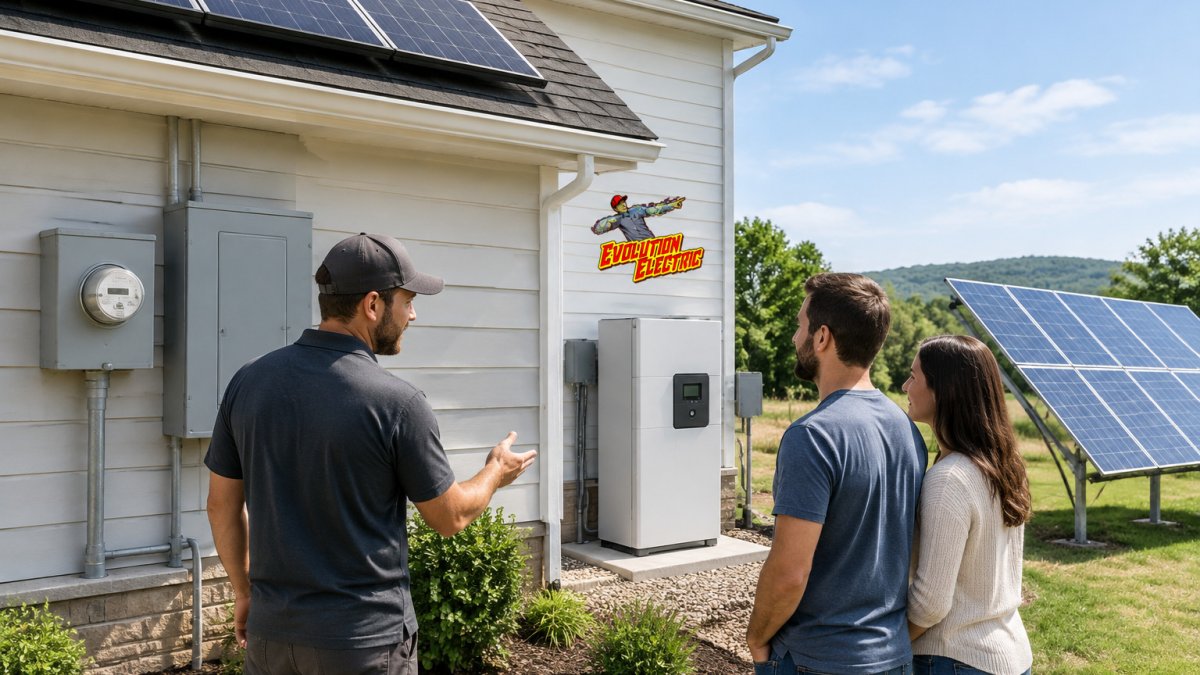
Alternatives to grid-tied solar for homes depend on how much power you need, how often the grid fails, and what your roof and budget allow. This guide from Generators of Nashville by Evolution Electric walks through the main options, with trade-offs for homeowners in Middle Tennessee and across the United States. Our licensed electricians have installed Generac generators, solar arrays and home battery systems since 2014.
Grid-tied solar is the most common residential setup, but it has a basic limitation. When the utility grid goes down, a standard grid-tied system shuts off for safety, so it produces no power during a blackout (Solar and Resilience Basics). Homeowners who want solar without depending on the grid have several other paths to consider.
Grid-Tied, Off-Grid, and Hybrid Solar: Definitions That Matter
A grid-tied solar system is a photovoltaic array connected to the utility network, sending excess power back to the grid and drawing from it at night. An off-grid system has no utility connection and relies entirely on panels, batteries and often a backup generator. A hybrid system combines solar with batteries and keeps a grid connection as a fallback.
The three designs differ mainly in their dependence on the utility. Grid-tied systems are the simplest and least expensive per watt. Off-grid systems cost more because they must store enough energy for every low-sun period. Hybrid systems sit in the middle, offering backup power without giving up the grid entirely.
Off-Grid Solar System for Home: How It Works and What It Costs
An off-grid solar system for a home uses panels to charge a battery bank, which an inverter converts to usable household power. Because there is no grid to fall back on, the system must cover cloudy days, winter months and high-demand periods on its own.
The mechanics are straightforward but unforgiving. Panels produce direct current, a charge controller regulates that current into the battery bank, and an inverter converts stored DC power into the 120/240-volt alternating current your home uses. Off-grid inverters are typically larger and more expensive per watt than grid-tied inverters because they must be able to start motor loads, well pumps, compressors, furnace blowers, without the grid to absorb the surge. Many off-grid designs also use a transfer switch or a critical-loads panel so the generator and the inverter do not fight each other.
Pricing depends on your home's energy use, roof condition and equipment selection, so a site assessment gives the most accurate number. For current prices or a quote, visit our website. What you can control is the structure of the cost: panels and racking are usually the smallest line item in an off-grid build, the battery bank is usually the largest, and the inverter, charge controller, wiring, disconnects and generator make up the rest. A system sized too small will leave you without power, which is why sizing matters more than the panel count.
Battery Autonomy and Whole-Home Load Sizing
Battery autonomy is how long a battery bank can run your home without sun or grid power. To calculate it, add up the daily watt-hours your household uses, then divide the usable battery capacity by that figure. Use usable capacity, not nameplate capacity: most lithium iron phosphate batteries are rated to deliver roughly 80 to 100 percent of their stated capacity, while flooded lead-acid batteries are typically limited to about 50 percent depth of discharge to protect cycle life.
Central air conditioning is the largest load in most Tennessee homes, and it can drain a battery quickly during a summer heat wave. A single 3-ton central air conditioner can draw roughly 3,000 to 4,000 watts while running and several times that at startup. That is why off-grid homes in this climate often pair a modest battery bank with a generator, or shift cooling loads to mini-split heat pumps and ceiling fans that draw far less.
A common mistake is sizing the system for average usage instead of peak demand. Start-up surges from air conditioners, well pumps and refrigerators can exceed running loads several times over. Plan for the highest load you expect to run at once, not just the monthly average on your utility bill.
Watch out: sizing an off-grid battery to cover a whole-house central air conditioner through a multi-day heat wave usually pushes the battery bank past the point where the system pays for itself, so decide early whether cooling is a battery load or a generator load.
The article's key figures for an off-grid system are summarised below.
| Item | Value | Note |
|---|---|---|
| Battery usable capacity (lithium iron phosphate) | Roughly 80 to 100 percent | Of stated capacity |
| Battery usable capacity (flooded lead-acid) | About 50 percent | Depth-of-discharge limit to protect cycle life |
| 3-ton central air conditioner running draw | Roughly 3,000 to 4,000 watts | Startup draw is several times higher |
| Largest cost line item | Battery bank | Panels and racking are usually the smallest |
| Sizing basis | Peak demand | Not the monthly average on the utility bill |
Hybrid Solar System With Battery Backup: The Middle Ground
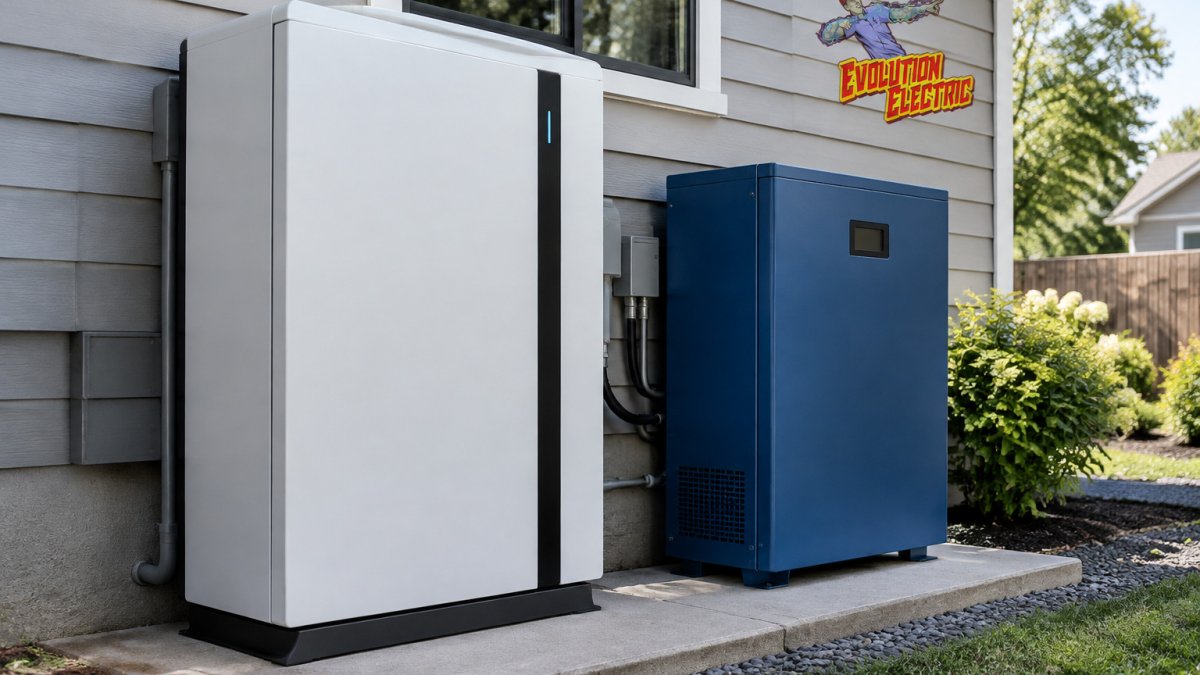
A hybrid solar system with battery backup keeps the grid connection while adding storage, so the home can switch to battery power during an outage. This setup suits homeowners who want lower utility bills and some independence without the expense of a fully off-grid build. The battery typically covers essential circuits, such as refrigeration, lighting, internet and medical equipment, rather than the entire house.
Hybrid systems depend on an inverter that can manage both solar and battery input and switch to backup mode automatically. Many homeowners add a battery to an existing solar array, which requires a compatible inverter and a careful review of the current setup. Pages on this site explain how that addition works in practice.
Home Battery Backup Without Solar: Who It Suits
A home battery backup without solar stores grid electricity and releases it during outages or peak-rate periods. It works well for homeowners who want outage protection but have a shaded roof, a rental, or a limited budget for panels. The battery recharges from the grid, so its runtime depends on how much stored energy you keep in reserve.
Battery-only systems are a practical option for renters and apartment dwellers who cannot install panels, though the choice of battery depends on your lease terms. Compare solar generator and home battery options before deciding, because the two products differ in capacity, charging speed and installation requirements.
Whole-House Standby Generator: Outage Coverage and Fuel Trade-offs
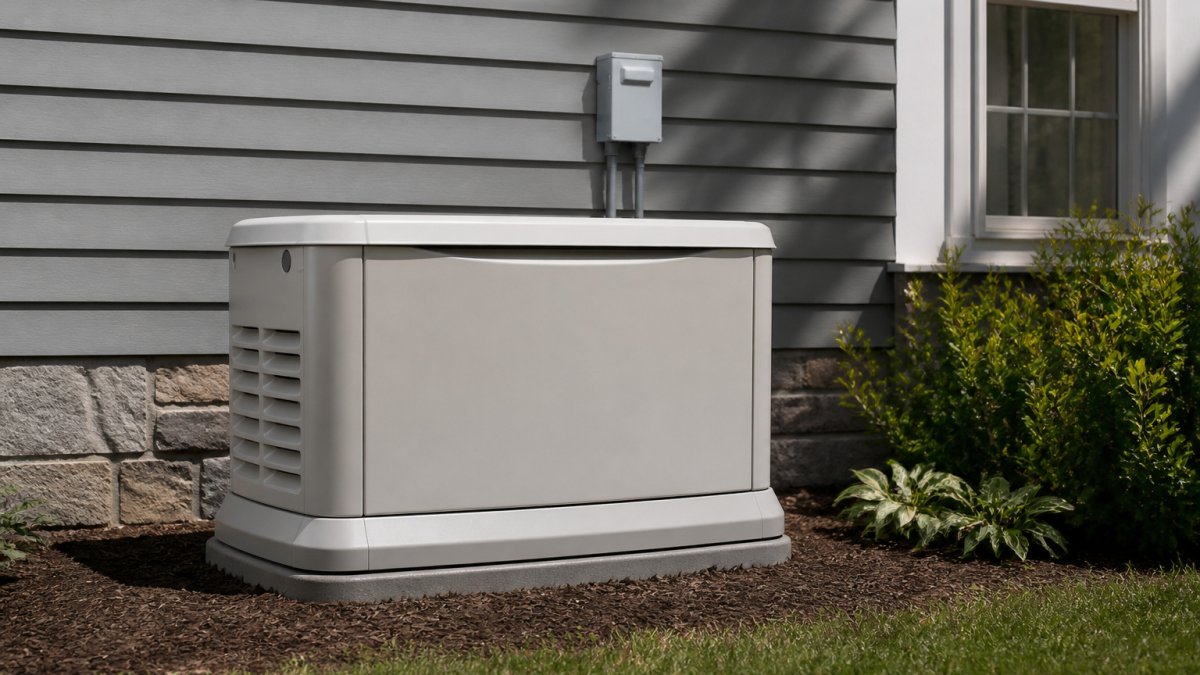
A whole-house standby generator is a permanently installed unit that starts automatically within seconds of a power loss and runs on natural gas or propane. Because it runs on fuel rather than stored energy, it can keep a home powered for as long as fuel is supplied. Standby generators are a common choice for homes that cannot tolerate even a short outage.
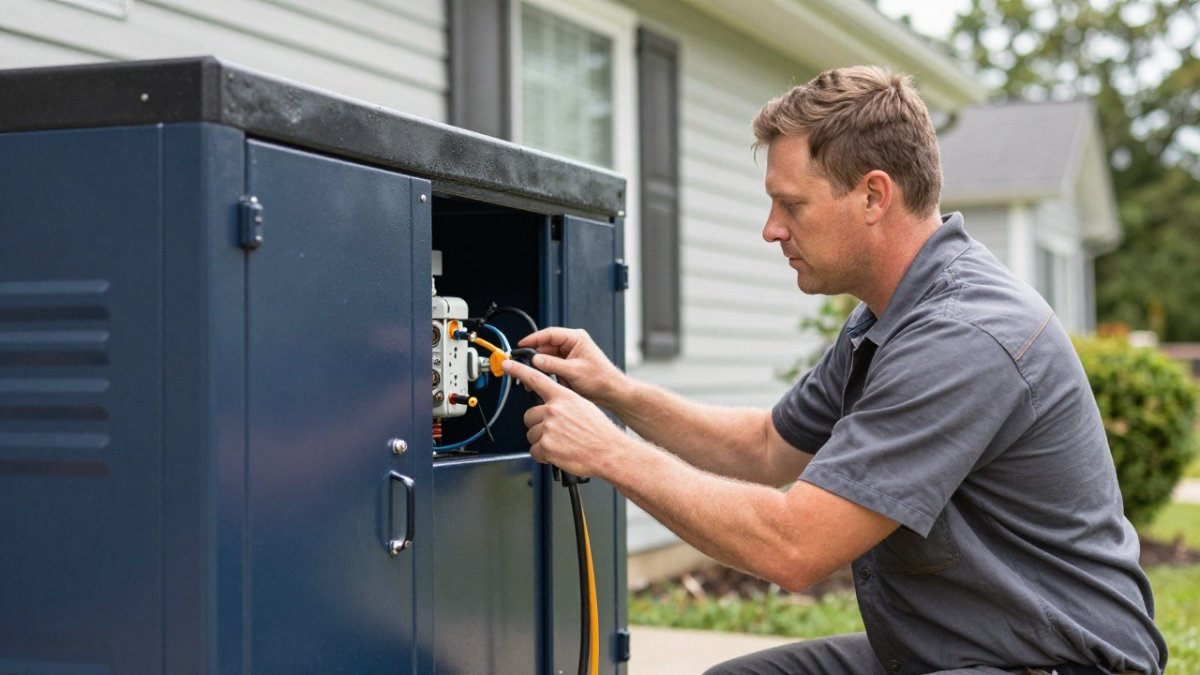
The trade-off is fuel supply and ongoing maintenance. Natural gas service usually continues during storms, but propane depends on tank levels, and both require periodic service to stay ready. Standby units also carry higher upfront costs than portable generators, so weigh the reliability against your budget.
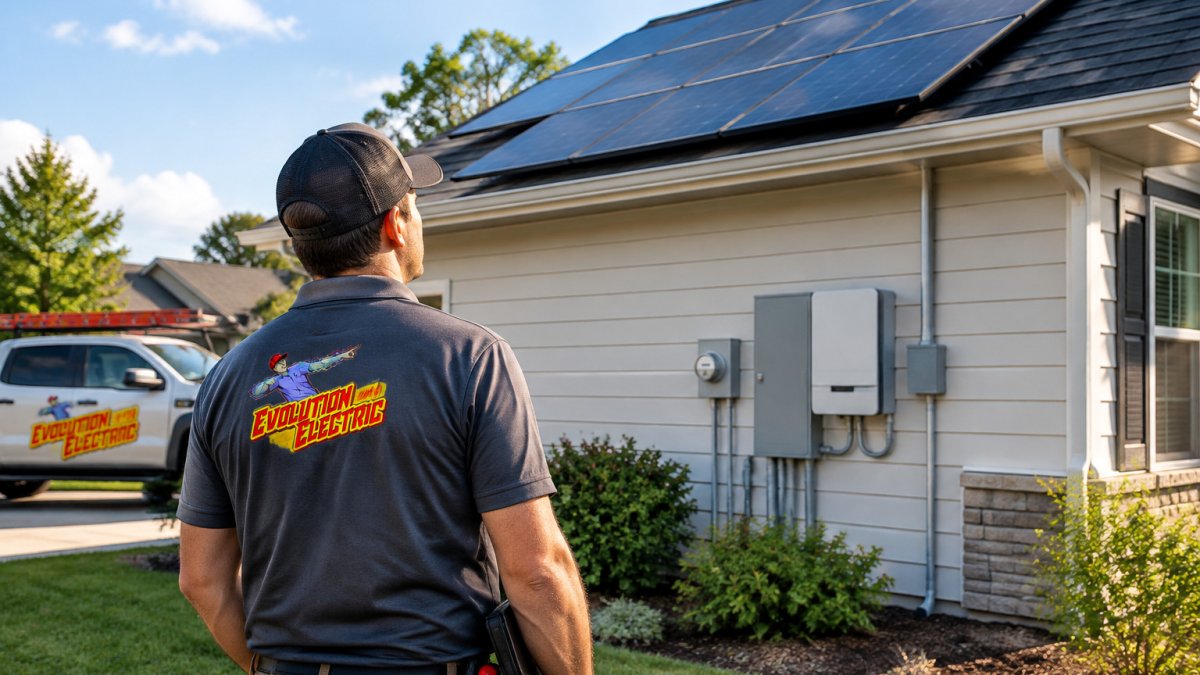
!A licensed electrician in work clothes inspects a standby generator mounted beside a suburban Middle Tennessee home
Permits, Utility Rules, and Interconnection Constraints
Many jurisdictions require a permit before installing solar, battery or generator equipment, and grid-connected systems typically need utility approval before they can operate. Interconnection rules control how a system may export power to the grid, and some utilities restrict or charge for certain configurations. Before committing to a design, confirm the requirements with your local building department and utility.
Permit and code requirements also affect who is responsible if something goes wrong. Grid-tied solar behavior during outages and generator permit requirements are worth reviewing before you start the process.
According to the National Electrical Code overview from the National Fire Protection Association, electrical installations must meet specific safety standards, and local jurisdictions adopt and amend those rules. Check which edition your city or county enforces.
Choosing Your Backup Path: Booking a Load Assessment With Generators of Nashville
The right backup path depends on your outage frequency, the loads you need to run, and your long-term energy goals. A grid-tied system may save money without providing outage protection, while a hybrid or standby generator can cover blackouts. Start by listing the circuits you must keep running during an outage.
A simple decision framework helps narrow the field before you call anyone. First, do you need power during an outage, or only lower bills? Second, if you need outage power, how long and how often? Third, what does your site allow? When site limits or outage needs rule out the usual options, comparing alternatives to traditional solar generators can help clarify which backup approach fits your home.
Lifecycle cost matters more than sticker price. Compare the upfront cost, the replacement cycle for batteries (battery lifespans vary by chemistry and use), generator fuel and service, inverter replacement, and the utility bill you still pay.
Renters, apartment dwellers and homeowners with unsuitable roofs are not out of options. Check lease terms and utility program rules before buying, because portability and eligibility vary widely.
Safety and reliability deserve a plain answer. A standard grid-tied inverter shuts down during an outage unless it is paired with storage and islanding equipment, so 'solar' alone does not mean 'backup power.' Generators have their own trade-offs: fuel supply, noise, maintenance, and carbon monoxide risk if sited poorly. No single option wins on every axis, which is why the load assessment exists.
Our team at Generators of Nashville by Evolution Electric can assess your home and recommend a setup that fits your loads and budget. You can book a load assessment with Generators of Nashville to get a site-specific recommendation. Take our 60-second quiz to receive a free, personalized quote for your whole-home backup system.
Frequently Asked Questions
Is grid-tied solar worth it?
Grid-tied solar is worth it for many homes because net metering and utility connection keep the system simple and lower the upfront battery spend. It does not provide backup power during an outage, though, because the inverter shuts down when the grid fails for safety reasons. If outages are your main concern, pair solar with battery storage or a standby generator, or consider a hybrid system. Your utility bills and usage history can help show whether the payback works for your home.
Can I have solar without connecting to the grid?
Yes. An off-grid solar system runs without a utility connection, using solar panels, a battery bank, and a charge controller or inverter to supply your home. It requires careful load sizing so the battery covers nights and cloudy stretches, and it usually needs a backup generator for long winter periods. Off-grid systems cost more per kilowatt-hour of storage than grid-tied setups, and they require permitting that differs from standard grid interconnection. Your roof, shade, and loads determine whether off-grid is practical.
Can a home battery provide backup power without solar panels?
Yes. A battery backup system can be charged from the utility grid and will power essential circuits when the grid goes down. Without solar, the battery recharges only when grid power is available, so runtime depends on battery capacity and how much you limit loads during an outage. Some homeowners pair a battery with a standby generator for multi-day outages. Pricing depends on battery capacity, inverter size, and installation scope, so request a quote for your specific circuits.
Can a generator work alongside solar panels or a home battery?
A generator can work alongside solar and batteries when the system is designed for it. A properly configured hybrid inverter can start a generator automatically when battery charge drops below a set level, which keeps the home powered through extended cloudy or winter periods. The generator and inverter must be sized and wired by a licensed electrician to avoid backfeeding the utility and to meet National Electrical Code requirements. Ask any installer to explain the transfer and charging logic before you buy.