 how-to
Whole Home Generator Permit Requirements: 2026 Guide
Last Updated: October 22, 2026
Quick Summary
A permanent whole home generator requires at least one generator permit in nearly every U.S. jurisdiction before installation begins. Most installations need several separate approvals, typically covering building, electrical, mechanical, and fuel-gas work. Skipping permits can trigger stop-work orders, penalty fees, and insurance or resale problems.
- Portable generators rarely need a permit, but standby generators almost always do.
- A common mistake is assuming the electrical permit covers the gas line; it does not.
- Missing documents are the top cause of permit application delays.
- Call the building department before buying the generator and request the checklist in writing.
- Many jurisdictions charge double permit fees for work started without a permit.
Table of Contents
- Do You Need a Permit for a Whole Home Generator?
- The Whole House Generator Installation Permit Stack
- Documents and Plans Your Permit Application Needs
- Generator Installation Setbacks and Clearances
- Generator Transfer Switch Permit and Electrical Connection Rules
- Generator Installation Inspection: What Inspectors Check
- Timelines, HOA Rules, and What Happens Without a Permit
- Frequently Asked Questions
Do You Need a Permit for a Whole Home Generator?
Yes. In nearly every U.S. jurisdiction, a permanent whole home generator requires at least one permit before installation begins. At Generators of Nashville by Evolution Electric, we've pulled permits for standby systems across Middle Tennessee since 2014.
The permit matters for three reasons:
- Safety: Generators burn fuel, produce carbon monoxide, and connect to your home's electrical panel.
- Liability: Unpermitted work can void insurance claims and complicate a home sale.
- Code compliance: Inspectors confirm the work meets current electrical and fuel-gas codes.
A generator permit is the official approval a local building department issues before you install a permanent backup power system. It confirms the equipment, placement, wiring, and fuel connections meet local code.
Standby vs. Portable: Why the Rules Differ
Portable generators usually need no permit. You roll them out during an outage, plug in appliances, and put them away.
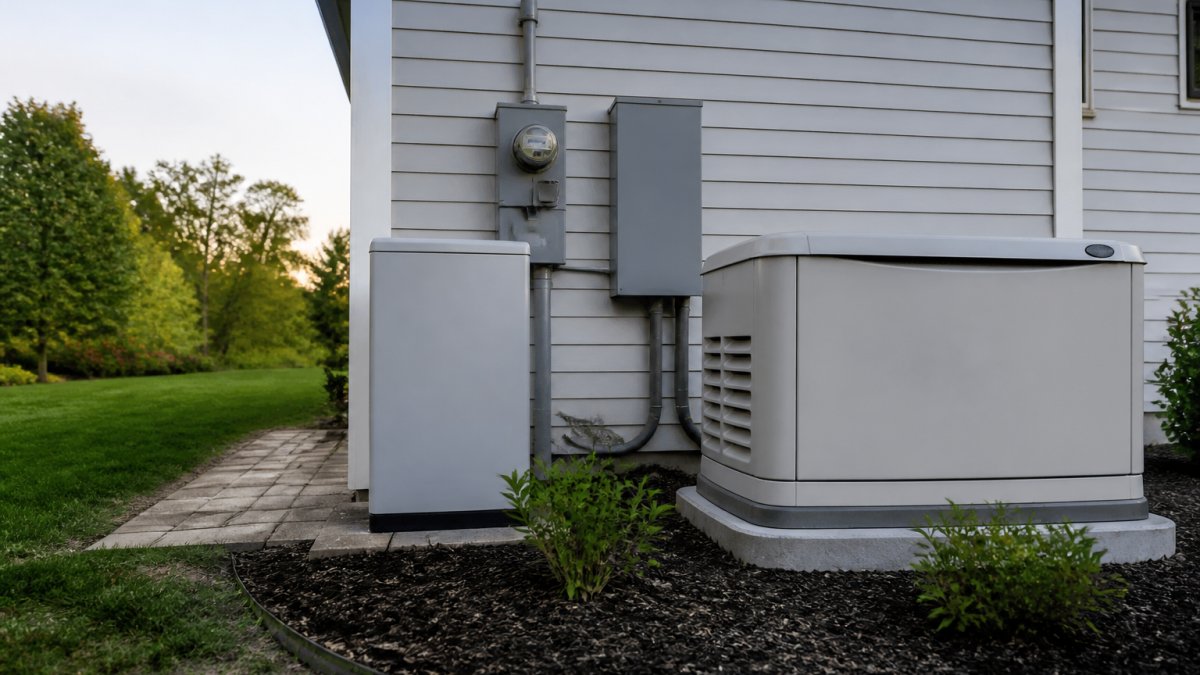
Standby generators are different. A permanent generator is bolted to a pad, wired to your electrical system through a transfer switch, and connected to a fuel source.
Here's the practical split:
| Feature | Portable Generator | Standby Generator |
|---|---|---|
| Permit needed | Rarely | Almost always |
| Fuel source | Gas can, manual refill | Natural gas or propane line |
| Transfer switch | Cord-based | Automatic transfer switch |
| Placement | Temporary | Fixed pad, setback rules apply |
| Inspection | Usually none | Required before use |
If you want power that comes on by itself during an ice storm, you're in standby territory, and that means permits.
The Whole House Generator Installation Permit Stack
Most homeowners assume one permit covers everything. It rarely does. A whole house generator installation permit usually involves several separate approvals, and each one covers a different trade.
Building, Electrical, Mechanical, Plumbing, and Fuel-Gas Permits
What gets pulled depends on your setup and your local building department. Here's how the stack typically breaks down:
- Building permit: Covers the concrete pad, equipment placement, and structural work.
- Electrical permit: Covers the transfer switch, panel connections, and grounding.
- Mechanical permit: Covers the generator unit itself and any exhaust or ventilation work.
Some jurisdictions combine these into a single residential permit. Others want them separate, especially the electrical and fuel-gas pieces. A common mistake is assuming the electrical permit covers the gas line. It doesn't.
Documents and Plans Your Permit Application Needs
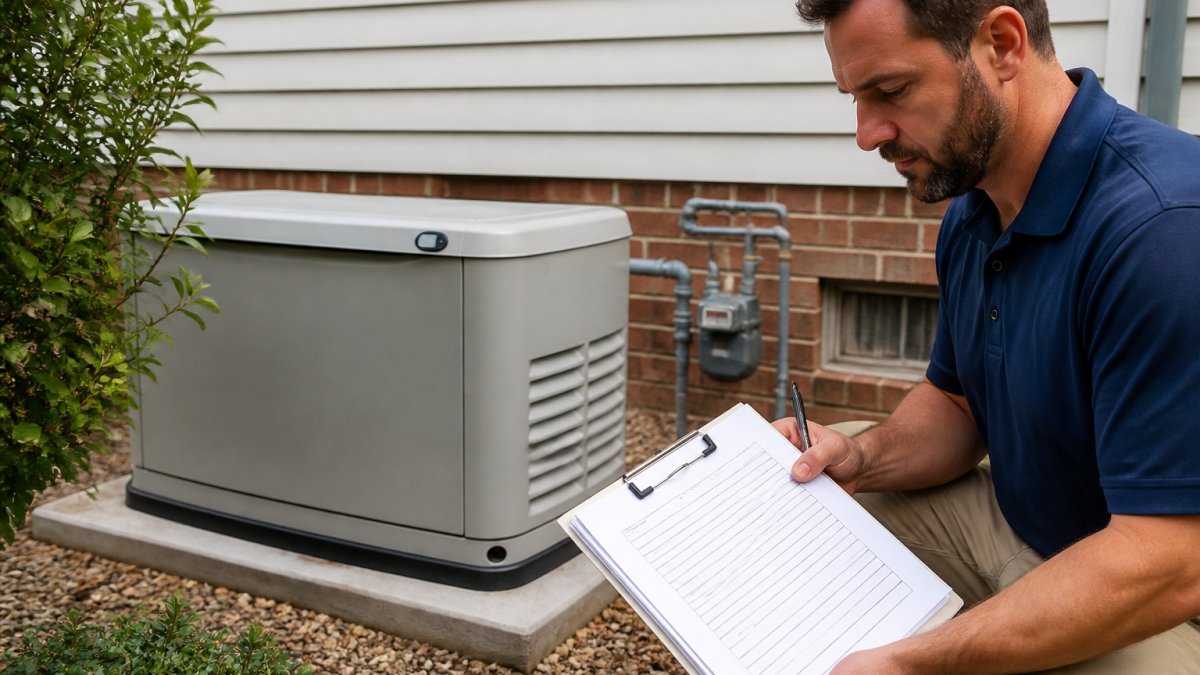
Expect to submit a packet, not a single form. Most building departments want construction plans and a site plan showing exactly where the unit will sit. Missing documents are the top cause of application delays, and the fastest way to avoid them is to build the packet in the same order the plan reviewer will read it.
The Submittal Packet, in Review Order
Organize your documents so a reviewer can move from the equipment to the site to the connections without hunting:
- Cover sheet and application form. Include the property address, owner name, contractor license number, scope of work, and the permit types requested. If your jurisdiction uses a combined residential permit, list every trade on one form; if it splits electrical and fuel-gas, file separate applications with cross-referenced addresses.
- Manufacturer spec sheets and installation manual. Submit the pages that show the model number, fuel type, clearances, and electrical ratings. Reviewers use these to check that the unit you bought matches the plans.
- Electrical single-line diagram. Show the utility service, main panel, automatic transfer switch, generator breaker, grounding electrode conductor, and bonding. Label the transfer switch rating and the conductor sizes.
- Site plan. Draw the lot to scale with the house footprint, the generator pad, property lines, easements, doors, windows, and fresh-air intakes. Dimension every setback the code requires.
- Fuel-gas piping diagram and load calculations. Show pipe size, length, fittings, shutoff valve, sediment trap, and pressure-test method. Include the appliance load calculation that justifies the pipe size.
- Contractor credentials and homeowner authorization. Attach the license numbers for the electrical and fuel-gas trades, proof of insurance, and a signed owner authorization if the contractor is submitting on the owner's behalf.
A design professional may need to stamp plans in some jurisdictions, particularly for larger units or complex gas runs. Ask the building department before you submit. A rejected packet costs you weeks.
A Pre-Purchase Verification Workflow
Before you buy the generator, confirm the packet requirements directly with the authority having jurisdiction (AHJ). Most practitioners find this five-step check prevents the most common rejections:
- Identify the AHJ. Search the city or county building department website for "residential generator permit" and note whether the electrical and fuel-gas permits are issued by the same office or by separate departments.
- Ask for the submittal checklist. Many departments publish a one-page checklist for standby generators; request it by email so you have a written record.
- Confirm the current code edition. Ask which edition of the National Electrical Code (NEC) and the International Fuel Gas Code (IFGC) or International Residential Code (IRC) the department enforces, because clearance and bonding rules change between editions.
Call the building department before you buy the generator. Ask which documents they require for your specific model and fuel type, and request the checklist in writing. Getting the packet right the first time is the fastest path to approval.
Common Rejection Triggers
Even a complete packet can stall on details. Watch for these:
- Site plan missing the distance to a fresh-air intake or an adjacent property line
- Single-line diagram that omits the grounding electrode conductor or the transfer switch neutral
- Fuel-gas load calculation that does not match the pipe size shown
If the department rejects the packet, ask for the specific deficiency in writing and resubmit only the corrected pages with a cover letter referencing the plan review number. That keeps the resubmittal in the same review queue instead of starting over.
Generator Installation Setbacks and Clearances
Placement rules exist for a reason: exhaust, fire safety, and noise. Generator installation setbacks and clearances are set by local code, and they vary by jurisdiction, so treat any number you hear online as a starting point only.
Take our 60-second quiz for a free quote today! →
Typical clearance categories to plan around:
- Distance from the home's walls and windows
- Distance from doors and fresh-air intakes
- Distance to property lines and easements
Your manufacturer's installation manual sets minimum clearances, and local code can require more. The stricter rule wins. If your yard is tight, this is where a project stalls, so confirm setbacks before you pick the spot.
Generator Transfer Switch Permit and Electrical Connection Rules
The generator transfer switch permit is the piece homeowners underestimate most. A transfer switch disconnects your home from the utility grid before the generator feeds power in. Without it, power can backfeed onto utility lines and endanger line workers.
That's why electrical inspectors look closely at this part. The electrical permit covers:
- The automatic transfer switch and its rating
- Panel connections and breaker sizing
- Grounding and bonding
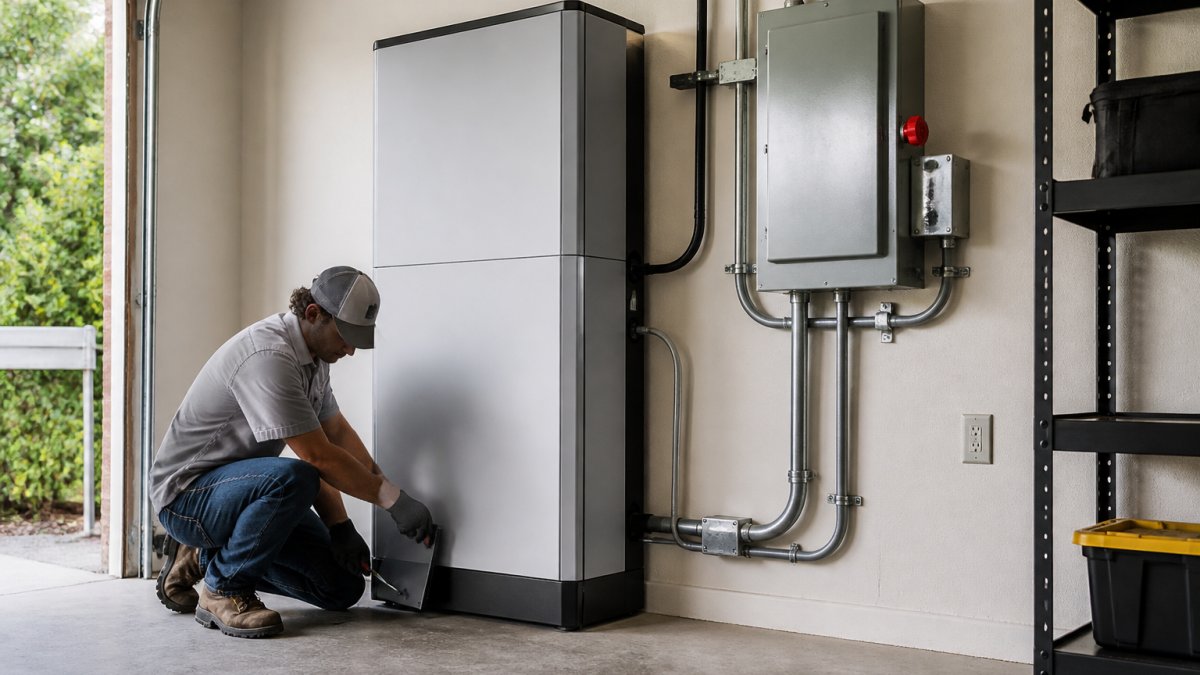
Only a licensed electrician should make these connections. This is not a DIY job, and inspectors will check who pulled the permit.
Generator Installation Inspection: What Inspectors Check
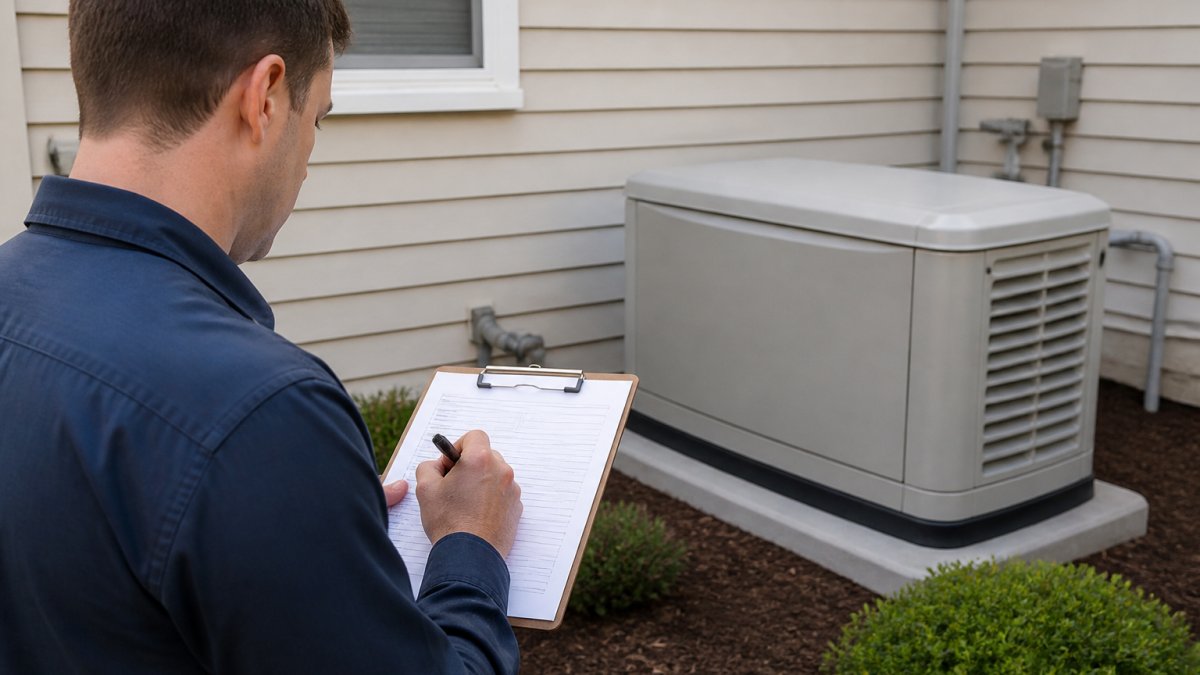
A generator installation inspection happens in stages, not all at once.
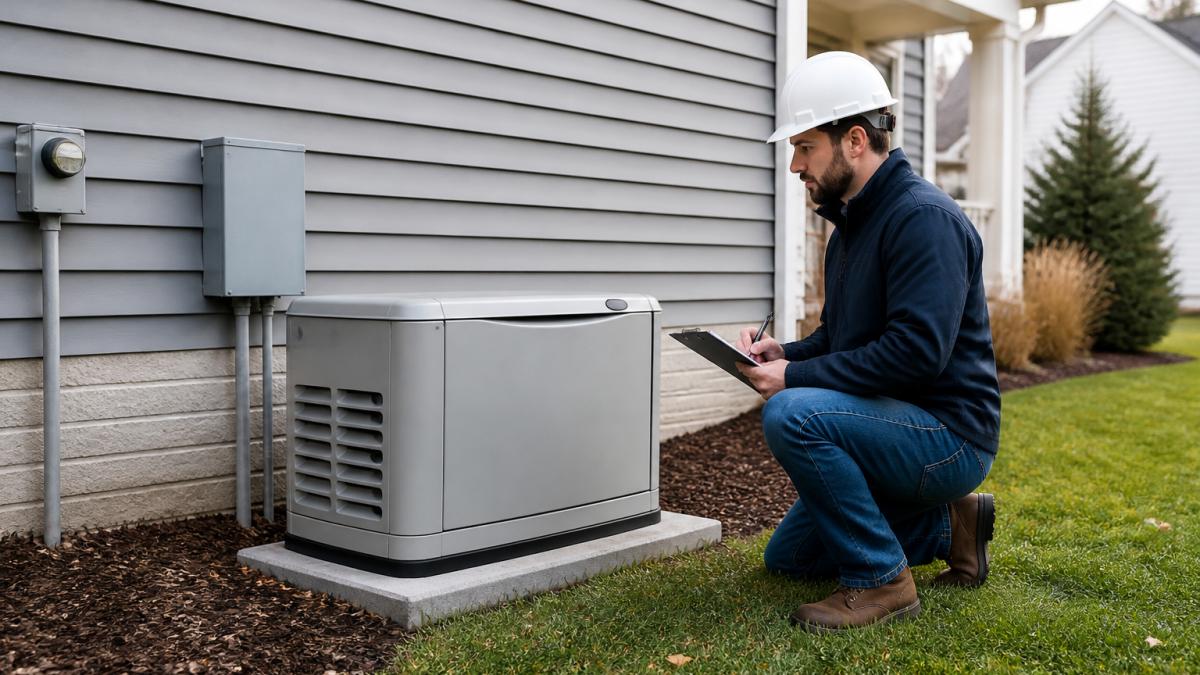
Inspectors typically verify:
- Setbacks and clearances match the approved site plan
- The transfer switch is installed and rated correctly
- Gas piping is pressure-tested and leak-free
The final inspection is what clears you to run the system. Fail it, and you fix the issue and schedule a re-inspection.
Timelines, HOA Rules, and What Happens Without a Permit
Permit timelines vary widely by jurisdiction. Some building departments review a residential generator packet in days; others take weeks, especially in busy seasons. Plan for review time before you schedule installation. Ordering equipment before approval is a common scheduling mistake.
A Realistic Permit and Installation Timeline
Most practitioners plan the project in five stages. Treat the ranges below as planning assumptions, not promises, and confirm each one with your AHJ:
- Pre-application verification (1-2 weeks). Confirm the AHJ, code edition, submittal checklist, and whether a design professional stamp is required. This is also when you check HOA and zoning constraints.
- Packet assembly (1-2 weeks). Gather spec sheets, the single-line diagram, site plan, fuel-gas calculations, and contractor credentials. Missing documents are the top cause of delays, so build the packet against the department's checklist.
- Plan review (days to several weeks). Simple residential packets may clear in a few business days; complex gas runs or busy seasons can push review to several weeks. Ask the department for its current average review time when you submit.
- Installation and rough-in inspection (1-3 days of work, plus scheduling). The rough-in inspection happens before trenches or walls close. Schedule it as soon as the work is ready, because inspection queues can add days.
- Final inspection and utility coordination (days to weeks). The final inspection clears the system for use. If the fuel line requires utility service activation, coordinate the gas utility's turn-on with the inspection date so you are not waiting on a second appointment.
Build the schedule backward from the inspection dates, not forward from the purchase date. Equipment that arrives before permit approval sits in the yard and can complicate the site plan if the model changes.
HOA, Zoning, and Easement Constraints
A building permit does not resolve private covenants or property restrictions. Check these before you finalize placement:
- HOA rules. Many associations restrict generator placement, screening, or noise. Request written approval and keep it with the permit packet; some departments ask for it.
- Zoning setbacks. Local zoning may impose a setback from property lines that is stricter than the building code. Confirm both.
- Utility easements. A pad cannot sit in an easement even when it meets code setbacks. Ask the utility for the easement width and location.
If the HOA and the code conflict, the stricter rule controls in practice. Get the HOA decision in writing before you pour a pad.
What Happens When Work Starts Without a Permit
The consequences are real and often more expensive than the permit itself:
- Stop-work order. The building department can halt the project until the work is permitted and inspected.
- Corrective work. Inspectors may require opening walls, exposing trenches, or removing equipment to verify concealed work.
- Penalty fees. Many jurisdictions charge double permit fees or civil penalties for work started without a permit.
The permit is the cheap part. If work has already started without one, contact the AHJ before an inspector discovers it; many departments allow a retroactive permit with corrective inspections, which is usually cheaper than a stop-work order.
At Generators of Nashville by Evolution Electric, our licensed electricians handle the permit paperwork, plan submittals, and inspections as part of installation. You don't chase the building department; we do.
Frequently Asked Questions
Can I install my own whole home generator?
A whole home standby generator is not a do-it-yourself project in most jurisdictions. The work involves a fuel-gas connection, a permanent electrical tie-in, and a transfer switch, and each of those typically requires a licensed trade and a separate generator permit. Homeowners can often pull a permit as the property owner, but the installation itself must usually be performed or supervised by licensed professionals, and the building department will inspect the finished work before it can be energized.
Who is responsible for obtaining generator installation permits?
Responsibility is usually spelled out in the installation contract. Many contractors pull the whole house generator installation permit under their own license, which keeps the inspection and correction process in their hands. Some homeowners prefer to apply as the property owner. Either way, confirm in writing who submits the application, who pays the permit fee, and who schedules the generator installation inspection. If the contractor disappears, the permit record and any open corrections stay with the property, so get the responsible party named in the contract.
Does a standby generator installation need an electrical inspection?
Yes. A standby generator ties into the home's electrical system through a transfer switch, so the electrical work is inspected like any other service upgrade. Expect the inspector to check the transfer switch wiring, grounding and bonding, conductor sizing, and the disconnect. Many jurisdictions also require a separate fuel-gas inspection for the propane or natural gas line and a building inspection for the pad and equipment placement. The generator installation inspection is typically the last gate before the utility approves the connection.
What should I prepare before applying for a generator permit?
Gather the equipment spec sheet, a site plan showing the generator location and its distance from property lines and openings, the electrical one-line diagram including the transfer switch, and the fuel supply details. Confirm your zoning district allows the equipment and check any HOA approval requirements. Ask the building department whether a design professional's stamp is needed. Having these documents ready before you submit shortens plan review and reduces the chance of a correction notice that delays scheduling.