 comparison
Is Residential Solar Worth It in 2026?
Last Updated: November 4, 2026
Quick Summary
Residential solar is worth it for some homes and not others in 2026. The 30% federal tax credit expired at the end of 2025, so payback is now longer and depends on system cost, your electricity rate, and how the system is financed.
- The federal residential clean energy credit covered 30% of installed cost through 2025 and is no longer available for 2026 installations.
- Confirm in writing which incentives apply to the install date on your contract before comparing quotes.
- Cash purchases usually give the best lifetime return because there is no financing cost.
- Solar loan payments above your current electric bill can leave you paying more each month.
- Use your own 12 months of kilowatt-hour usage and actual rate schedule rather than generic national averages.
Table of Contents
- What Solar Costs Before Incentives and Financing
- How the Federal Tax Credit Changes Your Solar Payback
- Solar Panel Payback Period: Running the Numbers
- Is Solar Worth It Calculator: A Reproducible Method
- Reasons Solar Panels Are Not Worth It for Some Homes
- Renters, Condos, Batteries, and Backup Power Considerations
- Next Step: Getting Your Home-Specific Quote
- Frequently Asked Questions
At Generators of Nashville by Evolution Electric, homeowners often ask whether residential solar is still worth the investment in 2026. The short answer is yes for some homes and no for others. The federal tax credit that once cut system costs by 30% expired at the end of 2025, so the math has changed (Residential Clean Energy Credit). Here is how to work through it, starting with the costs.
What Solar Costs Before Incentives and Financing
Industry estimates vary widely. The gap between published ranges comes from system size, roof condition, and the equipment you choose. Ask any installer for a per-watt price and a line-item breakdown, so you can compare quotes on equal terms.

How the Federal Tax Credit Changes Your Solar Payback
The federal residential clean energy credit, commonly called the residential solar tax credit, covered 30% of the installed cost of a residential system through the end of 2025 (Residential Clean Energy Credit). For systems placed in service in 2026, that credit is no longer available (Residential Clean Energy Credit). The practical effect is that a system that would have been discounted by the credit in 2025 now costs its full installed price, and every payback calculation has to start from that higher number.
What the credit actually did was shorten payback by roughly the same proportion it reduced cost, and removing it lengthens payback accordingly. Quotes and calculator results built on the credit generally no longer apply.
Three mechanisms determine how much the expiration hurts a specific household:
- System size and cost per watt. A larger, higher-cost system loses more absolute dollars when the 30% credit disappears, so the payback penalty scales with the project.
- Your electricity rate and rate growth. The credit reduced upfront cost; your utility rate determines annual savings. Households with high or fast-rising rates absorb the loss of the credit more easily because savings accumulate faster.
- Financing structure. A cash buyer feels the full $24,000 out of pocket. A solar-loan borrower spreads the higher principal over the loan term, which raises the monthly payment and can push it above the current electric bill, the classic sign that the deal no longer cash-flows in year one.
Confirm in writing which incentives apply to the install date on your contract, and treat any quote that lists a federal residential credit for a 2026 installation as out of date until the installer corrects it.
State, local, and utility incentives still exist and vary widely by location, so the federal credit is not the only offset, but it was the largest and most uniform one, and its absence means the remaining incentives carry more weight in the decision. Ask each installer for a written incentive schedule tied to your address and utility, and verify eligibility with the program administrator rather than relying on the sales proposal alone.
Because the federal credit can change the economics of a home solar system, it is worth weighing those savings against other household electricity costs, including the value of home EV charging.Solar Panel Payback Period: Running the Numbers
A simple payback division hides the assumptions that decide whether solar is actually worth it. A stronger approach is to run the same household through several scenarios side by side and then stress-test the winner.
Start with a single set of assumptions so the comparison is fair. Use your own figures for annual usage, utility rate, system size, and installed cost. Keep those inputs fixed and change only the financing.
| Scenario | Upfront Cash | Monthly Cash Flow | Simple Payback | 25-Year Net Position |
|---|---|---|---|---|
| No solar | $0 | Pay utility bill (~$117/mo) | Not applicable | $0 baseline |
| Cash purchase | ~$21,000 | Near-zero electric bill in sunny months | Roughly 13-15 years at these inputs | Savings accumulate after break-even |
| Solar loan | $0 down | Loan payment minus bill savings | Longer than cash; depends on rate and term | Sensitive to loan APR and term |
| Lease or PPA | $0 to low | Fixed lease payment, often below utility bill | Not a payback calculation, you do not own the system | Limited; savings end at lease term |
The point of the comparison is the structure rather than any specific figures, your rates and quotes will differ. Cash purchase usually produces the best lifetime return because there is no financing cost. A solar loan can be cash-flow positive in year one if the loan payment is below the bill it replaces, but a higher APR or a longer term can erase that advantage. A lease or power purchase agreement (PPA) is a bill-reduction product, not an investment; you generally do not capture the system's residual value or the remaining incentives.
Take our 60-second quiz for a free quote today! →
Once you have a base case, run a sensitivity analysis. Change one variable at a time and watch what happens to payback:
- Electricity-price growth. Repeat the calculation at several annual rate increases. Flat rates push payback out; sustained increases pull it in.
- Panel degradation. Model production declining gradually each year, as indicated by the manufacturer's warranty terms.
- Maintenance and inverter replacement. Budget for occasional cleaning, monitoring, and, for string inverters, a replacement around year 10 to 15. Microinverters and some optimizers carry longer warranties but cost more upfront.
- Financing cost. Re-run the loan scenario at a couple of APRs and terms. A one-point APR increase on a 20-year loan can add thousands in interest and lengthen payback by a year or more.
- Export compensation. If your utility pays little or nothing for exported power, size the system closer to your daytime usage rather than maximizing production.
A simple rule of thumb: if payback lands well within your expected remaining time in the home, the investment case is reasonably strong; if it lands beyond that, solar becomes a bet on staying put or on rates rising faster than you modeled. Neither outcome is wrong, but you should know which bet you are making.
A payback estimate built on generic production projections and national average electric rates can be off by years. Pull your own 12 months of kilowatt-hour usage and your actual rate schedule, and ask the installer to show the production model and the rate assumptions behind the savings line.
Is Solar Worth It Calculator: A Reproducible Method
Use this sequence so your result holds up to scrutiny:
- Pull 12 months of kilowatt-hour usage from your utility bills.
- Get two or three quotes with the same system size and equipment.
- Subtract any state or local incentives that still apply.
- Divide the net cost by your projected annual savings to get payback years.
- Repeat with rate increases of 0% and 3% per year, so you see the sensitivity.
If the payback period stays under roughly half your expected time in the home, the investment case is stronger.
Reasons Solar Panels Are Not Worth It for Some Homes
Solar is a weaker choice when your roof faces heavy shade, needs replacement within a few years, or your utility pays little for exported power. A common mistake is assuming all savings come from the panels. In many cases, the monthly bill drops more from changing usage habits than from generation alone. Also consider the solar loan: a payment that exceeds your current electricity bill can leave you paying more each month.
Renters, Condos, Batteries, and Backup Power Considerations
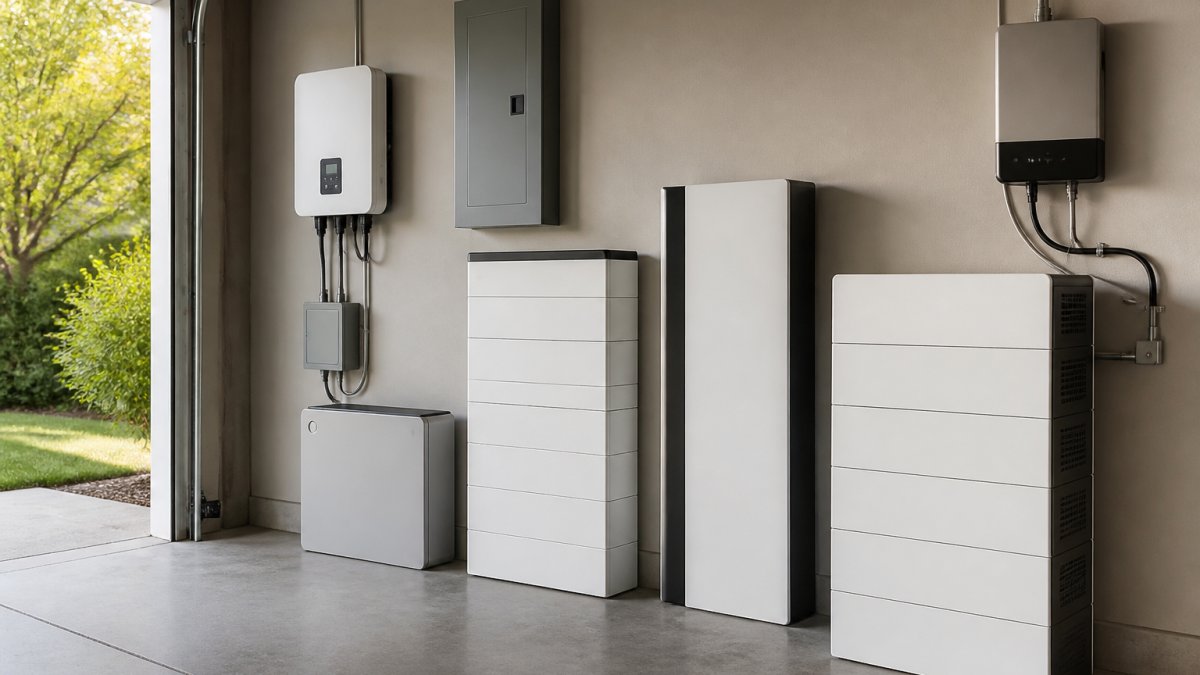
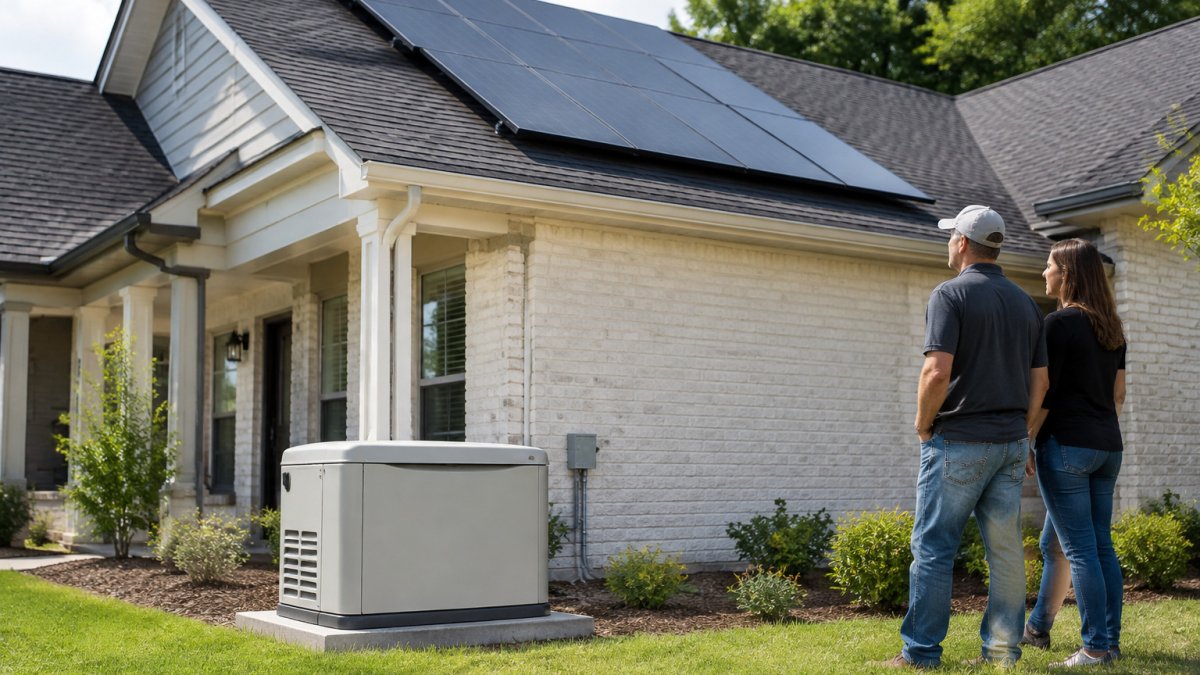
Renters and condo owners usually cannot install panels without landlord or association approval, and shared roofs add their own rules. Battery storage is a separate economic question from panels. A battery can provide backup during outages even when it does not pay back on bill savings alone. Compare a solar battery against a standby generator on upfront cost, fuel, maintenance, and runtime, because the two solve the outage problem differently. Our team at Generators of Nashville by Evolution Electric can walk through both options for a specific home.
| Option | Upfront Cost Driver | Bill Savings | Outage Backup |
|---|---|---|---|
| Solar panels only | System size, roof | Yes, depends on rates | No |
| Solar plus battery | Panels plus storage | Partial | Yes |
| Standby generator | Unit and install | No | Yes |
Next Step: Getting Your Home-Specific Quote
Solar pays off for homes with good sun exposure, stable roofs, and rates that justify the investment. Start with your own usage data and two or three written quotes. Our team at Generators of Nashville by Evolution Electric can help compare solar, battery, and generator options for your home. Take the 60-second quiz for a free, personalized quote and find out which backup power setup fits your needs.
Frequently Asked Questions
Are solar panels a good investment in 2026?
For many homeowners they are, but the answer depends on your electricity rates, how much sun your roof gets, system cost, and available incentives. Homeowners paying high utility rates with a south- or west-facing roof and no major shading tend to see the strongest returns. Homes with low rates, heavy shade, or a roof due for replacement often see weaker economics. Run the numbers with your own bills and a written quote before deciding.
Is residential solar worth it in 2026 without the federal tax credit?
It can still be, but the payback period is longer because the federal residential clean energy credit is no longer available for systems installed after it ended. Without the credit, a system must generate enough savings from lower electricity bills and any state or utility incentives to justify the upfront cost. Compare a with-credit and without-credit scenario side by side, since many homes still break even within the system's useful life.
How long does it take for residential solar panels to pay for themselves?
Payback depends on system cost, electricity rates, production, and incentives, so no single number applies to every home. Use your own total installed cost divided by your estimated annual bill savings to get a simple payback figure, then adjust for expected rate increases and panel output over time. Shorter payback periods generally come from higher utility rates and sunnier, unshaded roofs.
Is solar worth it if you add a home battery?
A battery adds cost and changes the math. Batteries are most financially justified when they shift usage away from expensive peak-rate hours, when your utility pays little for exported solar power, or when backup power has real value to your household. Evaluate battery economics separately from panel economics so you can see what each component contributes.