 how-to
How to Add Solar to an Existing Battery Backup System
Quick Summary
Yes, in most cases you can add solar to an existing battery backup system. The battery itself rarely needs to change, while the inverter and wiring determine whether the upgrade is simple or expensive. Check your inverter type first.
- Check whether your inverter is hybrid, battery-based, or solar-ready before requesting a quote.
- AC coupling is usually the easier retrofit because the existing battery inverter can often stay in place.
- DC coupling generally requires a compatible hybrid inverter and may mean replacing a battery-only inverter.
- Permits and utility interconnection approval must be completed before the solar array can operate.
- Standard grid-tied solar shuts off during outages, so backup function depends on an islanding-capable inverter.
Table of Contents
- Can You Add Solar to an Existing Battery Backup System?
- Solar Battery Inverter Compatibility: What to Check First
- AC-Coupled vs. DC-Coupled Solar Additions
- Adding Solar Panels to an Existing Battery Backup: Step-by-Step Installation Sequence
- Adding Battery to Existing Solar System Cost: What to Expect
- Solar Battery Backup During a Power Outage: Limits and Behavior
- Scheduling Your Free Quote for a Solar-Ready Backup Upgrade
- Frequently Asked Questions
Can You Add Solar to an Existing Battery Backup System?
Last Updated: November 14, 2026
Yes, in most cases you can add solar to an existing battery backup system, but the answer depends on the inverter.
A battery backup system stores energy for outages; solar panels generate energy. They work together only when the inverter accepts power from both sources, which depends on how the battery was originally connected.
Most homeowners find the upgrade manageable once they know what to check. Below: compatibility, coupling types, installation sequence, cost, and outage behavior.
Solar Battery Inverter Compatibility: What to Check First
The inverter is the part of the system that decides what your existing battery can do.
Read the labels on your battery and inverter for manufacturer, model number, and whether the inverter is hybrid, battery-based, or solar-ready.
Compatibility also depends on voltage and communication protocols. If the battery and inverter cannot talk to each other, the system may not charge correctly or protect the battery from overcharging.
Compatibility Checklist Using Inverter and Battery Specifications
Use this checklist before you request a quote:
- Inverter model and type (hybrid, battery-based, or grid-tied only)
- Battery chemistry (commonly lithium iron phosphate or lead-acid)
- Nominal battery voltage and usable capacity in kilowatt-hours
If you cannot confirm several items, an installer can read the nameplates and manufacturer documentation during a site visit.
AC-Coupled vs. DC-Coupled Solar Additions
Solar can connect to a battery in two main ways, and the choice affects cost and performance.
| Feature | AC-Coupled | DC-Coupled |
|---|---|---|
| How solar connects | Solar inverter feeds the home AC circuit, then the battery inverter charges from AC | Solar panels feed a charge controller that charges the battery directly on the DC side |
| Works with existing battery | Usually yes, even with a separate battery inverter | Often requires a compatible hybrid inverter |
| Typical retrofit complexity | Lower when the battery inverter stays in place | Higher, may need inverter replacement |
| Efficiency | Some energy lost in extra conversion steps | Generally more efficient for battery charging |
| Best fit | Adding solar to an existing battery system with a working inverter | New or fully replaced systems designed around one inverter |
AC coupling is often the easier retrofit. The solar inverter sends power into your home's AC wiring, and the existing battery inverter charges the battery from that supply.
DC coupling can be more efficient, but it usually requires a hybrid battery inverter that accepts solar input. If your inverter is battery-only, expect to replace it.
Adding Solar Panels to an Existing Battery Backup: Step-by-Step Installation Sequence
A retrofit works best in a clear order; rushing the steps leads to incompatible equipment or failed inspections.
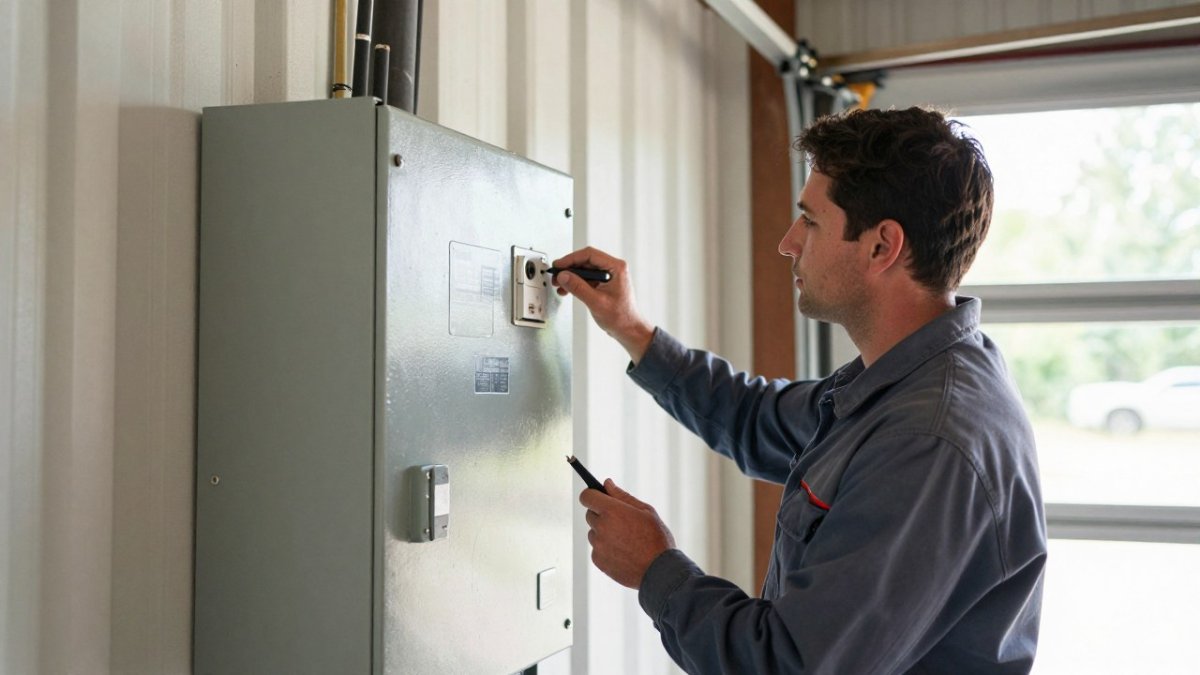
- Confirm inverter and battery compatibility. Use the checklist above or request an assessment.
- Choose a coupling method. AC coupling for most existing batteries, DC coupling only with a compatible hybrid inverter.
- Size the solar array. Match panel output to daily energy use and battery capacity. Many installers use your monthly utility bill to estimate kilowatt-hours per day.
- Plan the electrical work. Confirm breaker capacity, panel space, and whether a backup load panel needs changes.
- Obtain permits and utility approval. Interconnection rules apply before the system can operate.
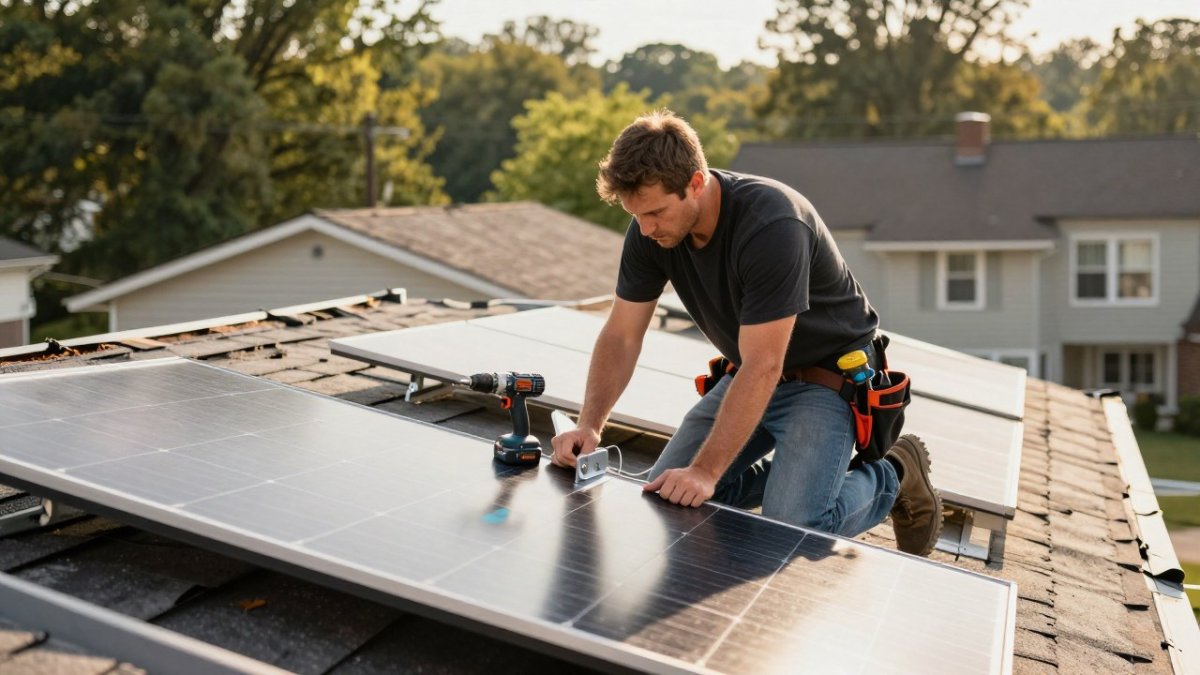
- Install panels, inverter equipment, and wiring. A licensed electrician completes the connections.
- Test the system. Check charging, discharging, and backup transfer before final sign-off.
Permits, Utility Interconnection and Warranty Considerations
Adding solar to a battery system usually triggers permit review, and the local utility must approve interconnection before the array is energized. Skipping these steps can delay the project or create safety problems.
Warranty coverage needs attention too: some battery manufacturers void coverage if equipment is connected to unapproved components. Ask your installer to confirm the battery, inverter, and solar equipment are listed as compatible, and keep documentation of the approved configuration.
Adding Battery to Existing Solar System Cost: What to Expect
Cost depends on several variables, and the equipment is only one of them. Ask for a written quote that separates these line items so you can compare bids apples to apples.
The four cost drivers
- Inverter situation. If your existing inverter is a hybrid or battery-based unit that already accepts a PV input, you may only pay for panels, mounting, wiring, and labor. If it is a battery-only or grid-tied-only inverter, you are looking at a replacement or an added inverter, the single largest swing in the project.
- Coupling architecture. AC coupling usually keeps the existing battery inverter in place and adds a solar inverter, which is typically the lower-complexity path. DC coupling requires a compatible hybrid inverter and often rewiring on the DC side.
- Electrical scope. Panel space, breaker capacity, a backup load subpanel, and the length of the run from the array to the equipment all affect labor. A main panel upgrade, if needed, is a separate line item.
- Permits and interconnection. Building permits, electrical permits, and utility interconnection review carry fixed fees that vary by jurisdiction and by utility. These are pass-through costs, not installer markup, so ask for them itemized.
What typically moves the number up or down
- Lower-cost path: existing hybrid inverter, AC coupling, modest array sized to daily consumption, no panel upgrade, straightforward roof or ground mount.
- Higher-cost path: inverter replacement, DC coupling, main panel upgrade, battery capacity expansion at the same time, or a long conduit run.
- Battery expansion: if your existing battery is undersized for the loads you want to back up, adding capacity is a separate purchase and should be quoted separately from the solar addition.
How to read a quote
Ask for equipment, labor, permits, and interconnection fees on separate lines, whether the quote assumes the existing inverter stays or is replaced, and the model number of any new inverter.
Watch out: a quote that is far below others may omit the utility interconnection fee or assume your existing inverter is compatible without verifying the nameplate, confirm both in writing before signing.
Incentives and utility rebates can change the net cost, and eligibility depends on equipment and installation date.
Sizing math you can do before you call anyone
You can estimate the array size you need without an installer. Take your average daily electricity use in kilowatt-hours (kWh) from a recent utility bill, then divide by an estimated production factor for your location.
For backup runtime, multiply usable battery capacity in kWh by the depth of discharge the manufacturer allows, then divide by the average wattage of the critical loads you plan to run.
Solar Battery Backup During a Power Outage: Limits and Behavior
This is the part of the retrofit most homeowners misunderstand, and it determines whether the system is actually useful when the grid goes down. Two mechanisms matter: islanding protection and backup load transfer.
Why grid-tied solar shuts off during an outage
Standard grid-tied solar inverters must shut down when the utility grid is de-energized (Solar and Resilience Basics). This is anti-islanding, and it protects line workers repairing downed conductors. The inverter senses the loss of grid voltage and stops exporting within a fraction of a second, so a solar array alone, with no battery and no islanding-capable inverter, produces nothing during an outage, even in full sun.
A battery system changes this only if the inverter can form its own grid reference when the utility is absent.
How backup loads are actually transferred
Most residential battery systems do not back up the whole house, only a subset of circuits wired to a backup load panel, sometimes called a critical loads panel.
This is why the load plan matters more than the battery's headline capacity. A 13.5 kWh battery running a refrigerator, furnace blower, lights, internet, and a few outlets can last a day or more.
What determines runtime and recharging
- Usable capacity. Manufacturers publish total capacity, but usable capacity is lower because the system reserves a margin to protect the battery. Ask for the usable figure.
- Peak versus average load. Startup surges from motors and compressors can trip a battery inverter even when average draw is modest. Confirm surge ratings against the appliances you want to run.
- Solar recharging while islanded. Recharge depends on array size, sunlight, and whether the inverter allows solar to charge the battery while serving loads. On a sunny day a modest array can keep essential loads running indefinitely; on a cloudy day the battery drains.
A realistic outage scenario
Consider a home with a 10 kWh usable battery, a 6 kW array, and a backup panel running a refrigerator (about 150 watts average), a furnace blower (about 400 watts while running), lights and electronics (about 200 watts), and intermittent well-pump or sump-pump use. Average draw is roughly 750 to 1,000 watts, so the battery alone covers well over a day, and with four to five peak sun hours the array refills much of what the loads consume, extending runtime indefinitely in fair weather. Add a central air conditioner drawing 3,000 to 4,000 watts and the same battery lasts only a few hours unless the array is much larger.
Watch out: some inverters limit how much solar can charge the battery while islanded, and some battery systems prioritize backup reserve over solar charging, confirm islanded charge behavior with the manufacturer's documentation, not just the sales brochure.
Questions to ask before you rely on it
- Which circuits will be on the backup panel, and what is their combined average and peak wattage?
- Does the inverter support solar production while islanded, and at what power level?
- What is the usable battery capacity after the manufacturer's reserve margin?
- What happens on a cloudy day after two days of outage, does the system shed loads or shut down cleanly?
A clear answer to those five questions is worth more than any capacity number on a spec sheet.
Scheduling Your Free Quote for a Solar-Ready Backup Upgrade
Adding solar to an existing battery backup is often achievable, but the details decide whether it is a simple retrofit or a larger project. At Generators of Nashville by Evolution Electric, our licensed electricians check your inverter, battery, and electrical panel before recommending a path forward. Take our 60-second quiz to receive a free, personalized quote for your home.
Frequently Asked Questions
Can you add battery backup to existing solar?
Yes, in most cases. Adding a battery to an existing grid-tied solar system usually means adding an AC-coupled battery, which works with the current inverter without replacing it. Whether this works depends on your inverter's make and model, available panel capacity, and your main electrical panel. A licensed electrician should assess the system before any equipment is ordered, because the answer depends on specifications the homeowner rarely has on hand.
How much does it cost to add solar to an existing battery backup?
Pricing depends on the equipment, the number of panels, the inverter setup, electrical work needed, permits and local requirements. Generators of Nashville by Evolution Electric does not publish fixed prices for this project because every site is different. For current pricing tied to your home and system, take the 60-second quiz on our website to request a free, personalized quote.
Do you need an electrician to connect solar panels to a battery backup?
Yes. Connecting solar panels to a battery backup involves high-voltage wiring, breaker sizing, interconnection with the utility and permit inspections. A licensed electrician confirms that the work meets the National Electrical Code and local requirements, and that the system will switch to backup power safely during an outage. Attempting this work without a license can void equipment warranties and create safety and insurance problems.
Can an existing battery backup charge from solar during a power outage?
It depends on the system design. Some battery backup systems can charge from connected solar panels even when the grid is down, but only if the inverter and panel layout support off-grid operation. Many grid-tied systems shut down solar production during an outage for safety reasons unless they include backup-capable equipment. Ask your installer to confirm outage behavior for your specific equipment before you rely on it.