 blog
Solar Generator vs Home Battery: Key Differences
Table of Contents
- Solar Generator vs Home Battery: What's the Real Difference?
- Upfront Costs, Installation, and Permitting
- Home Battery Backup Runtime: How Long Will It Last?
- Portable Solar Generator for Home Use: Where It Fits
- The Best Battery for Home Solar System: Chemistry and Lifespan
- Home Battery and Generator Together: A Hybrid Backup Strategy
- Which Backup Power Solution Is Right for You?
- Frequently Asked Questions
Last Updated: October 13, 2026
Solar Generator vs Home Battery: What's the Real Difference?
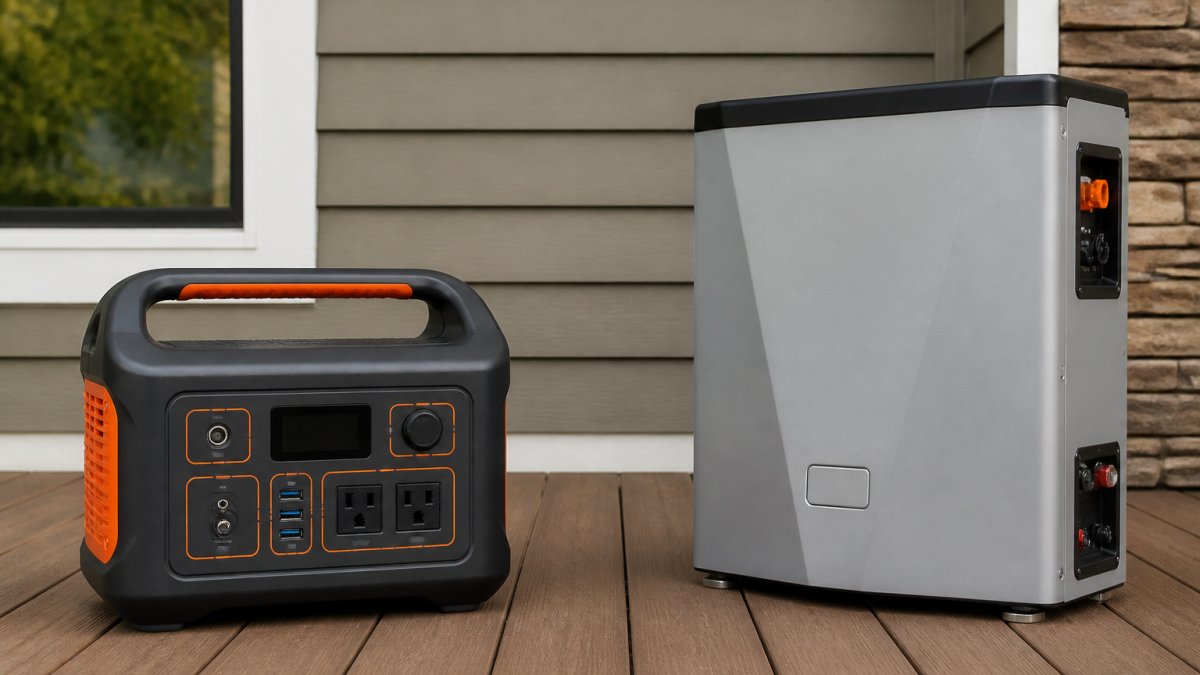
The difference between a solar generator and a home battery comes down to scale and wiring: a solar generator is a portable battery unit with built-in outlets that you roll out during an outage, while a home battery is a permanently installed system wired into your electrical panel to power your whole house.
They aren't.
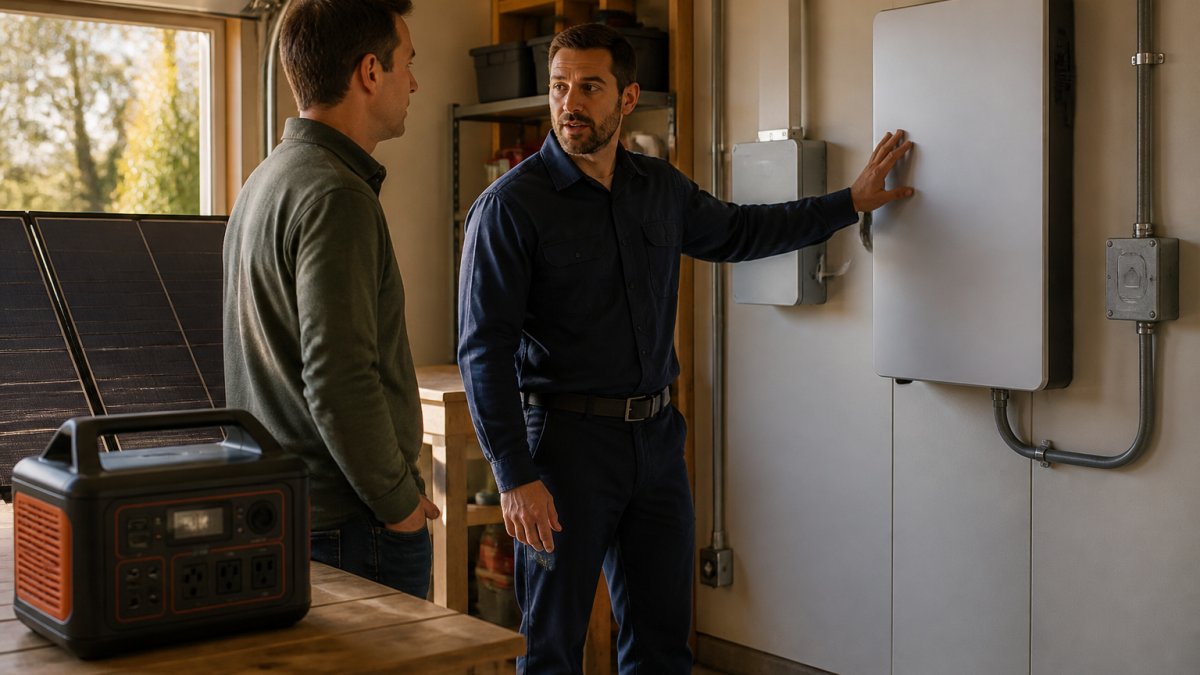
A solar generator is a self-contained box that stores energy and delivers it through standard outlets, usually with a solar panel for recharging. A home battery is a fixed storage system, often paired with rooftop solar, that feeds your breaker panel automatically when the grid drops.
Why the Term 'Solar Generator' Confuses Buyers
Here's the trap. A solar generator doesn't generate anything. It stores electricity in a battery bank and releases it through an inverter. The solar panel is just one way to recharge it.
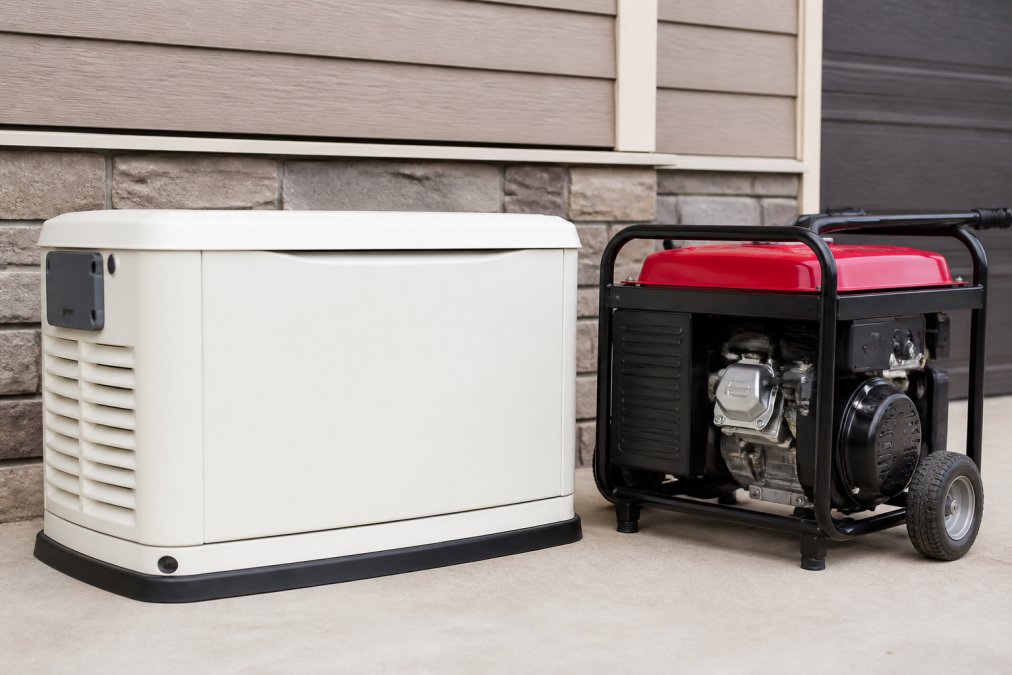
A common mistake is assuming the word "generator" means fuel, noise, and exhaust. It doesn't here. These units run silent, produce no emissions, and can be used indoors because there's no carbon monoxide risk. That's a genuine advantage over a gas backup generator, but it also means the runtime is capped by battery capacity, not by a fuel supply you can refill.
So when you compare a solar generator vs home battery, you're really comparing a portable battery to a permanent one. Same core technology, very different job.
Upfront Costs, Installation, and Permitting
Cost is where these two products diverge most, and it's also where most guides stay vague. Here's the structure you're actually paying for.
Portable solar generator (portable power station)
- No installation labor, no electrician, no permit, no inspection.
- You pay for the unit plus, optionally, folding solar panels.
- Cost scales almost linearly with capacity: a small unit that runs a router and phones sits at the low end, while a large unit capable of running a fridge and a sump pump sits several times higher.
- The only "installation" is deciding where to store it and how to route the solar panel outside.
Home battery (permanently installed storage)
A home battery quote is really four line items stacked together:
- Battery and inverter hardware, the storage unit itself, plus either a dedicated battery inverter or a hybrid inverter that also manages solar.
- Electrical integration, a transfer switch, an automatic transfer switch, or a critical-load subpanel so selected circuits can run off the battery when the grid drops.
- Labor, mounting, conduit, wiring, and commissioning by a licensed electrician.
- Permitting and inspection, a building/electrical permit and a passed inspection before the system can be energized.
Because those four items vary so much by home, a single national price is misleading.
The lifetime cost angle most guides skip
Purchase price is only the entry fee. Total cost of ownership includes:
- Cycle life and depth of discharge. Lithium iron phosphate (LiFePO4) cells generally tolerate more full charge cycles than older lead-acid designs, and keeping depth of discharge moderate (rather than draining to zero every outage) stretches calendar life. A battery cycled gently can last meaningfully longer than one cycled hard.
- Degradation. All lithium batteries lose capacity over time. A battery that starts at a given usable capacity will deliver less of it years later, which matters when you sized it tightly for a specific load.
- Warranty terms. Home battery warranties typically combine a time period with a throughput or cycle limit, read both, because the cycle cap is often what you hit first.
- Replacement. A home battery is replaced professionally, as a system, not swapped at a hardware store. A portable unit's battery degrades the same way, but you replace the whole box, which is simpler and usually cheaper per event.
How to compare quotes fairly
When you get bids, ask each installer to break out hardware, integration, labor, and permitting separately, and to state the usable capacity in kilowatt-hours, the continuous and surge output in watts, the cycle/throughput warranty limit, and the expected degradation. Two quotes with the same bottom line can represent very different systems once those numbers are on the table.
Home Battery Backup Runtime: How Long Will It Last?
Runtime is the number buyers care about most and the one most often calculated wrong.
Runtime (hours) = Usable capacity (kWh) ÷ Load (kW)
"Usable" is the key word.
| Appliance | Typical Running Watts | Hours on a 10 kWh Battery |
|---|---|---|
| Refrigerator | 150 | ~66 hours |
| Internet router + laptop | 100 | ~100 hours |
| Sump pump | 800 | ~12 hours |
| Well pump | 1,000 | ~10 hours |
| Central AC | 3,500 | ~2.8 hours |
Surge power matters too. Motors on fridges, pumps, and AC units pull two to three times their running watts for a split second at startup.
The part most guides leave out: recharging
Runtime math assumes the battery stays charged. In a real outage, what keeps it alive is how you refill it. There are three paths, and they behave very differently.
- Solar charging. Solar input depends on panel wattage, sun angle, shading, and season. A clear summer day produces far more than a short, low winter day. Cloudy weather can cut production substantially, and consecutive overcast days can leave you with little to no recharge, which is why a solar-only battery is best thought of as a daytime top-up, not a guaranteed daily refill.
- Grid charging. When the grid is up, the battery recharges from the utility. This is the normal operating mode and is irrelevant during an outage, since the grid is what failed.
- Generator charging. A fuel generator can recharge a home battery during a long outage, which is the core logic behind a hybrid setup. Recharge time depends on the generator's output and the battery's charge acceptance rate, a small generator will refill a large battery slowly.
A worked example
Take our 60-second quiz for a free quote today! →
Suppose you want to keep a refrigerator (150 W), a router and laptop (100 W), and a few LED lights (say 60 W) running, about 310 W total.
What this means for sizing
- Size for your longest realistic outage, not the average one.
- Add up surge wattage for everything that might start at once, not just running watts.
- If you rely on solar recharge, plan for cloudy days by oversizing capacity or pairing with a generator.
- If you rely on a generator to recharge, confirm the generator's output can actually refill the battery in a reasonable window.
Portable Solar Generator for Home Use: Where It Fits
A portable solar generator for home use is best for critical loads, not whole-house backup. Think internet, a laptop, phone charging, a CPAP machine, a few lights, and a fridge if you size up.
For remote workers, this is often the practical answer. You can't run central air on one, but you can absolutely keep your router and workstation alive through a multi-day storm. Pair it with a folding solar panel and you can recharge during daylight without touching the grid.
Where portability wins: apartments, renters, and anyone who wants backup without a permanent install. Where it loses: whole-home coverage, high-draw appliances, and extended outages where you'd need to keep recharging.
The Best Battery for Home Solar System: Chemistry and Lifespan
The best battery for a home solar system is almost always lithium iron phosphate (LiFePO4) for new installations, because it balances safety, cycle life, and cost better than older chemistries.
Two things drive lifespan: chemistry and how hard you cycle it. LiFePO4 cells generally tolerate more charge cycles than older lead-acid designs and hold up better in hot garages. Depth of discharge matters too. Draining a battery to zero every outage shortens its life; keeping it in a moderate range stretches it.
Replacement economics are the part most guides skip. A home battery is a long-term asset, and when it eventually degrades you're looking at a professional replacement, not a swap at the hardware store. A portable unit's battery degrades the same way, but you replace the whole box.
Home Battery and Generator Together: A Hybrid Backup Strategy
A home battery and generator together cover each other's weaknesses, and for many households that's the smartest configuration.
The battery handles the first hours of an outage instantly and silently, so your lights don't even flicker. When the outage stretches into days, a fuel generator or a larger solar array recharges the battery and carries the heavy loads. You get quiet, instant response plus long-duration endurance.
The trade-offs are real. A hybrid setup costs more upfront and needs more integration work, including a transfer switch and proper load management. But if you live somewhere that sees both short blips and multi-day ice storms, the combination beats either option alone.
U.S. Department of Energy guidance on home energy storage
Which Backup Power Solution Is Right for You?
Neither option is universally better. The right choice depends on what you need to keep running and for how long.
Choose a portable solar generator if:
- You rent or don't want permanent installation
- You need to protect internet, computers, and a few essentials
- Your outages are usually short
- You want zero permitting and zero wiring
Choose a home battery if:
- You want automatic whole-home or critical-load backup
- You're pairing with rooftop solar
- You need high-draw appliances like AC or a well pump covered
- You're planning for long-term energy independence
Choose a hybrid system if you face both frequent short outages and occasional extended ones, and you want the strengths of each.
The real challenge isn't picking a technology, it's sizing it correctly for your home, your appliances, and your outage patterns. Generators of Nashville by Evolution Electric has installed backup power across Middle Tennessee since 2014, and our licensed electricians handle everything from portable solar generators to full home battery systems and Generac standby units, including the wiring and permitting that trips up DIY installs. Take our 60-second quiz for a free, personalized quote and get a system built around what you actually need to keep running.
Frequently Asked Questions
What is the difference between a solar generator and a home battery?
A solar generator is a portable power station with a built-in battery and inverter that you can move and plug devices into directly. A home battery is a permanently installed system wired into your electrical panel that can back up your whole house or selected circuits. The solar generator vs home battery choice comes down to portability versus whole-home capacity and integration.
Can I use a home battery and generator together during an outage?
Yes. Pairing a home battery with a standby generator gives you instant battery response for short outages and generator power for extended ones. The battery handles small loads and smooths the generator's output, while the generator recharges the battery and runs heavy appliances. This hybrid setup is common for homeowners who want both speed and endurance.
How long can a home battery backup runtime last during a power outage?
Runtime depends on your battery's energy capacity and which circuits you back up. A typical home battery backing up essential loads like a refrigerator, internet router, lights, and phone chargers can last 12 to 24 hours or more. If you back up heavy loads like air conditioning or an electric water heater, runtime drops significantly. Adding solar panels or a generator extends it indefinitely.
What is the best battery for a home solar system?
Lithium iron phosphate (LFP) batteries are widely used for home solar systems because they offer long cycle life, thermal stability, and no maintenance. The best choice depends on your energy needs, whether you want whole-home or partial backup, and whether the system integrates with your existing solar inverter. A licensed electrician can size the battery to match your household consumption and backup goals.