 ultimate-guide
Whole Home Generator Installation Cost 2026: Complete Guide
Table of Contents
- Whole Home Generator Installation Cost 2026: What Drives the Price
- Generac Generator Installation Cost Breakdown
- Whole Home Generator Sizing Guide: Matching Capacity to Your Home
- Hidden Costs: Electrical Panel Upgrades and Service Work
- Backup Generator Maintenance Requirements and Long-Term Ownership
- Permits, Code Compliance, and Professional Installation
- Frequently Asked Questions
Last Updated: September 10, 2026
Whole Home Generator Installation Cost 2026: What Drives the Price
The whole home generator installation cost 2026 homeowners face rarely matches the sticker price on the unit itself. At Generators of Nashville by Evolution Electric, we've quoted enough Middle Tennessee homes since 2014 to know the pattern: the generator is often the smallest line item on the final invoice. Labor, electrical work, fuel connections, and permits fill the rest.
That surprises people. It shouldn't.
U.S. Department of Energy guidance on home backup power notes that a properly sized standby system is an infrastructure project, not an appliance purchase. Understanding what drives the price helps you budget realistically and spot an inflated quote before you sign.
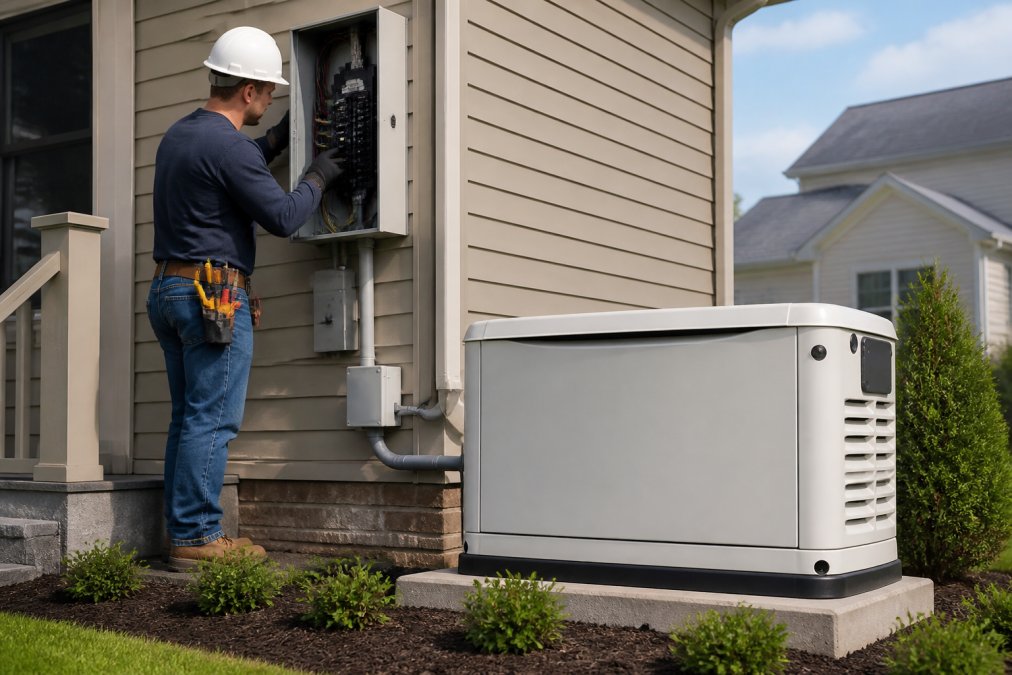
Unit Capacity and Kilowatt Rating
Capacity is the single biggest cost lever. A 10 kW unit that covers essentials costs far less than a 22 kW system sized to run central air, a well pump, and an electric range at once. Price scales with kilowatt capacity, and so does the supporting infrastructure.
Fuel Source: Natural Gas vs. Liquid Propane
Homes with an existing natural gas line usually pay less for fuel hookup. Liquid propane requires a tank and delivery setup, which adds cost but works where gas service doesn't reach.
| Factor | Natural Gas | Liquid Propane |
|---|---|---|
| Fuel connection | Existing line, simpler | Tank required |
| Runtime during outage | Unlimited while supply holds | Limited by tank size |
| Best for | Suburban gas-served homes | Rural or off-grid properties |
Generac Generator Installation Cost Breakdown
A Generac generator installation cost estimate typically bundles four things: the unit, the automatic transfer switch, labor, and site work. The transfer switch is the component most homeowners forget, and it's essential. Without it, your system can't safely isolate from the grid.
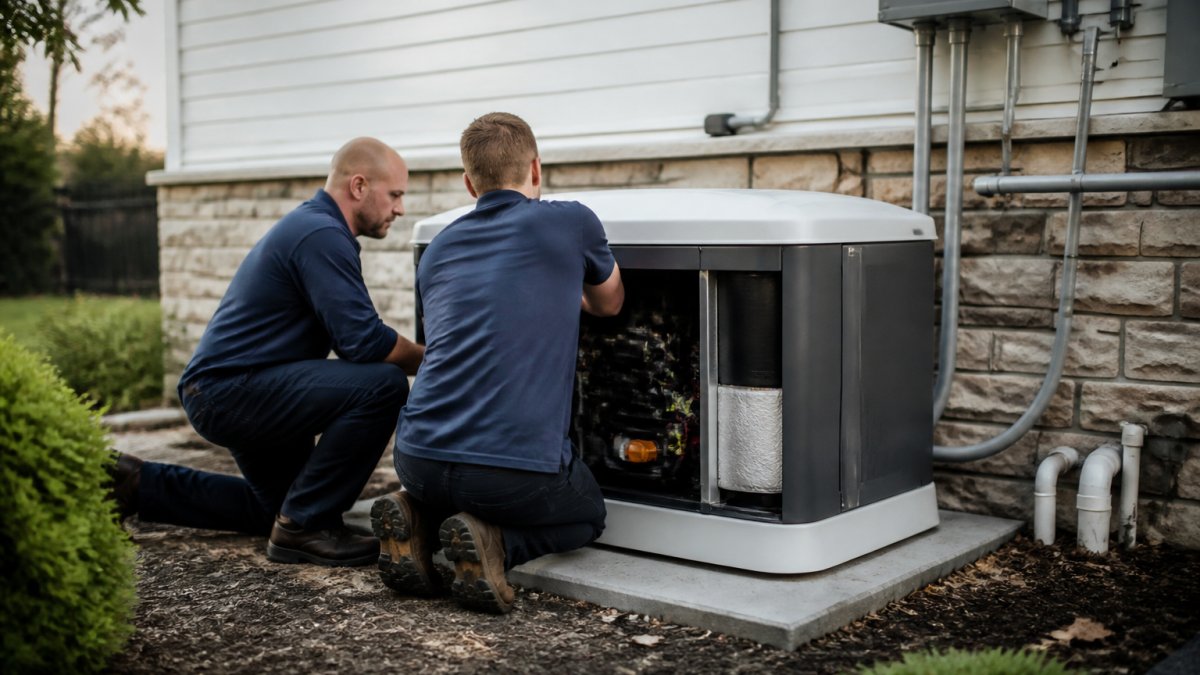
Professional electricians handle the wiring, grounding, and transfer switch installation. This is not a weekend DIY job. Backfeeding a panel during an outage endangers utility crews and violates code.
Whole Home Generator Sizing Guide: Matching Capacity to Your Home
A whole home generator sizing guide starts with one number: your electrical load calculation. Not the square footage of your house, not the number on the side of your neighbor's unit. The load calculation.
Here is the mechanism. Every appliance and motor has two ratings:
- Running watts, what it draws once it is up to speed.
- Starting (surge) watts, the momentary spike when a motor first kicks on. A central AC compressor, a well pump, and a furnace blower can each pull two to three times their running watts for a fraction of a second.
A generator must cover running watts for everything you want on at once, plus the largest single surge on the circuit. That is why a home with 8 kW of running load can still need a 14 kW or larger unit, the AC compressor's startup spike sets the floor.
How a Real Load Calculation Works
A licensed installer walks the panel and records nameplate data, then groups loads into three buckets:
- Continuous loads, lights, internet, refrigerator, sump pump. These run the whole outage.
- Intermittent loads, well pump, furnace blower, microwave, garage door. These cycle.
- Motor loads with surge, AC condenser, heat pump, air handler, pool pump. These drive the sizing decision.
The calculation applies demand factors rather than simply adding every nameplate. A common pattern is to count the largest motor at full surge, then add the rest at running watts. The result is your minimum kW.
The Three Practical Tiers
Most single-family homes land in one of three bands:
- Essential circuits only (fridge, furnace, internet, a few lights and outlets): typically 7.5 kW to 10 kW. Lowest unit cost, smallest transfer switch, simplest install.
- Whole home minus heavy loads (everything except central AC, electric range, EV charger, or electric dryer): typically 14 kW to 18 kW, paired with load-shedding modules that automatically drop the heavy circuits when the generator is near capacity.
- True whole-home coverage (everything runs simultaneously, including central AC and electric cooking): typically 22 kW to 26 kW and up. Largest unit, largest transfer switch, and often the largest electrical service requirement.
Load Shedding Changes the Math
A load-shedding module is a small relay that the transfer switch controller can open on command. When the generator senses it is approaching its rated capacity, it temporarily drops a shed-able circuit, usually the AC, the range, or the EV charger, then restores it when load falls. This lets a 14 kW unit serve a home that would otherwise need a 22 kW unit, and it is often the single biggest cost lever after fuel source.
Ask any installer whether their quote includes load-shedding modules and which circuits they plan to shed. If the answer is vague, the sizing is a guess.
What to Ask Before You Sign
- What is my calculated running load and surge load, in writing?
- Which circuits are on the essential panel, and which are shed?
- Does the quote assume my existing service amperage is adequate?
- What happens if I add central AC or an EV charger later?
An honest installer runs a site assessment and a real load calculation. If a quote skips that step, it is a guess, and an undersized unit will nuisance-trip during the exact outage you bought it for.
Hidden Costs: Electrical Panel Upgrades and Service Work
The hidden costs of electrical service upgrades catch more homeowners off guard than any other line item. Older panels may lack the capacity or physical space for a generator feed. A panel upgrade, sub-panel, or new grounding work can add significant expense, and it's often unavoidable for code compliance.
Ask every installer one question: does this quote assume my existing panel is adequate? Get it in writing.
NFPA 70 National Electrical Code information governs how these connections must be made. Code compliance isn't optional, and it's the reason licensed work costs more than a handyman's estimate.
Backup Generator Maintenance Requirements and Long-Term Ownership
Backup generator maintenance requirements determine your true ten-year cost. Purchase price is the entry fee; ownership is the marathon. Almost every guide stops at the install invoice. This section does not.
The 10-Year Total Cost of Ownership Model
Total cost of ownership (TCO) for a standby generator has five buckets. Stack them and the picture changes fast:
- Upfront install, unit, transfer switch, labor, fuel hookup, permits, site work.
- Scheduled maintenance, annual service visits, oil and filter changes, spark plugs, valve adjustments on air-cooled units.
- Consumables and wear items, starting battery (typically replaced every three to five years), belts, hoses, and the controller battery on some models.
- Fuel, natural gas billed monthly during outages, or propane refills on rural systems.
- Unscheduled repair reserve, a realistic allowance for a failed starter, alternator, or controller over a decade.
What Annual Service Actually Covers
A typical annual service visit includes:
- Oil and oil filter change
- Air filter inspection or replacement
- Spark plug inspection or replacement
- Battery load test and terminal cleaning
- Coolant check on liquid-cooled units
- Exercise-cycle verification under load
- Visual inspection of fuel lines, exhaust, and enclosure
Most manufacturers require documented annual service to keep the warranty valid. Skip it and you may find out the hard way that the warranty was void the whole time.
Fuel Consumption During an Outage
Fuel is the variable most homeowners underestimate. A common pattern:
- Natural gas units draw from the meter, so there is no refill logistics, but a multi-day outage shows up on your gas bill, and the unit's demand can push you into a higher usage tier.
- Propane units burn from a tank. A 500-gallon tank at half-full may only carry a mid-size air-cooled unit for a few days at partial load (generac.com). Extended outages mean scheduling a refill, and during a regional outage, every propane customer in the area is calling at once.
Size your propane tank for the longest outage you realistically expect, not the average one.
Battery Replacement and Exercise Cycles
The starting battery is the most common failure point on any standby generator. It sits idle for months, then is asked to crank a cold engine at 2 a.m. in a storm. Most practitioners recommend replacing it on a fixed interval, commonly every three to five years, rather than waiting for it to fail.
Weekly exercise cycles (usually 10 to 15 minutes, unloaded or lightly loaded) keep the battery charged, circulate oil, and confirm the controller is working. If your unit is not exercising on schedule, that is the first thing to diagnose.
A Simple Way to Compare Quotes
When two quotes differ by a few thousand dollars, do not compare the install price. Compare the ten-year number:
- Install price
- Plus 10 years of annual service at your local rate
- Plus two battery replacements
- Plus a repair reserve
- Plus estimated fuel for your expected outage hours
The lowest install quote is frequently not the lowest ten-year cost, especially if it uses a smaller unit that runs at higher load, burns more fuel, and wears faster.
Ask every installer for a written 10-year ownership estimate alongside the install quote. The company that can produce one is the company that has thought about what happens after the truck leaves.
Permits, Code Compliance, and Professional Installation
Building permits and inspections add cost and time, but they protect you. Your local jurisdiction sets the rules, and a turnkey installation should include pulling permits, coordinating the utility interconnection, and passing final inspection.
This is where cheap quotes fall apart. An unpermitted install may work fine until you sell the home, file a claim, or the utility discovers an unsafe connection.
Frequently Asked Questions
How much is a generator for a 2000 sq ft house installed?
A 2000 sq ft home typically needs a 14kW to 20kW standby generator to run essential systems and central air. The installed cost depends on whether your home has natural gas, how far the unit sits from the meter, and whether your electrical panel needs an upgrade. Most homeowners should budget for the generator, automatic transfer switch, concrete pad, wiring, and labor as separate line items. Request a site assessment for an accurate quote.
What factors influence the total installation cost of a backup generator?
The biggest cost drivers are kilowatt capacity, fuel source (natural gas vs. liquid propane), distance from the fuel supply to the unit, transfer switch amperage, and whether your electrical panel can handle the added load. Site preparation, concrete pad installation, permits, and labor rates in your area also affect the final price. A home that needs a sub-panel or service upgrade will pay more than one that does not.
Does the installation cost include the transfer switch and gas line work?
Not always. Many advertised prices cover only the generator unit itself. A turnkey installation quote should itemize the automatic transfer switch, electrical wiring, gas line connection or propane tank setup, concrete pad, and permit fees. Ask your installer for a written breakdown so you can compare quotes accurately. If a price seems too low, confirm what is excluded.
How does the size of my home affect the generator wattage I need?
Square footage is a starting point, but wattage requirements depend on which appliances and systems you want to run during an outage. A 2000 sq ft home with central AC, well pump, refrigerator, and furnace may need 14kW to 20kW. Larger homes or those with electric heat, multiple AC units, or EV chargers may need 22kW or more. A licensed electrician performs an electrical load calculation to size the system correctly.
What are the ongoing maintenance costs for a whole home generator?
Standby generators require annual professional servicing, typically including oil and filter changes, spark plug inspection, battery testing, and a transfer switch check. Backup generator maintenance requirements also include monthly self-test cycles and keeping the unit clear of debris. Budget for an annual service visit and occasional replacement parts. Skipping maintenance can void warranties and lead to failure during a power outage.
Is a whole house generator a tax write-off?
In most cases, a whole home generator is not tax-deductible for a primary residence. However, if you use the generator exclusively for a home office or medical necessity, consult a tax professional about potential deductions. Some states offer incentives for backup power systems, but federal tax treatment varies. Keep all receipts and documentation for your records.
Planning backup power means weighing unit price against the full scope of electrical work, fuel setup, permits, and a decade of maintenance. Generators of Nashville by Evolution Electric handles that entire chain: licensed electricians, authorized installation of Generac, EcoFlow, Anker SOLIX, and Jackery systems, and E4G whole-home backup built for Middle Tennessee outages. Get a free, personalized quote and skip the guesswork. Take our 60-second quiz and start your backup power plan today.