 ultimate-guide
Is a Whole Home Generator Worth It in 2026?
Table of Contents
- What a Whole Home Generator Actually Costs
- Standby Generator vs Portable Generator: Which Fits?
- How Fuel Consumption Rates Affect Your Budget
- Calculating the Long-Term ROI of Backup Power
- Maintenance, Resale Value, and Insurance Implications
- The Downsides Most Installers Won't Mention
- Making the Call: Is It Worth It for Your Home?
- Frequently Asked Questions
Last Updated: September 8, 2026
The question of whether a whole home generator is worth it usually surfaces right after the power goes out, not before. When a storm knocks out your electricity for three days, the cost of a backup system suddenly feels small compared to the cost of a ruined refrigerator, a flooded basement, or a week of lost remote work. But making a smart decision requires looking at the full financial picture, not just the sticker price. At Generators of Nashville by Evolution Electric, we have been installing these systems since 2014, and we provide expert guidance on their value.
A whole home generator is a permanently installed, automatic backup power system that restores electricity to your house within seconds of an outage. It runs on your existing natural gas line or a propane tank, and it does not require you to go outside in a storm to flip a switch. The real question is whether the investment makes sense for your home, your outage history, and your budget.
What a Whole Home Generator Actually Costs
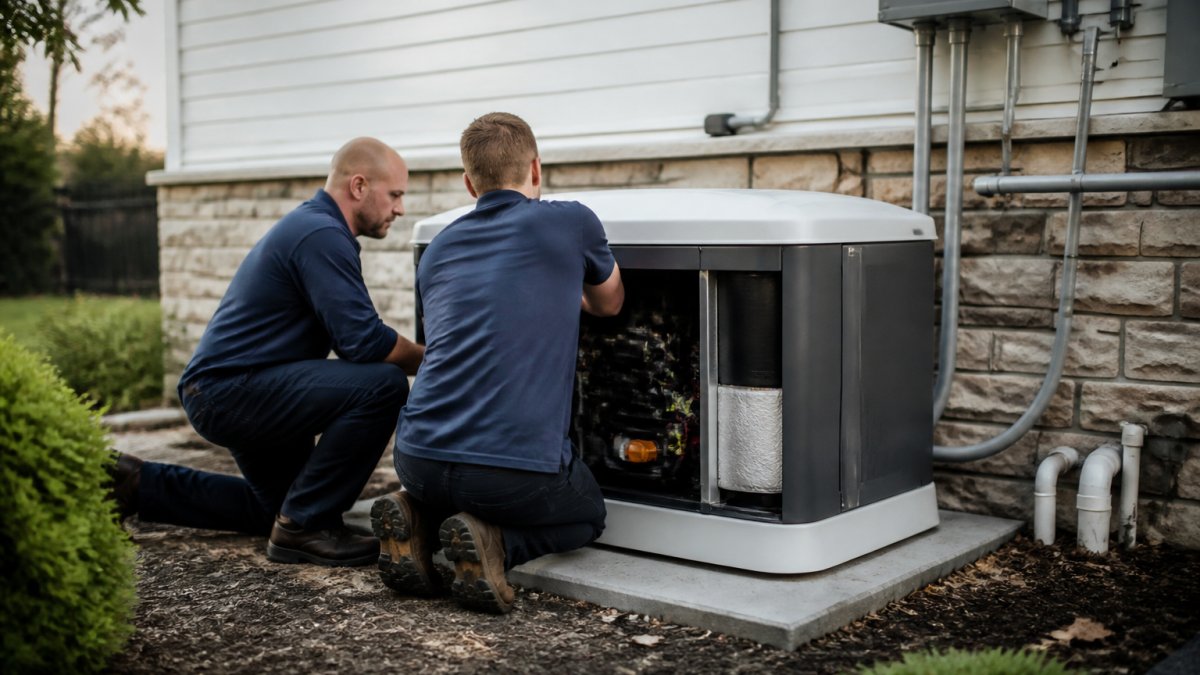
The purchase price of the unit itself is only the starting point. A complete installation involves a concrete pad, a dedicated electrical panel connection, an automatic transfer switch, gas line work, and permits. Professional installation is not optional for these systems because they connect directly to your home's electrical infrastructure and fuel supply.
Most homeowners find that the total installed cost is several times the price of the generator unit alone. The equipment cost scales with your home's power requirements, which are measured in kilowatts. The more circuits you want to back up, the larger the unit you need.
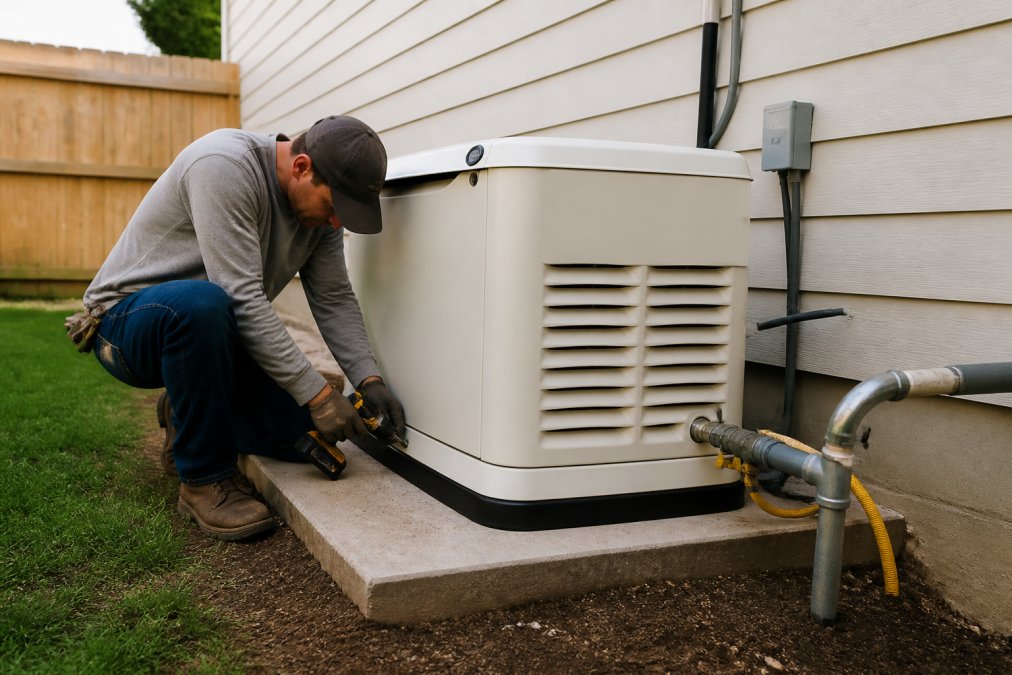
To give you a realistic picture, here is how the total project cost typically breaks down for a mid-sized home requiring a 22kW air-cooled unit:
| Cost Component | Typical Range | Notes |
|---|---|---|
| Generator Unit (22kW) | $4,500 - $7,500 | Air-cooled models are the most common for residential use. Liquid-cooled units (e.g., 38kW+) cost significantly more. |
| Automatic Transfer Switch | $500 - $1,200 | Often bundled with the generator, but can be a separate line item. |
| Concrete Pad | $300 - $800 | Must meet local frost depth and code requirements. |
| Electrical Labor & Panel Work | $1,500 - $3,500 | Includes wiring, breaker installation, and any needed panel upgrades. |
| Gas Line Connection | $500 - $2,000 | Requires a licensed plumber or gas fitter. Costs rise if the run is long or requires trenching. |
| Permits & Inspections | $200 - $600 | Varies by municipality. |
| Total Installed Cost | $7,500 - $15,000+ |
These figures are based on industry averages from sources like the U.S. Department of Energy and contractor pricing surveys. Your actual quote will depend on your home's specific electrical panel configuration, the distance from the unit to your gas meter, and local labor rates. Homes with older 100-amp panels often require a panel upgrade to 200-amp service, which can add $1,500 to $3,000 to the total project cost.
Standby Generator vs Portable Generator: Which Fits?
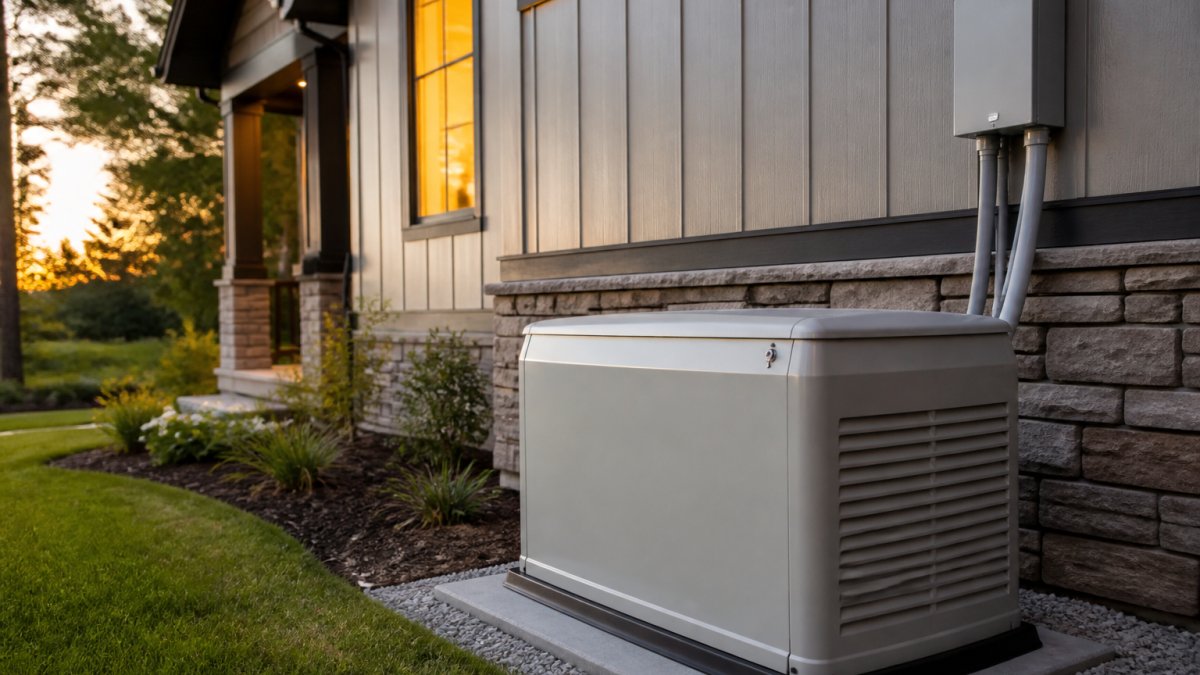
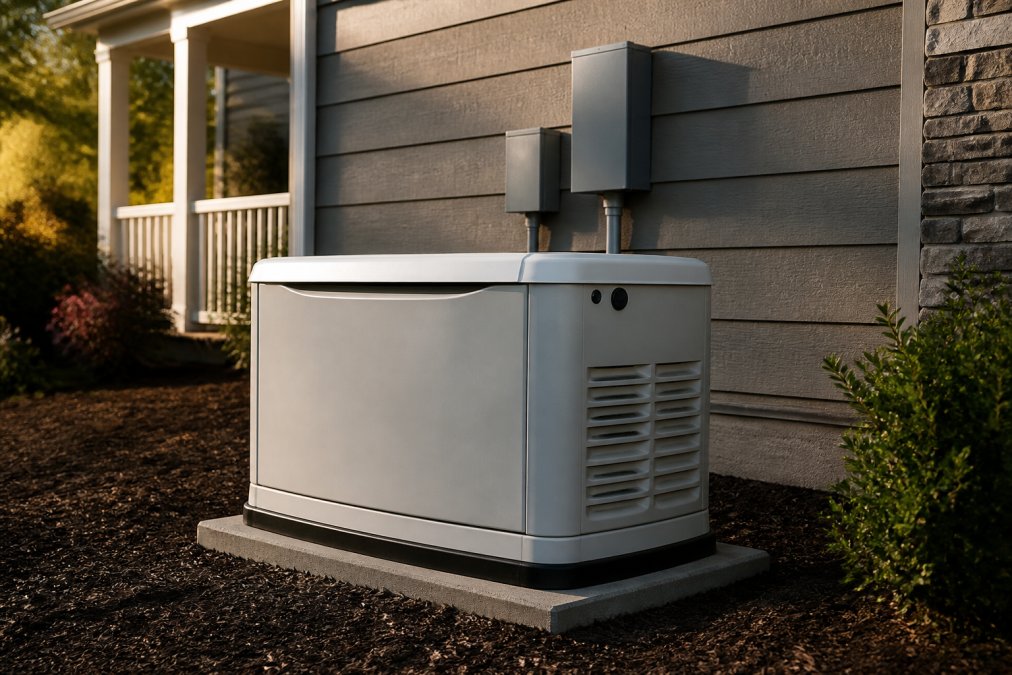
A standby generator sits permanently outside your home, much like a central air conditioning unit. It is hard-wired into your electrical system and turns on automatically when it detects a power loss. A portable generator, by contrast, is a rolling unit you wheel out during an outage, connect with extension cords, and fuel yourself.
The standby generator vs portable generator decision comes down to three factors: convenience, coverage, and cost. Portable units are far cheaper upfront, but they only power what you can physically plug into them, and they require you to store fuel and manually start the unit in potentially dangerous weather.
Standby generators offer what the industry calls worry-free operation. The automatic transfer switch monitors your utility power constantly, disconnecting your home from the grid and connecting it to the generator within seconds of an outage, then reversing the process when power returns. You do nothing.
| Feature | Standby Generator | Portable Generator |
|---|---|---|
| Installation | Professional, hard-wired | None, roll it out yourself |
| Power Coverage | Whole home or selected circuits | Only plugged-in devices |
| Fuel Source | Natural gas or propane | Gasoline or propane tanks |
| Startup | Automatic via transfer switch | Manual |
| Cost | Higher | Lower |
| Best For | Extended outages, remote work | Short outages, minimal needs |
How Fuel Consumption Rates Affect Your Budget
A whole home generator runs on either natural gas or propane, and your choice affects both your operating costs and your resilience. Natural gas models connect to your existing utility line, which means unlimited fuel as long as the gas grid stays operational. Propane models store fuel on site in a tank, giving you independence from utility infrastructure but requiring you to monitor and refill the tank.
Fuel consumption rates vary significantly based on the load the generator is carrying. A unit running at half capacity to power lights, a refrigerator, and a furnace consumes far less fuel than one running at full capacity to power central air conditioning, an electric water heater, and a well pump.
For propane systems, size your tank so it can sustain your home for at least a week of continuous operation, accounting for the fact that you may not be able to refill during a widespread emergency.
Calculating the Long-Term ROI of Backup Power
The return on investment for a whole home generator is not a simple calculation because the primary benefit is intangible: peace of mind. But you can quantify several concrete financial factors that contribute to the value equation.
First, consider the cost of an extended outage. Food spoilage, hotel stays, and emergency repairs to frozen pipes or flooded basements can add up quickly. For remote workers, an outage also means lost income.
Second, think about appliance protection. Power surges when electricity returns can damage sensitive electronics, including your HVAC system, refrigerator compressor, and home entertainment equipment. A generator with surge protection safeguards these expensive investments. battery backup systems.
Insurance implications are another factor many homeowners overlook. While a generator itself does not typically lower your homeowners insurance premium, it can prevent the kind of damage that leads to claims, such as frozen pipes, water damage from sump pump failures, and food spoilage.
Maintenance, Resale Value, and Insurance Implications
A whole home generator is mechanical equipment that requires regular attention. Preventative maintenance typically involves an annual inspection, oil changes, and battery testing. Many manufacturers recommend running the unit under load for a short period each month to ensure it starts when you need it.
The maintenance guidelines from the Federal Emergency Management Agency emphasize that generators need to be tested regularly to confirm they will operate during an emergency. This monthly exercise takes about 15 minutes and is essential for reliability.
The impact on home resale value is a point of genuine debate. A standby generator can make a home more attractive to buyers in areas prone to severe weather or unreliable grid service. However, the resale value rarely equals the full installation cost. Think of the generator as you would a new roof: it preserves your home's value and livability rather than serving as a pure investment.
The Downsides Most Installers Won't Mention
A whole home generator is not a perfect solution, and honest assessment requires acknowledging its limitations. These systems are loud. While modern units are quieter than older models, they still produce a noticeable hum that neighbors may hear during an outage. Placement matters, and local noise ordinances may restrict where you can install the unit.
Noise is often the single biggest source of neighbor complaints and buyer hesitation. Here is what you need to know about generator sound levels:
- Decibel ratings: Most residential air-cooled generators operate at 62-70 decibels (dB) at a distance of 23 feet (the standard measurement distance) (the CDC). For reference, a normal conversation is about 60 dB, and a vacuum cleaner is around 70 dB. Liquid-cooled units are quieter, typically 55-60 dB, because they run at lower RPMs.
- The 23-foot rule: The decibel rating is measured at 23 feet from the unit. If your generator is installed closer to a neighbor's window or your own patio, the perceived noise will be significantly higher. Every 10 dB increase represents a doubling of perceived loudness.
- Local noise ordinances: Many municipalities have noise restrictions that apply to generators. For example, some cities limit noise from stationary sources to 55 dB during the day and 50 dB at night in residential zones (the EPA). A generator running at 65 dB could violate these limits, especially during a nighttime outage. Check your local municipal code or zoning ordinance before installation.
- Mitigation strategies: You can reduce noise impact by installing the unit on the side of the house farthest from neighboring bedrooms, using a sound-attenuating enclosure (available from some manufacturers), or placing a rubber isolation pad beneath the unit to reduce vibration transfer. Landscaping with dense shrubs can also help, but never obstruct the generator's required clearance for airflow and maintenance.
Carbon monoxide safety is a serious consideration. The generator must be installed at a safe distance from windows, doors, and vents to prevent exhaust from entering your home. [EXTERNAL_LINK: Generators should never be operated indoors or in enclosed spaces. Professional installation ensures proper placement, but you should also install carbon monoxide detectors on every level of your home.
Fuel dependency is another factor. If you choose a natural gas model and the gas utility experiences a disruption, your generator will not run. This is rare but possible, particularly after major earthquakes or gas line failures. Propane systems avoid this risk but introduce the challenge of fuel storage and refilling.
The initial investment is substantial, and the system provides no benefit during the 99% of the time the power is working. For some homeowners, particularly those on tight budgets, the money might be better spent on other home improvements or an emergency savings fund.
Making the Call: Is It Worth It for Your Home?
The answer depends entirely on your circumstances. A whole home generator is worth it if you experience frequent or extended outages, if you work from home and depend on reliable internet and computers, if you have medical equipment that requires power, or if you simply value the comfort and safety of an uninterrupted home environment.
It is harder to justify if you rarely lose power, if outages in your area last only a few hours, or if the upfront cost would strain your finances. In those cases, a portable generator or a smaller battery backup system for essential devices may be a more sensible starting point.
The smartest approach is to get a professional assessment of your home's specific power needs before making any purchase. A home energy audit that identifies your peak load, your essential circuits, and your fuel options will prevent you from overbuying or underbuying.
At Generators of Nashville by Evolution Electric, we have been serving Middle Tennessee homeowners since 2014. Our licensed electricians can evaluate your home, size the right system, and handle every aspect of the installation, from permits to the final connection. We also offer solar and battery backup options for homeowners who want energy independence beyond traditional generators.
Frequently Asked Questions
How long will a 250 gallon propane tank last for a whole house generator?
A 250-gallon propane tank holds about 200 gallons of usable fuel. A typical 20-kilowatt standby generator burns roughly 2 to 3 gallons per hour under a normal household load. That means a full tank could run for 60 to 100 hours of continuous operation. During a multi-day outage where the generator cycles on and off, it could last one to two weeks. Your actual runtime depends on your generator's size and how much of your home you are powering.
What is the difference between a portable generator and a standby whole home system?
A portable generator runs on gasoline, requires manual setup during an outage, and powers selected appliances through extension cords. A standby generator is hard-wired to your home, runs on natural gas or propane, and starts automatically when the power goes out. Standby units handle your entire electrical panel, including your AC and well pump, without you lifting a finger. The tradeoff is cost: standby systems require professional installation and a higher upfront investment.
Is a whole home generator a tax write-off?
For most homeowners, a whole home generator is not tax-deductible. The IRS considers it a home improvement, not a medical expense or business cost. One exception: if you run a business from home and need the generator to protect equipment or maintain operations, you may be able to deduct a portion based on the percentage of business use. A remote worker employed by a company cannot claim this deduction. Consult a tax professional for guidance on your specific situation.
How often does a whole home generator require professional maintenance?
Plan on professional maintenance once a year. Most manufacturers, including Generac, recommend an annual tune-up that includes an oil change, filter replacement, and a full system test under load. This service keeps your warranty valid and ensures the unit starts when you need it. You should also run a self-test weekly, which most standby systems do automatically. Between professional visits, check for debris around the unit and confirm the battery is charging.
Deciding whether a whole home generator is worth it comes down to weighing the cost of inaction against the price of preparation. If extended outages threaten your comfort, your work, or your home's systems, the investment delivers real value. Take our 60-second quiz today to receive a free, personalized quote for your whole-home backup system, and let our team help you make the right call for your home.