 comparison
Battery Backup vs Standby Generator: 2026 Guide
Table of Contents
- Battery Backup vs Standby Generator: Head-to-Head Comparison
- How Each Battery Backup and Standby Generator System Works
- Whole Home Generator Installation Cost and Battery System Pricing
- How Long Does a Home Battery Last During an Outage?
- Backup Power System Maintenance: DIY vs. Professional Service
- Climate, Hybrid Systems, and Home Value Considerations
- Which Backup Power Solution Is Right for Your Home?
- Frequently Asked Questions
Last Updated: August 31, 2026
Battery Backup vs Standby Generator: Head-to-Head Comparison
The battery backup vs standby generator decision is one of the most consequential choices a homeowner makes for long-term energy resilience. Get it wrong, and you either overspend on capacity you'll never use or find yourself without power during the exact storm that matters most. At Generators of Nashville by Evolution Electric, we've guided homeowners through this decision since 2014, and the answer is almost never one-size-fits-all.
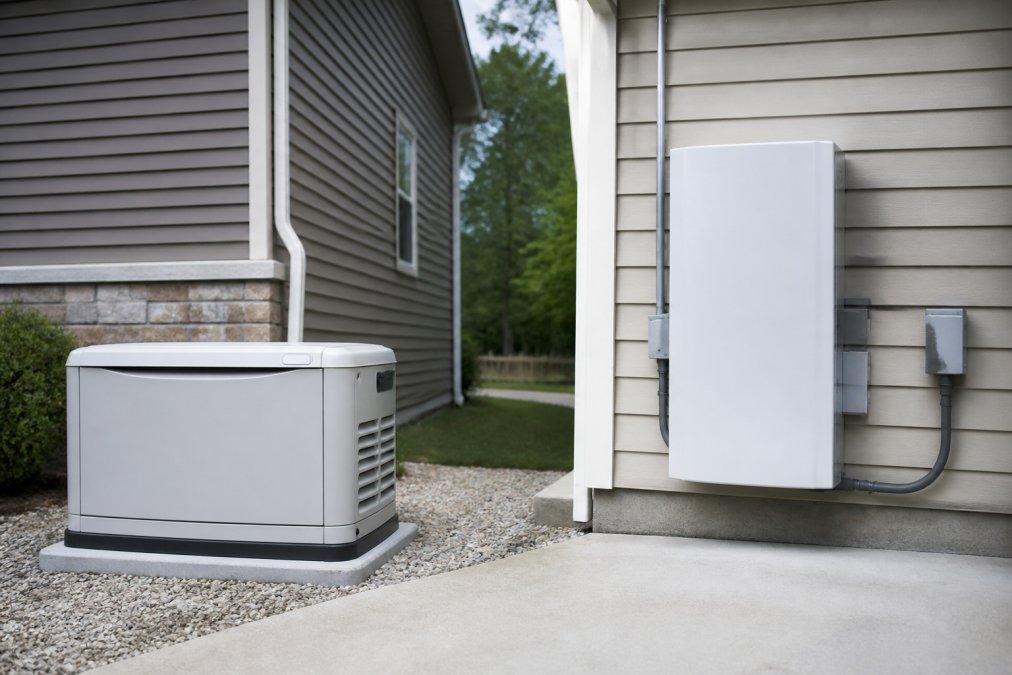
Battery backup systems are quiet, clean, and increasingly capable, but they carry finite energy storage measured in kilowatt-hours. Standby generators run on natural gas or propane and can operate for days or weeks without interruption, but they require fuel, produce emissions, and need professional installation with a dedicated fuel line. The right one depends on your home's energy load, your regional climate, and how long your outages typically last.
| Factor | Battery Backup | Standby Generator |
|---|---|---|
| Runtime | Limited by capacity (kWh) | Continuous with fuel supply |
| Fuel Source | Grid or solar charged | Natural gas or propane |
| Noise Level | Silent | 65-70 dB at 23 feet |
| Installation | Moderate complexity | High complexity, fuel line required |
| Emissions | Zero | Carbon emissions during operation |
| Best For | Short outages, solar integration | Extended outages, whole-home load |
| Automatic Switchover | Yes (20ms with smart panel) | Yes (automatic transfer switch) |
| Maintenance | Low, mostly software updates | Annual professional service required |
How Each Battery Backup and Standby Generator System Works
How Battery Backup Systems Work
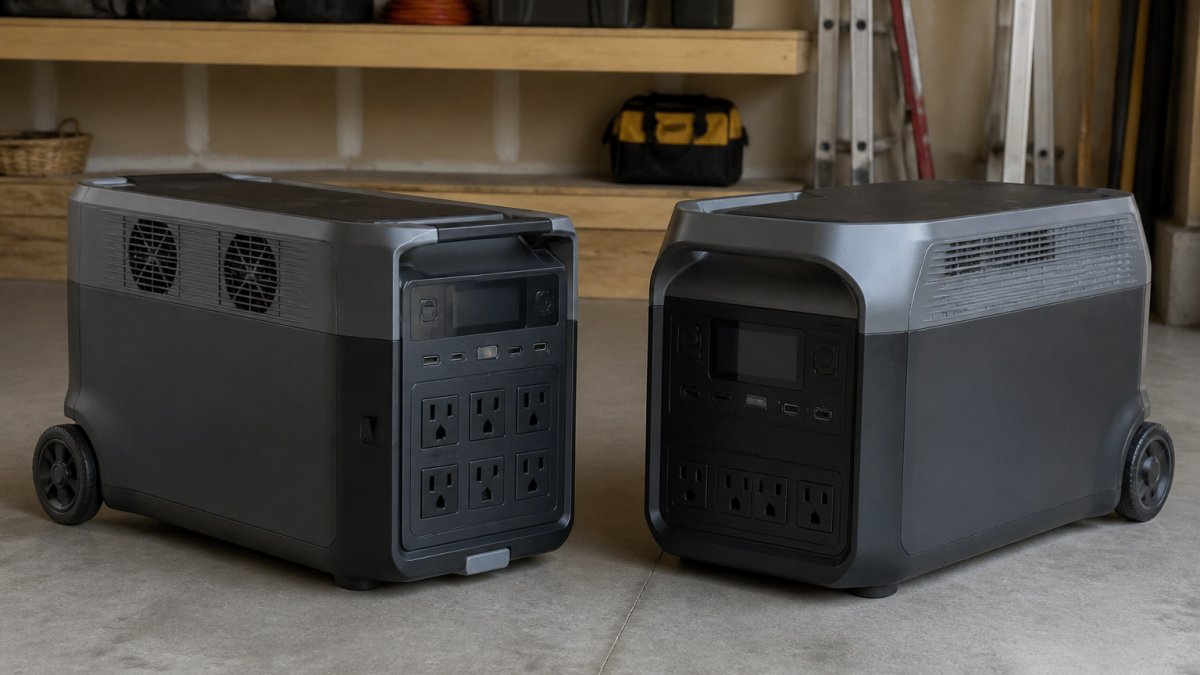
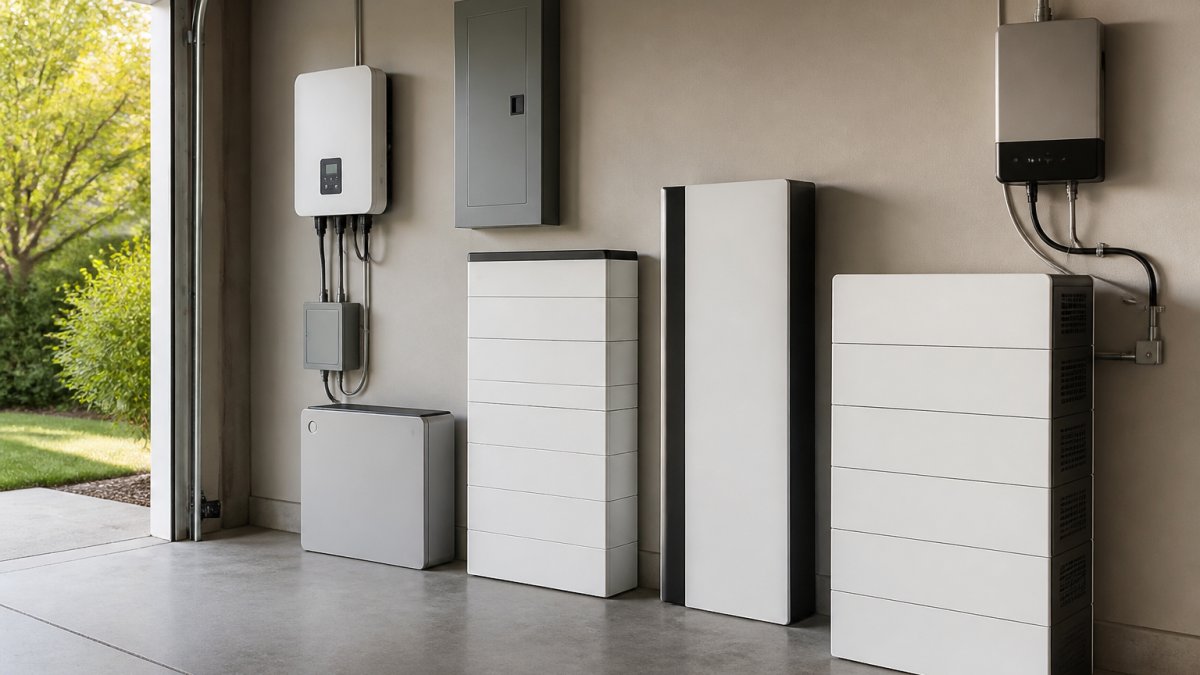
A battery backup system stores electrical energy in lithium iron phosphate (LFP) cells and discharges that energy through an inverter when grid power fails. The inverter converts stored DC power to the AC power your home's circuits use. Systems like the EcoFlow DELTA Pro Ultra use a smart home panel with an automatic transfer switch that triggers switchover in as little as 20 milliseconds.
Capacity is measured in kilowatt-hours. A 6 kWh base unit can run a refrigerator, several lights, and phone charging for roughly 12-24 hours depending on load. Expandable systems like the EcoFlow DELTA Pro Ultra scale from 6 kWh to 90 kWh, and the Anker SOLIX F3800 starts at 3,840 Wh and expands to 53.8 kWh with additional battery modules.
Most modern LFP batteries support 80-100% depth of discharge without significant lifespan degradation (peer-reviewed research). Solar integration is a major advantage: when paired with solar arrays, battery systems can recharge during daylight hours, extending effective runtime well beyond the raw kilowatt-hour capacity.
How Standby Generators Work
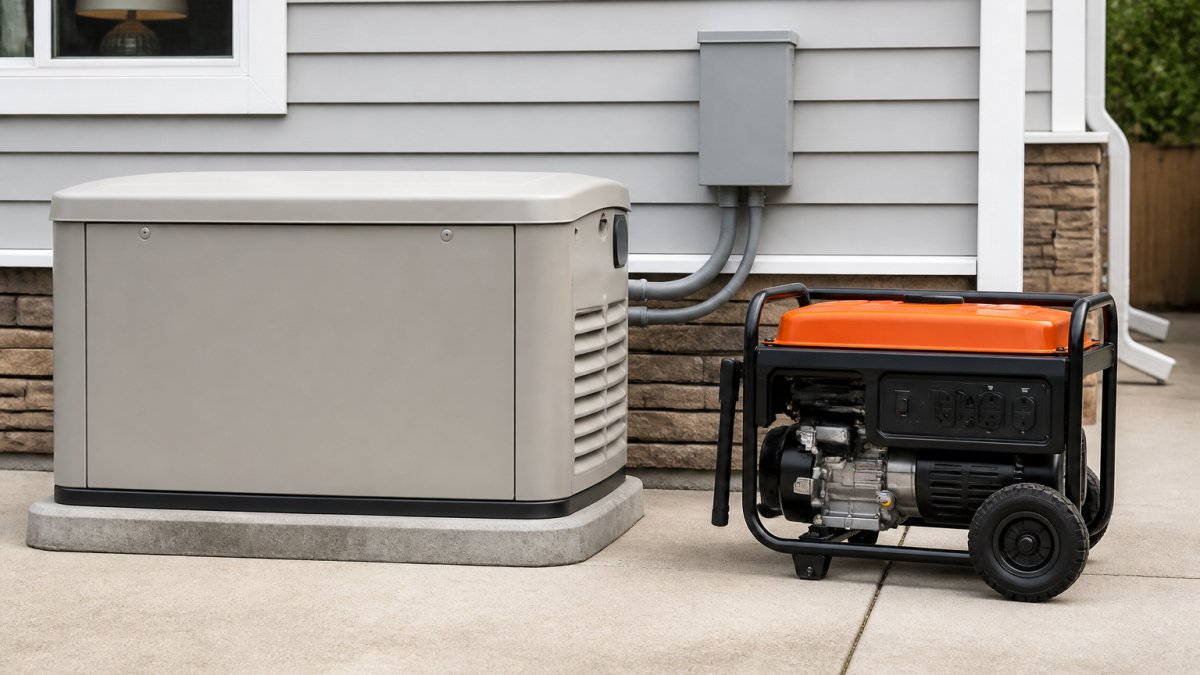
A standby generator is permanently installed and connected to your home's electrical panel via an automatic transfer switch. When grid power drops, the transfer switch detects the interruption and signals the generator to start, typically within 10-30 seconds. The generator then powers your home's circuits until grid power is restored.
Standby generators run on natural gas piped directly from the utility or on a propane tank installed on the property. This fuel arrangement enables continuous runtime, as long as fuel flows, the generator runs. The Generac Guardian Series uses True Power technology to deliver clean, stable electricity suitable for sensitive electronics.
The automatic transfer switch makes whole-home standby power hands-free. The system handles the transition automatically, which matters at 2 a.m. during an ice storm.
Whole Home Generator Installation Cost and Battery System Pricing
Standby generator equipment costs vary significantly by output capacity. For a complete picture of whole home generator installation cost, the variables are: your home's square footage, total electrical load, panel amperage, whether you need a new transfer switch, local permitting fees, and fuel line installation. There is no universal price that applies to every situation.
The U.S. Department of Energy's home energy resources notes that federal tax incentives may apply to battery storage systems installed alongside qualifying solar arrays, which can meaningfully offset upfront costs.
How Long Does a Home Battery Last During an Outage?
How long a home battery lasts during an outage depends entirely on total stored capacity in kilowatt-hours and your home's power consumption rate in kilowatts.
A 10 kWh battery powering a home drawing 1 kW continuously will last roughly 10 hours. The same battery powering a home drawing 3 kW, refrigerator, lights, television, and router, lasts closer to 3 hours. Add central air conditioning, which can draw 3-5 kW on its own, and a single 10 kWh unit may sustain whole-home comfort for only 1-2 hours.
This is why expandable systems matter. A 30 kWh configuration running the same 3 kW load lasts 10 hours. At 90 kWh, you're looking at 30 hours of continuous whole-home power without solar input. Add a solar array that generates 5-10 kW during daylight hours, and you may sustain indefinitely through a combination of solar generation and battery storage.
Standby generators don't have this runtime ceiling. They run continuously as long as natural gas supply is maintained or propane tanks are refilled. For extended outages measured in days or weeks, this is a decisive advantage that battery systems cannot match without significant solar infrastructure.
For most homes: a battery backup system handles outages up to 24-48 hours well, especially with solar charging. For outages longer than that, a standby generator or hybrid system is the more reliable choice.
Backup Power System Maintenance: DIY vs. Professional Service
Maintenance requirements differ sharply between these two technologies.
Battery backup systems require minimal physical maintenance. Primary tasks are firmware updates (handled through the manufacturer's app), periodic inspection of cable connections, and keeping the unit within its operating temperature range. Most manufacturers recommend a professional inspection every few years, but day-to-day ownership is largely passive.
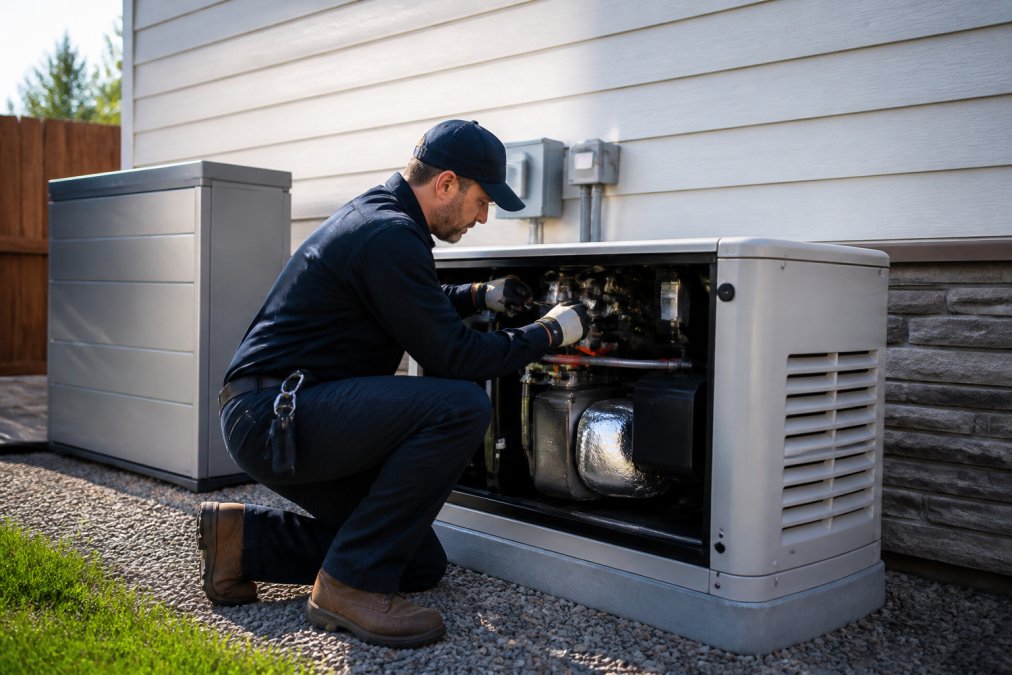
Standby generators require annual professional service that typically includes oil and filter changes, spark plug inspection, battery testing, coolant checks, and a full load test. The generator also runs a weekly self-test cycle automatically.
| Task | Battery Backup | Standby Generator |
|---|---|---|
| Firmware updates | DIY (app-based) | N/A |
| Connection inspection | DIY annually | Professional annually |
| Oil and filter change | N/A | Professional annually |
| Load testing | App-automated | Professional annually |
| Battery health check | App-automated | Battery replacement every 3-5 years |
| Fuel system inspection | N/A | Professional annually |
A common mistake is skipping annual generator service because the unit "seems fine." Generators that sit idle between outages can develop fuel system issues, stale oil, and battery degradation that only surface when you actually need the unit.
Climate, Hybrid Systems, and Home Value Considerations
Climate-Specific Performance
Climate shapes the battery backup vs standby generator decision more than most guides acknowledge. Extreme cold reduces lithium battery performance: most LFP batteries experience reduced output capacity at temperatures below 32°F, and some systems restrict charging in freezing conditions. In regions with harsh winters, a battery stored in an unheated garage may deliver significantly less than its rated capacity during winter outages.
Standby generators are generally more temperature-resilient, though they require block heaters in very cold climates to ensure reliable cold starts. In hot, humid climates, battery systems perform well but need adequate ventilation. If your outages happen primarily in winter ice storms, verify your battery system's cold-weather specifications before purchasing.
Take our 60-second quiz for a free quote today! →
Hybrid Systems: Combining Solar, Battery, and Generator
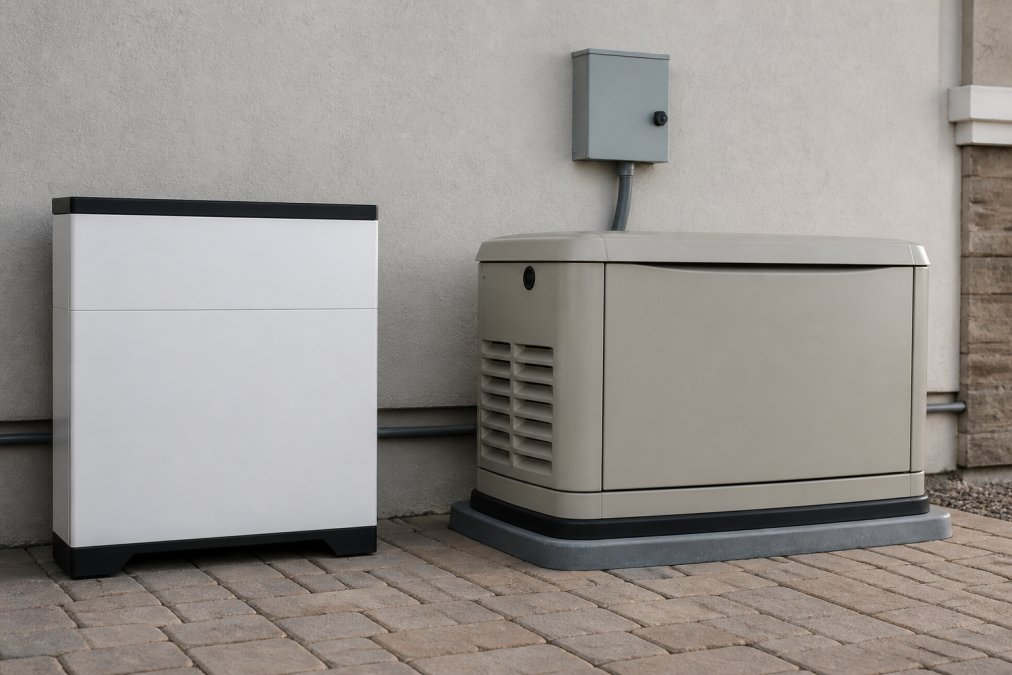
The most resilient backup power configuration available to homeowners today is a hybrid system: solar panels feeding a battery storage system, with a standby generator as a backup for extended cloudy periods or high-load situations. This configuration addresses the core weakness of each individual technology.
The Generac PWRcell integrates directly with Generac standby generators, so when battery charge drops below a set threshold during an extended outage, the generator activates to recharge the battery and power the home simultaneously. The result is extended grid independence that a battery or generator alone cannot provide.
Hybrid systems carry higher upfront costs and greater installation complexity. Proper design requires sizing the solar array, battery capacity, and generator output to work together, which requires professional assessment.
Insurance and Home Value Impact
A permanently installed standby generator is generally treated as a home improvement that adds to property value, similar to a finished basement or HVAC upgrade. Whole-home backup power is an increasingly common buyer expectation in areas prone to frequent outages.
Check with your homeowners insurance provider about premium reductions for backup power systems, particularly for water damage prevention (a generator keeps sump pumps running). Permits and professional installation documentation are typically required to support any insurance-related claims. An unpermitted generator installation can create liability exposure.
Battery storage systems, particularly when paired with solar, may qualify for federal tax credits. Check current IRS guidance for eligibility requirements specific to your installation.
Which Backup Power Solution Is Right for Your Home?
The battery backup vs standby generator decision comes down to four practical questions.
How long do your outages typically last? If most outages in your area resolve within 12-24 hours, a well-sized battery backup system handles them. If extended outages of several days are common, a standby generator or hybrid system is more reliable.
What is your critical load? A remote worker who needs internet, a computer, and basic lighting has a different load profile than a family trying to maintain central air conditioning, a well pump, and a refrigerator. Battery systems can cover critical loads efficiently; whole-home loads during summer heat require either a large battery bank or a generator.
Do you have or plan to add solar? If yes, a battery system with solar integration becomes significantly more capable and moves toward genuine grid independence.
What is your tolerance for ongoing maintenance? Battery systems are lower maintenance. Standby generators require annual professional service. Factor this honestly into your comparison.
| Home Situation | Recommended Solution |
|---|---|
| Short outages, solar-ready home | Battery backup system |
| Extended outages, no solar | Standby generator |
| Frequent long outages, solar planned | Hybrid system |
| Remote worker, critical load only | Battery backup system |
| Whole-home comfort during multi-day outages | Standby generator or hybrid |
| Maximum grid independence | Hybrid: solar + battery + generator |
Have a licensed electrician assess your electrical panel before committing to either system. Panel capacity, existing circuit configuration, and local permitting requirements all affect which solution installs cleanly and which requires additional work.
For homeowners who want a personalized recommendation based on their actual load profile, Generators of Nashville by Evolution Electric generates a free, personalized quote that accounts for your home's specific situation.
As documented in the National Electrical Code standards for backup power installations, backup power systems must meet specific installation requirements to be code-compliant. Working with a licensed electrician ensures your installation meets NEC standards and passes local inspection.
Choosing between a battery backup and a standby generator shapes how your home handles every outage for the next decade. Generators of Nashville by Evolution Electric has installed Generac standby generators, EcoFlow and Anker SOLIX battery systems, and full hybrid configurations across Middle Tennessee since 2014. Our licensed electricians assess your home's load, panel capacity, and outage history before recommending a system. Take our 60-second quiz for a free quote today.
Frequently Asked Questions
Q: Which is better for home backup power: a battery or a generator?
A: It depends on your outage patterns and load requirements. A battery backup system runs silently, requires no fuel, and works well for outages lasting several hours, especially when paired with solar. A standby generator runs on natural gas or propane and can power your entire home indefinitely as long as fuel is available. For extended outages or whole-home coverage including central air conditioning, a standby generator typically handles the load more reliably. Many homeowners choose a hybrid setup combining both.
Q: What are the main disadvantages of a standby generator?
A: Standby generators require professional installation, a dedicated fuel line, and regular maintenance including oil changes, filter replacements, and annual tune-ups. They produce noise during operation, emit exhaust, and have a carbon footprint tied to fuel consumption. Permitting is required in most jurisdictions, which adds time and cost to installation. They also need a licensed electrician to install the automatic transfer switch and connect to your electrical panel safely.
Q: How long does a home battery last during an outage?
A: Runtime depends on the battery's kilowatt-hour capacity and your home's energy load. A 10 kWh battery backup system running essential circuits, such as lighting, a refrigerator, and phone charging, can last 12 to 24 hours. Running central air conditioning or electric heating significantly reduces that window. Expandable systems like the EcoFlow DELTA Pro Ultra can scale from 6 kWh to 90 kWh, extending runtime considerably. Solar integration allows the battery to recharge during daylight, which can extend coverage through multi-day outages.
Q: Does a home battery backup require less maintenance than a standby generator?
A: Yes, generally. Battery backup systems have no moving parts, require no oil changes, and do not need fuel management. Most manufacturers recommend an annual inspection of connections and firmware updates. Standby generators, by contrast, require oil and filter changes every 50 to 200 hours of operation, annual professional tune-ups, and periodic load testing. A backup power system maintenance schedule for a standby generator is more involved and typically requires a licensed technician to stay compliant with manufacturer warranties.
Q: How much does whole home generator installation cost compared to a battery system?
A: Whole home generator installation cost varies based on unit size, fuel line requirements, permitting, and electrical panel work. Equipment and installation together can represent a significant investment, and battery systems have their own range depending on capacity and brand. Factors like the size of your home, existing electrical infrastructure, and whether solar integration is included all affect the final number. Because pricing depends on your specific setup, the most accurate way to compare costs is to request a personalized quote based on your home's actual energy load.
This article was written using GrandRanker