 ultimate-guide
Hire Professional Generator Installer Nashville TN: 2026 Guide
Table of Contents
- Why Nashville Homeowners Hire a Professional Generator Installer
- Types of Backup Power Systems: Standby vs. Portable
- Generator Sizing: How to Calculate Your Electrical Load
- The Real Cost of Whole Home Generator Installation
- Why You Need a Licensed Electrician for Generator Hookup
- Navigating the Generator Permit Process in Davidson County
- What to Expect: Installation Timeline and Site Assessment
- Post-Installation Inspection Checklist and Preventative Maintenance
- Frequently Asked Questions
Last Updated: September 7, 2026
When the power goes out in Middle Tennessee, the difference between a minor inconvenience and a major disruption often comes down to whether you hire professional generator installer Nashville homeowners trust. A standby generator is a significant investment, and installation is far more complex than most realize.
Why Nashville Homeowners Hire a Professional Generator Installer
Most homeowners don't attempt a generator installation themselves because the stakes are too high. A whole-home generator connects directly to your electrical panel and fuel supply, so mistakes can create fire hazards, damage appliances, or endanger utility workers.
When severe weather knocks out the grid, you need an emergency power supply that activates automatically. A certified electrician ensures the automatic transfer switch, sub-panel, and main breaker are configured correctly and handles coordination with local building codes and the utility grid connection.
Types of Backup Power Systems: Standby vs. Portable
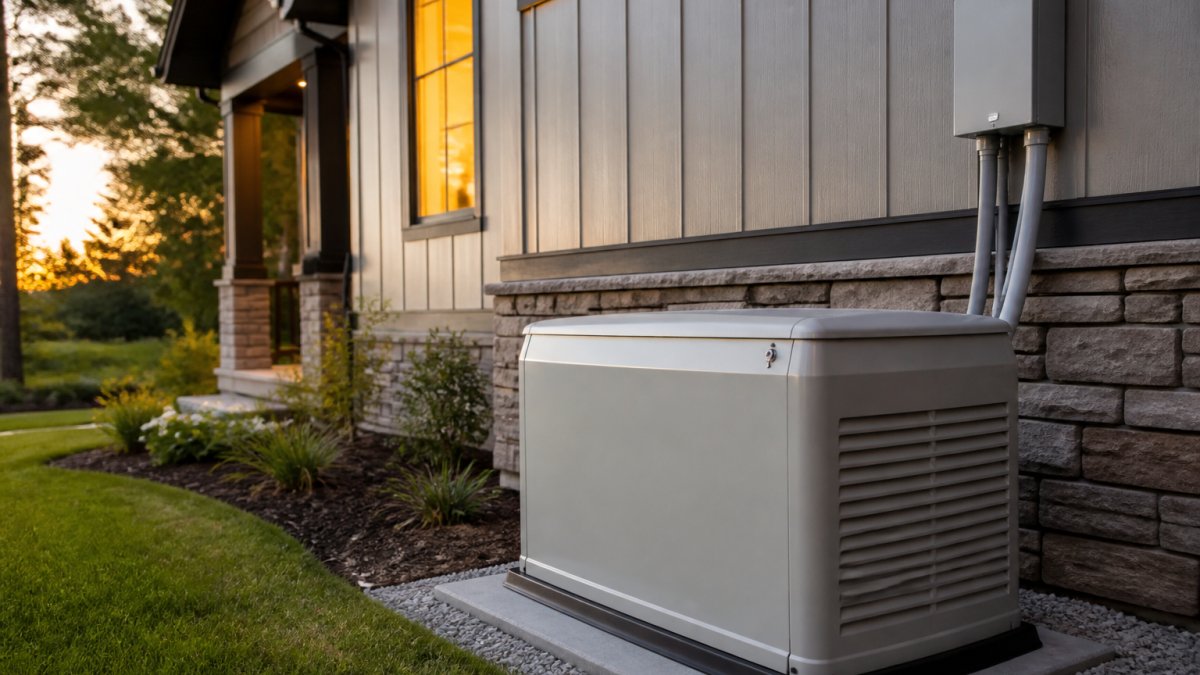
Choosing between a standby generator and a portable unit comes down to how much of your home you want to protect. A standby generator is permanently installed on a concrete pad, runs on natural gas or propane, and starts automatically within seconds of an outage. A portable generator must be rolled out and connected manually, typically powering only a few circuits through extension cords.
For most Nashville families, the standby option wins on convenience and safety. Portable units require you to be home and awake to deploy them and carry risks of carbon monoxide poisoning if placed improperly. A whole-home generator protects your HVAC system, well pump, and appliances without any action on your part.
Generator Sizing: How to Calculate Your Electrical Load
Getting the generator size wrong is the most common and expensive mistake homeowners make. If it's too small, it won't start your air conditioner or other high-draw appliances. If it's too large, you're paying for kilowatt (kW) capacity you'll never use.
The process starts with listing essential loads: refrigerator, furnace blower, sump pump, lights, internet router, and medical equipment. Next, you identify the starting wattage of large motors like your AC compressor, which can draw three to five times their running wattage. A licensed electrician applies demand factors to determine the right kW capacity.
The Real Cost of Whole Home Generator Installation
The upfront price tag is only the first number you should look at. To make a sound financial decision, you need a Total Cost of Ownership (TCO) breakdown that accounts for installation, fuel, maintenance, and eventual component replacement.
Upfront Installation Costs: What Drives the Quote?
The final cost of a turnkey installation for a standby generator is driven by several site-specific variables:
- Generator Unit Size: The price scales with capacity and features like quieter operation.
- Transfer Switch: This is a mandatory safety component, not an upgrade. A 200-amp automatic transfer switch (ATS) is standard for most whole-home systems and is included in the quote. If your panel is older or maxed out, you may need a sub-panel.
- Fuel Line Installation: Running a new natural gas line from your meter to the generator is often the most variable cost. Propane setups require tank sizing and installation, which is a separate cost.
- Electrical Panel Upgrades: Many older Nashville homes have 100-amp panels that lack the capacity for a whole-home generator. Upgrading to a 200-amp panel is a significant job. Your installer must assess this during the site visit.
- Permit and Inspection Fees: Davidson County charges a nominal fee for the electrical permit. This is a mandatory line item, not an optional extra.
- Labor and Site Prep: This covers the concrete pad, trenching, and the electrician's time for the two-day installation. It is the largest variable component, reflecting the complexity of your specific site.
The Hidden Costs: Maintenance, Fuel, and Replacement
- Annual Maintenance: A factory-trained technician should perform an annual service that includes an oil and filter change, spark plug replacement, and a full operational test under load. Skipping it voids your warranty and risks failure during an outage.
- Fuel Consumption: A 22kW generator running on natural gas will consume roughly 2 to 3 gallons of gasoline-equivalent per hour at half load (energy.gov). Natural gas is metered, so you'll see the cost on your monthly bill during an extended outage. Propane tanks need to be refilled, which can be a logistical and financial burden during a multi-day event.
- Battery Replacement: The starter battery is the most common failure point. It typically lasts 3 to 5 years. This is a simple DIY task for many, but it's a recurring cost to plan for.
- Component Lifespan: A well-maintained air-cooled generator is designed to last 2,000 to 3,000 hours of operation. Liquid-cooled units can last longer. At some point, major components like the alternator or engine will need replacement, a cost that often exceeds the value of the unit, prompting a full system replacement.
Calculating Your 10-Year TCO
The ongoing costs are real but manageable.
The lowest initial bid is often the most expensive option in the long run if it cuts corners on the transfer switch, uses undersized wiring, or fails to secure the proper permit.
Why You Need a Licensed Electrician for Generator Hookup
The electrical connection is where generator installations succeed or fail, which is why hiring a licensed electrician for generator hookup is non-negotiable. Improper connections can backfeed electricity into the grid, creating a lethal hazard for line workers. An automatic transfer switch prevents backfeeding, but only when installed correctly by someone who understands NEC compliance and local codes.
Beyond safety, a licensed professional brings expertise in load management, surge protection, and system testing. They'll verify that your generator's output is properly isolated from the utility feed and that grounding and bonding are correct. Many manufacturers also require professional installation to keep the warranty valid.
Navigating the Generator Permit Process in Davidson County
In Davidson County, a standby generator installation is treated as a permanent electrical modification under the Metropolitan Nashville-Davidson County Department of Codes and Building Safety, and must comply with the National Electrical Code (NEC) and local amendments.
The Permit Application: Who Pulls It and Why
The responsibility for pulling the permit falls on the licensed electrical contractor. A reputable installer will include the permit fee in their quote and handle the application process.
Take our 60-second quiz for a free quote today! →
The application requires the contractor to submit a detailed description of the work, including the generator model, location, and electrical load calculations, which the county reviews to ensure the installation meets code before work begins.
The Inspection Process: What the County Checks
Once the installation is complete, the county will schedule an inspection to verify several critical safety points:
- Electrical Connections: The inspector will check that the automatic transfer switch is properly wired to prevent backfeeding, that all connections are torqued to specification, and that the grounding and bonding are correct.
- Fuel Line Integrity: For natural gas installations, the inspector will verify that the gas line is properly sized, supported, and leak-tested. For propane, they will check the tank placement and the regulator setup.
- Unit Placement and Clearances: The county enforces specific clearance requirements for the generator's placement relative to windows, doors, and property lines. These rules exist to prevent carbon monoxide from entering the home and to ensure adequate airflow for cooling and exhaust. A common requirement is a minimum of 5 feet from any window, door, or opening into the home, but you should rely on your installer to know the exact current code.
- Noise Considerations: While Davidson County does not have a specific decibel limit for residential generators in all zones, the unit must comply with the local noise ordinance. Your installer should be familiar with the placement options that minimize disturbance to neighbors.
What Happens If You Skip the Permit?
Skipping the permit is a gamble with serious consequences. If an unpermitted installation is discovered, you will be required to obtain a retroactive permit, involving additional fees and potentially costly corrections. Without an inspection, there is no independent verification that the electrical and fuel connections are safe, and this can void your homeowner's insurance policy.
Your Installer's Role: End-to-End Compliance
A professional installer who works in Nashville regularly will have a working relationship with the county's inspection department. Your role is to confirm the permit has been pulled and the final inspection scheduled, and to ask for a copy of the permit and inspection sign-off for your records.
What to Expect: Installation Timeline and Site Assessment
A typical installation timeline runs from a few days to a couple of weeks. The process begins with a site assessment, where an installer evaluates your electrical panel, measures the distance to your fuel source, and identifies the best location for the unit.
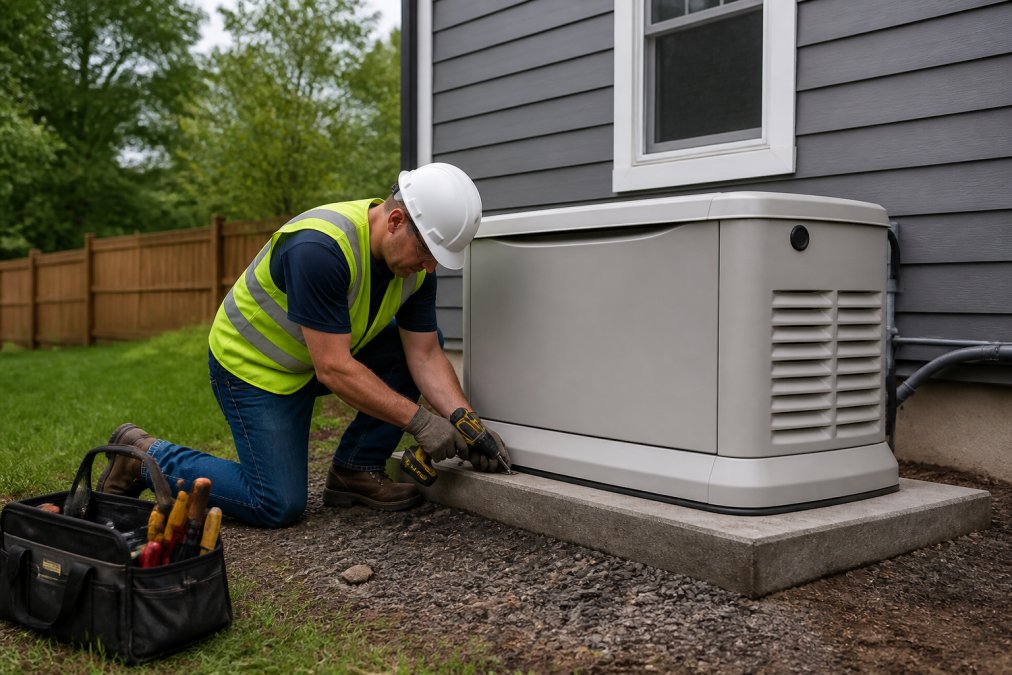
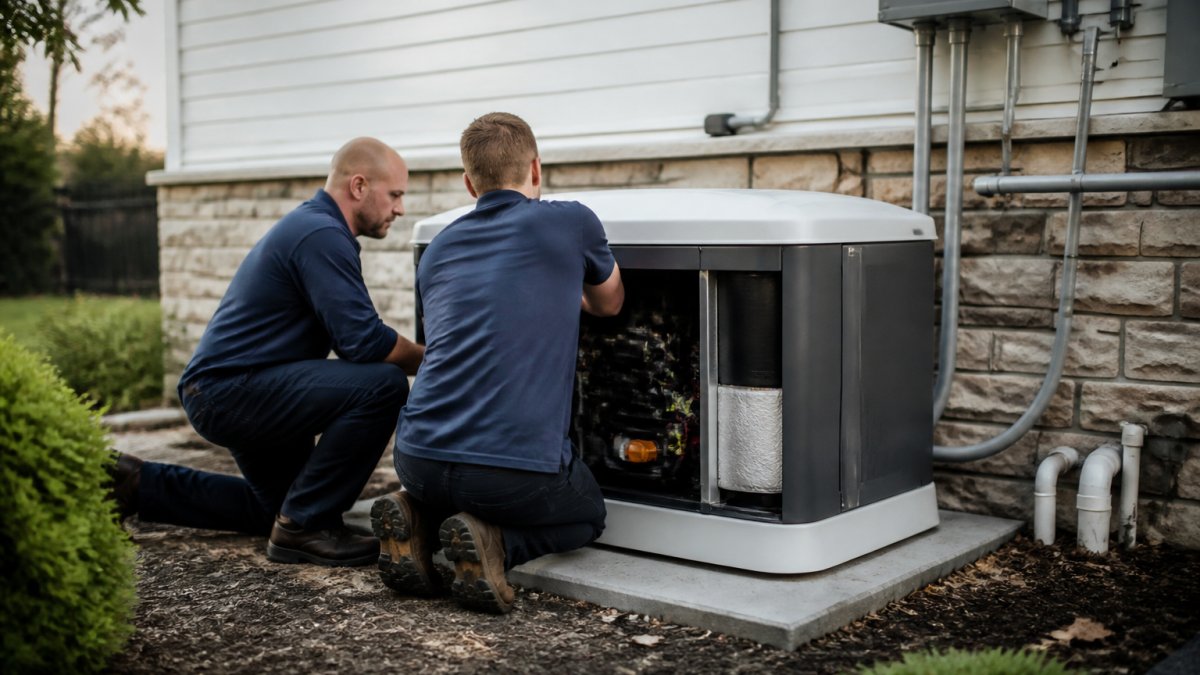
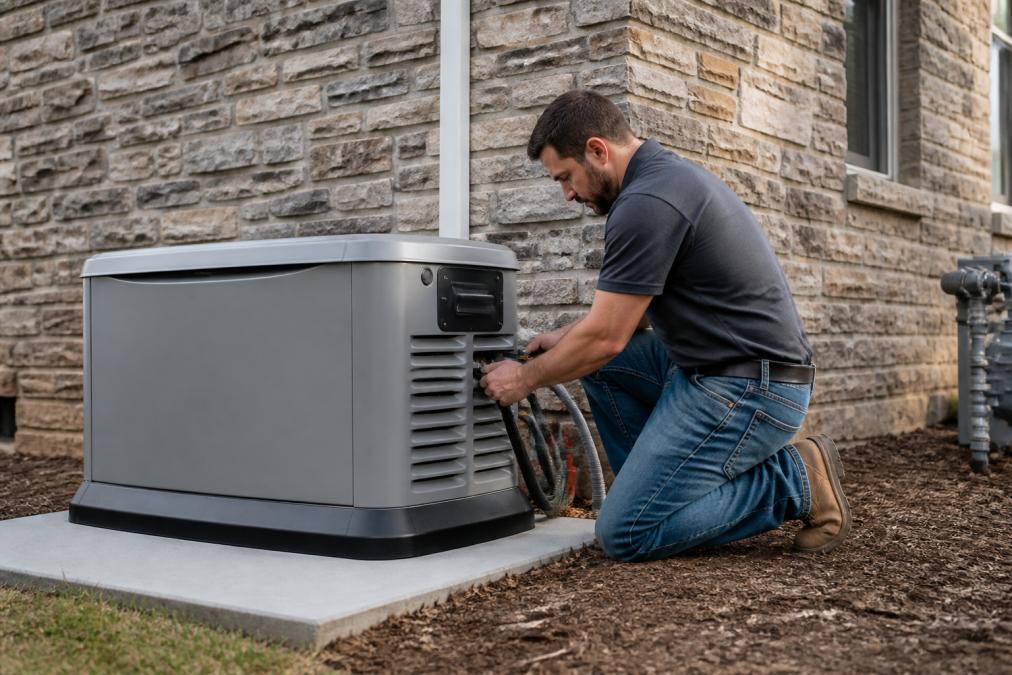
Once the assessment is complete, installation typically takes one to two days. Day one involves pouring the concrete pad and running the fuel and electrical lines. Day two focuses on setting the generator, wiring the transfer switch, and performing initial testing, followed by a commissioning process where the installer simulates a power outage to confirm the system starts, transfers, and shuts down correctly.
Post-Installation Inspection Checklist and Preventative Maintenance
Once your system is live, your responsibility shifts to preventative maintenance. A whole-home generator is an engine that may sit idle for months, and it requires periodic attention to start reliably. Most manufacturers recommend an annual service contract that includes an oil change, filter replacement, and a full operational test under load.
Here's a practical post-installation inspection checklist to keep your system in top shape:
- Run the generator monthly for 10-15 minutes under load to keep the engine lubricated
- Check for oil and coolant leaks around the unit base
- Clear debris, leaves, and snow from the generator housing and air intake vents
- Verify the automatic transfer switch operates by simulating a utility outage
- Test the battery and charging system, as a dead battery is the most common failure point
- Schedule an annual tune-up with a factory-trained technician to replace filters and fluids
- Confirm remote monitoring alerts are active so you know if the system faults
Skipping these steps is the fastest way to discover your generator doesn't work when you need it most. A preventative maintenance schedule is a small annual investment compared to the cost of an emergency repair or the consequences of being without power during a winter storm. The National Fire Protection Association's guidance on standby generator safety emphasizes that regular inspection and testing are essential for reliable operation. Similarly, the U.S. Department of Energy's backup power resources recommend having a qualified professional service your system annually. By staying ahead of maintenance and working with an installer who offers ongoing support, you ensure your investment delivers exactly what you bought it for: uninterrupted power when the grid goes down.
Choosing to hire professional generator installer Nashville residents can rely on is a decision about long-term safety and comfort. The process involves complex electrical work, local regulations, and significant financial investment, all best handled by experienced professionals. Generators of Nashville by Evolution Electric has served Middle Tennessee since 2014, providing licensed electricians who specialize in Generac systems and modern battery backup solutions. Our team manages the entire process from initial site assessment through final inspection. Take our 60-second quiz today to receive a free, personalized quote.
Frequently Asked Questions
How much does it cost to have someone install a generator in Nashville?
The cost of whole home generator installation varies widely based on the generator's kilowatt (kW) capacity, the complexity of your site, and the distance from your main breaker panel. A professional installer will conduct a site assessment to provide a precise quote, which includes the unit, the automatic transfer switch, concrete pad, and labor. For an accurate figure, request a personalized quote from a licensed installer, as online prices for just the equipment don't reflect the full turnkey installation cost.
What certifications should a professional generator installer hold?
A professional installer should be a licensed electrician in Tennessee and ideally a factory-trained technician for the brand they install. Look for certifications from Generac or other manufacturers, ensuring they are up-to-date on the latest NEC compliance codes and installation standards. This guarantees the work meets local codes, passes inspection, and maintains your warranty coverage. Ask about their experience and request proof of licensing and insurance before work begins.
Does a generator installation require a building permit in Nashville?
Yes, a generator permit process is required for most permanent standby generator installations in Davidson County. This process involves submitting plans, paying a fee, and scheduling inspections to ensure the work complies with local building codes and NEC compliance. A professional installer manages this entire process for you, pulling the necessary permits and coordinating with inspectors. This protects you from fines and ensures your backup power system is safe, legal, and properly grounded.
How long does the whole-home generator installation process take?
A typical turnkey installation takes one to three days once the site assessment is complete and the permit is approved. The timeline depends on the complexity of your electrical panel setup, the need for a sub-panel, and any concrete work required for the generator pad. After installation, you'll schedule a final inspection with the local authority. Ask your installer for a detailed timeline before signing a contract to know exactly when you'll have power outage protection.