 ultimate-guide
Cost of Professional Generator Installation: 2026 Guide
Table of Contents
- What Drives the Cost of Professional Generator Installation
- Whole House Generator Installation Cost Breakdown
- Home Generator Permit Requirements and Inspection Fees
- Labor Rates and What a Professional Installation Quote Covers
- Backup Generator Installation Timeline: What to Expect
- Hidden Post-Installation Costs and Long-Term Expenses
- Financing, ROI, and Whether a Standby Generator Is Worth It
- Frequently Asked Questions
Last Updated: September 2, 2026
What Drives the Cost of Professional Generator Installation
The total project price is shaped by four core factors: the generator unit itself, the fuel source, the electrical infrastructure already in your home, and local labor rates. A 22-kilowatt natural gas unit installed in a home with a modern panel and an existing gas line costs significantly less than the same unit in a home that needs panel upgrades, new gas piping, and a concrete pad poured from scratch.
Most guides quote a single "average" figure without context. The breakdown below provides the context you need.
Generator Unit Size and Kilowatt Capacity
Kilowatt capacity is the single biggest cost driver. A small standby generator in the 10-13 kW range covers essential circuits: lights, refrigerator, a few outlets, and a sump pump. A whole-house standby system that runs your HVAC, water heater, and all major appliances typically starts at 20 kW and scales up for larger homes.
A licensed electrician calculates the wattage requirements of every circuit you want covered, then selects a unit with enough capacity to handle that load plus a reasonable buffer. Larger units require more robust electrical and gas infrastructure, often triggering upgrades to gas line sizing, conduit runs, and grounding requirements.
Fuel Source: Natural Gas vs. Propane
Natural gas is typically cheaper to run long-term because it draws from the municipal supply line. If your home already has gas service, connecting the generator involves extending or tapping that line. If you don't have gas service, bringing it to your property is a separate project.
Propane offers flexibility for rural properties or homes without natural gas access. The tradeoff is the propane tank itself: you'll need either an above-ground or buried tank, and tank installation adds to the project scope.
Electrical Panel Upgrades and Transfer Switch Requirements
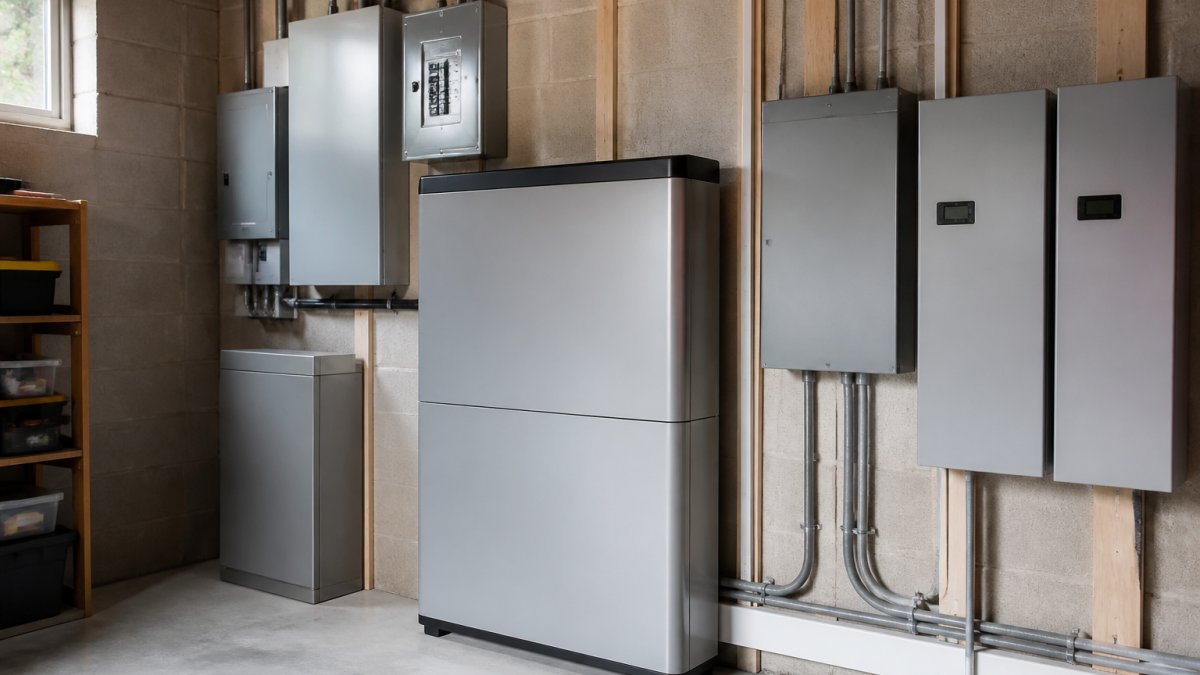
Every standby generator installation requires an automatic transfer switch. This device monitors grid power and automatically switches your home to generator power within seconds of an outage. It must be installed by a licensed electrician and must meet code compliance requirements under the National Electrical Code (NEC) standards.
Some homes need a sub-panel installed alongside the transfer switch, particularly if the existing electrical panel is older, already near capacity, or incompatible with the transfer switch configuration. An electrical panel upgrade adds both material and labor costs.
Whole House Generator Installation Cost Breakdown
Whole house generator installation cost is best understood as a sum of distinct line items rather than a single figure.

Here's how a typical whole-house installation breaks down:
| Cost Component | What It Covers | Notes |
|---|---|---|
| Generator unit | Equipment purchase price | Varies by kW capacity and brand |
| Automatic transfer switch | ATS hardware and wiring | Required for all standby systems |
| Electrical panel work | Sub-panel, breakers, conduit | Needed if existing panel is undersized |
| Concrete pad | Site prep and pour | Required by most local codes |
| Gas or propane line | Fuel line extension or tank install | Depends on existing infrastructure |
| Labor | Electrician and plumber hours | Varies significantly by region |
| Permit fees | Local building and electrical permits | Non-negotiable; required by code |
| Inspection fees | Final code inspection | Part of the permit process |
The wide variance in whole house generator installation cost comes down to how many of these line items apply to your specific property.
Partial-Home vs. Whole-House Standby Systems
A partial-home standby system powers essential circuits: refrigeration, lighting, a few outlets, and a sump pump. These systems use smaller generators in the 10-17 kW range and require less robust infrastructure. A whole-house standby system covers every circuit, including HVAC, electric water heaters, home offices, and all appliances simultaneously. The decision should be driven by a load calculation, not a budget shortcut.
Site Preparation: Concrete Pad and Conduit Work
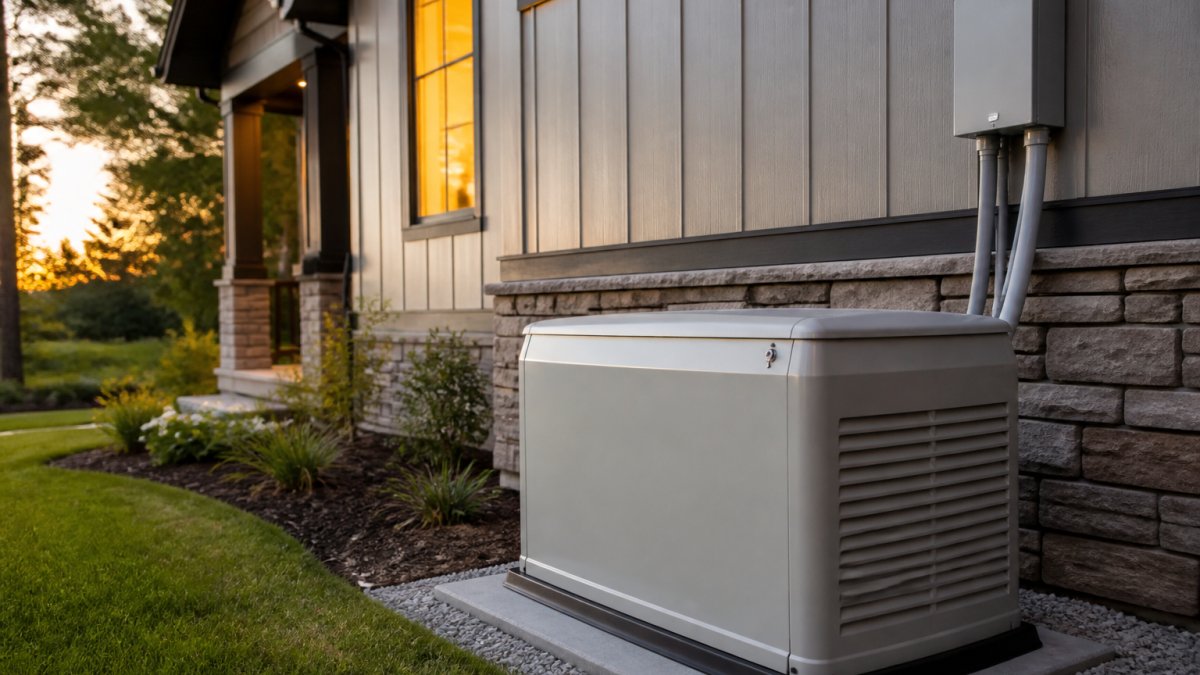
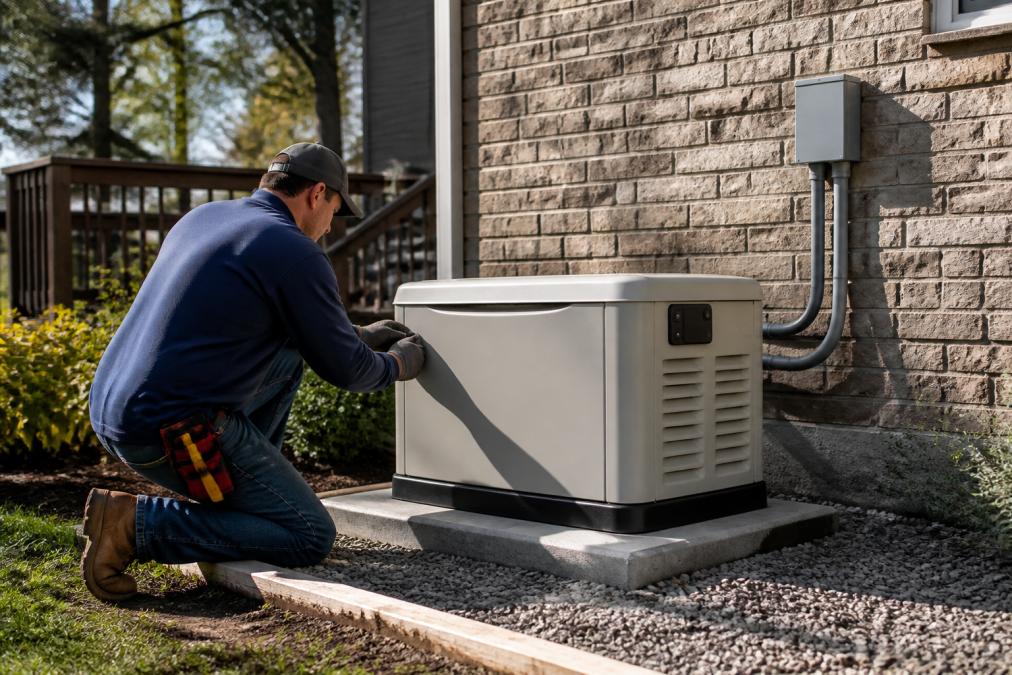
Most local codes require a concrete pad for permanent standby generator installations. The pad must meet minimum size and thickness specifications, be level, and provide adequate clearance from the home's exterior walls and openings.
Conduit runs the electrical wiring from the generator to the transfer switch and panel. The length of that run, the routing required to meet code, and whether the conduit must be buried or surface-mounted all affect labor time and material cost.
Home Generator Permit Requirements and Inspection Fees
Every standby generator installation requires at minimum an electrical permit. Depending on your municipality, you may also need a separate mechanical or gas permit.
The permitting process protects you. An installation that bypasses permits may void your homeowner's insurance coverage in the event of a fire or electrical fault and can create problems when you sell the property. electrical panel upgrades.
According to the U.S. Consumer Product Safety Commission's guidance on generator safety, improper generator installation is a leading cause of residential carbon monoxide incidents and electrical fires. Proper permitting and inspection verify the installation meets safety standards.
Permit fees vary by jurisdiction. A licensed electrician handles the permit application process as part of a professional installation.
Labor Rates and What a Professional Installation Quote Covers
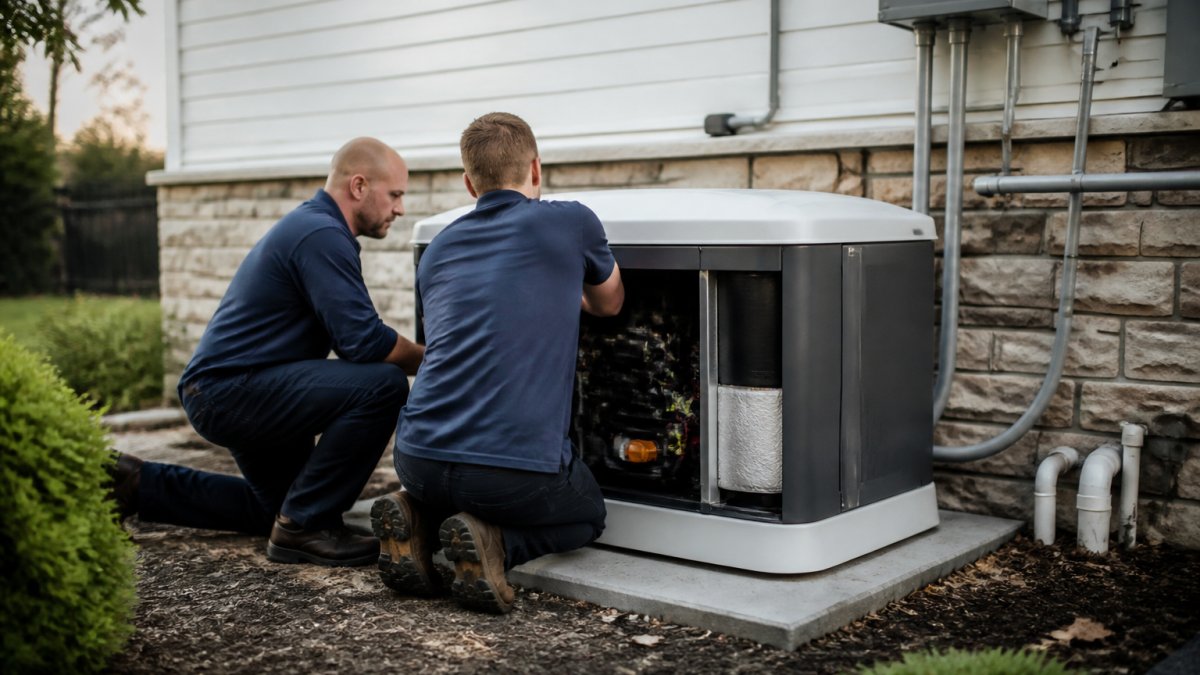
Labor is typically one of the largest line items in the cost of professional generator installation. A complete standby generator installation involves a licensed electrician for the panel work, transfer switch, and conduit runs, and often a licensed plumber or gas fitter for the fuel line connection.
A professional installation quote should cover all of the following:
Take our 60-second quiz for a free quote today! →
- Site assessment and load calculation
- Generator unit placement and mounting
- Concrete pad coordination
- Automatic transfer switch installation and wiring
- Conduit runs and grounding
- Fuel line connection or propane tank coordination
- Permit application and inspection scheduling
- Startup testing and system commissioning
Regional Labor Variance and How to Vet Quotes
Labor rates for licensed electricians vary meaningfully by region. To vet quotes effectively, get a minimum of three bids and compare them line by line, not just as a total. Verify that the installer is a licensed electrician in your state through your state electrical contractor licensing board. Ask for proof of liability insurance and a warranty on both parts and labor.
Backup Generator Installation Timeline: What to Expect
The backup generator installation timeline from first contact to a running system typically spans two to six weeks for a standard residential installation. The variation depends on equipment lead times, permit processing speed, and contractor scheduling.
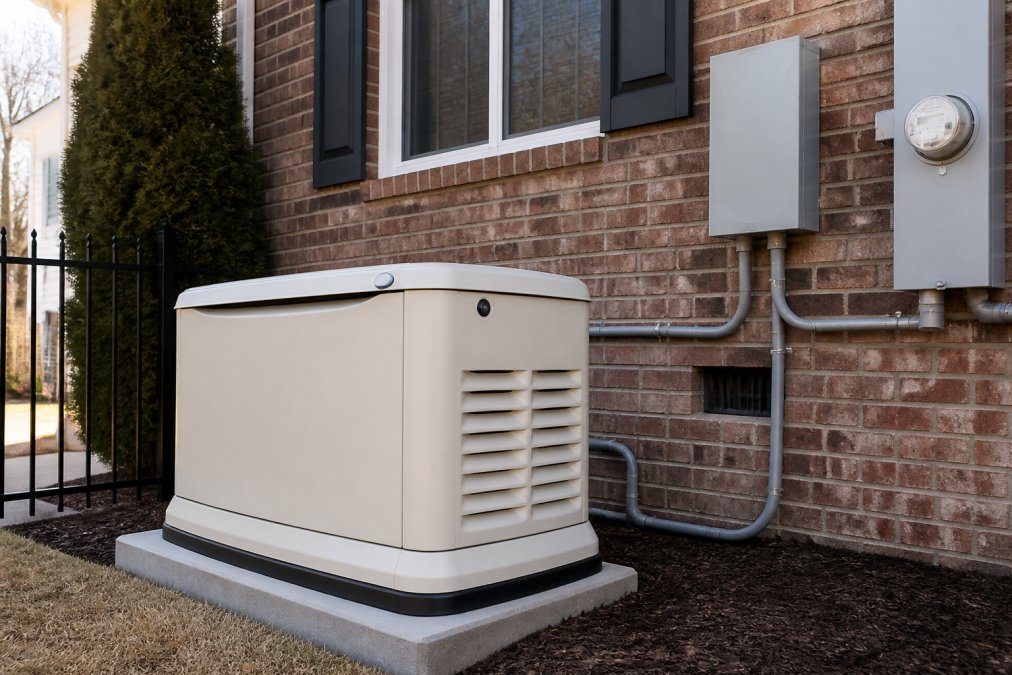
Here's a realistic breakdown:
- Site assessment and load calculation: 1-2 hours on-site.
- Equipment ordering: Lead times range from a few days to several weeks depending on the model and current supply.
- Permit application: Processing time varies by municipality from 48 hours to two weeks.
- Installation day: A straightforward installation typically takes one to two days. Complex installations with panel upgrades, new gas lines, and concrete work take longer.
- Inspection and commissioning: The final inspection is scheduled after installation is complete.
Hidden Post-Installation Costs and Long-Term Expenses
The cost of professional generator installation doesn't end when the inspector leaves.
Annual maintenance: Standby generators require annual service to remain reliable. A maintenance visit typically includes an oil change, filter replacement, spark plug inspection, battery check, and a load test.
Fuel costs: Natural gas costs vary with market rates. Propane requires periodic refills, and the cost depends on tank size and how much the generator runs during testing and outages.
Extended warranty: Most standby generators come with a manufacturer warranty, but extended warranties are available and worth evaluating for whole-house systems.
According to the U.S. Department of Energy's guidance on backup power systems, proper maintenance is the most reliable predictor of generator performance during an actual outage.
Financing, ROI, and Whether a Standby Generator Is Worth It
The ROI question on a standby generator is legitimate. For some homeowners, the financial case is clear. For others, the value is primarily about comfort and risk mitigation rather than direct financial return.
Where the financial case is strongest:
- Homes in areas with frequent or extended outages where food spoilage, frozen pipe damage, or sump pump failure represent real financial risk
- Remote workers whose income depends on uninterrupted power and internet connectivity
- Homes with medical equipment that requires continuous power
- Properties in areas where backup power is a meaningful differentiator in resale value
Where the case is weaker:
- Homes in areas with very infrequent outages where a portable generator would provide adequate coverage at a fraction of the cost
- Homeowners planning to sell within two to three years
Financing options are available through home improvement loans, HELOC products, and manufacturer financing programs. The Federal Trade Commission's guidance on home improvement financing provides a useful framework for evaluating loan terms.
| Scenario | Recommended System | Key Consideration |
|---|---|---|
| Remote worker, frequent outages | Whole-house standby, 20+ kW | HVAC and office circuits must be covered |
| Family, essential protection only | Partial-home standby, 13-17 kW | Load calculation determines circuit coverage |
| Rural property, no natural gas | Propane standby with buried tank | Tank sizing affects fuel autonomy |
| Urban home, rare outages | Portable or battery backup | Lower upfront cost, limited runtime |
| Home with medical equipment | Whole-house standby, automatic transfer | Zero-delay switchover is non-negotiable |
Evaluate a standby generator against the cost of what you're protecting and what an extended outage would actually cost you in lost income, spoiled food, property damage, or disruption to your family's safety.
The decision to install a standby generator involves real complexity: sizing, fuel source, electrical infrastructure, permitting, and long-term maintenance all factor into both the cost and the outcome. Getting it right requires a licensed installer who does a proper site assessment and pulls the necessary permits. Generators of Nashville by Evolution Electric has been doing exactly that since 2014, with licensed electricians who specialize in Generac systems and whole-home backup power. Take the 60-second quiz for a free, personalized quote and find out what the right system actually costs for your home.
Frequently Asked Questions
How much does a generator for a 2,000-square-foot home cost to install?
Total project cost for a 2,000-square-foot home depends on the kilowatt capacity needed, your fuel source, electrical panel condition, and local permit fees. A load calculation by a licensed electrician is the only reliable way to size the system correctly. Whole-house standby setups generally cost more than partial-home systems because they require a larger automatic transfer switch, more wiring, and sometimes a sub-panel upgrade. Request a detailed quote that itemizes the generator unit, labor, concrete pad, and permit fees separately.
What is included in a professional generator installation quote?
A thorough quote covers the generator unit itself, the automatic transfer switch, site assessment and load calculation, concrete pad installation, natural gas line or propane tank connection, conduit and wiring, electrical panel work, permit fees, and final inspection. Some installers also include a startup test and owner walkthrough. Watch for quotes that omit permit costs or site prep, these are common line items that get added later and inflate the final bill.
What are the permit requirements for installing a home generator?
Most jurisdictions require at least an electrical permit and, if a new gas line is involved, a gas piping permit as well. Some areas also require a mechanical permit for the generator unit. Permits trigger inspections that verify code compliance with NEC standards, grounding, transfer switch wiring, and fuel connections. Skipping permits creates liability if the system causes damage and can complicate homeowners insurance claims. Always confirm your installer pulls permits before work begins.
How long does professional generator installation take?
A straightforward installation on a home with an adequate electrical panel and existing gas service typically takes one to two days of on-site work. More complex projects, those requiring a panel upgrade, new gas line run, or difficult site preparation, can extend to three or four days. Permit processing adds time before work can start, often one to two weeks depending on the municipality. Factor in equipment lead times as well, since some generator models have multi-week delivery windows.
Is a whole-house generator a tax write-off?
Generators installed purely for convenience are generally not deductible for most homeowners. However, if a generator is medically necessary, for example, to power life-sustaining equipment, a portion of the cost may qualify as a medical expense deduction under IRS rules. Home-based business owners may be able to deduct a proportional share if the generator powers a qualifying home office. Tax rules change frequently, so consult a qualified tax professional before claiming any deduction related to your standby generator.
What hidden costs should I budget for after generator installation?
Annual maintenance contracts, load bank testing, oil and filter changes, and coolant checks add recurring costs most homeowners overlook. If your generator runs on propane, tank rental fees and fuel top-offs apply year-round. Extended warranty upgrades, surge protection devices, and HVAC integration wiring are common add-ons that surface after the initial quote. Budget a few hundred dollars per year for routine service to keep the manufacturer warranty valid and the system ready for the next outage.
This article was written using GrandRanker