 ultimate-guide
What Is the Best Backup Power Source for a Home in 2026?
Table of Contents
- How to Size a Home Generator or Battery for Your Actual Load
- Standby Generator vs. Home Battery: Which Backup Power Source Wins?
- Best Home Energy Storage Systems for Outage Protection
- Backup Power System Maintenance Checklist for Every Season
- Installation Permits, Electrical Codes, and Smart Home Integration
- Conclusion: Matching Your Backup Power Source to Your Home
- Frequently Asked Questions
Last Updated: October 2, 2026
How to Size a Home Generator or Battery for Your Actual Load
The best backup power source for a home is sized to your real electrical load, not the biggest unit on the showroom floor. At Generators of Nashville by Evolution Electric, our licensed electricians have sized whole-home systems since 2014, and the most common mistake is buying capacity you will never use while ignoring the circuits you actually need.
Sizing starts with your electrical panel. Every backup power source must match two numbers: peak load and continuous power.
U.S. Department of Energy guidance on home backup power
Calculating Peak Load vs. Continuous Power
Peak load is the maximum wattage your home draws in a brief surge, such as when an AC compressor and well pump start together. Continuous power is the steady draw once everything runs normally.
Generators and batteries are rated for both. A unit rated for 10,000 watts continuous may handle a 12,000-watt surge briefly.
To estimate your numbers, add the running wattage of the appliances you refuse to live without, then add the startup wattage of the largest motor-driven appliance. That total becomes your sizing target.
Wattage Requirements for AC, Well Pumps, and Refrigerators
Three appliances drive most sizing decisions:
- Central air conditioning: high continuous draw plus a large startup surge
- Well pumps: moderate continuous draw, very high startup surge
- Refrigerators and freezers: modest draw, but they run around the clock
A common mistake is sizing for the whole panel instead of the circuits that matter. Most homeowners do not need to run the oven, dryer, and AC simultaneously during an outage.
Standby Generator vs. Home Battery: Which Backup Power Source Wins?
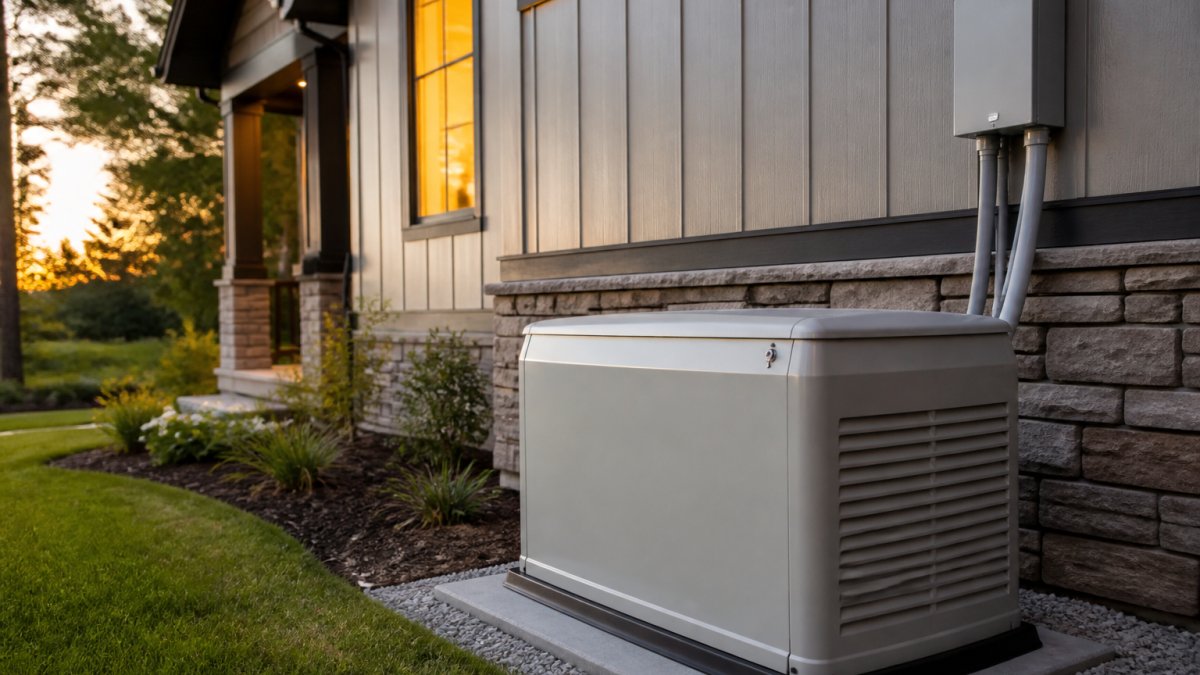
A standby generator wins for extended outages and heavy loads. A home battery wins for quiet, instant, fuel-free coverage of essential circuits. Neither is universally better, so the standby generator vs home battery question comes down to outage length, fuel access, and budget.
Runtime, Fuel, and Noise Decibels Compared
Runtime separates these categories more than any other spec.
Fuel type and availability decide whether a generator is practical. Natural gas depends on utility infrastructure that can fail in a regional event. Propane and diesel require on-site storage and delivery.
Noise also differs sharply. Standby generators run in the 60-decibel range at close distance, roughly a normal conversation. Battery systems are silent.
Automatic Transfer Switch and Interconnection Differences
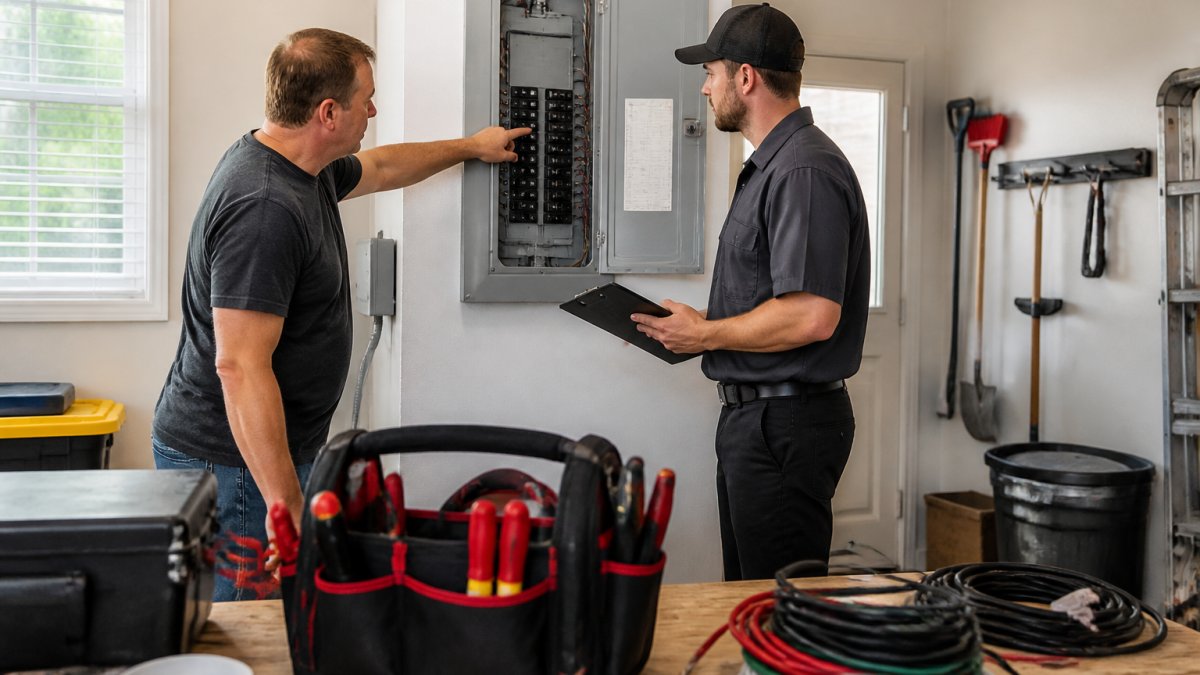
An automatic transfer switch makes backup power hands-off. It detects a grid outage, disconnects your home from the utility, and routes power to your backed-up circuits within seconds.
Generators and batteries both use transfer equipment, but the interconnection differs. A standby generator typically pairs with a dedicated automatic transfer switch sized to the unit.
Both approaches require a licensed electrician. Improper interconnection risks backfeeding the grid, which endangers utility crews and violates electrical codes.
Best Home Energy Storage Systems for Outage Protection
The best home energy storage systems pair high-capacity lithium-ion batteries with smart energy management, and the right pick depends on whether you want whole-home coverage or essential-circuit protection. The table below covers common home energy storage systems, followed by the runtime math most reviews skip.
| System | Usable Capacity | Continuous Output | Best For | Fuel Required |
|---|---|---|---|---|
| Tesla Powerwall 3 | 13.5 kWh | ~11.5 kW | Whole-home backup and solar storage | None |
| Anker SOLIX Home Battery | Modular, expandable | Scales with modules | Scalable energy storage | None |
| EcoFlow Delta Pro 3 | Expandable portable capacity | ~4 kW (7.2 kW with X-Boost) | Versatile backup plus portability | None |
| Bluetti Elite 200 V2 | ~2 kWh | ~2.6 kW | Emergency power for essentials | None |
| Jackery Solar Generator | Varies by model | Varies by model | Small electronics and light loads | None |
Generators of Nashville by Evolution Electric installs EcoFlow, Anker SOLIX, and Jackery systems alongside Generac standby generators, so we recommend the category that fits your load rather than the one we happen to stock.
What 13.5 kWh Actually Runs
Capacity numbers mean nothing until you translate them into runtime. A 13.5 kWh battery does not run your whole house for days. Here is the honest math for a typical essential-circuit load:
- Refrigerator: ~150 watts running, ~600 watts on compressor start. Roughly 3.6 kWh per day if it cycles normally.
- Furnace blower (gas heat): ~500 watts. About 4 kWh per day in winter.
- Sump pump: ~800 watts running, ~2,000 watts on start. Intermittent, but heavy when it runs.
- Well pump: ~1,000 watts running, ~2,000-3,000 watts on start. Intermittent.
- Internet router, modem, phone chargers, LED lights: ~200 watts combined. About 4.8 kWh per day.
Add those up and a 13.5 kWh battery covers roughly one to one-and-a-half days of essential circuits with no solar input. Add a 5 kW solar array and a sunny day, and the same battery cycles indefinitely. That is why batteries pair with solar: recharge turns a one-day battery into a multi-day solution.
Whole-Home vs. Essential-Circuit Batteries
A fixed battery delivers 13.5 kWh with an integrated solar inverter and seamless outage switching, and it can back up a 200-amp panel with the right transfer equipment.
Portable units serve a different job. The EcoFlow Delta Pro 3 offers expandable capacity and fast recharging. The Jackery Solar Generator is the lightest option and suits occasional emergencies rather than whole-home demand.
The 10-Year Cost of Ownership Nobody Quotes
Purchase price is the smallest number in the equation.
Batteries have almost no routine maintenance cost: no oil, no filters, no fuel delivery. Their cost is front-loaded. Fuel-powered systems are the opposite.
Backup Power System Maintenance Checklist for Every Season
A backup power system maintenance checklist prevents the failure mode nobody plans for: equipment that sits unused for months and then will not start. Run these checks on a schedule, and budget for the maintenance lifecycle costs most guides never mention.
Monthly:
Take our 60-second quiz for a free quote today! →
- Start the generator under load for 15-20 minutes
- Check battery app for state of charge and error alerts
- Inspect the automatic transfer switch indicator
Seasonally:
- Test propane or natural gas connections for leaks
- Clear debris from the generator enclosure and air intakes
- Verify battery firmware is current
Annually:
- Change oil and filters on fuel-powered units
- Test carbon monoxide detectors near the unit
- Have a licensed electrician inspect transfer switch operation
Never run a portable generator indoors, in a garage, or near a window. Carbon monoxide safety is not optional; generator exhaust can be fatal within minutes in enclosed spaces.
The 10-Year Cost of Ownership, Line by Line
This is the part almost no ranking guide breaks down. Purchase price is a one-time event. Maintenance is a decade-long drip. Here is what each category actually costs to own.
Standby generator (natural gas or propane):
- Annual oil and filter change: a service call or DIY kit, every year
- Air filter and spark plug replacement: every 1-2 years depending on run hours
- Valve adjustment: on a longer interval, often every few hundred hours
- Battery replacement in the unit's starting system: every 3-5 years
- Exercise cycle fuel consumption: the weekly self-test burns a small amount of fuel year-round
- Propane delivery or tank lease if you are not on natural gas
Home battery:
- No oil, no filters, no fuel
- Firmware updates: free, but require a working internet connection
- Capacity degradation: expect roughly 2-3 percent per year, which is why warranties guarantee a retention floor rather than 100 percent
- Inverter replacement: possible in years 10-15, and it is the single largest out-of-warranty expense
Portable generator or solar generator:
- Fuel stabilizer and fresh gasoline if you store fuel
- Carburetor service if the unit sits with old fuel
- Battery pack degradation on solar generators, similar to home batteries
Why Maintenance Frequency Depends on Your Climate
Maintenance intervals are not universal. In regions with heavy winter ice and snow, generators run longer during outages and need more frequent oil changes. Cold starts stress the starting battery, so plan on replacing it closer to the three-year mark than the five-year mark.
Battery systems have their own climate sensitivity. Lithium batteries lose capacity faster in sustained high heat, so a garage-mounted battery in a hot climate may degrade faster than the warranty curve suggests.
What Actually Fails First
The most common failure point on a standby generator is not the engine. It is the starting battery, followed by the transfer switch.
On a battery system, the most common failure point is the communication link between the battery, the inverter, and the monitoring app.
Installation Permits, Electrical Codes, and Smart Home Integration
Installation permits and electrical codes govern every permanent backup power source, and skipping them creates liability that follows the equipment, not the installer. Most jurisdictions require a permit for generator and battery interconnection, followed by an inspection before the system is energized.
The permitting hurdle catches homeowners off guard. Requirements vary by county and municipality, and a system that passes inspection in one jurisdiction may need additional documentation in the next.
Smart home integration is the newer frontier. Battery systems increasingly connect to energy management apps that let you prioritize circuits, schedule charging around utility rates, and monitor consumption in real time.
Climate shapes the choice as well. In regions with winter ice storms, cold-weather starting capability and fuel reliability matter most.
Conclusion: Matching Your Backup Power Source to Your Home
Choosing a backup power source is a sizing problem before it is a shopping problem.
Start with your actual load, decide how long your worst outage lasts, then pick the category that covers it: a fuel-powered standby generator for extended, heavy-demand outages, or a battery storage system for quiet, instant, fuel-free protection. Generators of Nashville by Evolution Electric has installed these systems across Middle Tennessee since 2014, with licensed electricians handling sizing, permits, and interconnection. Our team installs Generac standby generators, solar arrays, and home battery systems from EcoFlow, Anker SOLIX, and Jackery, and we will tell you which one your house actually needs.
Take our 60-second quiz for a free, personalized quote and get a system sized to your home, not a sales pitch.
Frequently Asked Questions
What is the most reliable backup power source for a house?
A standby generator with an automatic transfer switch is the most reliable for extended outages because it runs on natural gas or propane and has unlimited runtime as long as fuel flows. Home batteries offer seamless switching but typically provide 1-3 days of backup depending on load. For short outages, a portable inverter generator is a cost-effective alternative.
How do I choose between a standby generator and a home battery system?
Choose a standby generator if you need week-long runtime, have natural gas or propane on site, and want whole-home coverage including AC. Choose a home battery if you already have solar, want quiet operation with no fuel storage, and mainly need to cover essentials for 1-2 days. Many homeowners combine both for layered protection.
How much power do I need to keep my home running during an outage?
Start by adding the starting wattage of your largest motor-driven appliances (AC, well pump, furnace) and the running wattage of lights, refrigerator, and electronics. A typical home needs 5,000-7,500 running watts for essentials, or 10,000-20,000 watts for whole-home coverage. A licensed electrician can perform a load calculation to size your system accurately.
Are solar-plus-storage systems effective for long-term power outages?
Yes, if sized correctly. A solar array paired with a battery storage system can recharge daily and sustain essential loads indefinitely during sunny conditions. However, extended cloudy weather may require grid recharge or a generator. For true energy independence, many homeowners add a standby generator as a backup to the solar battery system.
What are the maintenance requirements for home backup power systems?
Standby generators need annual oil and filter changes, battery checks, and exercise runs every few weeks. Home batteries require minimal maintenance but should have firmware updated and vents kept clear. Portable generators need fresh fuel, spark plug checks, and carbon monoxide safety monitoring. A professional maintenance schedule ensures reliability when you need it most.
Is a portable generator or a whole-home standby generator better?
Portable generators cost less upfront but require manual setup, refueling, and cannot power large HVAC systems without a transfer switch. Whole-home standby generators start automatically, run on existing fuel, and handle heavy loads like AC and well pumps. For frequent or long outages, a standby generator is the better long-term investment.