 ultimate-guide
Home Generator Installers: What to Expect in 2026
Table of Contents
- What Home Generator Installers Actually Handle
- Standby vs. Portable: Which Installation Fits Your Home
- How Generator Sizing and Load Management Work
- Whole House Generator Installation Cost: What Drives the Number
- How Long Does Generator Installation Take?
- Why You Need a Licensed Electrician for Generator Installation
- Permits, Codes, and Noise Rules You Cannot Skip
- Frequently Asked Questions
Last Updated: September 30, 2026
What Home Generator Installers Actually Handle
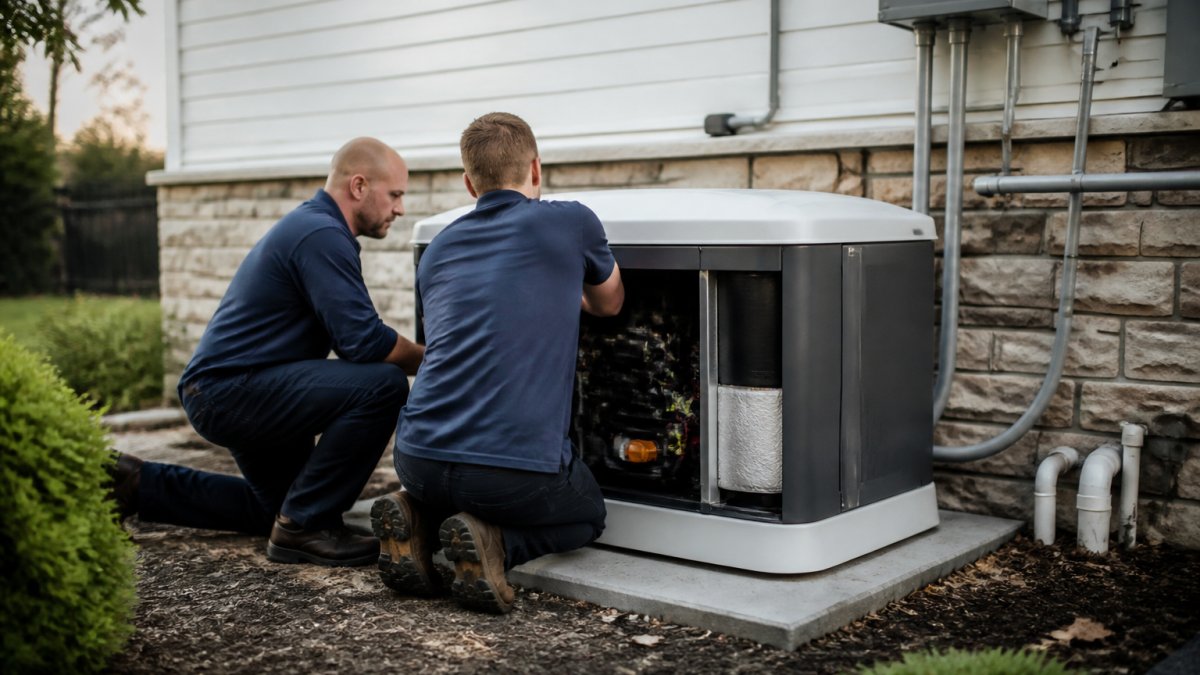
Home generator installers handle the full scope of backup power: site assessment, equipment selection, permit filing, electrical work, fuel connection, and commissioning, not just dropping a unit beside the house.
Here is what the work actually involves:
- Load calculation to determine your home's true wattage requirements
- Permitting with your local jurisdiction before any trenching or wiring begins
- Pad or platform preparation, plus fuel line routing for natural gas or propane
- Automatic transfer switch installation at the electrical panel
- Grounding, voltage regulation checks, and carbon monoxide safety verification
- Startup testing under load, then a walkthrough of the maintenance schedule
Standby vs. Portable: Which Installation Fits Your Home
Standby generators are permanently installed and start automatically during an outage, while portable units must be wheeled out, fueled, and connected by hand. The right choice depends on how much of your home you need running and how often outages hit.
When a Portable Unit Makes Sense
Portable generators suit renters, occasional storm prep, and households needing only a few circuits. They cost less upfront, usually need no electrical permit, and store in a garage. Trade-offs: you must be home to start them, fuel storage is on you, and they cannot power central AC or a well pump without careful load management.
When a Standby System Pays Off
A standby generator makes sense when outages are frequent, someone depends on powered medical equipment, or you work from home and cannot afford downtime. These run on natural gas or propane, exercise weekly, and switch over automatically.
How Generator Sizing and Load Management Work
Generator sizing starts with a load calculation totaling the running and starting watts of everything you want powered. The goal is a kilowatt capacity that covers your essential circuits with headroom, not one matching your entire panel rating.
| Home Priority Tier | Typical Loads | Sizing Consideration |
|---|---|---|
| Essential | Fridge, freezer, internet, lights, sump pump | Smallest kilowatt capacity, lowest cost |
| Comfort | HVAC, well pump, microwave, garage door | Mid-range unit plus load management |
| Whole-house | Range, dryer, EV charger, AC units | High kilowatt capacity, load shedding required |
Whole House Generator Installation Cost: What Drives the Number
Whole house generator installation cost depends on kilowatt capacity, fuel type, transfer switch complexity, and site conditions. Any installer who quotes a single figure without a site assessment is guessing.
Where the Money Goes
The total breaks into several buckets. The generator unit is the most visible line, but rarely the largest. Expect these to shape your quote:
- Generator unit and kilowatt capacity
- Automatic transfer switch, sized to your service panel
- Electrical panel upgrade if your existing panel cannot carry the load
- Fuel connection, including a natural gas line tap or propane tank installation
- Concrete pad, trenching, and conduit runs
- Permits and inspection fees
- Labor for a licensed electrician and any subcontractors
Total Cost of Ownership Over 10 Years
The purchase price is only the first number. Total cost of ownership (TCO) adds four recurring buckets on top of the install:
- Annual maintenance, oil and filter change, spark plug inspection, valve adjustment check, and a load-bank test. Most manufacturers require documented annual service to keep the warranty valid.
- Fuel, natural gas units draw from your existing meter, so the cost shows up on your utility bill. Propane units require a tank refill contract, and consumption scales with exercise and run hours.
- Battery replacement, the starting battery on a standby unit typically needs replacement every three to five years, and it is not covered by the generator's main warranty.
- Repair reserve, controllers, voltage regulators, and transfer switch relays are the parts most likely to fail outside warranty. Setting aside a small annual reserve is standard practice.
Build Your Own TCO Worksheet
You do not need a proprietary calculator. Use this framework and plug in each installer's numbers:
Take our 60-second quiz for a free quote today! →
| Cost Bucket | What to Ask For | Frequency |
|---|---|---|
| Install (unit + labor + permit) | Itemized quote, not a lump sum | One-time |
| Annual service contract | Written scope: oil, filter, plugs, load test | Yearly |
| Fuel | Estimated annual run hours × fuel rate | Ongoing |
| Starting battery | Brand and model of replacement | Every 3-5 years |
| Out-of-warranty repair reserve | Parts most likely to fail | As needed |
How Long Does Generator Installation Take?
How long does generator installation take? Most residential standby installations take one to three days of on-site work, but the full timeline from contract to power-on usually runs several weeks because of permitting and equipment lead times.
- Site assessment and load calculation, completed before the quote
- Permit application and approval from your local building department
- Pad prep and equipment delivery
- Electrical rough-in and transfer switch installation
- Fuel line connection and pressure testing
- Inspection by the local authority
- Startup, load testing, and homeowner walkthrough
Why You Need a Licensed Electrician for Generator Installation
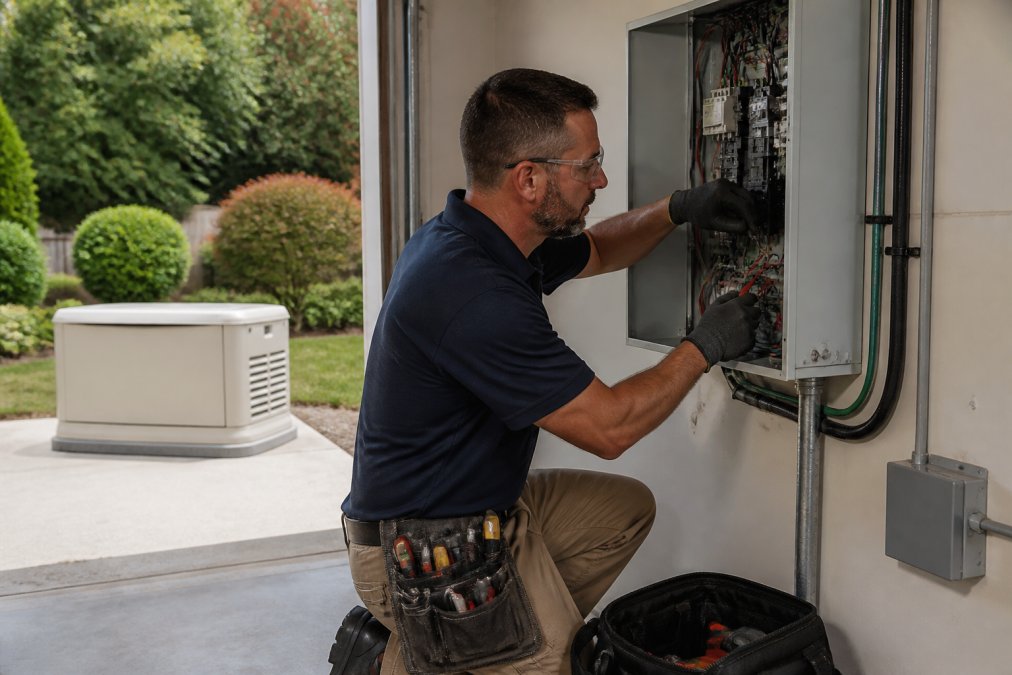
You need a licensed electrician because generator installation ties directly into your home's main electrical service, and errors cause fire, electrocution, and backfeed hazards, the dangerous scenario where generator power flows backward into utility lines and can injure line workers.
Questions to Ask Before You Hire
Use this checklist when vetting any installer:
- Are you licensed and insured in this state, and can I see the license number?
- Will you pull the electrical permit, or is that my responsibility?
- Who performs the load calculation, and will I get it in writing?
- What does the warranty cover, and who services it after installation?
- How do you handle a service call if the unit fails during an outage?
- Can you show me completed installations in my area?
Permits, Codes, and Noise Rules You Cannot Skip
Building code compliance and permits are not optional. Most jurisdictions require an electrical permit for standby installation, and the work must pass inspection before the utility connects service.
Noise Ordinance Compliance: How to Measure and Comply
Noise is the rule most homeowners discover late, usually after a neighbor complains. Standby generators run weekly exercise cycles and can run for hours during an outage, so the sound profile matters more than the spec sheet suggests.
- Stand at the point on your property line closest to where the generator will sit.
- Take readings at several times of day, including one reading during the unit's weekly exercise cycle.
- Note the ambient background noise, a reading taken next to a highway is not comparable to one taken in a quiet subdivision.
- Compare your highest reading against the numeric limit in your local code.
HOA Rules Stack on Top of City Code
A homeowner association can impose restrictions stricter than the city's: approved enclosure styles, minimum setbacks from neighboring structures, and pre-approval of the unit's location. Some HOAs prohibit standby generators entirely in certain plats.
Frequently Asked Questions
What qualifications should I look for in home generator installers?
Look for a current state electrical license, proof of insurance, and manufacturer authorization for the brand they sell. Ask whether the transfer switch work is done by their own licensed electricians or subcontracted, and request references from installations at least two years old. A written scope that names the generator model, kilowatt capacity, transfer switch type, and permit responsibility separates serious installers from quote-and-run operations.
How much does it cost to install a whole house generator for a 2000 square foot house?
There is no single number. Whole house generator installation cost depends on the kilowatt capacity you need, whether your home has natural gas or requires a propane tank installation, whether the electrical panel needs an upgrade, and how far the unit sits from the gas meter and panel. A 2000 square foot home with central air might need a larger unit than the square footage alone suggests. Request a site assessment and itemized quote rather than comparing flat rates.
Do I need a permit for home generator installation?
Yes in most jurisdictions. An electrical permit is standard, and many areas also require a mechanical or gas permit plus a zoning review for setbacks and noise. Building code compliance covers transfer switch wiring, grounding, and carbon monoxide safety clearances. A reputable installer pulls the permits in their name and schedules the inspection, so ask who is listed as the permit holder before work starts.
How long does generator installation take from signing to first test run?
Plan on several weeks, not days. The site assessment and quote come first, then permit approval, which can take one to three weeks depending on the jurisdiction. The physical install itself usually takes one to two days for a standby unit, and a propane tank installation adds time. If your electrical panel needs an upgrade or a gas line must be run, add another week or more. Ask for a written schedule with milestones.