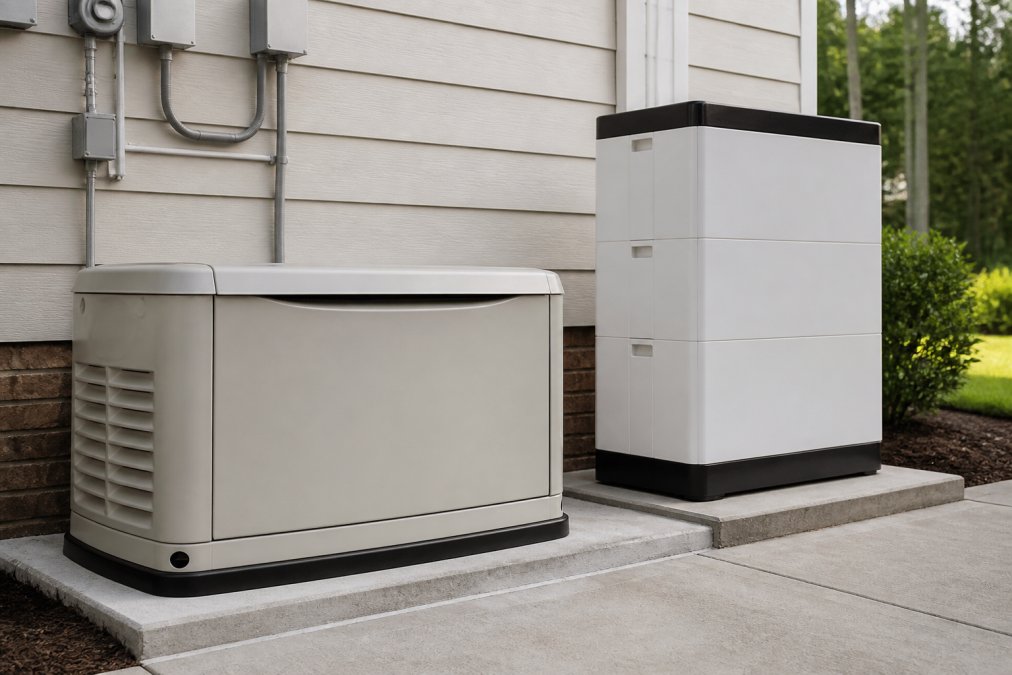
 comparison
Solar Battery vs Standby Generator Cost: 2026 Comparison
Table of Contents
- Solar Battery vs Standby Generator Cost: The Bottom Line Up Front
- Upfront Costs: What You Actually Pay Before the First Outage
- Whole Home Generator Installation Cost and What Drives It
- Ongoing Costs: Fuel, Maintenance, and Repairs Over 10 Years
- How Long Do Home Batteries Last During an Outage vs a Generator?
- Federal Solar Tax Credit Eligibility and Other Incentives
- Hybrid Systems and Smart Energy Management: The Middle Path
- Which One Should You Pick? A Decision Framework
- Frequently Asked Questions
Last Updated: September 19, 2026
Solar Battery vs Standby Generator Cost: The Bottom Line Up Front
The solar battery vs standby generator cost comparison usually comes down to this: a standby generator carries a lower upfront price, while a solar battery carries lower long-term costs. A typical home standby generator costs less to install, but it depends on fuel that has to keep arriving. A solar battery costs more on day one, but it runs on sunlight you already own.
Upfront Costs: What You Actually Pay Before the First Outage
Upfront pricing is where standby generators look unbeatable, until you itemize what is actually in the quote. A generator is a mechanical box, a fuel line, and a transfer switch. A solar battery is a storage system that usually needs panels, an inverter, and a critical-load panel to be useful. Those line items are where the two diverge.
Standby Generator Upfront Costs
A whole-home standby generator's cost depends on various factors, and the spread is driven less by the box than by the site. A typical quote bundles four things:
- The unit itself, air-cooled units in the 7-24 kW range sit at the low end; liquid-cooled 22-48 kW units built for central air and electric ranges sit at the high end.
- The automatic transfer switch (ATS), service-rated switches sized to your panel add cost, and a 200-amp service-rated ATS is a different line item than a 100-amp essential-circuits switch.
- Fuel hookup, a natural gas connection may only need a permit and a plumber, while propane requires a tank, a pad, and a line, which can add thousands before the generator is even set.
- Permitting and inspection, most jurisdictions require an electrical permit, a gas permit, and a final inspection, and some HOAs add architectural review.
Solar Battery Upfront Costs
Battery pricing splits into three tiers, and the tier matters more than the brand:
- Portable solar batteries, units like the Jackery Solar Generator 2000 Plus start around $999 and are best treated as plug-in backup for a few circuits, not whole-home power.
- Expandable home batteries, systems such as the EcoFlow DELTA Pro run roughly $3,000 to $8,000 as a net system cost before installation.
- Whole-home battery plus solar, a battery paired with a new array and a critical-load or smart panel is the top of the range, and the array is usually the largest single line item.
The Hybrid Entry Point
Whole Home Generator Installation Cost and What Drives It
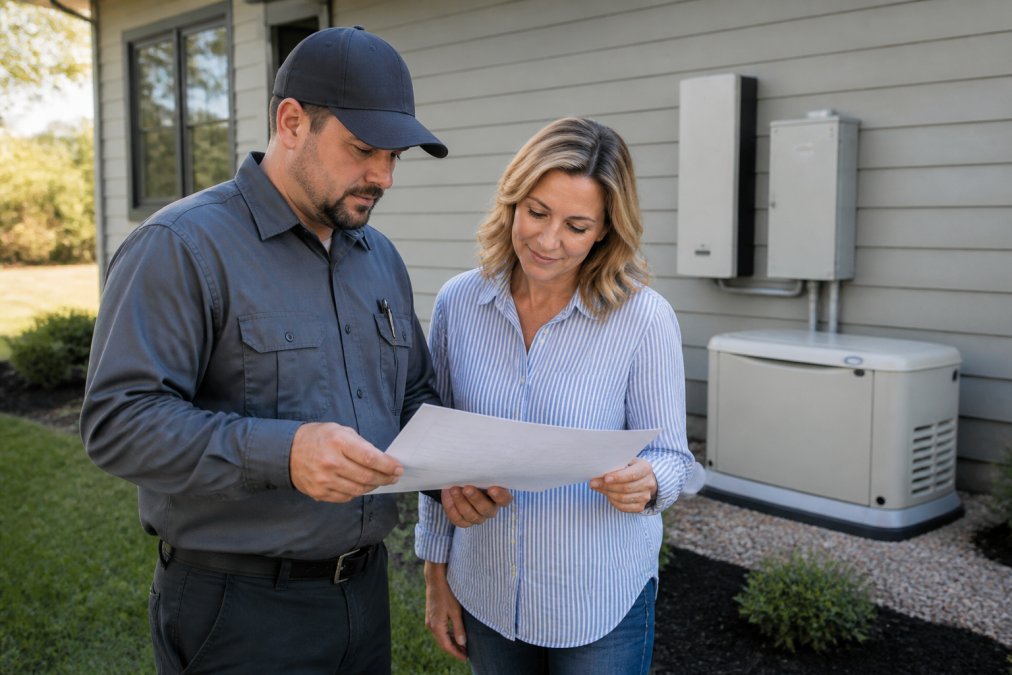
Whole home generator installation cost depends on four things: generator size, fuel source, electrical panel condition, and site logistics. A small essential-circuits system costs far less than a unit sized to run central air conditioning and an electric range.
| Cost Driver | Why It Matters | Typical Impact |
|---|---|---|
| Generator size | Bigger units run more appliances | Higher unit price |
| Fuel source | Natural gas vs. propane hookup | New line or tank needed |
| Electrical panel | Age and capacity | Panel upgrade possible |
| Site logistics | Distance from fuel and panel | More labor and wiring |
Ongoing Costs: Fuel, Maintenance, and Repairs Over 10 Years
Ongoing costs are where the solar battery vs standby generator cost picture flips. A generator needs fuel, oil changes, and periodic servicing. A battery needs almost nothing beyond an occasional check of connections and software updates. But "almost nothing" and "fuel and servicing" are not useful numbers on their own, the decade is where the two actually separate.
Fuel Consumption and Supply Logistics
Fuel consumption scales with load, and load scales with what you decide to run. A generator carrying a refrigerator, a few lights, and a router sips fuel. A generator carrying central air, a well pump, and an electric range burns through a propane tank in days, not weeks. The practical implication is that runtime is not a generator spec, it is a function of tank size and load, and most homeowners underestimate both.
Maintenance Schedules and Operating Expenses
Standby generators need annual servicing, oil and filter changes, and a battery replacement in the unit every few years. A realistic service schedule looks like this:
- Annual service, oil, oil filter, air filter, spark plugs on air-cooled units, and a visual inspection of the enclosure and connections.
- Battery replacement, the small starting battery in the generator typically needs replacement every two to four years.
- Exercise cycles, most units run a weekly self-test, which burns a small amount of fuel and adds wear over time.
- Repairs, transfer switches, control boards, and fuel regulators are the most common failure points, and they are not cheap to replace.
The 10-Year View
Over a decade, the pattern most practitioners see is this: the generator's lower upfront price is steadily eaten by fuel, annual service, and at least one significant repair, while the battery's higher upfront price is offset by near-zero operating costs and, in many cases, by the federal residential clean energy credit. The crossover point depends on how often you actually run the system.
Smart Panels Change the Sizing Math
A smart panel or load-shedding controller can automatically drop non-essential circuits during an outage, which means both a smaller generator and a smaller battery can carry the same house. That lowers upfront cost and, for the generator, lowers fuel consumption during every event. It is the single most underrated lever on total cost of ownership, and it is why the hybrid route in the next section is often cheaper over a decade than either option alone.
How Long Do Home Batteries Last During an Outage vs a Generator?
How long do home batteries last during an outage depends on capacity and load. A modest battery can carry critical loads like a refrigerator, internet router, and a few lights for a day or more. Running central air conditioning shortens that window sharply.
Federal Solar Tax Credit Eligibility and Other Incentives
Federal solar tax credit eligibility can meaningfully change the math, and it applies to solar-plus-storage systems rather than to fossil-fuel generators. Homeowners should confirm current rules with a tax professional, since eligibility depends on system type and timing. Check the IRS guidance on the residential clean energy credit for the latest details before you buy.
Hybrid Systems and Smart Energy Management: The Middle Path
Hybrid systems pair a solar battery with a standby generator, and they solve the weakness in each option. The battery handles short outages silently and cheaply. The generator kicks in only for extended events, cutting fuel consumption and wear.
Which One Should You Pick? A Decision Framework
Pick based on outage length, budget, and how much you value quiet and clean power. Use this framework:
- Short, frequent outages: solar battery wins on cost and convenience
- Multi-day outages: standby generator or hybrid system
- Remote work with critical loads: battery sized to your equipment
- Lower upfront budget: standby generator
- Long-term energy independence: solar battery plus storage
- Best of both: hybrid battery and generator
Frequently Asked Questions
Is a solar battery cheaper than a standby generator?
Upfront, standby generators usually cost less. A whole-home battery setup like the EcoFlow DELTA Pro ecosystem has varying costs before installation labor. Over 10 years, the math shifts: generators add fuel, oil changes, and service calls, while batteries need almost no routine maintenance. The cheaper option depends on how often you lose power and for how long.
How long does a solar battery last during a power outage compared to a generator?
A standby generator runs indefinitely as long as fuel is available, making it the clear winner for multi-day outages. Home batteries are rated in kilowatt-hours, so runtime depends on what you power. Running a critical load panel with fridge, lights, internet, and a few outlets can stretch a charged battery 1 to 3 days. Powering a whole home with AC drops that to hours. Pairing batteries with solar extends runtime by recharging daily.
Do standby generators require more maintenance than solar battery systems?
Yes. Standby generators need annual professional service, oil and filter changes, battery replacement every few years, and weekly self-tests. Fuel systems also need inspection, and propane or natural gas supply must stay reliable. Solar batteries have no engines, no fuel, and no exhaust, so maintenance is limited to occasional firmware updates and keeping the units ventilated. Over 10 years, that gap shows up in your total cost of ownership.
Can I use a solar battery to power my whole home during an outage?
Yes, but sizing matters. A whole-home battery system with a smart home panel and enough capacity can run your entire house, including AC, for a limited time. Most homeowners choose a critical load panel instead, which covers essentials like refrigeration, internet, medical equipment, and lighting for longer. An installer can calculate your critical load and match battery capacity so runtime meets your expectations.
Does a standby generator increase home value more than a solar battery system?
Both can help at resale, but they appeal to different buyers. A standby generator signals reliable backup power, which matters in areas with frequent outages. Solar batteries paired with panels often attract buyers interested in lower utility bills and net metering credits. Neither guarantees a dollar-for-dollar return. The bigger factor is whether the system is professionally installed, permitted, and documented, since buyers want proof it works.
The hardest part of this decision is not the price tag. It is matching the system to your actual outage risk and your actual appliances. Generators of Nashville by Evolution Electric handles that sizing for you, with licensed installation, authorized Generac, EcoFlow, Anker SOLIX, and Jackery systems, and E4G whole-home backup options. Get started with Generators of Nashville by Evolution Electric and take our 60-second quiz for a free quote today.