 comparison
EcoFlow Delta Pro vs Anker SOLIX: Home Backup Guide
Table of Contents
- EcoFlow Delta Pro vs Anker SOLIX: Quick Comparison Table
- EcoFlow DELTA Pro Home Backup: What It Handles
- Anker SOLIX F3800 Home Backup: What It Handles
- Capacity and Expandable Battery Backup for Home Use
- Portable Power Station for Home Outages: Where Each Wins
- Installation, Permits, and Professional Setup
- Which System Fits Your Home? Decision Framework
- Frequently Asked Questions
Last Updated: October 18, 2026
EcoFlow Delta Pro vs Anker SOLIX: Quick Comparison Table
The EcoFlow Delta Pro vs Anker SOLIX decision comes down to one question: do you want a battery you can wheel into the garage and plug in yourself, or a system wired into your panel by a licensed electrician? This guide from Generators of Nashville by Evolution Electric breaks down both families so you can match the hardware to your home instead of the other way around. Below, we'll show you exactly where each system wins, where it falls short, and which households should walk away from both.
Here is the at-a-glance comparison before we go deeper:
| Factor | EcoFlow DELTA Pro family | Anker SOLIX family |
|---|---|---|
| Best known models | DELTA Pro, DELTA Pro Ultra, DELTA 3 Pro | SOLIX F3800 Plus, SOLIX E10 |
| Starting capacity | 4,096 Wh on DELTA 3 Pro | Not published in our source data |
| Maximum expansion | Up to 48 kWh on DELTA 3 Pro | Not published in our source data |
| Reported entry price | About $4,699 for DELTA Pro Ultra | $4,299 for SOLIX E10 |
| Reported cost per Wh | About $0.76 | About $0.59 on F3800 Plus |
| Setup style | Portable plus optional transfer gear | Portable plus whole-home configurations |
| Best for | Multi-day outages, flexible placement | Budget-per-kWh buyers, panel-tied setups |
EcoFlow DELTA Pro Home Backup: What It Handles
EcoFlow's DELTA Pro line is the more mature ecosystem of the two, and that maturity shows in the expansion options. The DELTA 3 Pro starts at 4,096 Wh and expands to 48 kWh, according to EcoFlow's DELTA series product documentation. That range covers anything from keeping a fridge and router alive to carrying a household through a multi-day outage.
The DELTA Pro Ultra, the model most often compared head-to-head with Anker's whole-home units, carries a reported price of about $4,699 in the comparison data we reviewed. That works out to roughly $0.76 per watt-hour.
What we like: the modular approach. You can buy one battery now and add capacity later without replacing the inverter. That matters for homeowners who want to phase in spending.
Where it falls short: EcoFlow's published specs for whole-home wiring are thinner than what a licensed installer wants to see before committing to a panel connection. Plan on a site assessment rather than a plug-and-play assumption.
Anker SOLIX F3800 Home Backup: What It Handles
Anker's SOLIX F3800 home backup story is simpler to explain: it competes on cost per watt-hour. The comparison data we reviewed estimates the F3800 Plus at about $0.59 per watt-hour, roughly a quarter cheaper than the EcoFlow DELTA Pro Ultra on the same measure.
The SOLIX E10, Anker's whole-home contender, lists an entry price of $4,299 in one comparison result. Treat that figure as a starting point, not a final number, because it comes from a third-party comparison rather than a confirmed current listing.
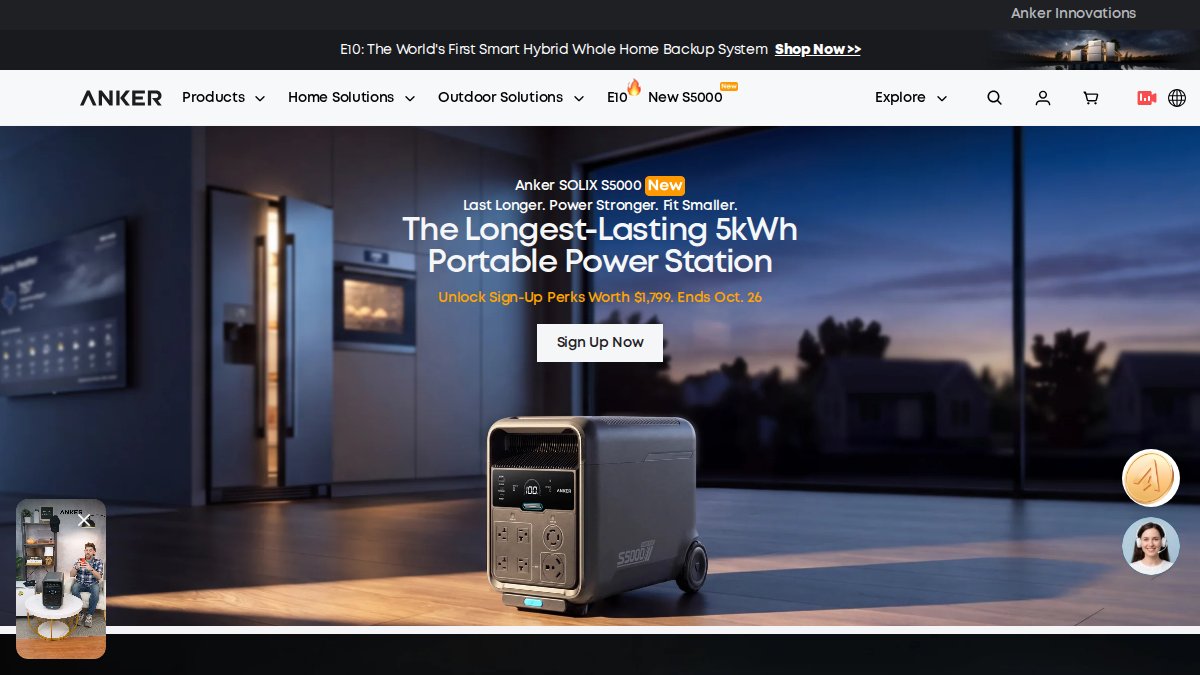
A common mistake is assuming a lower per-watt-hour price means a lower total bill. It often does not. The F3800 Plus is a portable power station for home outages first and a whole-home system second, so the accessories and labor to tie it into your panel add cost the sticker price does not show.
Capacity and Expandable Battery Backup for Home Use
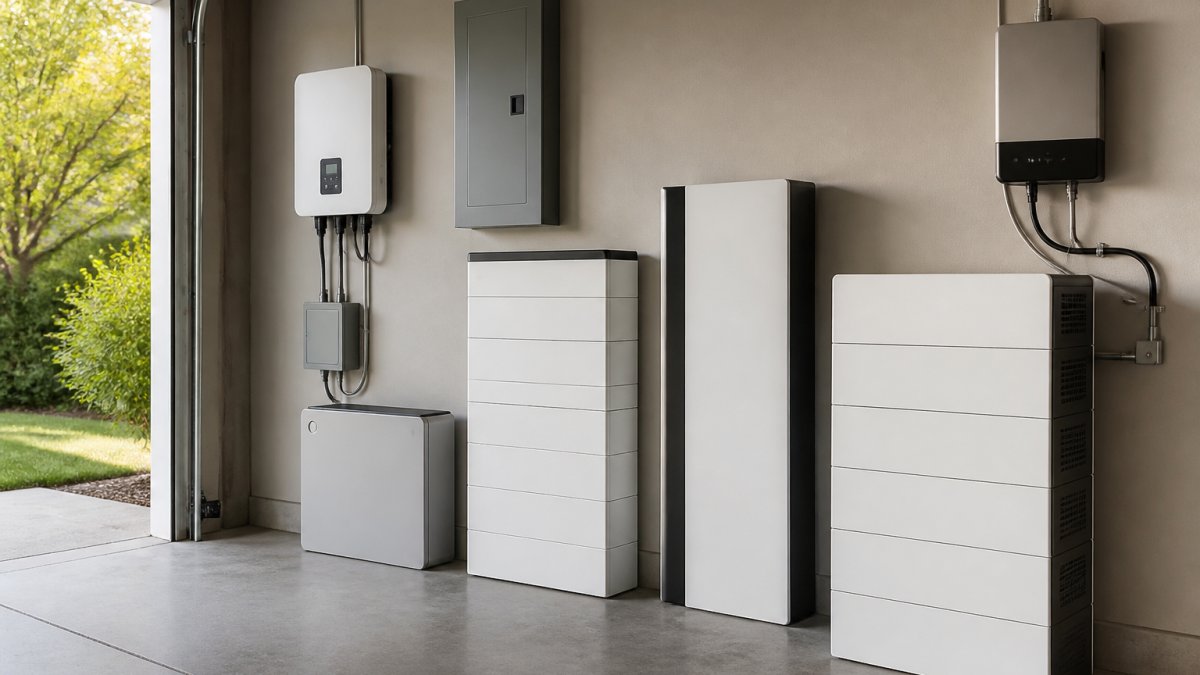
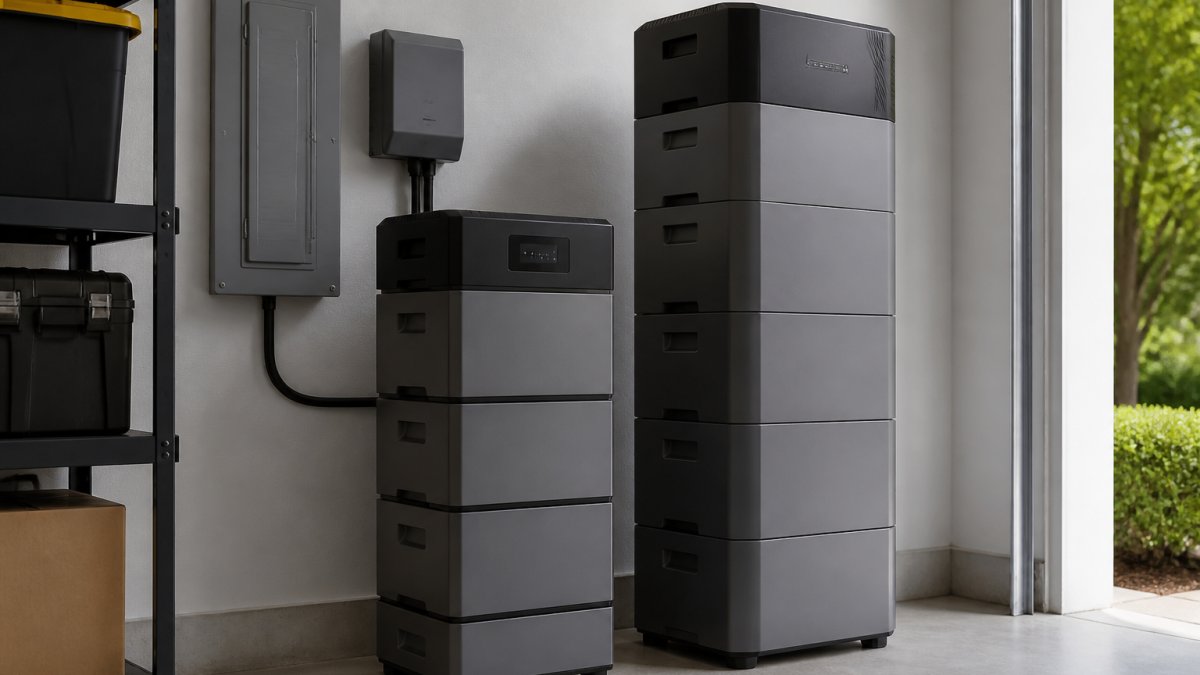
Expandable battery backup for home use is the feature that separates a serious system from an expensive camping accessory. Both brands offer expansion, but they expand differently.
EcoFlow publishes clear stacking numbers: 4,096 Wh base, 48 kWh ceiling on the DELTA 3 Pro. That is a documented path from "keep the essentials on" to "run the house for days."
Anker's expansion architecture is real but less clearly documented in the comparison data we reviewed. The SOLIX family supports additional batteries, yet the published capacity ceilings were not available in our source material. That is not a knock on the hardware. It is a reason to get the numbers in writing from an installer before you buy.
How much capacity do you actually need? A practical rule: add up the wattage of what you refuse to lose, multiply by the hours you expect to be dark, then add a 30% buffer for inverter losses and cold weather.
Portable Power Station for Home Outages: Where Each Wins
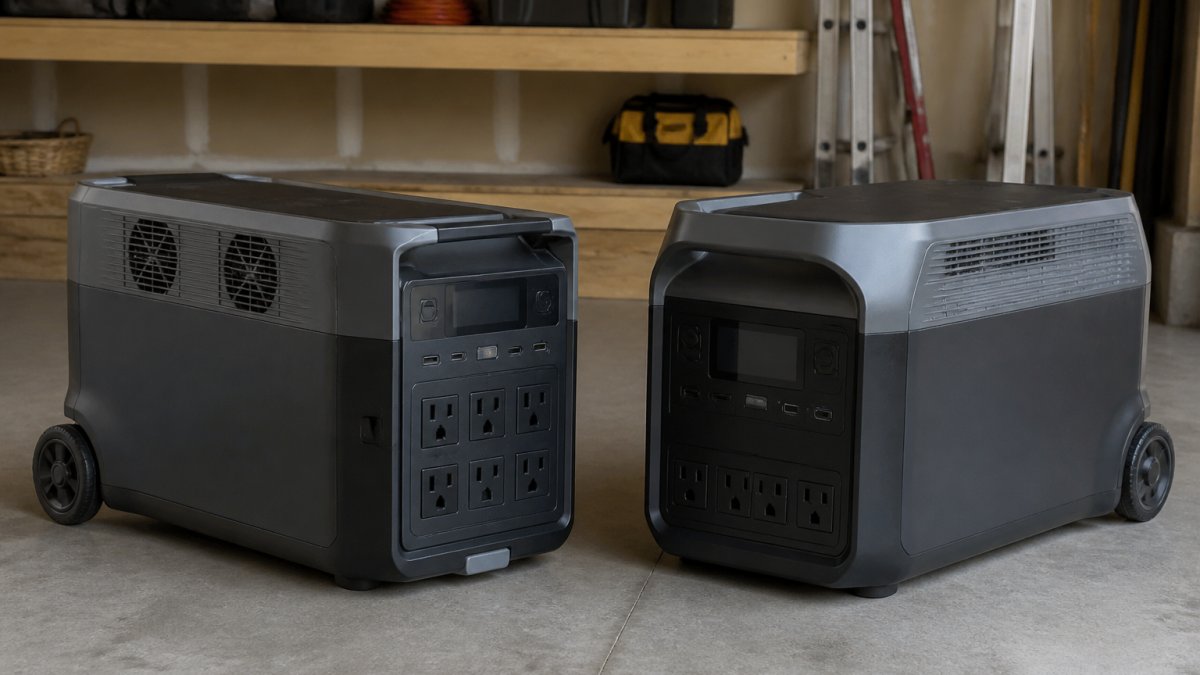
A portable power station for home outages wins on flexibility. You roll it to the room that needs power, plug in what matters, and skip the electrician entirely. Both the EcoFlow DELTA Pro and the Anker SOLIX F3800 can serve this role.
EcoFlow wins when:
Take our 60-second quiz for a free quote today! →
- You want one unit that scales from camping to blackout duty
- You value a documented expansion ceiling you can plan around
- You are willing to pay more per watt-hour for ecosystem depth
Anker wins when:
- Cost per usable watt-hour is your top filter
- You want a simpler, appliance-style mental model
- You plan to add a panel connection later through a contractor
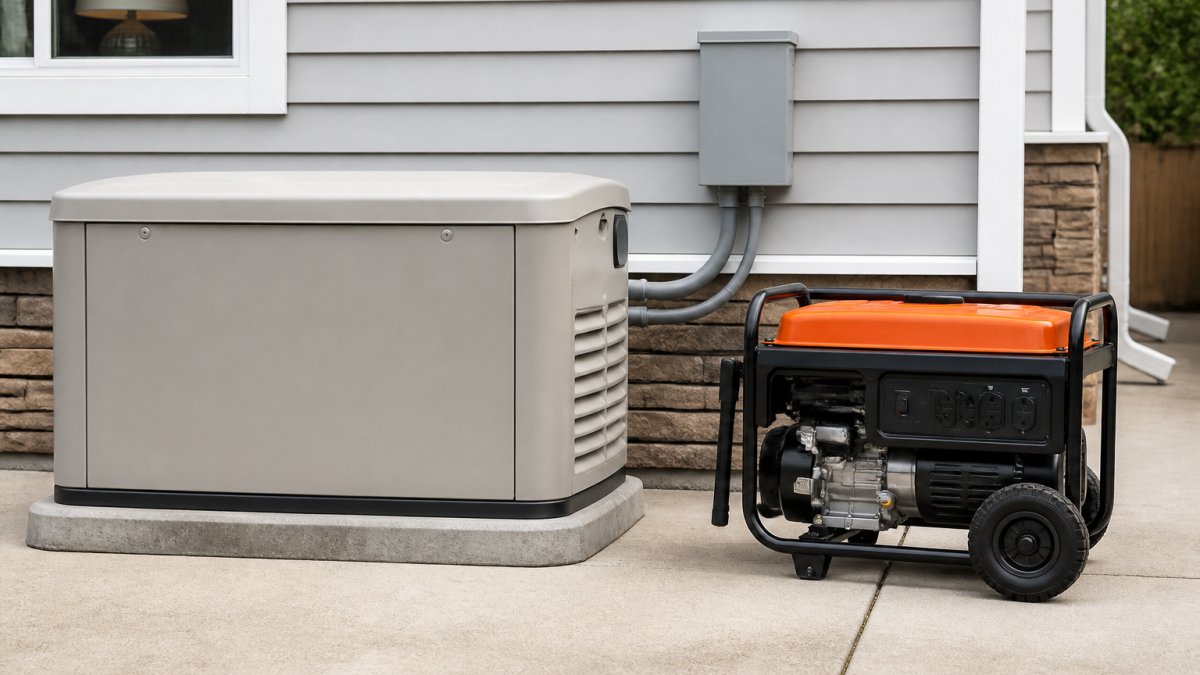
Neither wins when your goal is whole-home coverage with automatic switchover. That is a different product category, and pretending a portable unit replaces a standby generator is how people end up disappointed.
Installation, Permits, and Professional Setup
Installation is where the comparison stops being about specs and starts being about risk. A portable unit plugged into a wall outlet needs no permit. A battery tied into your home's electrical panel is a different animal.
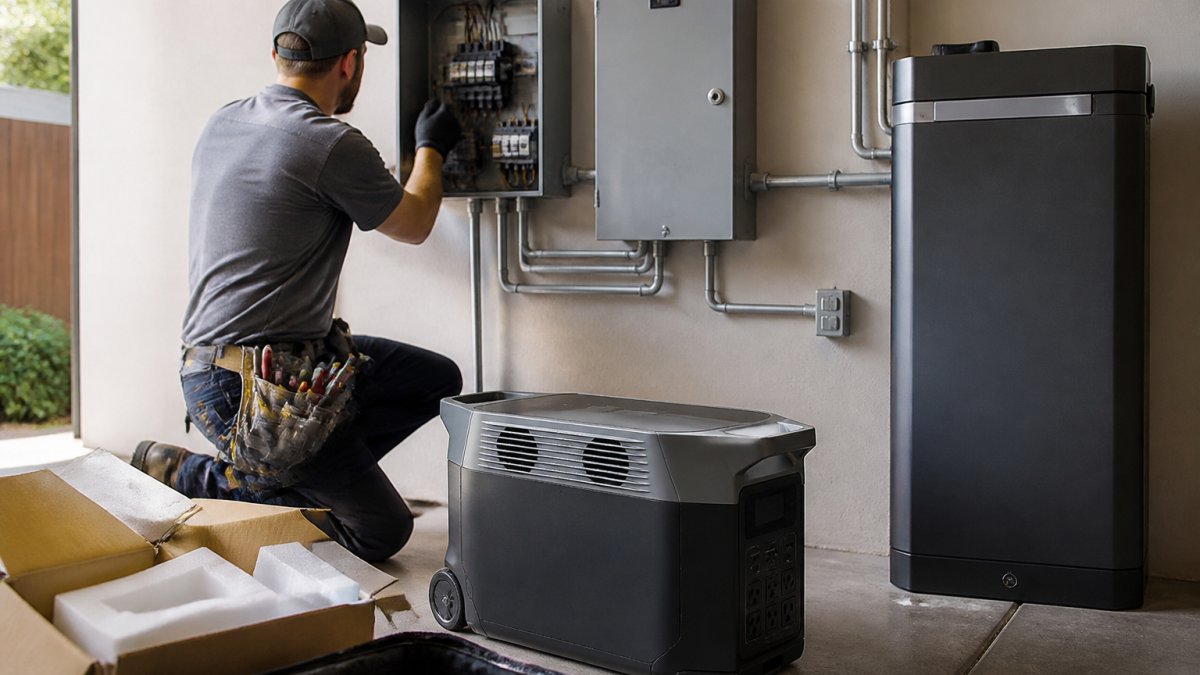
Most jurisdictions require an electrical permit for a panel-tied battery or transfer switch, and the work typically must be inspected before it is energized. The National Electrical Code guidance from NFPA is the baseline most local codes build on, but your city or county adopts its own version and amendments. Confirm the local requirement before scheduling anything.
Who is responsible if something goes wrong? The licensed contractor who pulled the permit. That is the practical argument for hiring an electrician rather than self-installing: the permit, the inspection, and the liability all live with the licensed professional.
At Generators of Nashville by Evolution Electric, our licensed electricians have installed backup systems since 2014, including EcoFlow and Anker SOLIX units. We handle the permit pull, the panel assessment, and the inspection coordination.
Which System Fits Your Home? Decision Framework
Use this framework to pick a side. Answer each question honestly, then follow the branch.
| Your situation | Recommended path |
|---|---|
| Want backup for fridge, router, and phones only | Either brand's portable unit, sized to your load |
| Work from home and cannot lose internet | Portable unit plus a UPS on network gear |
| Want whole-home coverage with automatic switchover | Panel-tied system installed by a licensed electrician |
| Budget is the deciding factor | Compare cost per usable watt-hour, then add install labor |
| Plan to expand capacity over several years | Choose the brand with the documented expansion ceiling |
Three questions to settle before you spend a dollar:
- What is your critical load in watts, added up from the labels on each device?
- How long do your outages typically last, and what is the worst case you want to survive?
- Is your electrical panel rated to accept the connection, or does it need an upgrade first?
If you cannot answer the third question, that is your starting point, not the battery spec sheet. A panel assessment costs far less than a restocking fee.
The real challenge with home backup is not choosing between two capable brands. It is matching capacity, connection style, and code compliance to your specific house before the next storm arrives. Generators of Nashville by Evolution Electric removes that guesswork with licensed electricians who have installed EcoFlow, Anker SOLIX, and Generac systems since 2014, plus E4G whole-home backup options for households that want automatic coverage. Take our 60-second quiz for a free, personalized quote.
Frequently Asked Questions
Is EcoFlow Delta Pro or Anker SOLIX better for home backup?
Neither wins outright. The EcoFlow DELTA Pro line is built around expandable capacity that can reach 48 kWh on the DELTA 3 Pro, which suits multi-day outages. Anker SOLIX options like the F3800 Plus show a lower reported price per watt-hour, roughly $0.59 versus about $0.76 for the DELTA Pro Ultra in one published comparison. Match the choice to your outage length, essential loads, and whether you plan to add batteries later.
Can EcoFlow Delta Pro or Anker SOLIX power a whole home?
Both lines are positioned as whole-home backup systems, but whole-home coverage depends on your service panel, essential-load strategy, and installed capacity, not the brand name alone. Many households start with a subpanel that runs the furnace, refrigerator, internet, and a few circuits, then expand. A licensed electrician should calculate your load before you buy so the system matches what you actually need to run.
How do EcoFlow DELTA Pro and Anker SOLIX compare in battery capacity?
EcoFlow publishes expansion figures for its DELTA line, with the DELTA 3 Pro starting at 4,096 Wh and expanding to 48 kWh. Anker SOLIX systems are also expandable, and the F3800 Plus is compared directly with the DELTA Pro Ultra on price per watt-hour. Confirm current capacity and expansion limits on each manufacturer's site, because configurations and bundle options change.
Do EcoFlow and Anker SOLIX require professional installation for home backup?
Plug-in setups can run appliances directly, but tying a battery system into your home's wiring through a transfer switch or subpanel is electrical work and typically requires a permit and a licensed electrician. Installation also determines whether the system backfeeds safely and meets local code. Have an installer review your panel and grounding before purchase so the equipment you buy can actually be connected.