 listicle
Best Home Energy Storage Systems: 2026 Guide
Table of Contents
- How Home Energy Storage Systems Work
- Key Factors When Choosing a Home Energy Storage System
- Best Home Energy Storage Systems Compared
- Generac PWRcell: Best for Scalable Whole-Home Backup
- Tesla Powerwall 3: Best Integrated Solar-Plus-Storage
- EcoFlow DELTA Pro Ultra: Best High-Output Modular System
- Anker SOLIX F3800: Best Portable Whole-Home Option
- Enphase IQ Battery 5P: Best for Existing Enphase Solar
- FranklinWH aPower 2: Best Single-Unit Capacity
- SolarEdge Home Battery: Best DC-Coupled Efficiency
- Jackery Explorer 2000 Plus: Best Entry-Level Expandable
- Home Battery Backup Cost: What to Budget in 2026
- Solar Battery Lifespan and Real-World Degradation
- Whole-Home Generator vs Battery Backup: Which Is Right for You?
- Frequently Asked Questions
Last Updated: September 1, 2026
Home energy storage is one of the fastest-growing categories in residential power, and one of the most confusing to shop. At Generators of Nashville by Evolution Electric, we've helped homeowners across Middle Tennessee evaluate, install, and maintain battery backup systems since 2014. This guide identifies the best home energy storage systems available in 2026, covering real technical specs, honest tradeoffs, and what each system actually costs to own.
Quick Picks:
- Best Overall for Whole-Home Backup: Generac PWRcell, scalable, efficient, generator-compatible
- Best Integrated Solar-Plus-Storage: Tesla Powerwall 3, built-in inverter, smart grid features
- Best Modular High-Output: EcoFlow DELTA Pro Ultra, massive scalability, UL certified
- Best Entry-Level Option: Jackery Explorer 2000 Plus, affordable, expandable, portable
- Best Single-Unit Capacity: FranklinWH aPower 2, 15 kWh usable, whole-home ready
How Home Energy Storage Systems Work
A home energy storage system captures electricity from solar panels, the grid, or a generator and releases it on demand during an outage or peak-rate hours. Most residential systems pair a lithium-based battery pack with an inverter that converts DC electricity into AC electricity for appliances. The battery management system monitors cell temperature, charge levels, and discharge rates to protect the battery and maximize cycle life.
Battery Management Systems and Safety
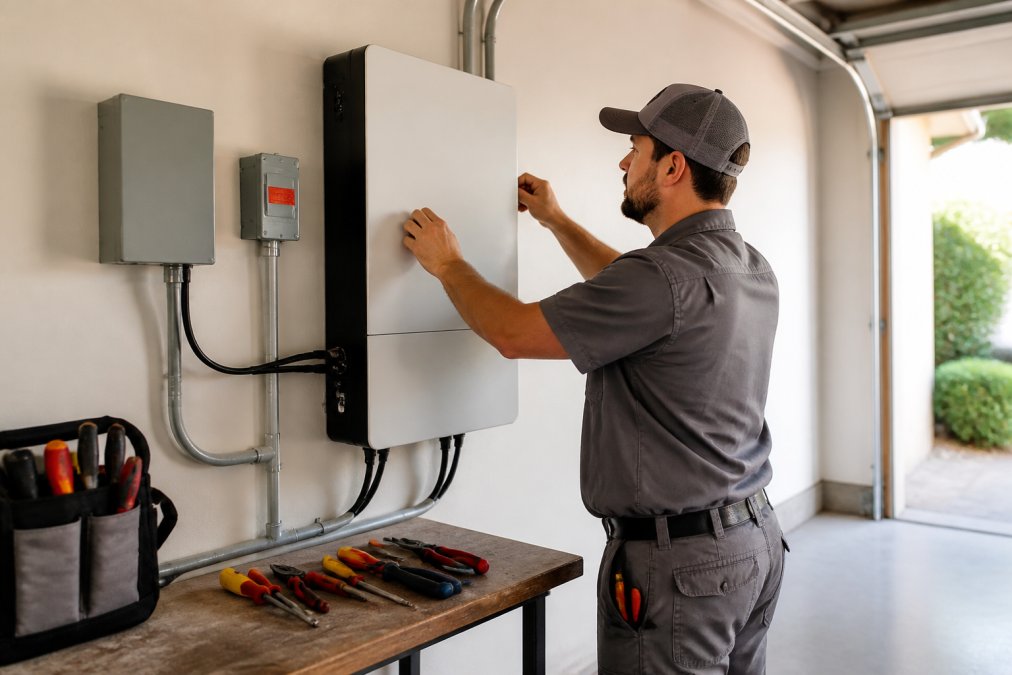
The battery management system (BMS) is the brain of any home energy storage unit, monitoring individual cell voltages, preventing thermal runaway, and managing discharge rates. Lithium iron phosphate (LFP) chemistry has become the dominant choice for residential storage because it's inherently more stable than older lithium-ion NMC formulations. The U.S. Consumer Product Safety Commission guidance on lithium battery safety recommends verifying UL certification before any residential installation, look for UL 1973 and UL 9540 listings.
AC-Coupled vs. DC-Coupled Configurations
In a DC-coupled system, solar energy flows directly from panels through a hybrid inverter into the battery without being converted to AC first. This single conversion step means higher round-trip efficiency, typically 96-98%. The SolarEdge Home Battery exemplifies this approach.
In an AC-coupled system, solar energy is converted to AC by a solar inverter, then back to DC to charge the battery, then to AC again when discharged. Each conversion costs roughly 3-5%. AC coupling is more flexible for retrofits because you can add a battery to an existing solar array without replacing the inverter. The Enphase IQ Battery 5P uses this approach.
Key Factors When Choosing a Home Energy Storage System
Choosing the right system depends on four variables: capacity needed, power output required, how the battery connects to existing solar, and warranty protection.
Capacity, Power Rating, and Depth of Discharge
Capacity (kilowatt-hours, or kWh) tells you total energy stored. Power rating (kilowatts, or kW) tells you how much energy it can deliver at once. Both matter, a 10 kWh battery with 3 kW continuous output can't run a central AC unit (which typically draws 3.5-5 kW). Depth of discharge (DoD) is the percentage of total capacity you can actually use. Most lithium systems allow 90-100% DoD; always compare usable kWh, not total kWh.
For a typical 2,000-square-foot home running essential loads, a 10-13 kWh battery provides roughly 8-12 hours of backup. Running central AC requires either a high-output system like the FranklinWH aPower 2 or a scalable solution like the EcoFlow DELTA Pro Ultra.
Inverter Compatibility and Solar Array Integration
The most common installation mistake is buying a battery incompatible with an existing inverter. DC-coupled batteries require a hybrid inverter supporting the specific battery's communication protocol. AC-coupled batteries are more flexible but less efficient.
Before purchasing, confirm your current inverter type, whether the battery manufacturer supports your inverter brand, and whether a new inverter is included in the installed price. Working with a licensed installer prevents these issues entirely.
Best Home Energy Storage Systems Compared
The systems below are ranked by use case. The right battery depends on your home size, existing solar setup, and whether you need partial or whole-home backup.
| System | Usable Capacity | Continuous Output | Chemistry | Best For |
|---|---|---|---|---|
| Generac PWRcell | 9-18 kWh (expandable) | Up to 11 kW | LFP | Scalable whole-home backup |
| Tesla Powerwall 3 | 13.5 kWh | 11.5 kW | LFP | Integrated solar-plus-storage |
| EcoFlow DELTA Pro Ultra | 6-90 kWh | 7.2-21.6 kW | LFP | High-output modular systems |
| Anker SOLIX F3800 | 3.84-53.8 kWh | 6 kW | LFP | Portable whole-home option |
| Enphase IQ Battery 5P | 5 kWh per unit | 3.84 kW per unit | LFP | Existing Enphase solar systems |
| FranklinWH aPower 2 | 15 kWh | 10 kW | LFP | Single-unit whole-home capacity |
| SolarEdge Home Battery | 10 kWh | 5 kW | LFP | DC-coupled SolarEdge systems |
| Jackery Explorer 2000 Plus | 2-24 kWh | 3 kW | LFP | Entry-level expandable backup |
Generac PWRcell: Best for Scalable Whole-Home Backup
The Generac PWRcell earns the top spot for homeowners wanting flexibility. Its modular cabinet design starts at 9 kWh and scales to 18 kWh per cabinet, with multiple cabinets supported for larger homes. Round-trip efficiency sits at 96.5%, among the best in this category.
What separates the PWRcell is its ability to charge from three sources simultaneously: solar panels, the grid, and a Generac standby generator. For homes with existing Generac generators, this creates a resilient backup ecosystem. The PWRview app provides real-time monitoring and load prioritization for essential circuits.
Installed costs vary depending on the specific configuration and installation requirements. For whole-home backup with genuine scalability, it is a significant investment.
Tesla Powerwall 3: Best Integrated Solar-Plus-Storage
The Tesla Powerwall 3 offers the cleanest solar-plus-storage integration. Its built-in solar inverter eliminates a separate component, reducing both cost and failure points. At 13.5 kWh usable and 11.5 kW continuous output, it handles most whole-home loads including central AC.
Storm Watch automatically pre-charges the battery when severe weather is forecast. Time-Based Control optimizes charging around time-of-use rates, which matters as utilities shift to variable pricing.
EcoFlow DELTA Pro Ultra: Best High-Output Modular System
Most home battery systems top out at 10-15 kW continuous output. The EcoFlow DELTA Pro Ultra scales from 7.2 kW to 21.6 kW by adding inverter modules, enough to run central AC, an electric water heater, and a home office simultaneously. Capacity scales from 6 kWh to 90 kWh with additional battery modules.
The DELTA Pro Ultra carries dual UL certification (UL 1973 and UL 9540). Its self-heating battery maintains performance in cold weather. The base unit is an accessible entry point for a high-output system.
Anker SOLIX F3800: Best Portable Whole-Home Option
The Anker SOLIX F3800 is the most capable portable power station in this comparison. Its 3,840 Wh LFP battery delivers 6,000W continuous AC output and supports 120V/240V dual-voltage for whole-home coverage via transfer switch. Expandability reaches 53.8 kWh with additional battery packs. lithium battery options.
Enphase IQ Battery 5P: Best for Existing Enphase Solar
If you already have an Enphase microinverter system, the IQ Battery 5P is the obvious choice. Its six embedded grid-forming microinverters make it a true AC-coupled system integrating seamlessly with Enphase. The 15-year warranty is the longest in this comparison.
Each unit provides 5 kWh usable capacity and 3.84 kW continuous output. Most homes need two or three units for meaningful whole-home backup.
Take our 60-second quiz for a free quote today! →
FranklinWH aPower 2: Best Single-Unit Capacity
The FranklinWH aPower 2 offers 15 kWh usable capacity and 10 kW continuous output in a single unit, the highest single-unit figures among mainstream residential batteries. Its IP67 rating allows outdoor installation without a protective enclosure.
The aGate controller provides circuit-level energy management and compatibility with any solar inverter, AC generator, or grid connection. For homeowners running high-surge appliances like central AC or well pumps, the aPower 2's output headroom is a real advantage.
SolarEdge Home Battery: Best DC-Coupled Efficiency
For homeowners with a SolarEdge Home Hub Inverter, the SolarEdge Home Battery offers the highest system-level efficiency through DC coupling. At 10 kWh usable and 5 kW continuous output, it covers essential loads comfortably. Installation is notably clean with wireless communication reducing wiring runs.
Jackery Explorer 2000 Plus: Best Entry-Level Expandable
The Jackery Explorer 2000 Plus scales to 24 kWh with additional battery packs. It's an accessible entry point, genuinely useful for partial-home backup: keeping a refrigerator, router, phone chargers, and lights running during short outages.
Its 3,000W continuous output (6,000W surge) handles most individual appliances but won't run central AC. For renters or homeowners testing battery backup before committing to a full installed system, it's a smart starting point.
Home Battery Backup Cost: What to Budget in 2026
Portable systems like the Jackery Explorer 2000 Plus vary in price. Whole-home installed systems from Generac, Tesla, or FranklinWH typically vary depending on the specific configuration and installation requirements. The installed cost breakdown includes equipment (battery + inverter if not integrated), electrical labor, permit fees, and sometimes a new smart electrical panel or transfer switch.
Federal Incentives and Rebate Navigation
The Section 25D residential clean energy credit, which covered 30% of standalone battery storage costs, expired December 31, 2025. State and utility incentives remain active in many markets. According to the Database of State Incentives for Renewables and Efficiency, dozens of states offer rebates, property tax exemptions, or utility bill credits for residential battery storage.
Tennessee Valley Authority (TVA) and local power companies in Middle Tennessee have their own programs. Check directly with your utility for current battery incentive availability.
Solar Battery Lifespan and Real-World Degradation
Solar battery lifespan is typically rated by cycle life, the number of full charge-discharge cycles before capacity drops below a specified threshold (usually 70-80% of original capacity). LFP batteries generally achieve 3,000-6,000 cycles, translating to 10-15+ years at one cycle per day.
Real-world degradation depends on depth of discharge, temperature, charging rate, and calendar aging. Regularly discharging to 0% accelerates degradation. Extreme heat accelerates chemical degradation. Systems with active thermal management handle temperature extremes better.
According to the National Renewable Energy Laboratory's residential storage research, real-world battery degradation rates can exceed manufacturer projections when installation conditions aren't optimal. Warranty terms matter: a 10-year warranty guaranteeing 70% capacity retention differs meaningfully from one covering defects only.
LFP batteries use no cobalt, addressing the primary ethical sourcing concern with older lithium-ion NMC chemistry.
Whole-Home Generator vs Battery Backup: Which Is Right for You?
A standby generator runs on natural gas or propane, produces power continuously as long as fuel is available, and can carry whole-home loads including central AC and EV chargers. For extended outages lasting days or weeks, a generator's unlimited runtime is decisive.
A battery backup system is silent, requires no fuel, produces no exhaust, and can be charged by solar panels for genuine energy independence. It's ideal for short outages (4-24 hours), for homeowners with solar arrays maximizing self-consumption, and for those reducing electricity bills through peak shaving.
| Factor | Standby Generator | Battery Backup |
|---|---|---|
| Runtime | Unlimited (with fuel) | Limited by capacity |
| Noise | Loud (65-70 dB) | Silent |
| Fuel required | Yes (gas/propane) | No (solar or grid) |
| Solar integration | Limited | Excellent |
| Outage response | Automatic (10-30 sec) | Instant |
| Best for | Extended outages, whole-home loads | Short outages, solar homes, bill reduction |
Many homeowners choose both. A battery handles daily energy management and short outages silently, while a generator provides unlimited backup for extended events. The Generac PWRcell is specifically designed to charge from a Generac standby generator, making this hybrid approach straightforward.
Choosing the right home energy storage system requires matching your home's actual load requirements, existing solar array configuration, and outage risk profile to a system that can realistically deliver. The systems in this guide represent the strongest options available in 2026, but the right answer for your home depends on details a spec sheet can't capture.
Generators of Nashville by Evolution Electric has been installing backup power systems for Middle Tennessee homeowners since 2014. Our licensed electricians are authorized installers for Generac, EcoFlow, Anker SOLIX, and Jackery systems, and we assess every home individually before recommending a solution. Take our 60-second quiz for a free quote today and get a personalized recommendation for your home.
Frequently Asked Questions
How much does a home battery backup system cost to install?
Installed costs vary widely based on capacity and brand. Entry-level portable units like the Jackery Explorer 2000 Plus vary in price, while whole-home systems such as the Generac PWRcell or FranklinWH aPower 2 typically vary depending on the specific configuration and installation requirements. Labor, electrical panel upgrades, and permitting add to equipment costs. For an accurate figure specific to your home's load requirements, contact a licensed installer for a detailed quote.
What is the difference between AC-coupled and DC-coupled battery systems?
In a DC-coupled system, solar energy flows directly from the panels into the battery before conversion, reducing energy loss and improving round-trip efficiency. AC-coupled systems convert solar energy to AC power first, then back to DC for storage. AC-coupled options like the Enphase IQ Battery 5P are easier to add to existing photovoltaic systems, while DC-coupled systems like the SolarEdge Home Battery deliver better overall efficiency when installed alongside a compatible inverter from the start.
How long do home energy storage systems typically last?
Most residential batteries carry warranties of 10 to 15 years, with lithium iron phosphate (LFP) chemistry generally outlasting lithium-ion NMC chemistry in cycle life. Real-world degradation depends on depth of discharge, ambient temperature, and charge frequency. LFP batteries commonly retain 70 to 80 percent capacity after 3,000 to 6,000 cycles. Keeping depth of discharge below 90 percent and avoiding extreme heat extends usable solar battery lifespan considerably.
Can a home battery power my entire house during an outage?
A single battery unit can power essential loads such as lighting, refrigeration, and Wi-Fi for many hours, but running central AC, electric water heaters, and all appliances simultaneously requires high continuous output and substantial kilowatt-hour capacity. Systems like the FranklinWH aPower 2 (15 kWh, 10 kW continuous) or EcoFlow DELTA Pro Ultra (expandable to 90 kWh) are built for whole-home backup. A load assessment by a licensed electrician determines exactly what capacity your home needs.
Is a whole-home generator or a battery backup system better for extended outages?
Battery backup excels at silent, instant-switchover protection for outages lasting hours, and pairs well with solar for ongoing self-consumption and time-of-use rate savings. Standby generators running on natural gas or propane can operate for days without refueling, making them better suited for extended outages common during severe ice storms or prolonged grid failures. Many homeowners choose both: a battery for short outages and daily energy management, and a generator as a longer-term emergency power supply.
This article was written using GrandRanker