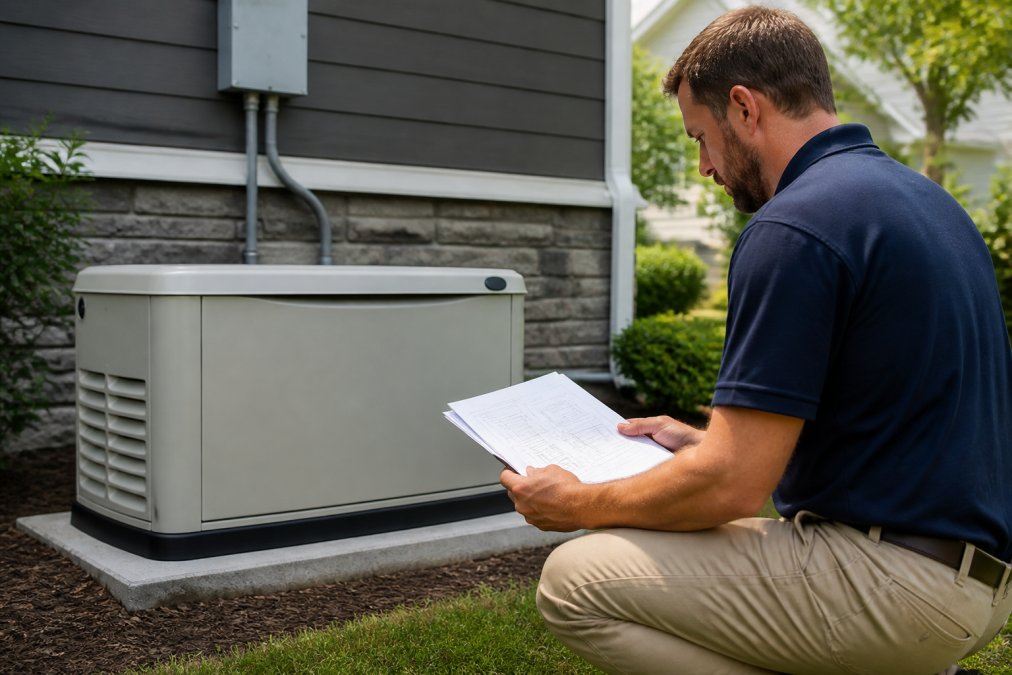
 ultimate-guide
Generator Installation Permits in Middle Tennessee: 2026 Guide
Table of Contents
- Why Generator Installation Permits Are Required in Middle Tennessee
- Electrical vs. Gas Permits: What Each One Covers
- Residential Electrical Permit Cost in Tennessee: What Drives the Fee
- NEC Generator Installation Requirements Every Installer Must Follow
- Hiring a Licensed Electrician for Generator Installation
- The Permit Application and Inspection Process, Step by Step
- HOA Rules, Permit Renewals, and Expiration Deadlines
- Frequently Asked Questions
Last Updated: September 26, 2026
Why Generator Installation Permits Are Required in Middle Tennessee
Generator installation permits are the official authorization a local jurisdiction issues before any electrical or gas work begins on a backup power system. In Middle Tennessee, that permit protects you from the two most expensive outcomes in home power: a failed inspection that forces you to tear out finished work, and an unpermitted system that complicates insurance claims or a future home sale.
Here's what most homeowners get wrong. The permit isn't paperwork for the installer's benefit. It creates a documented record that your whole-home generator was wired to code, grounded correctly, and connected to a transfer switch that actually isolates utility power during an outage. That last point matters more than any spec sheet. A transfer switch installed without inspection is the single most common cause of backfeed incidents that endanger utility line workers.
This guide from Generators of Nashville by Evolution Electric covers the full path: which permits you need, what drives the fee, how the inspection works, and where installations typically fail. Since 2014, our licensed electricians have worked through these requirements across the region, and the rules are more county-specific than most homeowners expect.
Electrical vs. Gas Permits: What Each One Covers
Two separate permits usually govern a generator install, and they are issued by different authorities. The electrical permit covers wiring, the transfer switch, grounding, and the sub-panel. The gas or propane permit covers fuel piping and connections. Treating them as one item is the first mistake homeowners make.
Electrical Permit Requirements
The electrical permit covers every conductor between your generator, your automatic transfer switch, and your main service panel. It also covers grounding requirements and any new sub-panel work. Your local jurisdiction issues this permit, and a licensed electrician must pull it in most cases. Homeowners generally cannot pull an electrical permit for generator work because the scope involves the utility service entrance.
Gas Line and Propane Permits
A natural gas piping permit covers the new line run from your meter to the generator, including sizing, shutoff valves, and pressure testing. Propane tank installation adds a separate layer: tank placement, clearance regulations, and a leak test. Gas work is licensed separately from electrical work, so a single installer may coordinate two trades.
| Permit Type | What It Covers | Who Issues It | Typical Trigger |
|---|---|---|---|
| Electrical | Wiring, transfer switch, grounding, sub-panel | Local building department | Any new circuit or panel work |
| Gas piping | Natural gas line, shutoffs, pressure test | Local building department | New fuel line to generator |
| Propane | Tank placement, clearances, leak test | Local building department | New or relocated tank |
Residential Electrical Permit Cost in Tennessee: What Drives the Fee
The residential electrical permit cost in Tennessee is not a flat number. Fees are set by each local jurisdiction and scale with the declared value of the work, the number of circuits, and whether a separate gas permit is bundled in.
Several factors move the fee up or down:
- Declared project value. Most building departments base the electrical fee on a valuation tier, so a larger standby generator with a new sub-panel costs more to permit than a small unit tied into an existing panel.
- Number of inspections. A gas line adds a pressure test and a separate inspection, which usually adds a second fee.
- Jurisdiction. Davidson County, Williamson County, Rutherford County, and the smaller surrounding counties each publish their own fee schedule. Two identical installs a county apart can carry different permit costs.
- Expedited review. Some departments offer faster review for an added fee.
Because these schedules change and vary by county, the honest answer is that you should confirm the current fee with your local building department before work starts. Generators of Nashville by Evolution Electric provides quotes for whole-home backup systems.
NEC Generator Installation Requirements Every Installer Must Follow
NEC generator installation requirements set the technical floor for every permitted job, and they are the reason the inspection exists. The National Electrical Code governs how a generator connects to a home, and the local inspector enforces it. Three requirements drive most of the field decisions.
Transfer switch. An automatic transfer switch must mechanically prevent utility power and generator power from connecting at the same time. This is the core safety function. A manual transfer switch is allowed in some setups, but a whole-home system almost always uses an automatic one.
Grounding and bonding. The generator, transfer switch, and service panel must share a properly bonded grounding path. Grounding requirements trip up more installs than any other single item, especially when a generator sits on a remote pad away from the service entrance.
Take our 60-second quiz for a free quote today! →
Load calculation. Before sizing anything, the installer runs a load calculation to confirm the generator can carry your actual demand: HVAC, well pump, refrigeration, and any dedicated circuits. An undersized unit that passes wiring inspection can still fail to carry your home during an outage.
The National Electrical Code overview from NFPA is the reference standard inspectors work from. Your installer should be able to point to the specific articles that apply to your setup.
Hiring a Licensed Electrician for Generator Installation
Hiring a licensed electrician for generator installation is not optional if you want the permit approved. Most jurisdictions require the electrical permit to be pulled by a licensed contractor, and the license must be current and in good standing.
What to verify before you sign:
- State and local licensing. Confirm the electrician holds a valid license for the jurisdiction where the work happens. Licensing rules vary by county and municipality.
- Insurance and bonding. Ask for a certificate of insurance. An uninsured installer leaves you exposed if someone is injured on your property.
- Permit handling. A qualified electrician pulls the permit, schedules the inspection, and closes it out. If a contractor asks you to pull your own permit, that is a red flag.
- Post-install support. Ask who handles warranty service. A contractor who disappears after the check clears leaves you calling someone new for every issue.
At Generators of Nashville by Evolution Electric, our licensed electricians handle the permit, the installation, and the inspection coordination as one job. We've operated since 2014, and we're an authorized installer of Generac, EcoFlow, Anker SOLIX, and Jackery systems, so the equipment and the paperwork come from the same team.
The Permit Application and Inspection Process, Step by Step
The permit process runs from site assessment to final inspection, and skipping a step stalls the whole job. Here is the sequence most Middle Tennessee jurisdictions follow.
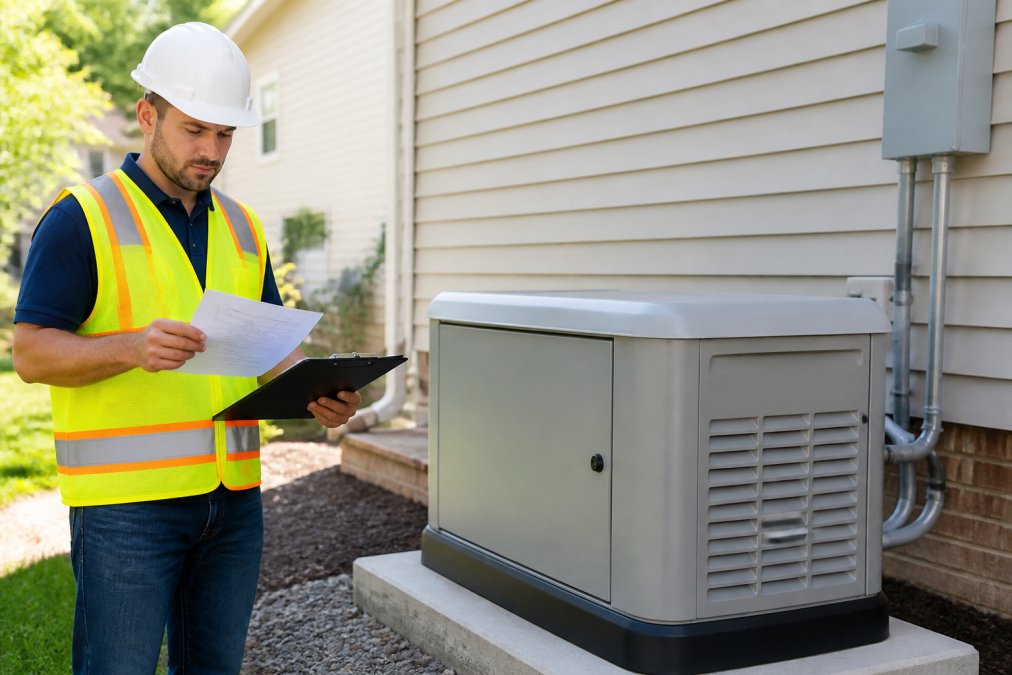
- Site assessment. The installer evaluates your service entrance, fuel source, and generator pad location, then confirms residential zoning and clearance regulations allow the placement.
- Load calculation and system design. The installer sizes the generator and transfer switch against your actual demand.
- Permit application. The contractor files the electrical permit and, if needed, the gas or propane permit with the local building department.
- Permit approval. The department reviews the plans and issues the permit. Review time varies by county workload.
- Installation. The electrician sets the generator pad, wires the transfer switch, runs the gas line, and completes grounding.
- Rough-in inspection. The inspector checks wiring and gas piping before the system is energized.
- Final inspection. The inspector verifies the completed system against code and signs off.
- Utility coordination. For some setups, the utility must approve the connection at the service entrance.
Common Inspection Failure Points
Most failed inspections trace back to a short list of repeat problems. Grounding and bonding errors top the list, usually when the generator is mounted on a remote pad and the grounding path isn't continuous. Improper transfer switch wiring is next, especially when a homeowner-supplied unit doesn't match the panel configuration. Undersized gas piping shows up when the line length wasn't factored into sizing.
HOA Rules, Permit Renewals, and Expiration Deadlines
Two requirements sit outside the building department and catch homeowners off guard: HOA approval and permit expiration.
Frequently Asked Questions
Do I need a permit to install a standby generator in Middle Tennessee?
Yes. A standby generator installation requires an electrical permit in every Middle Tennessee county, and a separate gas or propane permit if you're adding a fuel line. The permit confirms the work meets the National Electrical Code and local building code compliance standards. Installing without one risks fines, forced removal, and denied insurance claims. Your licensed electrician typically pulls the permit on your behalf before any equipment is set.
How much do generator installation permits cost in Tennessee?
Residential electrical permit cost in Tennessee varies by county and is usually based on the project's declared value or a flat fee schedule, so two neighboring counties can charge different amounts for the same job. Gas and propane permits are billed separately. Because fees change and depend on your specific setup, request an itemized quote that lists the permit fee rather than relying on a generic estimate.
What are the NEC generator installation requirements for a home?
NEC generator installation requirements cover the automatic transfer switch, proper grounding and bonding, conductor sizing, and clearance from windows, doors, and the utility service entrance. A load calculation determines whether the generator can carry your AC, well pump, and other large loads. The final inspection confirms all of this before your utility grants approval to operate the system.
What happens if I install a generator without a permit?
An unpermitted installation can trigger fines, a stop-work order, and a requirement to remove or redo the work at your expense. It can also void homeowner's insurance coverage for a fire or carbon monoxide incident tied to the generator, and it may surface as a problem when you sell the home. A licensed electrician for generator installation handles the permit application and inspection scheduling so this risk never lands on you.