 ultimate-guide
How to Tell How Long a Home Backup Battery Will Last
Last Updated: November 7, 2026
Quick Summary
A home backup battery typically lasts years, not hours, and its lifespan depends on chemistry, how often it cycles and the conditions it sits in. Lithium iron phosphate units often run about 10 to 15 years in backup use, standard lithium-ion about 8 to 12 years, and lead-acid about 3 to 7 years.
- Calendar life keeps counting down even when the battery sits idle.
- Cycle life measures full charge-and-discharge cycles before capacity drops to 70 to 80 percent.
- Warranty terms are contracts and often end at a cycle or throughput limit, whichever comes first.
- Heat, deep discharges and daily cycling all shorten battery life.
- A battery that loses runtime or shows recurring faults may need replacing.
Table of Contents
- Calendar Life, Cycle Life, Warranty Term and Outage Runtime Explained
- How Long Will a Solar Battery Last During a Power Outage?
- LiFePO4 Solar Battery Lifespan Compared to Other Chemistries
- Factors That Shorten or Extend Battery Life
- How to Tell If a Battery Backup Is Going Bad
- Home Battery Replacement Cost and Long-Term Economics
- Planning Your Backup Power Next Step With Generators of Nashville
- Frequently Asked Questions
A home backup battery's lifespan depends on its chemistry, how often it cycles, and the conditions it lives in. Generators of Nashville by Evolution Electric installs Generac generators, solar arrays and home battery systems like EcoFlow, Anker SOLIX and Jackery across Middle Tennessee. The short answer is years of service, not hours of backup, and the two get confused constantly. Once you know how long the battery can sustain essential loads, backup generator sizing helps determine what additional capacity is needed when an outage lasts longer.
Most homeowners ask this question because they want to know when to budget for a replacement. Understanding why is the first step to reading any lifespan claim honestly.
Many homeowners find that the warranty term, the advertised cycle count and the real-world runtime during an outage are three different numbers. A common mistake is treating them as interchangeable. The sections below separate them so you can judge a battery on the figures that matter.
Calendar Life, Cycle Life, Warranty Term and Outage Runtime Explained
Calendar life is how long a battery lasts regardless of use, measured in years. It keeps aging even when the battery sits idle, because chemical reactions inside the cells continue slowly over time.
Cycle life counts how many full charge-and-discharge cycles a battery can complete before its usable capacity drops to a set threshold, commonly 70 to 80 percent of original capacity. A battery that cycles daily will reach its cycle limit sooner than one that rarely discharges.
Warranty term is a contractual promise, not a measure of how long the battery will physically work. Warranties are often paired with a cycle or throughput limit, and the warranty may end at whichever comes first. Read the fine print for both.
Outage runtime is the number of hours a battery can power your critical loads during a grid failure. It depends on usable capacity in kilowatt-hours and the power draw of what you run, such as a refrigerator, lights and a well pump. Runtime shrinks as the battery ages, which is why a battery can still be "working" yet fail to cover an overnight outage.
How Long Will a Solar Battery Last During a Power Outage?
A solar battery's runtime during an outage is a function of its usable capacity and your load, not its age alone.
Solar panels can extend that runtime by recharging the battery during daylight, but only if the array is producing. A common mistake is assuming solar keeps the house running indefinitely. On a cloudy stretch or at night, the battery carries the load alone. For a deeper look at real figures by battery size, see our guide on how long 10kWh will power a home.
Related guidance on how long a home battery lasts during an outage covers the planning math in more detail.
LiFePO4 Solar Battery Lifespan Compared to Other Chemistries
Chemistry is the single biggest lever on how long a home backup battery lasts, and the three chemistries you are most likely to encounter behave very differently. The table below summarizes typical manufacturer-stated ranges; treat them as specifications, not guarantees, because field life depends heavily on how the battery is cycled and where it is installed.
| Chemistry | Typical cycle rating | Typical depth of discharge tolerated | Common warranty term | Typical service life in backup use |
|---|---|---|---|---|
| Lithium iron phosphate (LiFePO4) | Roughly 3,000-6,000 full cycles | 80-100% usable | 10 years, often paired with a throughput cap | About 10-15 years |
| Standard lithium-ion (NMC) | Roughly 1,500-4,000 full cycles | 80-90% usable | 10 years, often paired with a throughput cap | About 8-12 years |
| Lead-acid (flooded or AGM) | Roughly 300-1,200 cycles at 50% depth | 50% recommended to protect life | 1-5 years | About 3-7 years |
Typical service life in backup use
LiFePO4 is a chemistry commonly used in residential backup systems. Its cells tolerate deep discharges with less wear and have a flatter voltage curve.
Standard lithium-ion (NMC) packs more energy per pound, which matters in tight wall-mount installations, but its cycle life and thermal behavior vary more by manufacturer and cell design. It is less forgiving of sustained heat, so installation location deserves extra scrutiny.
Lead-acid remains the cheapest upfront option and is still common in older or budget systems. It delivers far fewer usable cycles and loses capacity faster when regularly drained below about 50 percent.
A scenario view makes the difference concrete.
Be aware that a cycle rating quoted at 80 percent depth of discharge is not comparable to one quoted at 100 percent, so ask any installer to state the depth-of-discharge basis alongside the cycle count in writing before you commit.
Factors That Shorten or Extend Battery Life
Most lifespan claims compress several different stressors into one number. The factors below are the ones that actually move the needle, and each one interacts with the others, a hot battery cycled deeply ages faster than the sum of either stressor alone.
Depth of discharge. Every full cycle consumes a slice of the battery's usable life. Draining to near-empty on a routine basis accelerates wear on the cells, while keeping daily cycling shallower spreads the same energy throughput over more, gentler cycles. Lead-acid is far more sensitive here than lithium chemistries; LiFePO4 tolerates deep discharges but still ages faster when repeatedly pushed to its floor.
Temperature. Sustained heat is the most damaging single condition for lithium cells. A garage or utility closet that climbs well above outdoor ambient in summer accelerates calendar aging even when the battery is idle. Cold slows charging and can trigger the battery management system to limit input, which is a protection mechanism rather than damage, but repeated charging below the manufacturer's minimum temperature can harm cells. Shade, ventilation, and keeping the unit off direct sun are the simplest protections.
Charging behavior and state of charge. Many home batteries are happiest held at a partial state of charge when they are not being used, and some systems let you set a reserve. Frequent fast charging and repeated full cycles add stress. The battery management system regulates this, but the settings you choose still shape the outcome.
Usage pattern. A battery that cycles daily for solar self-consumption accumulates cycles far faster than one that sits charged and waits for an outage. Neither pattern is wrong, but they lead to different end-of-life dates: the daily-cycled unit may hit its cycle limit first, while the standby unit may hit its calendar limit first.
Capacity retention and end-of-life thresholds. Manufacturers typically define end of life as the point where usable capacity falls to a stated percentage of original, commonly 70 to 80 percent. Watch your system's reported state of health rather than waiting for a failure; the threshold is a planning signal, not a cliff.
Maintenance and monitoring. Keeping firmware current, watching for capacity drops, and clearing vents and filters are low-effort steps that catch problems early.
A scenario table makes the combined effect easier to see. The ranges below are typical patterns, not guarantees:
| Usage scenario | Typical cycling | Temperature exposure | Expected service life |
|---|---|---|---|
| Standby backup only | A few dozen full cycles a year | Moderate, ventilated space | Toward the upper end of the chemistry range |
| Daily solar self-consumption | 250-350 full cycles a year | Moderate, ventilated space | Middle of the chemistry range |
| Daily cycling plus frequent outages | 300+ full cycles a year | Warm garage or closet | Toward the lower end of the chemistry range |
Installing the battery in a shaded, ventilated spot away from direct sun and extreme heat is one of the simplest ways to protect the investment, and it costs nothing at the design stage.
How to Tell If a Battery Backup Is Going Bad
Watch for these warning signs:
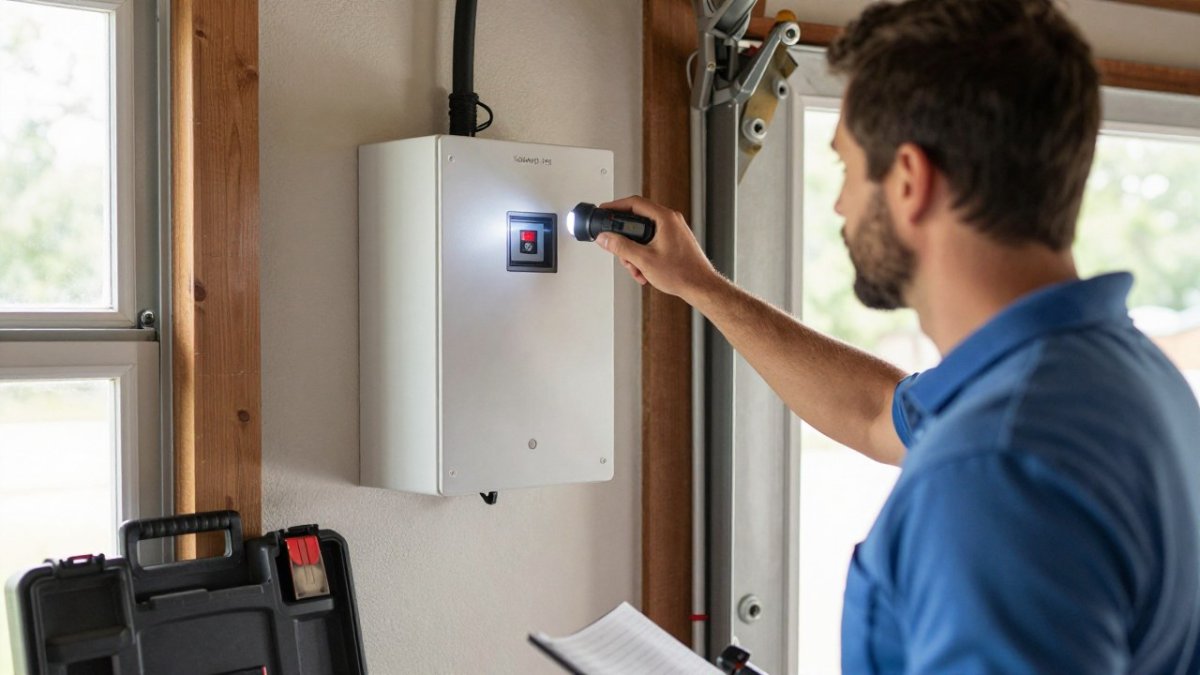
- Shorter runtime than before: If the same load drains the battery in noticeably fewer hours, usable capacity has likely dropped.
- Frequent alerts or error codes: Recurring faults from the battery management system often point to cell imbalance or aging.
- Unusual heat or swelling: Heat that is hot to the touch or a visibly swollen enclosure is a safety issue. Shut the system down and contact a licensed electrician.
- Charging that stalls or cycles oddly: A battery that will not reach full charge, or drops from full too quickly, may be losing capacity.
- Capacity readings below the end-of-life threshold: Many systems report state of health. When it falls near the threshold, plan for replacement.
If you notice any of these, have a licensed professional test the system rather than guessing.
Home Battery Replacement Cost and Long-Term Economics
Replacement cost varies with battery size, chemistry, the inverter and wiring involved, and local permitting, so pricing depends on your specific system and is best confirmed with a written quote.
When comparing options, consider the full ownership period rather than the purchase price alone. Factor in expected years of service, warranty coverage, the cost of a second battery partway through the system's life, and the value of backup power during outages you actually experience. A cheaper battery with a shorter cycle life can cost more over 15 years.
Planning Your Backup Power Next Step With Generators of Nashville
Choosing the right backup setup starts with knowing your critical loads, your outage history and whether solar fits your roof. Generators of Nashville by Evolution Electric, a licensed electrical team serving Middle Tennessee since 2014, can review your home and recommend a generator, battery or solar-plus-storage system that matches your needs. Take our 60-second quiz for a free, personalized quote, or contact the team directly to talk through your options.
Frequently Asked Questions
How much does a whole house backup battery cost?
Pricing depends on battery capacity measured in kilowatt-hours, the chemistry you choose, how many units you need, and installation requirements such as the electrical panel, permits and inverter compatibility. Because cost varies so much by home and configuration, the most accurate figure comes from a site assessment. Generators of Nashville by Evolution Electric can provide a current, personalized quote through its 60-second quiz on the website, which accounts for your critical loads and installation conditions rather than a generic average.
How long does a home backup battery last before it needs to be replaced?
Home backup battery service life varies by unit, and lithium-ion and LiFePO4 units differ in cycle life and warranty length. Actual replacement timing depends on how often the battery cycles, the depth of discharge in daily use, and the temperature where it is installed. Many manufacturers define end of life as the point where usable capacity drops to around 70 to 80 percent of its original rating, so check your warranty terms for the threshold that applies to your unit.
What factors affect the lifespan of a home backup battery?
The main factors are battery chemistry, cycle count, depth of discharge, operating temperature and usage pattern. Batteries that cycle daily for solar self-consumption wear faster than units that sit charged and only run during outages. Installing a battery in a hot garage or an unventilated space can also accelerate degradation, so placement and proper battery management system settings matter as much as the hardware itself.
Do lithium iron phosphate batteries last longer than other home batteries?
LiFePO4 batteries generally tolerate more charge cycles than many lithium-ion chemistries and lead-acid batteries, which is why they are common in home storage. Actual lifespan still depends on temperature, charging practices and warranty terms. Compare cycle ratings and warranty length directly rather than relying on chemistry alone.