 how-to
How to Size a Home Backup Generator: A Step-by-Step Guide
Table of Contents
- Understanding Running vs. Starting Watts Explained
- How to Calculate Total Power Requirements
- Electrical Load Calculation for Backup Power
- Average Home Power Consumption Per Day and Your Generator Size
- Standby vs. Portable Generators: Which Size Works for You
- Essential vs. Non-Essential Appliances: Prioritizing Your Backup Power
- Common Sizing Mistakes to Avoid
- Conclusion
- Frequently Asked Questions
Last Updated: September 4, 2026
Sizing a home backup generator comes down to one core calculation: matching the generator's total power output to the combined starting and running wattage of the appliances you need to keep alive during an outage. Most homeowners who undersize their generator do so because they only add up the "running" numbers on appliance labels, ignoring the brief but massive surge of power required to start motors. This guide from Generators of Nashville by Evolution Electric walks you through the exact process to size home backup generator correctly, so you never have to choose between the lights and the air conditioner.
At Generators of Nashville by Evolution Electric, we've installed backup systems across Middle Tennessee since 2014, and we see the same sizing errors repeatedly. The good news is that the math is straightforward once you understand two terms: running watts and starting watts. Below, we'll show you exactly how to calculate your home's true power demand, prioritize essential circuits, and avoid the costly mistake of buying a unit that's either too small to handle peak loads or so large it wastes fuel.
Understanding Running vs. Starting Watts Explained
Running wattage is the continuous power an appliance needs to operate, while starting wattage is the brief surge of power required to spin up motors and compressors. This distinction matters because most household appliances with motors draw 2 to 3 times more power in the first few seconds of operation than they do during steady-state running.
For example, a refrigerator might run at 600 running watts but demand 1,800 starting watts when the compressor kicks on (peer-reviewed research). A 3-ton central air conditioner could run at 3,500 watts but surge past 7,000 starting watts. If your generator's surge capacity is lower than the combined starting wattage of everything turning on simultaneously, the unit will trip its circuit breaker or stall.
The calculation for how to size home backup generator must therefore account for the single largest starting wattage event in your home, plus the running wattage of everything else operating at that moment. This is called the "largest motor plus the rest" method, and it prevents you from adding every starting watt together, which would grossly oversize your unit.
How to Calculate Total Power Requirements
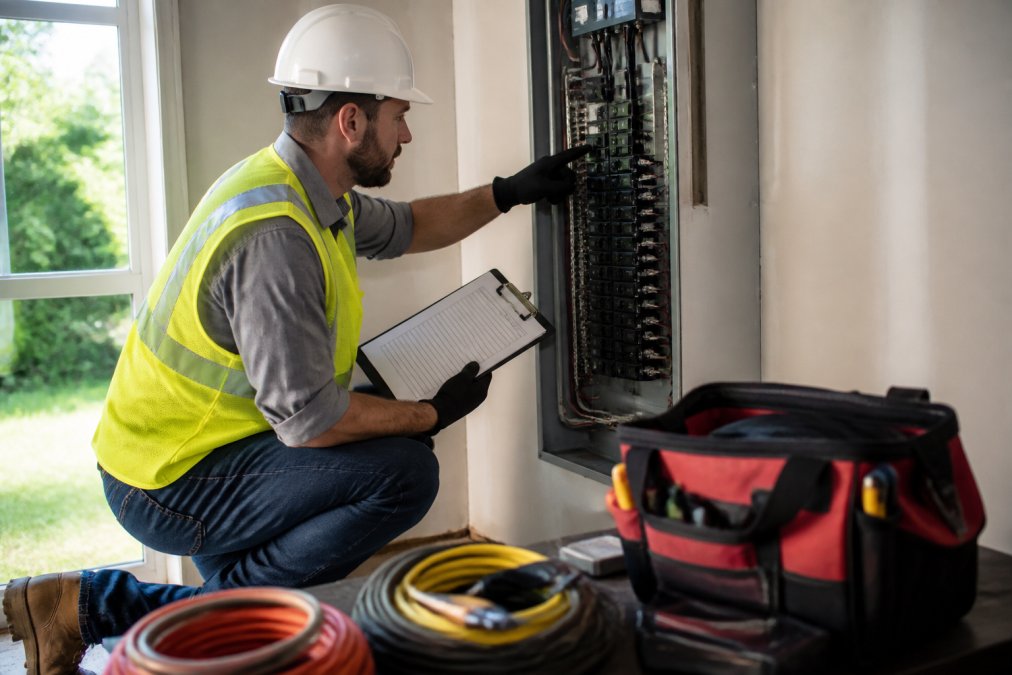
To size home backup generator capacity accurately, you need a complete inventory of the appliances and systems you want to power during an outage. The process involves listing your loads, finding their ratings, and then applying the simultaneous startup rule to determine peak demand. A licensed electrician can perform this electrical load calculation for backup power, but you can build a preliminary list yourself in under an hour.
Step 1: List Your Essential Appliances and Systems
Walk through your home and write down every appliance you cannot live without for more than a few hours. For most families, that means the refrigerator, well pump or sump pump, furnace blower, water heater, internet router, and a few lights and outlets for phone chargers. Remote workers should add a computer and monitor. If you rely on medical devices, those go on the list before anything else.
Step 2: Find Wattage Ratings for Each Device
Look for the nameplate label on each appliance, which lists volts and amps, or sometimes watts directly. If you only see volts and amps, multiply them together to get watts (volts x amps = watts). For example, a device rated at 120 volts and 5 amps draws 600 watts. Many appliances list running watts only, so check the manufacturer's documentation for starting wattage, which is often called "locked rotor" or "surge" watts for motor-driven equipment.
Step 3: Account for Simultaneous Startup
The critical step is determining which appliances could start at the same time. You don't need the generator to handle every appliance starting at once, because that rarely happens in practice. Instead, identify the appliance with the highest starting wattage, usually your central air conditioner or well pump. Add that starting wattage to the running wattage of every other appliance you expect to operate simultaneously. This peak load figure is the minimum surge capacity your generator must provide (ieee.org).
Electrical Load Calculation for Backup Power
An electrical load calculation for backup power is a formal method used to determine the total power your home demands at peak moments. The basic formula adds the starting watts of your largest motor to the running watts of all other connected loads. However, there's a practical ceiling: a 200-amp electrical panel can only deliver so much power, typically around 38,000 watts, so a generator must be sized to the panel's capacity, not just your appliance list (nfpa.org).
The table below summarizes how different home sizes and appliance combinations translate into recommended generator capacities. These figures assume typical construction and central air conditioning.
| Home Scenario | Typical Peak Load | Recommended Generator Size |
|---|---|---|
| Small home, no central AC, gas appliances | 5,000 - 7,000 watts | 7 - 10 kW portable |
| Average home, central AC up to 3 tons | 9,000 - 12,000 watts | 12 - 14 kW standby |
| Larger home, central AC over 3 tons, electric water heater | 13,000 - 16,000 watts | 16 - 18 kW standby |
| Large home with pool pump, EV charger, multiple AC units | 17,000+ watts | 20 - 24 kW standby |
Average Home Power Consumption Per Day and Your Generator Size
The average home power consumption per day in the United States is roughly 30 kilowatt-hours, but this figure is nearly useless for generator sizing because an outage changes your usage patterns entirely. During a power outage, you're not running the clothes dryer, dishwasher, or entertainment systems. You're running a fraction of your normal load, focused on keeping food cold, the home at a safe temperature, and essential devices charged.
What matters for sizing is not your daily energy consumption but your peak instantaneous demand. A generator's rating in kilowatts (kW) tells you the maximum continuous power it can supply at any single moment. One kilowatt equals 1,000 watts, so a 14 kW standby generator can deliver 14,000 running watts continuously and roughly 21,000 starting watts for brief surges.
To translate your appliance list into kilowatts, divide your total peak wattage by 1,000. If your calculation shows a peak demand of 11,500 watts, you need at least an 11.5 kW generator, which means stepping up to the next standard size, typically 12 kW or 14 kW, to leave headroom for voltage drops and future additions.
Take our 60-second quiz for a free quote today! →
Standby vs. Portable Generators: Which Size Works for You
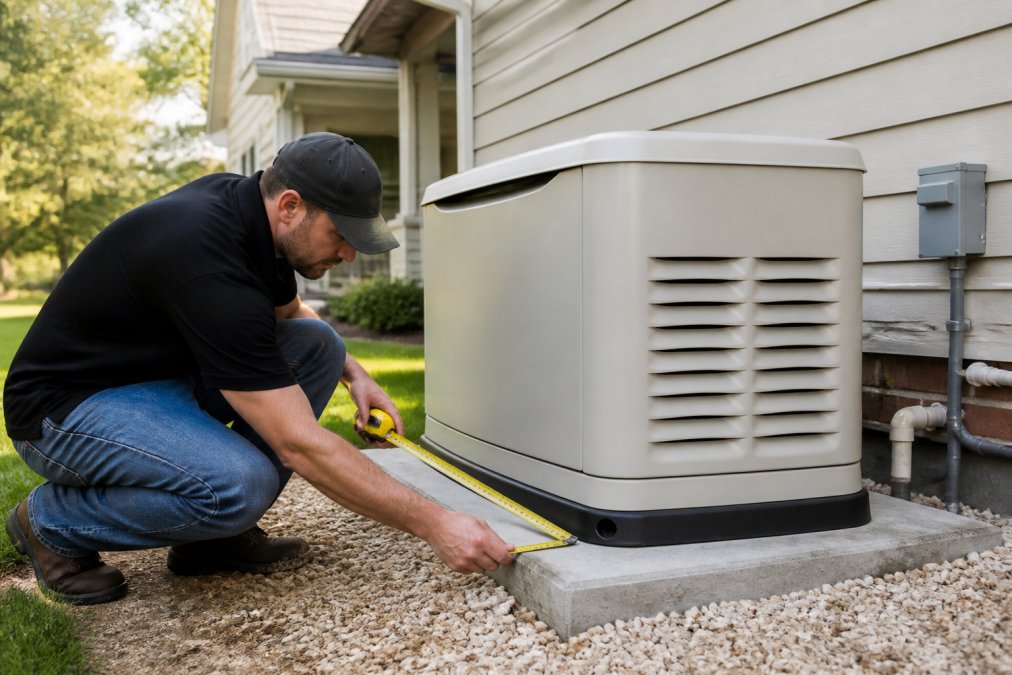
The choice between a standby and a portable generator affects both the sizing math and the installation requirements. A standby generator is permanently installed on a concrete pad outside your home, wired directly into your electrical panel through an automatic transfer switch. It runs on natural gas or propane, starts automatically within seconds of an outage, and can power your entire home continuously for days.
A portable generator, by contrast, sits in your garage or yard during an outage and connects to specific appliances via extension cords or a manual transfer switch. Portables are smaller, typically ranging from 3,000 to 10,000 watts, and require you to manually start them and manage which appliances run at any given time.
For whole-home coverage, standby generators are the clear choice because they can handle the full electrical load of your panel without you rationing power. The sizing calculation for a standby unit must account for every circuit you want backed up, since the transfer switch connects to essential circuits directly. Portables work best for smaller homes or for powering a few critical loads, where you can get by with a 5,000 to 7,500 watt unit and careful load management.
Essential vs. Non-Essential Appliances: Prioritizing Your Backup Power
If your budget or panel capacity won't support a generator large enough for your entire home, you need to separate essential circuits from non-essential loads. Essential circuits include the refrigerator, furnace or boiler controls, well pump, sump pump, internet router, and lighting in key areas like the kitchen and bathroom. Non-essential loads include electric water heaters, central air conditioning, electric ovens, dryers, and pool pumps.
A practical approach to size home backup generator capacity is to design for the essential list first, then add comfort loads like air conditioning only if budget and panel capacity allow. Many homeowners in Middle Tennessee choose a mid-size standby generator that powers all essentials plus one major comfort load, such as a single zone of air conditioning, and they manage the rest manually during extended outages.
Common Sizing Mistakes to Avoid
The most frequent error in generator sizing is underestimating starting watts, particularly for air conditioners and well pumps. Homeowners look at the running wattage on the label and forget that the startup surge can be double or triple that figure. This mistake leads to a generator that runs fine when the AC is already on but stalls when the compressor cycles on after a brief off period.
Another common mistake is ignoring voltage drop on long extension cord runs with portable generators. As the distance between the generator and the appliance increases, the voltage delivered to the appliance drops, which can damage sensitive electronics and cause motors to overheat. For runs over 100 feet, you need heavier gauge cord or a larger generator to compensate.
A third mistake is failing to plan for future additions. If you plan to add an electric vehicle charger, a heat pump, or a pool in the next few years, a properly sized generator today should account for that future load. Upgrading a standby generator later means replacing the unit and potentially the transfer switch, which costs far more than buying the right size the first time.
| Mistake | Consequence | The Fix |
|---|---|---|
| Using running watts only | Generator stalls when motors start | Add starting watts of largest motor |
| Sizing by square footage | Wrong capacity for actual loads | Inventory every appliance |
| Ignoring voltage drop | Damaged electronics, overheated motors | Use proper cord gauge or larger unit |
| No room for future loads | Expensive upgrade later | Add 20% headroom to your peak load |
Conclusion
Sizing a home backup generator correctly protects your investment and ensures your family stays comfortable and safe during an outage. The process is straightforward: list your essential appliances, find their running and starting wattages, calculate your peak load using the largest motor method, and choose a generator that meets or slightly exceeds that figure. If you're unsure about any part of the electrical load calculation, a licensed electrician can perform a professional assessment and recommend the right size for your specific home and panel configuration.
At Generators of Nashville by Evolution Electric, our licensed electricians have specialized in backup power systems since 2014, installing Generac standby generators, solar arrays, and home battery systems like EcoFlow, Anker SOLIX, and Jackery. We handle the permits, the electrical codes, and the transfer switch wiring so your system works the moment the grid goes down. Take our 60-second quiz today for a free, personalized quote on your whole-home backup system.
Frequently Asked Questions
What size generator do I need to run a 2,000 square foot house?
A typical 2,000 sq ft home needs 5,000-7,000 running watts to power essential systems like HVAC, water heater, refrigerator, and lighting. However, the actual size depends on which appliances you want to run simultaneously. If you want full whole-home backup including air conditioning, you may need 10,000-15,000 watts. Calculate your specific electrical load by listing your essential appliances and their wattage ratings to determine your exact requirements.
What is the difference between starting watts and running watts?
Running watts (also called rated watts) is the continuous power an appliance needs to operate normally. Starting watts (surge watts) is the temporary power spike required when an appliance first turns on, often 2-3 times higher than running watts. For example, an air conditioner may need 3,500 running watts but 5,000 starting watts. Your generator must handle both: the total running watts of all devices you'll use together, plus enough starting watts capacity to handle the largest appliance startup. This is why understanding both values is critical for proper sizing.
How do I calculate the total electrical load of my home?
Start by listing all appliances and systems you want to power during an outage. Find the wattage rating on each device's nameplate or manual. Add the running watts of appliances you'll use simultaneously (for example, refrigerator + lights + well pump). Then identify your largest single appliance's starting watts and add that to your total running watts. This gives you your peak load. For example: 1,200W refrigerator + 800W lights + 2,000W well pump + 5,000W AC startup = 9,000 watts needed. Use a professional load calculation for accuracy, or take our 60-second quiz for a personalized assessment.
Will a 20,000-watt generator run a whole house?
A 20,000-watt generator can power most whole homes during an outage, including central air conditioning, electric water heater, and multiple large appliances running simultaneously. However, it depends on your specific electrical load profile and which appliances you prioritize. Homes with electric heating, multiple heat pumps, or high-amperage equipment may need more capacity. A 20 kW standby generator with an automatic transfer switch provides reliable whole-home backup for most residential situations, but professional load calculation ensures you're not undersized or overspending on unnecessary capacity.