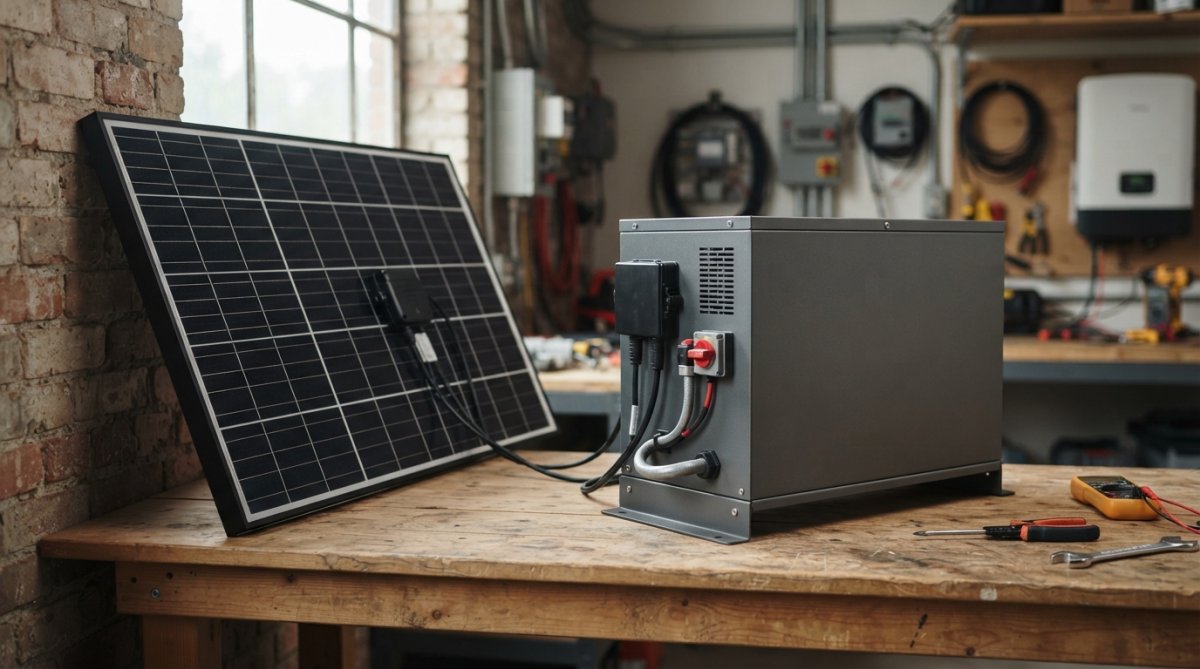
 comparison
Solar Panels vs Home Battery Backup: Which Fits Your Needs
Table of Contents
- Solar Panels vs Home Battery Backup: Key Differences
- Solar Battery vs Gas Generator Comparison
- Upfront Costs and Installation for Solar and Battery Systems
- How Long Do Home Batteries Last During an Outage
- Best Home Battery Brands for Backup Power
- Tax Incentives for Home Energy Storage Systems
- Energy Independence, Resilience, and Real-World Outage Performance
- Which Option Should You Choose
- Frequently Asked Questions
Last Updated: September 23, 2026
Solar Panels vs Home Battery Backup: Key Differences
Solar panels and home battery backup work best together: panels generate power during the day, batteries store it for night and outages. Understanding how each performs during a power outage is critical before you invest.
Solar panels alone won't keep your lights on during an outage; batteries alone drain within hours or days. The real solution is combining both technologies with a backup system. At Generators of Nashville by Evolution Electric, we provide expert installation of reliable backup power solutions for homeowners throughout Middle Tennessee.
How Solar Panels Work During Power Outages
Solar panels produce electricity when sunlight hits them, but most grid-tied systems shut down automatically during outages for safety, a critical detail many homeowners miss.
When the grid fails, your inverter detects the voltage loss and disconnects your panels to prevent energizing utility lines and endangering repair crews. Even on a sunny day, a traditional grid-tied system provides zero backup power during an outage.
The exception: if your solar array connects to a battery system with a hybrid inverter, your panels can charge the batteries during the day and power your home at night or during cloudy periods. This is where solar panels become truly valuable for resilience.
How Home Battery Backup Works
Home battery systems store electrical energy chemically and release it on demand, typically using lithium-ion or lithium iron phosphate (LFP) chemistry.
When the grid fails, an automatic transfer switch disconnects your home within milliseconds, and your battery powers critical loads, refrigerators, water heaters, internet routers, medical equipment, until the grid restores or the battery depletes.
Depth of discharge matters: a 10 kWh battery with 80% DoD provides 8 kWh usable power; the remaining 20% protects chemistry and extends lifespan. Round-trip efficiency (energy returned vs. stored) typically ranges 85-95%.
Solar Battery vs Gas Generator Comparison
These two backup power sources serve different purposes, and the best choice depends on your situation, budget, and outage patterns.
Gas generators burn fuel on demand, are portable, require no installation, and cost far less upfront. Drawbacks: fuel storage, noise, emissions, maintenance, and fuel scarcity during extended outages.
Home batteries store power silently with minimal maintenance and zero emissions, working automatically during outages. Tradeoff: higher upfront cost and limited capacity (10-15 kWh typical), depleting in 24-48 hours without solar recharge.
For many homeowners in Middle Tennessee, a hybrid approach can be beneficial: a smaller battery system handles critical loads for 1-2 days, paired with a backup generator for extended outages. This combination can provide silent, automatic power when needed, plus a safety net if an outage stretches longer.
Upfront Costs and Installation for Solar and Battery Systems
Cost is the primary barrier for most homeowners. Both solar panels vs home battery backup require professional installation by licensed electricians for code compliance and safety.
Solar installation involves roof assessment, wiring, permits, and utility interconnection.
How Long Do Home Batteries Last During an Outage
Battery runtime depends on usable capacity, your home's power draw, and environmental conditions affecting battery output and solar recharge.
Single-Day Runtime Calculations
A 10 kWh battery with 80% DoD provides 8 kWh usable energy. At 2 kW average draw, it lasts ~4 hours, but runtime varies dramatically by appliances:
- Heating or cooling active: Runtime drops to 2-3 hours. A 5 kilowatt heat pump can consume your entire 8 kWh reserve in under 2 hours on a cold day.
- Critical loads only (refrigerator, internet, lights): Runtime extends to 8-12 hours, depending on load management.
- Minimal consumption (lights and internet only): A 10 kWh battery can sustain 24+ hours.
Multi-Day Outage Performance: Seasonal Reality
Battery performance varies dramatically by season and weather conditions.
Summer outages: A 5 kW solar array generates 20-25 kWh on clear days, fully recharging a 10 kWh battery and powering your home simultaneously.
Depth of Discharge and Battery Chemistry Impact
Depth of discharge varies by chemistry: lithium-ion typically 80-90% DoD (8-9 kWh usable from 10 kWh), LFP typically 90-95% DoD (9-9.5 kWh usable). LFP extends capacity 5-10% and runtime 15-30 minutes over multi-day outages. Round-trip efficiency (85-95%) means a 10 kWh charge delivers 8.5-9.5 kWh to your home.
Take our 60-second quiz for a free quote today! →
Extending Runtime Without Adding Battery Capacity
Strategies to extend runtime: thermostat setback (5-10°F) reduces HVAC by 30-50%; water heater bypass saves 2-3 kWh/day; defer dishwasher, laundry, EV charging; active consumption management extends runtime 40-60%.
Best Home Battery Brands for Backup Power
The battery market includes established manufacturers and newer entrants, each with different strengths for whole-home backup.
Tax Incentives for Home Energy Storage Systems
The federal Investment Tax Credit (ITC) allows homeowners to claim a tax credit for battery system installation costs when paired with solar. State and local rebates vary; check your utility for current programs. Professional installation by licensed contractors is required to qualify for incentives. Generators of Nashville by Evolution Electric handles permitting and code compliance to ensure you capture all available credits.
Energy Independence, Resilience, and Real-World Outage Performance
Energy independence sounds appealing, but it's worth understanding what it actually means and what it costs over the battery's lifetime.
Defining True Independence vs. Practical Resilience
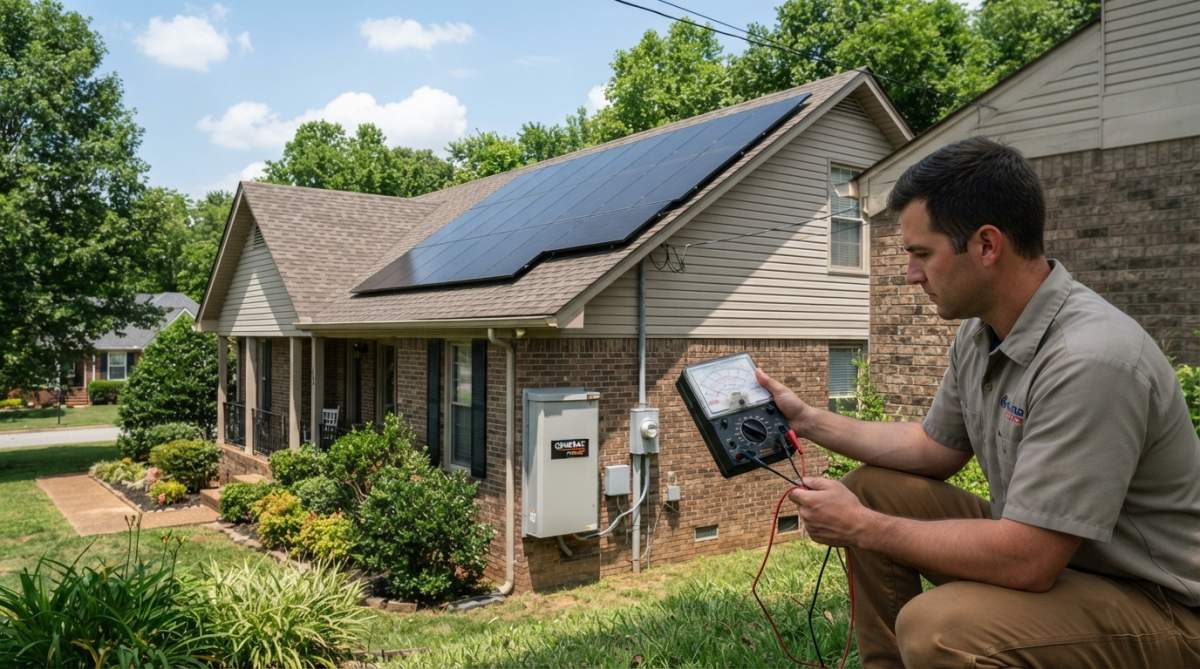
True grid independence requires solar capacity for annual needs plus 30-50 kWh battery storage for multi-day winter outages, impractical and expensive for most homeowners. A realistic goal is resilience: maintaining essential services 24-48 hours without the grid, then using a backup generator for longer outages.
Real-World Outage Performance Data
During the 2024 ice storm that affected the region, homes with properly designed battery plus solar systems maintained power for critical loads throughout the outage. Homes relying on batteries alone without solar depleted their systems within 24 hours and switched to generators. Homes with generators only endured noise, emissions, and fuel logistics for days.
Key findings from that outage:
- Battery + solar systems: Maintained 3-5 kW of continuous power for 48-72 hours before requiring generator backup.
- Battery-only systems: Depleted within 12-24 hours; homeowners reported losing refrigeration, heating, and internet access.
- Generator-only systems: Operated continuously for 72+ hours; fuel consumption averaged 3-5 gallons per day; noise complaints and maintenance issues were common.
- Hybrid (battery + solar + generator): Operated silently for 48 hours on battery and solar, then switched to generator for extended outage; total fuel consumption was 2-3 gallons over 5 days.
Battery Degradation: The Long-Term Cost Most Articles Ignore
Battery degradation is a legitimate lifetime cost, essential for calculating true ROI.
End-of-Life Recycling and Environmental Impact
Lithium-ion recycling:
- Current recycling efficiency: 90-95% of materials recovered
- Recovered materials: Lithium, cobalt, nickel, manganese, copper
- Recycling cost: $50-$150 per kWh of battery capacity (typically absorbed by recycler or manufacturer)
- Environmental benefit: Recycling reduces mining demand by 50-70% for key materials
- Current challenge: Recycling infrastructure is limited; most batteries are shipped to specialized facilities in other states or countries
Lithium iron phosphate recycling:
- Current recycling efficiency: 85-92% of materials recovered
- Recovered materials: Lithium, iron, phosphate, copper
- Recycling cost: $30-$100 per kWh (lower than lithium-ion due to simpler chemistry)
- Environmental benefit: LFP batteries contain no cobalt, reducing toxic material concerns
- Current advantage: LFP recycling is simpler and less costly than lithium-ion, making it more economically viable
Many battery manufacturers now offer take-back programs or partner with recyclers to ensure proper end-of-life handling. However, the recycling industry is still developing; costs and infrastructure vary by region.
Environmental impact comparison:
- A 10 kWh lithium-ion battery requires approximately 40-60 kg of raw materials (lithium, cobalt, nickel, etc.)
- A 10 kWh LFP battery requires approximately 50-70 kg of raw materials (lithium, iron, phosphate)
- Mining and processing these materials generates 2-4 tons of CO₂ equivalent per kWh of battery capacity
- Over a 15-year lifespan, a 10 kWh battery system offsets this environmental cost through avoided grid electricity (which generates 0.4-0.8 tons of CO₂ per kWh in most regions)
- Recycling recovered materials reduces future mining impact by 50-70%, making end-of-life recycling environmentally critical
Calculating True Cost of Ownership
When evaluating battery systems, account for degradation and end-of-life costs:
- Upfront cost: $8,000-$15,000 for a 10 kWh system installed
- Annual maintenance: $100-$300 (software updates, monitoring, occasional repairs)
- Degradation cost: By year 10, usable capacity drops 10-20%, reducing value by $1,000-$2,000
- End-of-life recycling: $300-$1,500 (often covered by manufacturer programs)
- Total 15-year cost: $10,000-$20,000 all-in
Compare this to a backup generator:
- Upfront cost: $3,000-$6,000 installed
- Annual maintenance: $200-$500 (oil changes, filter replacements, fuel stabilizer)
- Fuel cost (assuming 10 days of outages per year, 5 gallons per day): $500-$1,000 annually
- Total 15-year cost: $13,000-$23,000 all-in
Which Option Should You Choose
The answer depends on your priorities, budget, and outage patterns.
Frequently Asked Questions
Do solar panels provide power when the grid goes down?
Solar panels alone cannot power your home during a grid outage because they require an inverter and grid connection to function. Without battery backup or a special islanding inverter, solar panels shut down automatically when the grid fails for safety reasons. A home battery backup system stores excess solar energy so you can use it after sunset or during outages. This combination of solar panels and battery storage gives you true energy independence during power disruptions.
How long do home batteries last during an outage?
Battery duration depends on capacity and your household's power consumption. A typical home battery system stores 10-15 kilowatt-hours of energy. If your home uses 2 kilowatt-hours per hour during an outage, a single battery provides 5-7 hours of backup. Larger systems or multiple batteries extend this to 24 hours or more. During multi-day outages, battery performance depends on whether you can recharge from solar panels or a generator.
Can a home battery backup work without solar panels?
Yes. A home battery can operate independently by charging from the grid during off-peak hours when electricity rates are lower, then powering your home during peak hours or outages. This strategy, called peak shaving, reduces your utility bill. However, without solar panels, you're dependent on grid electricity to recharge the battery. For true energy independence and resilience, pairing batteries with solar panels is more effective because solar continuously replenishes stored energy without ongoing grid dependence.
What tax incentives are available for home energy storage systems?
The federal Investment Tax Credit (ITC) allows homeowners to claim 30% of installation costs for qualified battery storage systems through 2032. The credit applies to home batteries paired with solar installations or standalone systems in certain cases. Some states and utilities offer additional rebates or tax credits. The ITC percentage may decrease after 2032, so timing installation can affect your savings. Check with your state's energy office and local utility for current incentive programs in your area.