 ultimate-guide
Backup Power for Winter Storms: 2026 Home Guide
Table of Contents
- Types of Backup Power Systems for Winter Storms
- Essential Appliances to Power During an Outage
- Best Home Energy Storage Systems for Cold Climates
- Portable Power Station Cold Weather Performance
- How to Maintain a Backup Generator in Winter
- Safety and Permitting for Winter Storm Backup Power
- Frequently Asked Questions
Last Updated: September 13, 2026
Types of Backup Power Systems for Winter Storms
Backup power for winter storms comes down to three system types: standby generators, portable power stations, and home battery systems. The right pick depends on whether you need whole-home coverage or just the essentials.
At Generators of Nashville by Evolution Electric, we've installed all three across Middle Tennessee since 2014, and the pattern is consistent: homeowners who lose power during ice storms regret guessing at capacity more than they regret the equipment they chose. The U.S. Department of Energy guidance on home backup power makes the same point, sizing your load matters more than the brand on the box.
Here's how the three options actually differ in practice.
Standby Generators
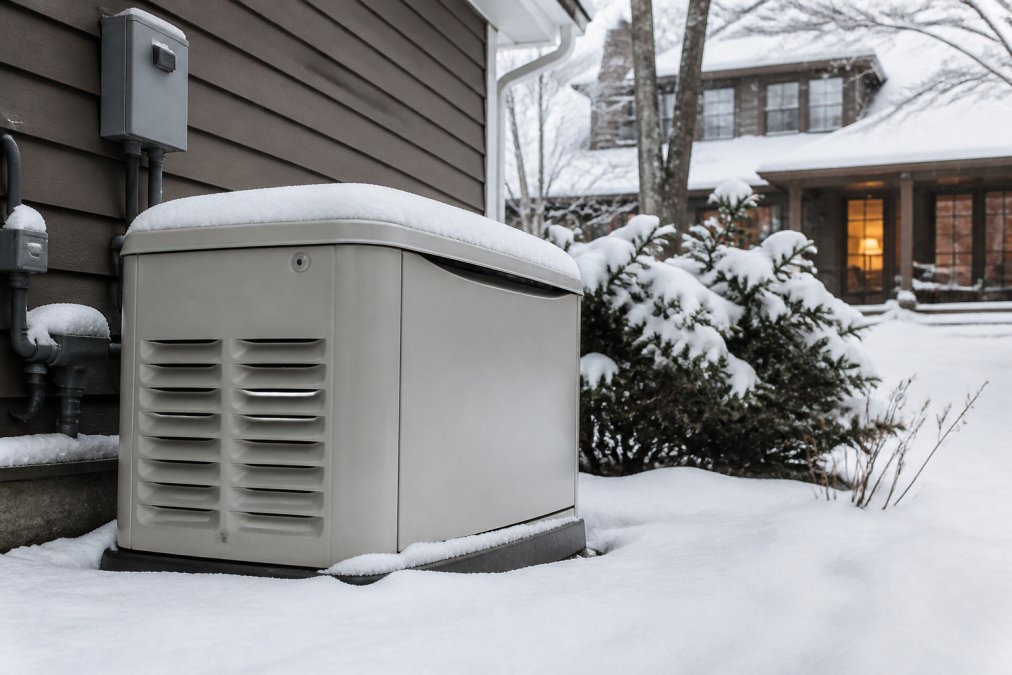
A standby generator is a permanently installed unit that runs on natural gas or propane and kicks on automatically when the grid drops. A transfer switch isolates your home from the utility lines, then the generator carries your selected circuits.
The advantage is fuel-free operation for as long as your gas supply holds. The trade-off is professional installation, a concrete pad, and a correctly wired automatic transfer switch. It's the option most homeowners want for whole-home coverage during a multi-day winter outage.
Portable Power Stations
A portable power station is a battery unit you can carry room to room, charged from a wall outlet, a car, or solar panels. No fuel, no exhaust, no installation.
Capacity is the limiting factor: most units cover phones, laptops, a router, and a few lights for hours, not days. For remote workers, a portable power station paired with a small solar panel is often enough. It won't run a furnace or a well pump.
Home Battery Systems
A home battery system stores energy from the grid or rooftop solar and discharges it during an outage. Lithium iron phosphate chemistry is now the default for stationary storage because of its cycle life and thermal stability.
The catch is capacity planning: a battery sized for evening loads won't carry you through a three-day ice storm unless it's paired with solar or a generator. For long-term grid independence, battery storage plus solar is the cleanest path.
Essential Appliances to Power During an Outage
Not every circuit needs backup. Prioritize the loads that keep your home safe and functional, then size the system around them. The mistake most homeowners make is adding up nameplate wattage and calling it done, that number is almost always wrong, because motors and compressors draw a startup spike two to three times their running wattage.
Separate running watts from surge watts
Every load has two numbers that matter:
- Running watts, what the device draws once it's operating steadily.
- Surge (starting) watts, the brief spike when a motor, compressor, or pump first kicks on. This is the number that stalls an undersized system.
A furnace blower might run at 600 watts but surge past 1,800; a well pump can run at 1,000 and surge to 3,000 or more; a refrigerator typically runs 150 to 200 watts with a surge near 600. If your backup source can't absorb the surge, the breaker trips or the inverter shuts down, even though the steady-state total looked fine on paper.
The essentials, ranked by what they actually draw
- Heating equipment, furnace blower, boiler circulator, or space heater. The largest and most overlooked draw in a winter outage; a space heater alone can pull 1,500 watts running.
- Well pump or sump pump, high surge, intermittent run. Matters more during freeze-thaw cycles than most homeowners expect.
- Refrigeration, a fridge and freezer hold temperature for hours if you keep the doors shut. Run them cyclically to stretch runtime.
- Medical equipment, anything with a continuous requirement, such as oxygen concentrators or CPAP machines. Size these first, not last.
- Communications, router, modem, and phone chargers. Low draw, high value, especially for remote workers.
- Emergency lighting, LED lamps and a few hardwired fixtures draw a fraction of what incandescent bulbs did.
A worked example
Say your priority list is a furnace blower (600 running / 1,800 surge), a refrigerator (200 running / 600 surge), a router and modem (30 running), four LED lamps (40 running total), and phone chargers (20 running).
- Steady running total: about 890 watts.
- Worst-case surge: if the furnace blower and refrigerator start together, add the larger surge to the other loads' running watts, roughly 1,800 + 200 + 30 + 40 + 20, or about 2,090 watts.
That gap between 890 and 2,090 is why a system sized on running watts alone fails. Size to the surge, then confirm your battery or generator can sustain the running total for the hours you need.
Load management: the strategy competitors skip
You don't have to power everything at once. Sequencing loads, well pump, then fridge, then furnace blower on a rotation, lets a smaller system carry a larger priority list. Many home battery systems and smart panels automate this with load shedding: they cut non-essential circuits when the grid drops, then restore them as capacity allows. Smart thermostats on backed-up circuits can also reduce heating demand during an outage, extending runtime more than most people realize.
Best Home Energy Storage Systems for Cold Climates
The best home energy storage systems for cold climates pair lithium iron phosphate batteries with thermal management, because standard lithium-ion chemistry loses usable capacity as temperatures drop.
Cold-weather degradation is the gap most product pages skip: a battery rated for a certain capacity at room temperature delivers less in an unheated garage in January. Systems with active thermal management hold output better, but draw power to do it.
| System Type | Cold-Weather Behavior | Best For |
|---|---|---|
| Lithium iron phosphate with thermal management | Holds capacity better, draws power to stay warm | Whole-home storage in cold regions |
| Standard lithium-ion | Noticeable capacity loss below freezing | Mild climates, indoor installation |
| Lead-acid | Significant capacity loss, slower charging | Budget setups, mild climates only |
For Middle Tennessee homeowners, the practical answer is to install storage in a conditioned space when possible and to choose chemistry rated for sub-zero performance if the unit lives outdoors.
Portable Power Station Cold Weather Performance
Portable power station cold weather performance drops in two ways: the battery holds less charge, and charging slows or stops when the cells get cold.
Take our 60-second quiz for a free quote today! →
Most manufacturers rate capacity at room temperature. In a cold garage, expect usable capacity to fall, sometimes sharply. Charging a cold battery can damage the cells, which is why many units refuse a charge until they warm up.
What works in practice:
- Store the unit indoors and only move it outside when you need it
- Charge to full before a winter storm alert, not during one
- Keep it off a concrete floor, which pulls heat out of the battery
- Let a cold unit reach room temperature before plugging it in
For remote workers, a portable station plus a charged laptop and a phone hotspot covers a short outage. It won't cover a furnace, and no portable unit will.
How to Maintain a Backup Generator in Winter
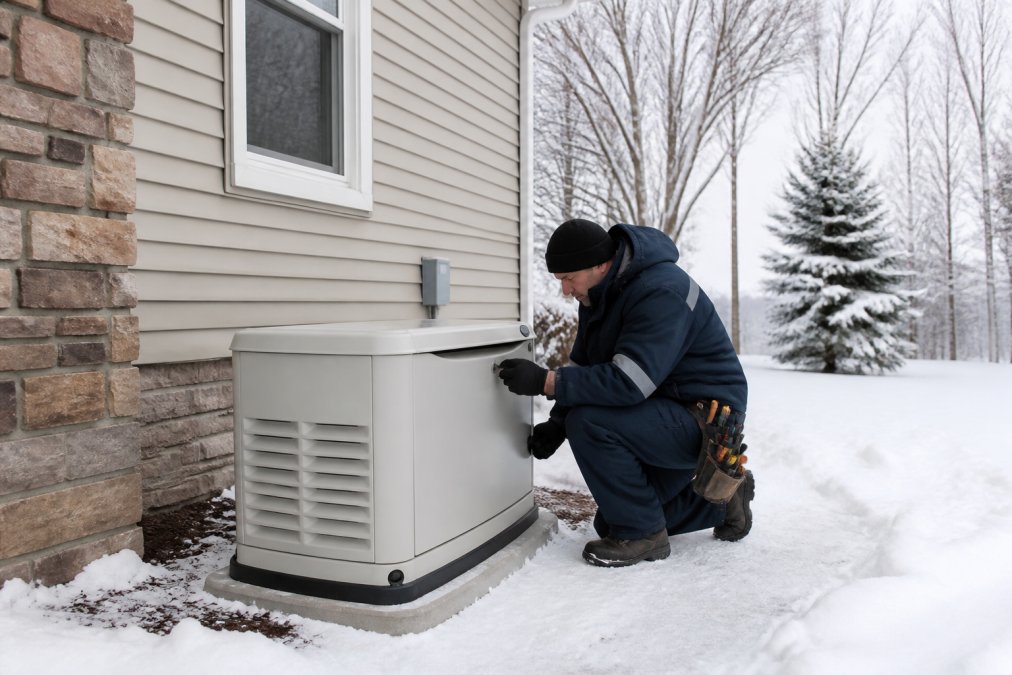
Winter maintenance separates a generator that starts on the first cold morning from one that doesn't. The steps take an afternoon.
- Test the automatic transfer switch. Run a scheduled outage simulation so the switch transfers and the generator carries the load. An untested switch is an unknown.
- Check fuel supply and lines. For propane, confirm tank level. For natural gas, verify the line isn't obstructed by ice or snow.
- Inspect and change the oil and filters. Cold starts are hard on oil past its service interval.
- Clear snow and ice from the unit and its air intakes. A blocked intake causes overheating and, on some units, exhaust problems.
- Check the battery. Standby generators have a starting battery that weakens in cold weather. Test and replace it before it fails.
- Confirm carbon monoxide safety. Never run a portable generator indoors, in a garage, or near a window. Install CO alarms on every level of the home.
The CDC guidance on carbon monoxide safety during power outages is blunt about this: generators, camp stoves, and grills belong outside, well away from doors and windows. CO poisoning during outages is entirely preventable.
Safety and Permitting for Winter Storm Backup Power
Two things sink more winter backup installations than bad equipment: carbon monoxide and paperwork. Both are preventable and routinely glossed over in product-led guides.
Carbon monoxide: the placement rules that actually matter
Carbon monoxide is colorless and odorless, and it kills during outages every winter. Any fuel-burning device produces CO, and if it runs where exhaust can drift back into the home, concentration builds fast. These are the rules safety agencies repeat because they're the ones people break.
- Never run a portable generator indoors, not in a garage, basement, crawlspace, or covered porch. Opening a garage door does not make it safe.
- Place the unit outdoors, well away from the home. A common guideline is at least 20 feet from any door, window, or vent, with exhaust pointed away from the structure. Distance matters more than direction.
- Keep it out from under eaves and away from vents. Exhaust rising into a soffit vent or intake can pull CO straight into living space.
- Never run a generator in snow or standing water. Moisture near the unit is an electrocution risk. Elevate it on a dry, stable surface and keep connection points dry.
- Install CO alarms on every level and outside sleeping areas. Test them before storm season, not during an outage. Battery-only alarms are the ones that fail when you need them.
- Know the symptoms. Headache, dizziness, nausea, and confusion are early signs. If they appear, get everyone outside and call for help, don't try to ventilate and stay.
A standby generator avoids the portable-unit placement problem because its exhaust is permanently routed away from the home, but it still needs clearance from windows, doors, and fresh-air intakes, and its exhaust must never be blocked by snow or ice.
Permitting and local rules: what to expect
Standby generator installations typically require an electrical permit and, in many jurisdictions, a separate inspection before the unit can be energized. The permit isn't just paperwork, it's the record that protects you in an insurance claim or resale inspection.
What local rules commonly govern:
- Setbacks from property lines. Many jurisdictions require a minimum distance from the lot line, and some require more from a neighboring bedroom window.
- Noise limits. Measured in decibels at the property line, often stricter at night. This rule most often forces a different placement than the homeowner wanted.
- Fuel storage. Propane tank placement and natural gas connections have their own code requirements, and a natural gas connection usually needs a licensed plumber or gas fitter in addition to the electrician.
- HOA rules. Even where the city approves a location, an HOA can restrict placement, screening, or unit size. Check the covenants before you buy, not after.
- Transfer switch and grounding. A proper transfer switch isolates your home from utility lines. Backfeeding through an outlet is illegal in most places and endangers line workers.
Getting any of this wrong means a failed inspection, a fine, or an insurance problem later. A licensed electrician who handles permit paperwork and inspection coordination keeps you out of the code office.
Smart automation and remote monitoring
For homeowners integrating backup power with smart home automation: smart thermostats and hubs should be on backed-up circuits so they stay online, and some systems let you monitor battery state and generator status remotely. That visibility is worth having when you're away during a storm, confirm the system transferred, check runtime remaining, and adjust load priorities without driving back.
CDC guidance on carbon monoxide safety during power outages
NFPA electrical safety resources
Frequently Asked Questions
What is the best backup power source for winter storms?
The best source depends on your needs. A standby generator running on natural gas or propane provides whole-home power and starts automatically during an outage. A home battery system offers quiet, fuel-free operation and pairs well with solar panels. For smaller loads, a portable power station can keep phones, routers, and a space heater running. Licensed electricians can assess your home's peak demand and recommend the right size, whether you need a transfer switch for a generator or a battery with enough kilowatt-hour capacity for overnight backup.
Do portable power stations work in freezing temperatures?
Portable power station cold weather performance varies by battery chemistry. Lithium iron phosphate (LiFePO4) units generally operate down to about -4°F (-20°C) for discharge, but charging below freezing can damage the cells. Many models include thermal management to warm the battery before charging. Store the unit indoors until needed, and check the manufacturer's temperature range. Capacity drops in cold weather, so plan for reduced backup duration and keep the station in a heated space when possible.
How long will a home generator run during a winter storm?
Runtime depends on fuel type and load. A standby generator connected to a natural gas line can run indefinitely as long as the gas supply continues. Propane units typically run 24 to 72 hours on a standard tank, depending on wattage output and load. Portable generators run 8 to 12 hours on a full tank. To extend backup duration, manage energy consumption by turning off non-essential appliances and using emergency lighting instead of overhead fixtures.
What are the safety requirements for using a generator during winter?
Never run a portable generator indoors, in a garage, or near windows; carbon monoxide can build up quickly and is odorless. Place the unit at least 20 feet from your home with the exhaust pointing away. Use a transfer switch or heavy-duty extension cords rated for the load, and never backfeed a home's wiring by plugging a generator into a wall outlet. For standby systems, a licensed electrician must install an automatic transfer switch and obtain any required permits. Follow local codes and manufacturer guidelines for fuel storage safety.