 how-to
How to Keep a Solar Battery Safe From Fire and Overheating
Last Updated: October 28, 2026
Quick Summary
Solar battery safety depends mostly on installation and routine checks. Choose a dry, ventilated spot within the manufacturer's temperature range, follow clearance rules, and have a licensed electrician inspect terminals and protection devices. Review health metrics and alerts regularly.
- Choose a dry, well-ventilated spot away from heat sources like furnaces and water heaters.
- Never install a battery in a sealed closet or unventilated crawl space.
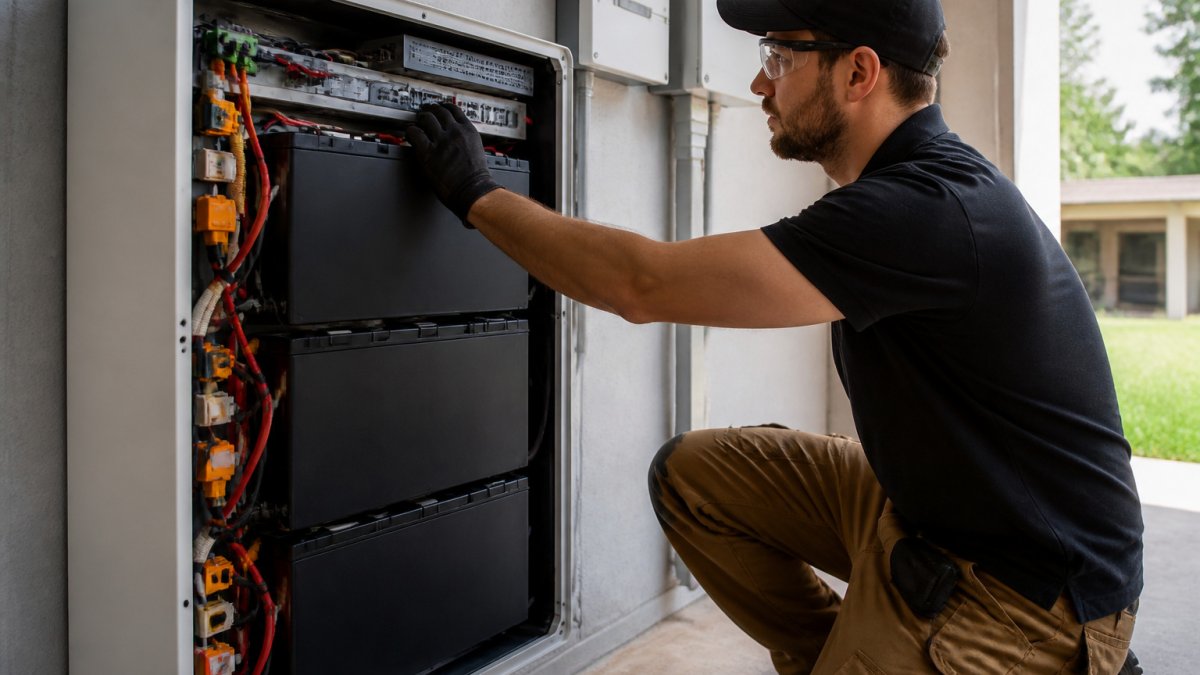
- Have a licensed electrician torque terminals and check breakers and disconnects regularly.
- Shut the system down and call an electrician if you see swelling, leaks, or a burnt smell.
- Never mix battery chemistries or use a charger not rated for your battery type.
Table of Contents
- Solar Battery Installation Requirements That Reduce Fire Risk
- Solar Battery Maintenance Checklist for Routine Safety Checks
- Battery Chemistry Differences: Lithium-Ion vs. Lead-Acid Safety
- Solar Battery Overheating Warning Signs to Act On Early
- What to Do in a Battery Fire or Smoking Emergency
- When to Call a Licensed Electrician for Your Battery System
- Frequently Asked Questions
Solar Battery Installation Requirements That Reduce Fire Risk
Solar battery safety starts at installation, and most fire risk is set in place before the first charge cycle. At Generators of Nashville by Evolution Electric, our licensed electricians install backup power solutions.
Choosing a location with proper ventilation and temperature
Look for a spot that is dry, stable and well ventilated.
- Avoid direct sun exposure and heat-trapping walls
- Keep the unit away from furnaces, water heaters and fuel storage
- Pick a space that stays within the manufacturer's rated temperature range
- Never install a battery in a sealed closet or a tight, unventilated crawl space
Check the manufacturer's operating temperature range before you commit to any spot.
Clearances, mounting, and electrical protection
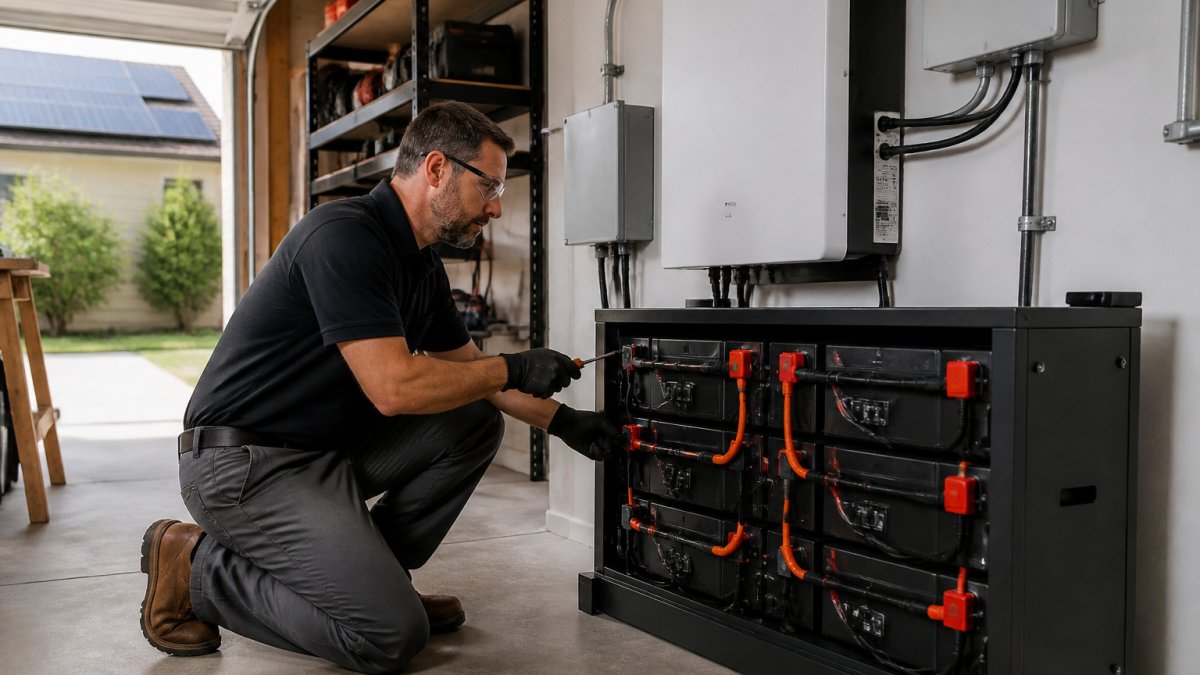
Clearance and mounting are easy to overlook. Follow the manufacturer's spacing rules and the National Electrical Code requirements that apply to your home, which you can review through NFPA National Electrical Code overview. Mount the unit on a solid, level surface that can carry its weight.
Solar Battery Maintenance Checklist for Routine Safety Checks
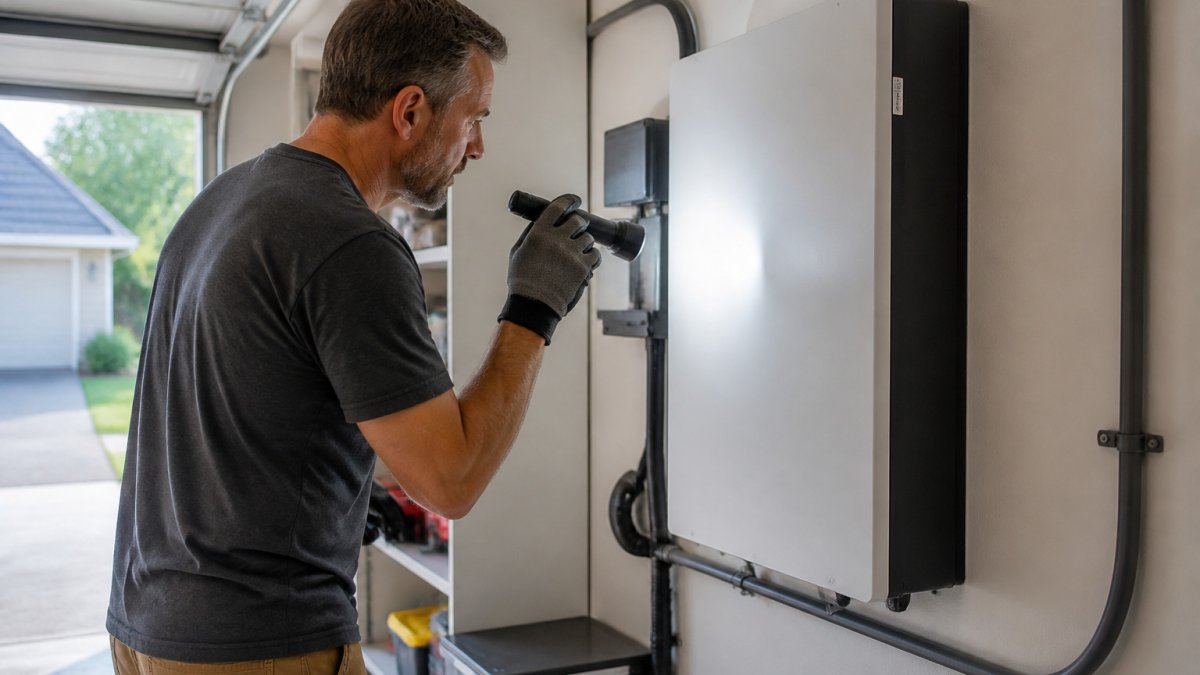
Routine checks catch small problems before they become big ones, and a consistent solar battery safety checklist is only useful if it is specific and repeatable. The schedule below turns general advice into a routine you can actually follow. It also explains what the numbers on your battery's app or display mean, so you can tell whether maintenance is working.
A practical monthly, seasonal, and annual schedule
- Have a licensed electrician torque terminals to spec and check breaker, fuse, and disconnect condition
- Review service records and confirm maintenance has not voided the warranty
- Assess capacity loss and cycle count against the manufacturer's expected degradation curve
- Confirm emergency shutdown procedures and labeling are still accurate
How to read battery health metrics
- State of charge (SOC): how full the battery is right now, usually shown as a percentage. SOC fluctuates daily and is not a health measure by itself.
- State of health (SOH): the battery's current capacity compared with its original rated capacity. A slow decline is normal; a sudden drop is a warning sign.
- Cycle count: how many charge and discharge cycles the battery has completed. Compare it with the manufacturer's rated cycle life to estimate remaining service life.
- Depth of discharge (DOD): how deeply the battery is drained in normal use. Shallow daily cycles generally extend life; routinely deep discharges accelerate wear.
- Capacity loss: the gap between rated and actual usable capacity. Track it over time rather than reacting to a single reading.
Troubleshooting alerts, reduced capacity, and abnormal performance
When the system reports a problem, work from the simplest explanation to the most serious.
- Check the alert code in the manufacturer's manual or app. Many codes point to a specific cause, such as over-temperature, communication loss, or a ground fault.
- Confirm environmental conditions. A battery that overheats only on hot afternoons may need better ventilation or shade, not repair.
- Review recent changes. New firmware, a new load, or a recent storm can explain a sudden shift in performance.
- Compare SOC and SOH trends. If SOH is dropping faster than the manufacturer's curve, capacity loss may be real rather than a display glitch.
- Stop and call a professional if you see swelling, leaks, a burnt smell, repeated over-temperature alerts, or a ground-fault code. Those are not DIY diagnoses.
Tasks that require a licensed electrician
Some maintenance is safe for a homeowner; some is not. Electrical isolation, torqueing terminals, replacing breakers or disconnects, and any work inside the enclosure should be handled by a licensed electrician. The same applies if the system has been flooded, physically damaged, or overheated. Before any professional visit, confirm the electrician's license through your state's licensing board and ask whether the work will be documented for warranty purposes.
Battery Chemistry Differences: Lithium-Ion vs. Lead-Acid Safety
Battery chemistry changes the safety picture, and the right precautions depend on which one you own. Lithium-ion and lead-acid batteries differ in charging limits, maintenance needs, ventilation requirements, and failure modes. Treating them as interchangeable is one of the most common maintenance mistakes.
Lithium-ion: charging limits and thermal stability
Key safety points for lithium-ion:
Take our 60-second quiz for a free quote today! →
- Respect the manufacturer's charge and discharge limits. Charging above the rated voltage or discharging below the minimum can damage cells and, in rare cases, trigger thermal runaway.
- Keep the battery within its rated temperature range. Many lithium systems cannot charge safely below freezing; some require the battery management system (BMS) to warm the cells first.
- Rely on the BMS, but do not assume it replaces inspection. The BMS monitors cell voltage, temperature, and current, and it will shut the system down if limits are exceeded. It cannot clean a corroded terminal or notice a physical crack.
- Watch for swelling or a sweet, chemical smell. These are signs of cell failure and warrant an immediate shutdown and professional inspection.
Lead-acid: ventilation, acid, and watering
Key safety points for lead-acid:
- Ventilate the enclosure. Hydrogen gas can accumulate in a sealed space; follow the manufacturer's ventilation requirements and never block vents.
- Wear eye protection and gloves when checking electrolyte. Flooded lead-acid batteries may require periodic watering with distilled water, and acid contact is a serious hazard.
- Clean corrosion promptly. White or green buildup on terminals increases resistance and heat; clean it with the manufacturer's approved method and re-torque connections to spec.
- Avoid deep discharges. Lead-acid batteries tolerate deep discharges poorly and lose capacity faster when routinely drained below the manufacturer's recommended depth of discharge.
Chemistry-specific maintenance at a glance
| Task | Lithium-ion | Lead-acid |
|---|---|---|
| Terminal cleaning | Yes, monthly visual | Yes, monthly visual; corrosion more common |
| Electrolyte watering | Not applicable | Flooded types may need distilled water |
| Ventilation | Required, but less gas | Critical; hydrogen gas during charging |
| Charge temperature limits | Often cannot charge below freezing | Charging efficiency drops in cold |
| Deep discharge tolerance | Moderate; BMS protects | Poor; avoid routinely |
| Primary failure signs | Swelling, chemical smell, over-temperature alerts | Acid leaks, corrosion, gas odor |
What this means for your maintenance routine
If you own lithium-ion, your routine should focus on temperature control, firmware updates, and reading BMS alerts. If you own lead-acid, ventilation, corrosion control, and electrolyte checks matter more. In both cases, document what you do and when, because maintenance records are often required to keep warranty coverage intact and to show a service history if you sell the home.
Solar Battery Overheating Warning Signs to Act On Early
If you notice any of these, shut the system down using the manufacturer's emergency stop and disconnect procedure. Then contact a licensed electrician before restarting it.
What to Do in a Battery Fire or Smoking Emergency
If you see smoke, flames or smell burning from a battery, act right away.
- Get everyone out of the home and call 911.
- Do not try to fight a battery fire with water unless the fire department tells you to.
- Keep a safe distance and do not reenter the building.
- Tell responders the battery type and location so they can plan the response.
Fire departments often recommend a dry chemical extinguisher only for small, early fires, and only if you can do so safely. When in doubt, leave.
When to Call a Licensed Electrician for Your Battery System
Take our 60-second quiz for a free, personalized quote on your whole-home backup system.
Frequently Asked Questions
Can a home solar battery catch fire?
Yes, although it is uncommon when a battery is installed correctly and maintained. Fire risk usually comes from loose or corroded connections, damaged cells, overheating from poor ventilation, or installation errors such as undersized wiring or missing overcurrent protection. Use a battery that carries a recognized safety listing, have a licensed electrician install it to the manufacturer's specifications and local code, and inspect it on a regular schedule. If you notice swelling, a burning smell, or heat at the enclosure, shut the system down and call a professional right away.
How often should a solar battery be inspected?
Do a quick visual check monthly and a more thorough inspection at least twice a year, ideally before summer and winter. Look for swelling, cracks, discoloration, dust buildup, pests, moisture, and loose or corroded terminals. Review the battery monitoring app for alerts, abnormal temperature readings, or unexpected drops in capacity. Keep a written log of each check so you can spot trends. Any electrical work, such as tightening terminals under power or opening the enclosure, should be left to a licensed electrician.
Can I use a fire extinguisher on a solar battery fire?
Do not fight a battery fire yourself. Lithium-ion battery fires can reignite hours later and release toxic smoke. Evacuate everyone, call 911, and keep a safe distance. If the fire department advises it and you can do so safely, a Class ABC or Class D extinguisher may be used on small flare-ups, but a battery fire is typically handled with water spray from firefighters. Never pour water directly into an energized battery without the fire department's guidance.
Where should a home solar battery be installed?
Install the battery in a location that is dry, well ventilated, and kept within the manufacturer's operating temperature range, which is often roughly 32 to 104 degrees Fahrenheit. Avoid attics, direct sun exposure, and spaces prone to flooding. Keep the unit away from living areas, flammable materials, and exits, and maintain the clearances listed in the installation manual. A licensed electrician in Tennessee should confirm the location meets the National Electrical Code and local permit requirements.
Read more: Solar battery maintenance checklist walks through the full routine step by step. For placement, mounting and wiring, see our residential installation guide. Homeowners weighing indoor safety should read whether LiFePO4 batteries are safe for indoors. When you are ready for professional help, book a backup generator consultation in Nashville. To check credentials before you hire, see how to verify a licensed electrician.