 comparison
Pioneer Generators Alternative for Tennessee Homes
Table of Contents
- Pioneer Generators Alternative Options for Tennessee Homeowners
- Why Homeowners Seek Alternatives to Pioneer Generators
- Standby vs. Portable: Which Backup Type Fits Your Home?
- Quick Comparison: Generac, EcoFlow, Westinghouse, and Champion
- Who Installs Generac in Tennessee? Licensed Electricians and What to Verify
- Generac vs EcoFlow Home Backup: Fuel-Powered or Battery-Powered?
- Cost of Whole Home Generator Installation: What Tennessee Homeowners Pay
- Total Cost of Ownership: Fuel, Maintenance, and Repairs Over 10 Years
- Permits, Tennessee Regulations, and Financing Your Backup System
- Making the Right Choice for Your Middle Tennessee Home
- Frequently Asked Questions
Last Updated: September 18, 2026
Pioneer Generators Alternative Options for Tennessee Homeowners
Homeowners searching for a Pioneer Generators alternative for Tennessee want dependable backup power without guesswork. This guide from Generators of Nashville by Evolution Electric breaks down the real options, from fuel-powered standby units to battery systems.
Why Homeowners Seek Alternatives to Pioneer Generators
Most people switch because a portable unit couldn't carry the load they needed, or because service and parts became a headache after the sale.
Standby vs. Portable: Which Backup Type Fits Your Home?
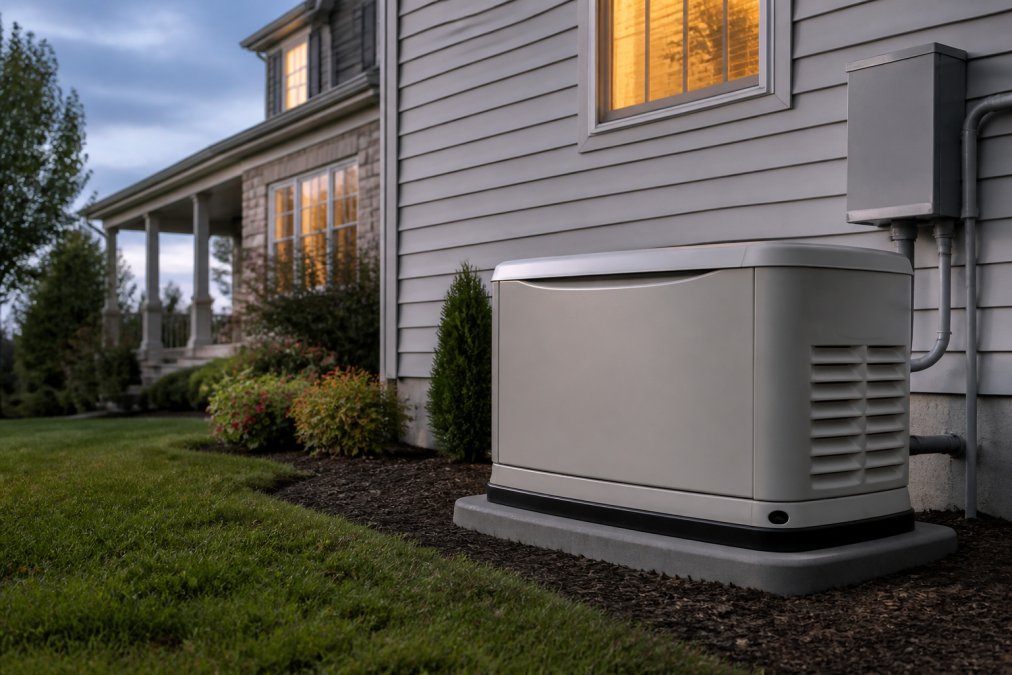
Standby generators are permanently installed, start automatically within seconds of an outage, and run on natural gas or propane. Portable generators are wheeled units you position and start by hand, typically on gasoline.
The trade-off comes down to three things:
- Convenience: Standby units start themselves; portables need manual setup and refueling.
- Capacity: Standby systems can carry a whole house; portables cover selected circuits.
- Cost: Portables cost far less upfront but demand more attention during a storm.
Quick Comparison: Generac, EcoFlow, Westinghouse, and Champion
Here's how the leading options stack up for a Middle Tennessee home.
| System | Type | Fuel | Best For |
|---|---|---|---|
| Generac Guardian Series | Standby | Natural gas or propane | Permanent whole-house coverage |
| EcoFlow battery backup | Battery | Grid or solar charging | Quiet, emissions-free indoor backup |
| Portable | Gasoline or propane | Flexible, budget-friendly essentials | |
| Portable | Gasoline | High-wattage portable power | |
| Standby | Natural gas or propane | Large homes with heavy loads |
Who Installs Generac in Tennessee? Licensed Electricians and What to Verify
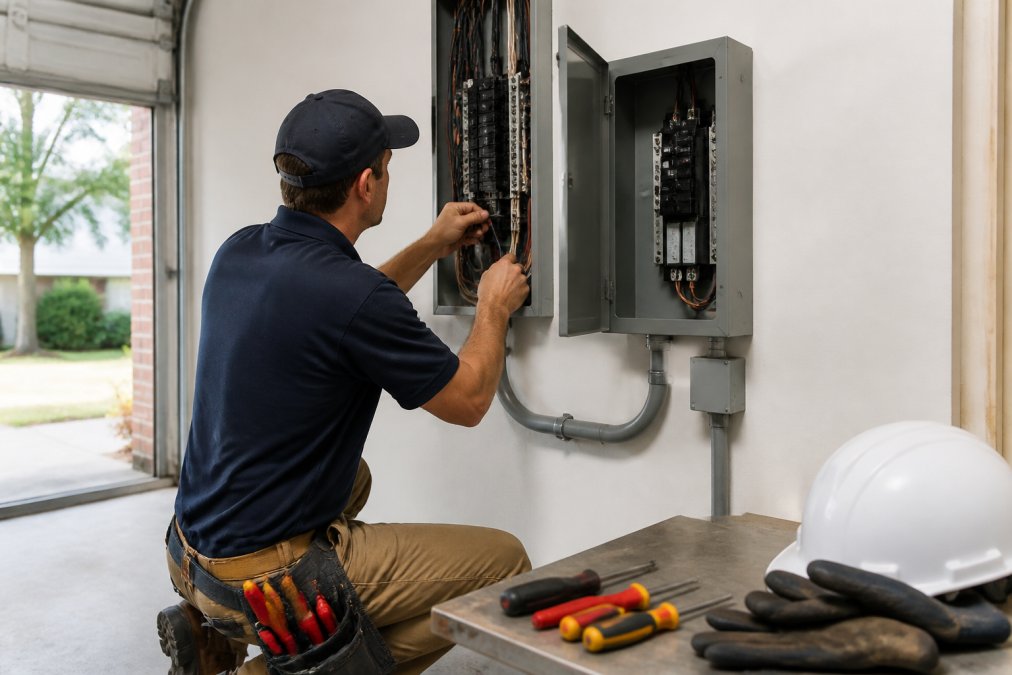
The short answer: a licensed electrical contractor, not a general handyman. Standby installation involves your electrical panel, a transfer switch, and fuel connections, all under licensing and code requirements.
Before you sign anything, verify these:
- Active state electrical license and proof of insurance
- Experience with automatic transfer switch wiring
- A written scope covering permits and inspection
- Clear warranty terms on both labor and equipment
Generac vs EcoFlow Home Backup: Fuel-Powered or Battery-Powered?
Generac vs EcoFlow home backup comes down to how long you need power and how you feel about fuel. A Generac standby generator runs indefinitely as long as natural gas or propane flows, making it the stronger pick for multi-day outages. Transitioning to these systems often requires considering how propane fuel alternatives might reduce your long-term reliance on traditional delivery infrastructure.
Cost of Whole Home Generator Installation: What Tennessee Homeowners Pay
The cost of whole home generator installation depends on system size, fuel type, and how much electrical work your home needs. A larger home with a long gas line run and complex panel costs more than a compact setup.
- Equipment cost for the generator or battery system
- Automatic transfer switch and wiring
- Fuel line or electrical service upgrades
- Permits and inspection fees
- Labor for licensed installation
Total Cost of Ownership: Fuel, Maintenance, and Repairs Over 10 Years
The purchase price is the smallest part of the story. What separates a good decision from an expensive one is the ten-year ledger: what you pay to keep the system alive, what it burns when it runs, and what it costs to replace when it quits.
The four cost buckets
Every backup system draws from the same four buckets:
- Acquisition, equipment, transfer switch, wiring, fuel line or service upgrade, permits, and labor.
- Recurring maintenance, oil, filters, spark plugs, battery replacement, and an annual service visit.
- Consumables during outages, natural gas or propane for standby, gasoline and oil for portable, grid or solar charging for battery.
- End-of-life replacement, the year the unit stops being worth repairing.
If a quote only addresses bucket one, you are looking at half a proposal.
Standby generators
A standby unit runs on natural gas or propane and exercises weekly, so it needs attention whether or not the grid fails. Budget for:
- An annual service call for oil, filter, plugs, and a load test.
- A starting battery replacement every few years, these fail quietly and are the number one reason a generator won't crank.
- Valve adjustment and belt inspection at the intervals in your owner's manual.
- Fuel consumption during an outage. A 22 kW air-cooled unit under load burns roughly two to three gallons of propane per hour. A multi-day ice storm outage is a real fuel event, not a rounding error.
Portable generators
The sticker price is the trap. A portable looks cheap until you add up:
- Gasoline at every outage, plus stabilizer and cans.
- Oil changes every 50-100 hours of run time, more often under heavy load.
- A carburetor cleaning or replacement if the unit sits with ethanol fuel in it.
- Extension cords, and possibly a manual transfer switch or interlock kit so you aren't backfeeding your panel.
- Shorter service life, a homeowner-grade portable that sees real storm duty often needs replacement inside a decade.
Battery backup systems
Batteries trade fuel for capacity: no oil, no filter, no spark plug, no exhaust. The trade-offs are:
- Capacity limits. A single home battery covers essentials for hours, not days, unless you stack units or pair with solar.
- Round-trip efficiency. You lose a percentage of every kilowatt-hour you put in and pull back out.
- Cell degradation. Lithium iron phosphate cells are rated for thousands of cycles, but capacity fades over years. Plan on a replacement horizon shorter than a standby generator's.
- Solar pairing. If you already have panels, the marginal cost of adding storage is lower and the ten-year math improves.
How to run the comparison yourself
Build a spreadsheet with one row per year for ten years and one column per bucket. Fill in what you know, mark what you don't, and ask your installer to fill the gaps in writing. The system that wins on ten-year cost is rarely the one with the lowest quote.
Permits, Tennessee Regulations, and Financing Your Backup System
Permitting and financing determine whether your install is legal, insurable, and affordable.
What actually requires a permit
A permanently installed standby generator is an electrical and mechanical project touching multiple code books:
- National Electrical Code (NEC), adopted statewide with local amendments. Governs the transfer switch, grounding and bonding, conductor sizing, and the disconnect.
- NFPA 37, sets clearance distances from windows, doors, vents, and combustible walls.
- NFPA 54 / National Fuel Gas Code, governs the gas line, shutoff valve, and pipe sizing.
- International Residential Code (IRC) and International Mechanical Code (IMC), cover the pad, exhaust, and structural placement.
- Local zoning and HOA rules, setback from property lines, noise ordinances, and screening requirements. Some HOAs require a screening enclosure; some prohibit the unit entirely.
The permit and inspection sequence
A typical standby install follows this order:
- Site assessment and load calculation.
- Permit application with the local building or electrical department, including a site plan showing clearances.
- Rough-in inspection after the transfer switch, wiring, and gas line are installed but before drywall or backfill.
- Final inspection after the unit is set, wired, gassed, and started.
- Utility coordination if a new gas meter or service upgrade is needed.
- Certificate of inspection, which your insurer may ask for.
Questions to ask before you sign
- Who pulls the permit, you or the contractor?
- Is the permit fee included in the quote, or billed separately?
- What happens if the inspector requires a change?
- Will I receive a copy of the final inspection report?
- Does the quote include gas line sizing and any required service upgrade?
A contractor who hesitates on any of these is telling you something.
Financing versus upfront payment
Most homeowners face three paths:
Pay upfront. Lowest total cost, no interest, no lien. Best if you have the cash and the system is a planned purchase.
How to compare financing offers
Do not compare monthly payments. Compare:
- Annual percentage rate (APR), the true cost of borrowing, including fees.
- Term length, a longer term lowers the payment but raises total interest.
- Prepayment penalty, can you pay it off early without a fee?
- Deferred interest traps, what happens if you miss the payoff deadline?
- Secured versus unsecured, a HELOC is secured by your home; an unsecured personal loan is not.
A note on tax treatment
Federal incentives for residential backup power have changed repeatedly, and eligibility depends on the technology and your tax situation. Confirm current rules with a licensed tax professional or the IRS before counting on any credit. State and local incentives are administered separately and should be verified with the relevant agency.
Putting it together
The right sequence is: get a load calculation, get a written scope naming the permit and inspection steps, get both a cash and a financed price, then decide. The system that fits your budget on paper is not always the one that fits over ten years.
Making the Right Choice for Your Middle Tennessee Home
There's no single best system, only the one matching your outage patterns, budget, and comfort with maintenance. Start with a load calculation, then weigh fuel versus battery against how long your outages last.
Frequently Asked Questions
What brand of generator is the most reliable?
Generac is widely recognized for reliability in whole-home standby systems, with air-cooled engines and automatic transfer switches that start within seconds of an outage. For portable use, Westinghouse and Champion offer dependable inverter and open-frame options. Battery systems like EcoFlow score high on quiet operation and zero fuel needs but have limited runtime. Reliability ultimately depends on proper sizing, professional installation, and consistent maintenance, not the brand name alone.
How do I choose the right size backup generator for my home?
Start with a load calculation that totals the running and starting watts of the appliances you want powered. A typical 2,000-square-foot home with central AC usually needs 14kW to 22kW for whole-house coverage. If you only need essentials like a fridge, internet, and a few lights, a 7,500-watt portable can work. A licensed electrician can perform the calculation and recommend a generator size that matches your actual usage.
Are solar and battery backup systems a viable alternative to standby generators?
Yes, for many homeowners. Battery systems like EcoFlow, Anker SOLIX, and Jackery provide silent, emissions-free backup and pair well with solar panels for extended outages. The trade-off is capacity: most home batteries cover essentials for 8 to 24 hours, while a natural gas or propane standby generator runs indefinitely as long as fuel is supplied. Some homeowners combine both for layered protection.
What should I look for in a professional generator installer?
Verify a current electrical contractor license, proof of insurance, and manufacturer authorization for the brand you choose. Ask for local references and confirm the installer handles permits, load calculations, and transfer switch wiring. In Tennessee, installation must meet local building codes and utility interconnection rules. A written quote should itemize equipment, labor, permit fees, and any concrete pad or gas line work so there are no surprises.
How often do home standby generators require professional maintenance?
Manufacturers typically recommend an annual service visit that includes oil and filter changes, spark plug inspection, battery testing, and a transfer switch function check. Homes in areas with frequent outages or heavy pollen may need service twice a year. Skipping maintenance is the most common reason standby generators fail during an outage. A preventative maintenance plan from a licensed electrician keeps the unit under warranty and ready to run.
Backup power is one of those purchases you only judge when the lights go out, so the stakes are higher than the sticker price suggests. Generators of Nashville by Evolution Electric removes the guesswork with licensed electricians, authorized installation of Generac, EcoFlow, Anker SOLIX, and Jackery systems, and E4G whole-home backup options tailored to your load. Get started with Generators of Nashville by Evolution Electric and take our 60-second quiz for a free quote today.