 How-to
How to Stop a Generator From Surging When the AC Kicks On
Last Updated: November 16, 2026
Quick Summary
Generator surging usually happens when the AC compressor's starting surge exceeds what the generator can supply, or when fuel and air delivery can't keep up with the sudden demand. Compare the AC's starting watts against your generator's continuous rating first. If the generator is sized correctly, check for stale fuel, clogged filters, or carburetor problems.
- Compressors need a short starting spike far above their running watts.
- Compare the generator's continuous rating against the AC's starting and running watts.
- Stale gasoline and clogged fuel filters are common causes of surging under load.
- A clogged air filter or partly closed choke can richen the mixture and cause rough running.
- Never adjust the governor by guesswork, since overspeed can damage the generator and appliances.
Table of Contents
- Why the AC Compressor Makes a Generator Surge
- Air Conditioner Starting Watts and Generator Capacity
- Generator Overload When the Air Conditioner Starts
- Step-by-Step Diagnosis: Engine Surging or a Brief Voltage Dip?
- How to Stop a Generator From Surging: Fuel, Air, and Carburetor Checks
- AC Soft Start Kits and When to Use Them
- Schedule a Load Assessment Before Your Next Outage
- Frequently Asked Questions
This guide explains why the compressor causes this, how to tell an engine problem from a brief voltage dip, and what steps stop the surging. Generator surging is usually a sizing or fuel-delivery issue, not a sign that the unit is broken beyond repair.
Why the AC Compressor Makes a Generator Surge
An air conditioner compressor needs a large burst of power the moment it starts. That burst can be several times its normal running load. The generator's engine has to speed up quickly to meet that demand, and if it can't respond cleanly, the output swings and the engine hunts for a stable speed.
Starting Watts Versus Running Watts
Running watts are the steady power an appliance draws once it is operating. Starting watts are the extra surge needed to get a motor moving, and they are much higher. A compressor can need a short spike far above what its nameplate suggests. Check the appliance label and the manufacturer's data for both numbers before you size anything.
Air Conditioner Starting Watts and Generator Capacity
A generator must cover the largest starting load plus the running load of everything else on the circuit at the same moment. If the unit is undersized, the engine has no reserve when the compressor kicks in, and surging follows. To prevent the compressor’s startup demand from overwhelming the engine, size a home standby generator around that peak load as well as the appliances that will run alongside it.
Here is a simple way to check. Add the running watts of every device you plan to power. Then add the extra starting watts of the largest motor, usually the AC. If that total is close to or above the generator's rated output, you are running near the limit.
- Confirm the generator's continuous (running) rating, not just its peak rating
- Note the starting watts of your AC and any well pump or fridge
- Leave a safety margin rather than running at the rated maximum
Before you size anything, compare the starting and running watts of your loads against the generator's rating. Compare backup power options and sizing for a deeper look at matching capacity to your home.
| Item | Value | Note |
|---|---|---|
| Starting watts | Several times running watts | Extra surge needed to start a motor |
| Running watts | Steady draw once operating | Listed on the appliance label |
| Generator rating to check | Continuous (running) rating | Not just the peak rating |
| Safety margin | Leave reserve below rated maximum | Avoid running at the limit |
Generator Overload When the Air Conditioner Starts
Overload is the most common cause. When the compressor starts and the generator cannot supply the spike, voltage sags and frequency drops. Lights flicker, the engine may slow, and the control panel may show an overload warning. Shutting off other loads before the AC starts can help as a temporary step, but it is not a permanent fix if the generator is simply too small.
Professional installation makes a difference here.
Step-by-Step Diagnosis: Engine Surging or a Brief Voltage Dip?
Most people lump two different symptoms together: the engine audibly hunting up and down in speed, and the lights dimming for a split second when the compressor starts. They have different causes and different fixes. Work through this decision tree in order, and stop if anything looks or smells unsafe.
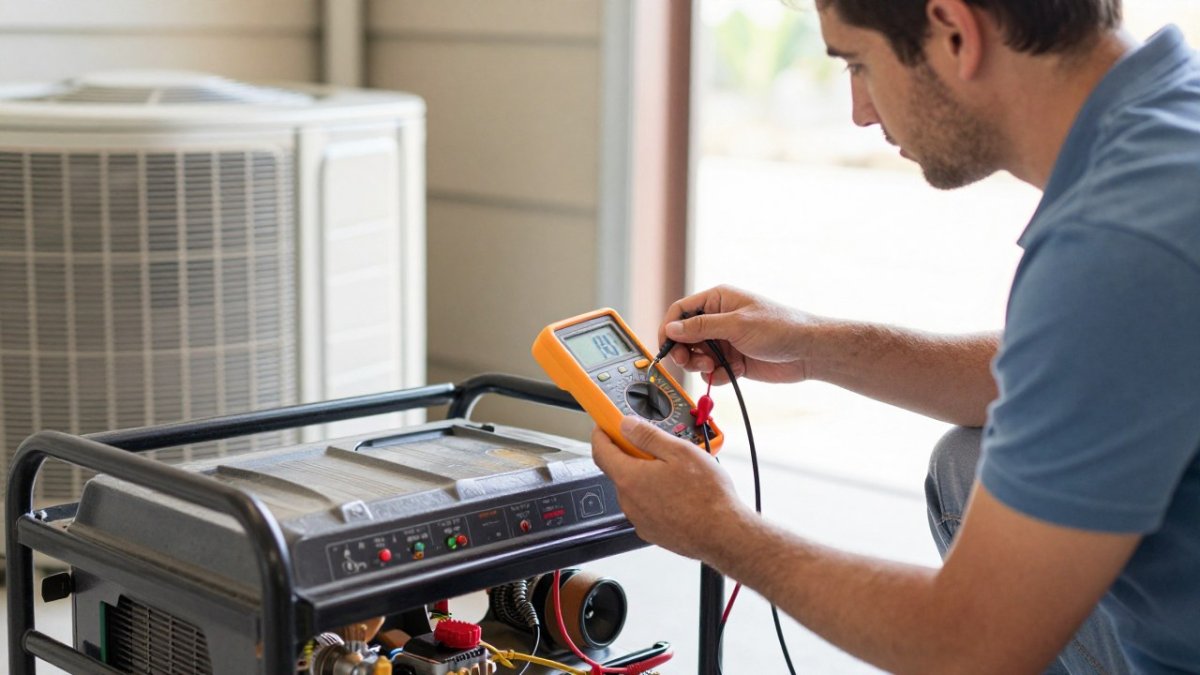
Step 1, Isolate the generator. Turn off the AC at the thermostat and unplug or switch off every nonessential load. Run the generator with only a light load (a lamp or a phone charger). Listen for 60 seconds.
- If the engine hunts at light load, the problem is in the engine or fuel system, not the AC. Skip to the fuel, air, and carburetor section.
- If the engine holds steady at light load, the AC starting load is the trigger. Continue to Step 2.
Step 2, Characterize the event at AC start. With the generator running steadily, watch the lights and listen as the compressor kicks on.
- A brief dim or flicker that recovers within about one to two seconds, with the engine speed returning to normal, is a voltage dip from starting inrush. That points to capacity, not a broken generator.
- An engine that bogs, slows, or hunts for several seconds and does not cleanly recover points to a fuel-delivery or governor response problem under load.
- A breaker trip or overload light means the starting load exceeded what the generator can supply. That is a sizing or load-management issue.
Step 3, Separate a generator fault from an AC fault. This is the step most guides skip. If you have a second suitable power source, a properly rated outlet on utility power, or a different generator known to be adequate, run the AC from it and observe.
- If the AC starts cleanly on the other source but bogs this generator, the generator is weak, undersized, or fuel-starved.
- If the AC struggles to start on the other source too, suspect the AC itself: a failing start capacitor, a stuck compressor, or a hard-start condition. A technician can test the capacitor with a multimeter.
- If you have no second source, run a different heavy motor load (a well pump or a shop vacuum) on the generator. If that also bogs the engine, the generator is the common factor.
Step 4, Confirm repeatability. Restart the AC two or three times with a few minutes between starts. A fault that appears on every start is more likely a hard capacity or AC-component issue; an intermittent one points to fuel flow, a loose connection, or a governor that is slow to respond.
Step 5, Know when to stop. If the engine surges constantly, the generator overheats, a breaker trips repeatedly, or you see or smell smoke, shut the unit down and have it inspected. Do not keep restarting into a fault.
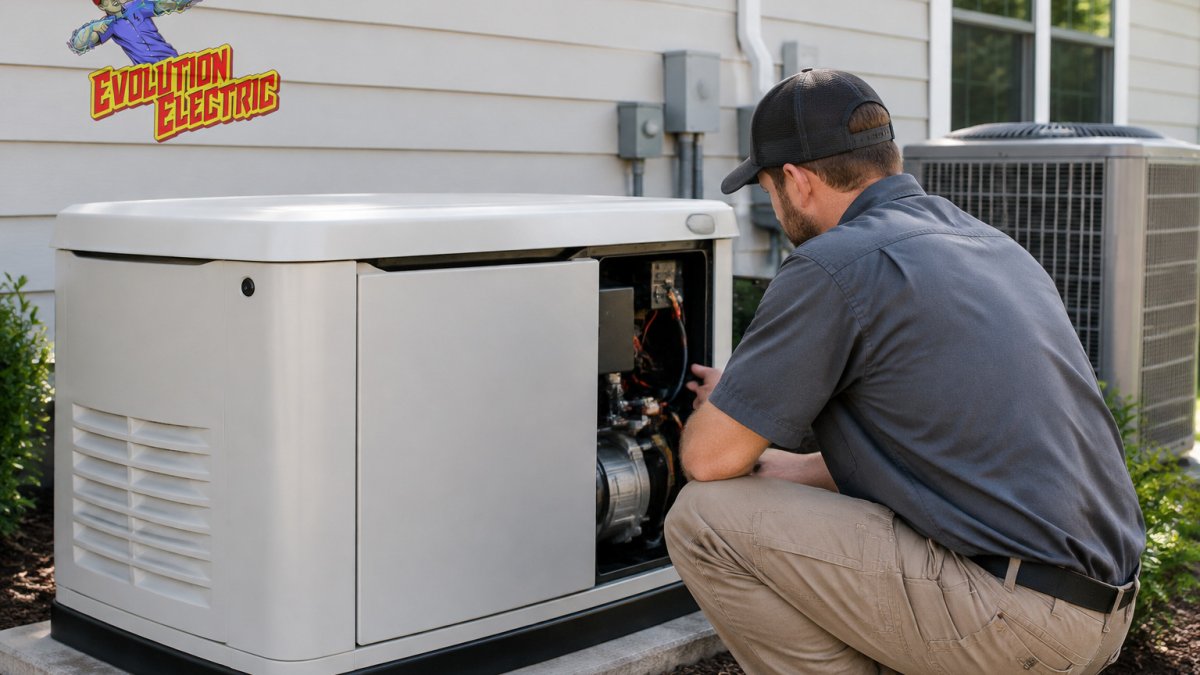
Watch out: Never open the generator enclosure, probe inside the control panel, or disconnect the transfer switch while the engine is running or hot. Shut down, let it cool, and treat all wiring as energized until proven otherwise.
How to Stop a Generator From Surging: Fuel, Air, and Carburetor Checks
Once you have ruled out a simple overload, the engine itself is the next suspect. Surging under load almost always comes down to the engine not getting a steady supply of fuel and air, or the governor not holding throttle position. The order below matters: check the cheapest, safest items first.
Fuel delivery. A generator under AC starting load demands a sudden increase in fuel flow. If the flow is restricted, the engine leans out, RPM drops, the governor opens the throttle, the engine catches, and the cycle repeats as visible hunting.
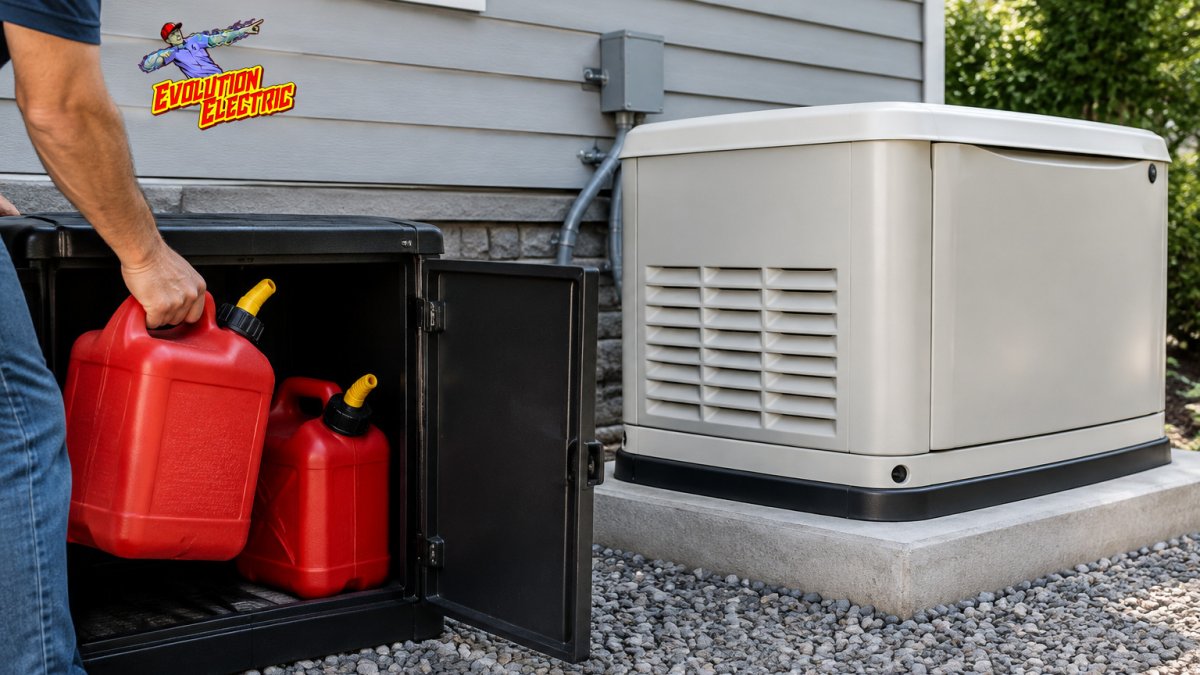
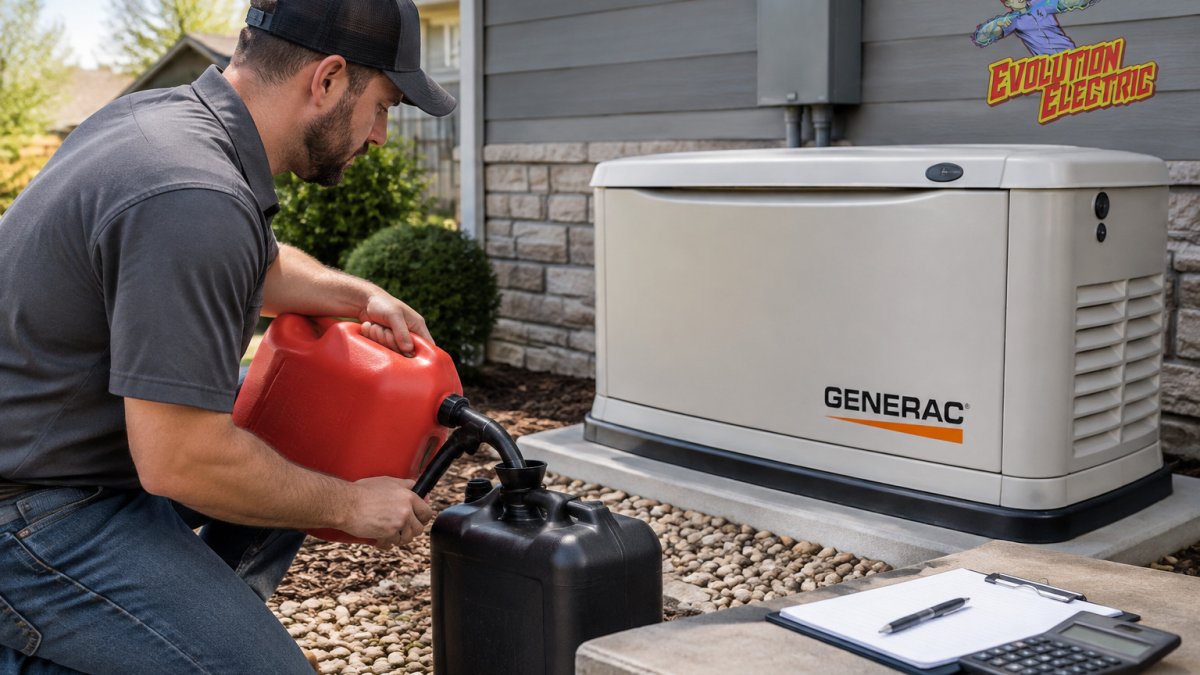
- Stale gasoline is the most common culprit. Gasoline degrades over months; varnish and gum clog the small passages in the carburetor. Follow these routine maintenance steps to keep the engine running steadily. Drain the tank and float bowl, refill with fresh fuel, and add a fuel stabilizer if the unit sits between outages.
- Check the fuel filter and the fuel line for cracks, kinks, or a partially closed shutoff valve. A restricted filter starves the engine exactly when demand rises.
- On propane or natural-gas units, a undersized supply line or a regulator that cannot keep up under load produces the same lean-hunt behavior. Have the gas supply checked by a qualified technician.
Air intake. A clogged air filter restricts airflow, richening the mixture and reducing power right when the compressor needs it. Inspect the filter; clean a foam element or replace a paper one per the maintenance schedule. Also confirm the choke is fully open once the engine is warm, a partially closed choke causes rough running and surging.
Carburetor and governor. If fuel and air are clean and the surging persists, the carburetor or governor is the likely cause. A clogged jet or a worn needle seat causes inconsistent fuel metering. A sticking throttle linkage or a governor spring that is out of adjustment lets RPM wander instead of holding steady. Cleaning a carburetor and adjusting a governor require a trained technician; do not attempt it on an energized or hot unit.
Watch out: Do not adjust the governor linkage by guesswork to chase a surge. A misadjusted governor can cause the engine to overspeed, which can damage the generator and connected appliances. If the linkage moves freely but the engine still hunts, stop and call a technician.
AC Soft Start Kits and When to Use Them
A soft start kit reduces the inrush current an AC compressor draws when it starts. Lower inrush means a smaller spike for the generator to supply. Soft starts are most useful when the generator is close to its limit and upgrading the unit is not yet practical.
They are not a substitute for correct sizing. A soft start can ease the load, but if the generator is clearly too small for the AC, the real solution is a larger unit or a load-management plan. Ask a licensed installer whether a kit suits your compressor and your generator before you buy one. Explore backup systems and installation services to see which options fit your setup.
Schedule a Load Assessment Before Your Next Outage
The fastest way to stop surging is to measure your real load before the next storm. Learn what installers do during a home visit so you know what to expect.
Generators of Nashville by Evolution Electric has served Middle Tennessee homeowners since 2014, and its licensed electricians install Generac generators and whole-home backup systems. Take our 60-second quiz to receive a free, personalized quote for your home.
Frequently Asked Questions
Can an air conditioner overload a generator when it starts?
Yes. A central air conditioner compressor draws several times its running current for a fraction of a second when it starts, known as locked-rotor amps. If the generator's rated running watts are too low to cover that momentary surge plus everything else running, the engine slows, the voltage sags, and the output can surge or shut down. Check the AC's nameplate for its rated load amps and locked-rotor amps, then compare the total starting watts with the generator's surge rating before connecting it.
Can a soft-start kit help an air conditioner start on generator power?
A soft-start kit, sometimes called a hard-start kit, adds a device that reduces the inrush current the compressor needs to get moving. This often lets a marginally sized generator run an AC that would otherwise cause surging or stalling. It does not add capacity, though. If the generator is badly undersized for the home's running load, a soft-start kit will not solve the problem, and a licensed electrician should confirm the installation is correct.
Should I turn off other appliances before starting my AC on a generator?
Yes. Before starting the air conditioner, switch off or unplug high-draw appliances such as electric water heaters, clothes dryers, ovens, and well pumps. Start the AC first, let the compressor reach steady running speed, then add loads one at a time. This keeps the total starting demand within what the generator can supply and makes it easier to tell whether surging comes from overload or from a fault.
What are the symptoms of a surging generator?
A surging generator's engine speed rises and falls in a rhythmic pattern, often with lights that brighten and dim and a fluctuating hum. Surging that happens only when the AC starts usually points to a momentary load problem, while surging that continues under steady load suggests a fuel delivery, carburetor, or governor issue. If the surging is severe, if you smell fuel or burning, or if the generator shuts down repeatedly, stop using it and have it inspected by a qualified technician.