 how-to
Residential Generator Maintenance Tips: 7 Essential Steps
Table of Contents
- Why Regular Generator Maintenance Matters
- How Often to Change Generator Oil and Filter
- Fuel Management and Stabilization for Standby Generators
- Battery Maintenance and Testing
- Air Filter and Spark Plug Inspection
- Operational Testing and Load Bank Testing
- Best Home Energy Storage Systems for Backup Power
- Troubleshooting Common Generator Start-Up Failures
- Frequently Asked Questions
Last Updated: September 24, 2026
Why Regular Generator Maintenance Matters
Standby generators fail during outages because they haven't been tested or serviced in months. Fuel goes stale, oil thickens, and batteries lose charge. When you need backup power most, the machine won't start.
Following generator maintenance tips keeps your generator ready to run when it matters. Following generator maintenance tips keeps your generator ready to run when it matters. Generator maintenance isn't complicated, you need a schedule and the discipline to follow it. Generator maintenance isn't complicated, you need a schedule and the discipline to follow it.
How Often to Change Generator Oil and Filter
Change your generator oil and filter every 50-100 engine hours or at least once per year, whichever comes first.
Dirty oil can't protect engine parts and causes wear, corrosion, and failure. Fresh oil keeps your engine running smoothly.
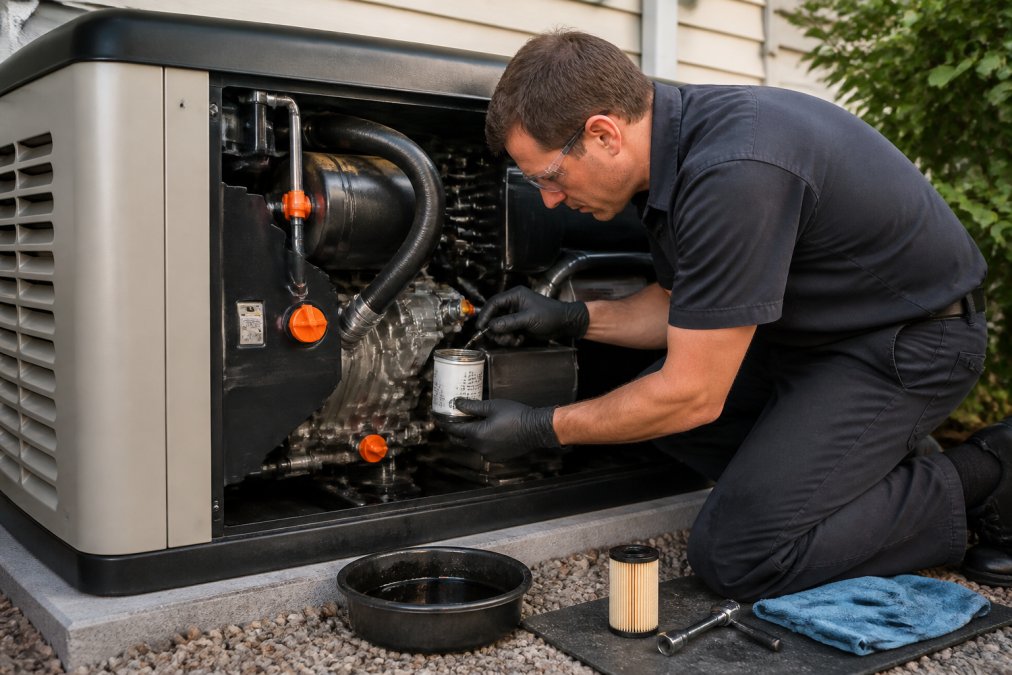
Here's the process:
- Let the engine cool for 5-10 minutes after running
- Locate the oil drain plug on the engine
- Place a drain pan underneath and remove the plug
- Let the old oil drain completely (10-15 minutes)
- Wipe the drain plug and reinstall it
- Locate the oil filter and loosen it by hand
- Install a new filter, hand-tightened only
- Add fresh oil to the manufacturer's recommended level
- Run the engine briefly to circulate the new oil
- Check the level again and top off if needed
Use the oil grade specified in your generator's manual; most residential generators use SAE 10W-30 or similar. Track oil changes in a maintenance log with the date, engine hours, and oil type used.
Fuel Management and Stabilization for Standby Generators
Fuel is the most common maintenance problem. Gasoline degrades over 3-6 months, leaving deposits in the carburetor and fuel system. Add a fuel stabilizer to every tank of gas to prevent fuel breakdown and keep your system clean.
Two approaches to fuel management:
Store fuel with stabilizer added and run the engine for 10-15 minutes to circulate treated fuel through the system. Alternatively, drain the fuel tank completely before long storage periods by turning off the fuel valve and running the engine until it stops. Most homeowners find the stabilizer approach easier since the generator stays ready to run without refueling first.
Safety protocols for handling fuel:
Follow these steps every time you refuel or perform fuel-related maintenance: wear nitrile gloves and safety glasses; work outdoors or in well-ventilated spaces; keep a Class B fire extinguisher nearby; avoid smoking, sparks, or open flames; use only red, EPA-approved fuel containers with vent caps; store fuel at least 50 feet from ignition sources in a cool location; and inspect containers monthly for leaks or damage.
Propane-specific fuel handling:
Propane doesn't degrade, so you skip fuel stabilization. However, if you smell propane (rotten-egg odor from the mercaptan additive), do not start the generator, avoid sparks, move away immediately, and call your propane supplier or fire department. Inspect propane tank connections annually for corrosion or loose fittings and tighten with a wrench if needed. Do not attempt to repair leaking connections yourself.
Battery Maintenance and Testing
Your generator's battery powers the starter motor and ignition system. Test battery voltage twice per year using a multimeter; a healthy battery reads 12.6 volts or higher. Keep battery terminals clean and corrosion-free, as white, blue, or green crusty buildup blocks electrical current.
To clean corroded terminals:
- Disconnect the negative cable first, then the positive cable
- Mix baking soda and water into a paste
- Scrub the terminals with an old toothbrush
- Rinse with clean water and dry thoroughly
- Reconnect the positive cable first, then the negative cable
Charge the battery if it drops below 12 volts. Use a standard car battery charger on a low setting. Most residential generator batteries charge fully in 4-8 hours.
Replace the battery if it won't hold a charge after charging. Batteries typically last 3-5 years in standby generators.
Air Filter and Spark Plug Inspection
According to generator maintenance tips, a dirty air filter restricts airflow to the engine. Less air means less power and harder starts. Check your air filter every 50 engine hours.
Take our 60-second quiz for a free quote today! →
Most residential generators use foam or paper air filters. Foam filters can be cleaned and reused. Tap the filter gently to dislodge dust, then wash it in warm soapy water, rinse, and let it dry completely before reinstalling.
Paper filters should be replaced when they look clogged with dust. They can't be cleaned effectively. New filters cost $10-30 and take 2 minutes to swap.
Inspect your spark plugs annually. Remove the spark plug wire and unscrew the plug. Look for heavy carbon buildup, oil fouling, or a gap that's too wide. A properly gapped spark plug has a gap of about 0.028-0.030 inches.
Most spark plugs last 100-200 engine hours. Replace them if they look worn or if your generator has trouble starting.
Printable maintenance schedule:
Tracking maintenance tasks prevents missed deadlines and keeps your generator reliable. Use this schedule as a reference or print it and post it near your generator:
| Task | Frequency | Last Completed | Notes |
|---|---|---|---|
| Check oil level | Before every run | , | Top off if below full mark |
| Change oil and filter | Every 50-100 engine hours or annually | Use manufacturer-recommended grade | |
| Add fuel stabilizer | Every time you refuel | Follow product instructions for dosage | |
| Test battery voltage | Twice per year (spring, fall) | Should read 12.6V or higher | |
| Clean battery terminals | As needed (if corrosion appears) | Use baking soda paste and water | |
| Inspect air filter | Every 50 engine hours | Clean foam filters; replace paper filters | |
| Inspect spark plugs | Annually | Replace if fouled or worn | |
| Run generator under load | Monthly | Run 20-30 minutes powering appliances | |
| Inspect fuel system for leaks | Quarterly | Check tank, lines, and connections | |
| Inspect belts and hoses | Annually | Look for cracks, fraying, or loose connections | |
| Test automatic transfer switch | Annually | Confirm it switches to generator power | |
| Professional inspection | Annually | Have a licensed technician perform load bank testing | |
| Drain fuel (if using drain method) | Before 6-month storage | Run engine until it stops |
Download or print this table and keep it with your generator documentation. Record the date and any observations in the "Last Completed" column. This log becomes invaluable if you need to troubleshoot problems or sell the generator, and it ensures no maintenance task slips through the cracks.
Why tracking matters:
Generators fail during outages not because maintenance is difficult, but because homeowners forget to do it. A printed schedule eliminates guesswork. You know exactly when each task is due. You can set phone reminders for quarterly load tests or annual professional inspections. Over time, the log shows patterns, for example, if your spark plugs foul frequently, it may indicate an underlying fuel or oil issue worth investigating with a professional.
Operational Testing and Load Bank Testing
The best maintenance is actually running your generator under load. Start it monthly and let it run for 20-30 minutes while powering some household appliances or devices. This exercises the engine, circulates oil and fuel, and confirms the unit works.
Load bank testing is more thorough. A load bank applies an electrical load to your generator to test its output capacity. This reveals problems that simple idle running won't catch.
Most homeowners don't own a load bank. Your generator installer can perform load bank testing annually as part of a service visit.
Best Home Energy Storage Systems for Backup Power
A standby generator solves one problem: fuel-based power during outages. Battery storage solves another: clean, quiet backup without fuel or noise.
Troubleshooting Common Generator Start-Up Failures
Your generator won't start. Here's how to diagnose the problem.
Frequently Asked Questions
How often should I perform maintenance on my residential generator?
Most manufacturers recommend running your generator under load for 30 minutes every month and changing the oil every 100 to 200 hours of operation or annually, whichever comes first. For standby generators used primarily during outages, an annual inspection of fuel, battery, filters, and belts is essential. Create a maintenance log to track these intervals and ensure nothing is missed. Professional servicing every two years can catch issues early.
What are signs that my generator needs an oil change?
Check your oil level regularly using the dipstick. Dark, dirty oil indicates it's time for a change. Running your generator and noticing reduced power output, unusual engine noise, or smoke can also signal that old oil needs replacement. Don't wait for these warning signs, stick to your maintenance schedule. Fresh oil keeps your engine cool and protects against corrosion and buildup.
Can I perform my own generator maintenance, or do I need a professional?
Basic tasks like checking oil levels, inspecting air filters, and testing battery terminals are homeowner-friendly. However, load bank testing, fuel system inspections, and automatic transfer switch checks require professional expertise and specialized equipment. Professional maintenance can identify safety issues, ensure compliance with electrical codes, and verify your system will actually run your entire home during an outage. Professional maintenance also protects your warranty.
What should I store in my maintenance log for my generator?
Record the date, engine hours, work performed (oil change, filter replacement, fuel stabilizer added), any issues discovered, and who performed the service. Include fuel type, battery voltage readings, and load bank test results. This log proves your system was properly maintained, helps identify recurring problems, and is valuable if you ever need warranty service or sell your home. Keep it digital or printed and stored safely.