 How-to
How Do You Safely Store Gasoline for a Generator?
Last Updated: November 21, 2026
Quick Summary
Keep gasoline in an approved, sealed container in a cool, dry, well-ventilated spot away from heat and ignition sources. Use a fuel stabilizer if it will sit longer than a few weeks, since a store gasoline generator setup depends on fuel that stays usable.
- Use only containers designed and listed for flammable liquids, such as UL 142 or ASTM F852 labeled cans.
- Never store gasoline inside living space, a basement, or an attached garage that shares a door with the house.
- Call your local fire department or AHJ to learn how many gallons you may legally keep on the property.
- Size your fuel reserve from the generator's gallons-per-hour rate, daily run hours, and days covered, plus about 20%.
- Inspect stored fuel and containers at least twice a year and use the oldest fuel first.
Table of Contents
- Why Stored Gasoline Matters for Emergency Generator Use
- Choosing Safe Gasoline Storage Containers
- Where to Store Gasoline Safely at Home
- Using a Fuel Stabilizer for Generator Fuel
- How Long Does Gasoline Last in a Jerry Can?
- Leaving Gas in a Generator When Not in Use
- Scheduling Your Next Storage Check and Generator Service
- Frequently Asked Questions
How do you safely store gasoline for a generator? Keep it in an approved, sealed container, in a cool, dry, well-ventilated spot away from heat and ignition sources, and use a fuel stabilizer if it will sit longer than a few weeks, since a store gasoline generator setup depends on fuel that stays usable. Storing fuel this way protects your home and keeps the generator ready when the power goes out. A generator depends on fuel that is fresh and stored correctly.
Storms and ice can knock out power for days across Middle Tennessee. A generator is only as reliable as the fuel inside it. Gasoline breaks down over time, picks up water, and gives off flammable vapors. Handle it well and your backup power will start when you need it.
Why Stored Gasoline Matters for Emergency Generator Use
Gasoline is not like water. It changes as it sits. The lighter compounds evaporate, and the remaining fuel can turn gummy and clog the carburetor or fuel system, which is why a store gasoline generator needs fresh fuel to start reliably. A generator that will not start during an outage is no help at all.
Stored fuel also carries real fire risk. Gasoline vapors are heavier than air and can travel along the floor to a pilot light, a furnace, or a spark. Safe storage protects your home, your family, and your equipment.
Choosing Safe Gasoline Storage Containers
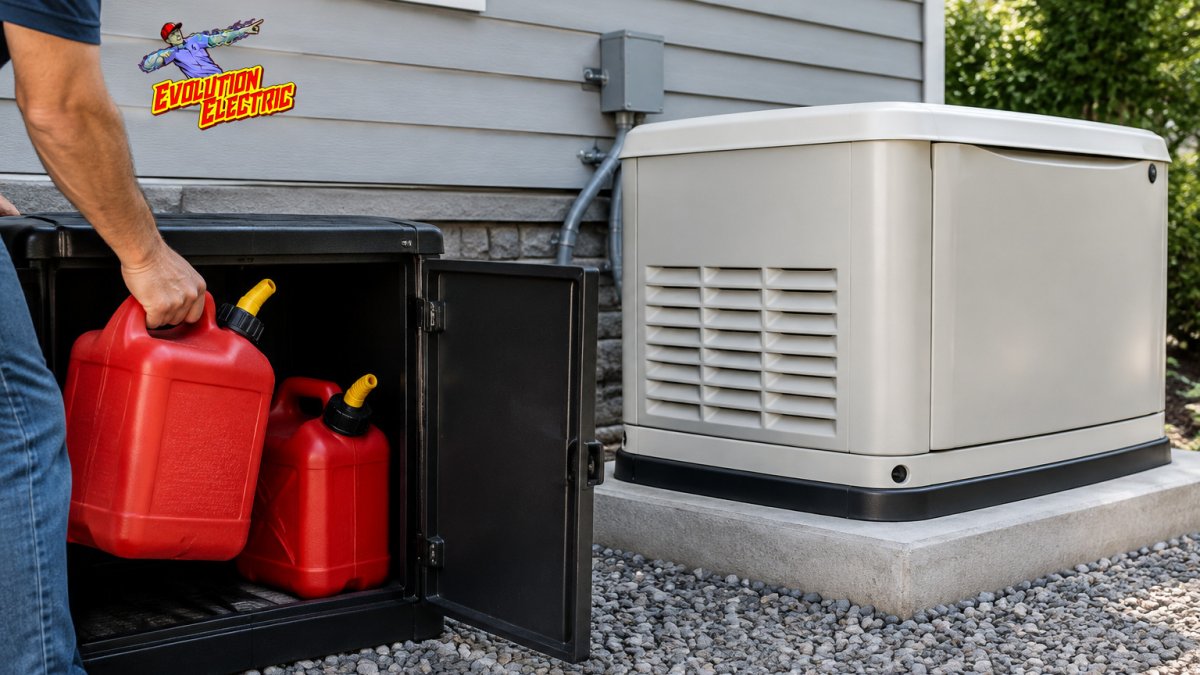
Use only containers designed, labeled, and listed for flammable liquids. In practice that means a metal safety can or a high-density polyethylene (HDPE) gas can with a tight, self-closing spout and a flame arrestor on the opening. The listing mark matters more than the color: look for a label showing the can meets a recognized flammable-liquid container standard, such as UL 142 or ASTM F852 for portable gasoline containers. A can that carries no listing mark is not an approved container, no matter how sturdy it looks.
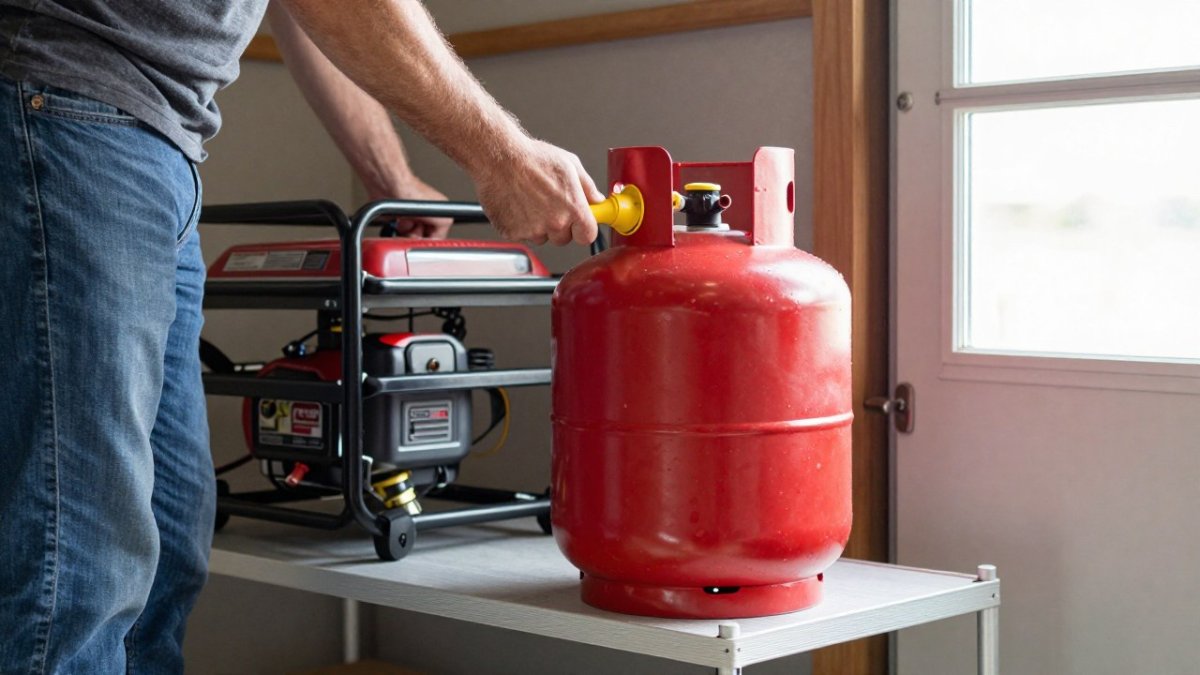
Capacity is part of the safety picture. Larger containers get heavy fast, and heavy cans get dropped, which is how spills start. Buy the smallest number of cans that covers your planned runtime rather than one oversized can.
Metal versus plastic is a real trade-off, not a brand preference:
- Metal safety cans resist permeation, hold up to heat better, and usually have a spring-closing lid and flame arrestor. They cost more and can rust if water sits inside.
- HDPE plastic cans are lighter, cheaper, and won't rust, but they can permeate vapor over time and become brittle with age or UV exposure. Store them out of sunlight and replace any can that has gone chalky or cracked.
Never use milk jugs, soda bottles, buckets, or any container not made for fuel. Those materials crack, leak, and let vapors escape, and they give no visual cue that the contents are flammable. Keep each can dedicated to gasoline, never mix fuel types or use a gas can for anything else, and label it clearly with the fuel type and the date you filled it.
Watch out: a can with a missing gasket, a cracked spout, or a cap that won't seal should be emptied safely and retired, not taped up and reused. Vapors escaping a damaged can are the fire hazard, not just the liquid inside.
The article compares the two main approved container types for storing gasoline.
| Container | Strengths | Trade-offs |
|---|---|---|
| Metal safety can | Resists permeation and heat; spring-closing lid | Costs more; can rust if water sits inside |
| HDPE plastic can | Lighter, cheaper, won't rust | Can permeate vapor; brittle with age or UV |
| Milk jug or soda bottle | None for fuel storage | Cracks, leaks, lets vapors escape |
Where to Store Gasoline Safely at Home
Store gasoline in a detached garage, a shed, or another outdoor structure with good airflow, never inside the living space, a basement, or an attached garage that shares a wall or door with the house. Vapors are heavier than air and travel along the floor, so a can in a basement can feed fumes toward a water heater, furnace, or dryer pilot light on the other side of the room.
How much you may store, and where, is set by local fire code, not by a single national number. Allowable quantities, approved cabinet requirements, and permitted locations vary from one authority to the next. Before you stock up, call your local fire department or the authority having jurisdiction (AHJ) and ask how many gallons of gasoline a homeowner may store on the property, and whether an approved storage cabinet is required above a certain amount.
Planning Fuel Quantity for a Real Outage
Storing the maximum allowed is not the same as storing the right amount. Size your reserve from the generator's actual consumption:
- Find the generator's fuel consumption at the load you expect, most manufacturer spec sheets list gallons per hour at 25%, 50%, and 100% load.
- Multiply by the hours per day you plan to run it. Most homeowners run a portable generator part-time, for example, a few hours in the morning and a few in the evening, rather than 24 hours straight.
- Multiply by the number of days you want to cover, then add a reserve of roughly 20% for refueling losses and unexpected load.
As an illustration: a generator that burns about half a gallon per hour at a typical household load, run 8 hours a day for 3 days, needs about 12 gallons, plus reserve, so plan on roughly 14 to 15 gallons. That total may exceed what your local code allows on hand, which is exactly why the fire-department call comes first. If your planned reserve is larger than the legal limit, plan to rotate and replenish during the outage rather than stockpiling beyond the cap. Because local limits may require replenishing fuel during an outage, professional generator resources can help you plan generator use around the supply you can legally store.
Keeping Fuel Away from Heat, Flames, and Ignition Sources
Keep cans well clear of open flames, pilot lights, sparks, and running motors, including lawn mowers, grills, and the generator itself while it runs. Shut the engine off and let it cool before refueling. Never smoke around fuel, and keep a working ABC-rated fire extinguisher within reach of the storage area. Most home fires involving fuel start from a small nearby spark, so clear the area before you set a can down.
Protecting Containers from Sunlight and Temperature Extremes
Heat accelerates fuel breakdown and raises pressure inside the can; direct sun can push a sealed container well above ambient temperature on a summer day. Choose a shaded, ventilated spot that stays cool and does not freeze, and keep cans on a level surface, upright, off the bare ground, and out of reach of children and pets. Fuel left in a hot garage through a full summer will age far faster than fuel kept in a shaded shed.
Watch out: if you smell gasoline in a storage area, do not flip a light switch or start a vehicle. Shut off anything running, ventilate from a distance if it is safe, keep people away, and call the fire department if the odor is strong or you cannot find the source.
Using a Fuel Stabilizer for Generator Fuel
A fuel stabilizer can slow the breakdown of gasoline. Add it to fresh fuel at the rate the product label gives, then run the generator for a few minutes so the treated fuel reaches the engine.
Stabilizer works best on fresh gasoline. It cannot restore fuel that has already gone bad. Follow the generator manufacturer's instructions on fuel type and additives, since some engines have specific requirements.
How Long Does Gasoline Last in a Jerry Can?
Untreated gasoline does not stay fresh indefinitely. Treated with a stabilizer and stored well, it can last longer. Heat, humidity, and air exposure all shorten its life.
- Untreated fuel: shorter life than treated fuel
- Stabilized fuel in a sealed container: longer, but still check it
- Fuel in a hot garage: shorter life than fuel in a cool shed
If the fuel smells sour, looks dark, or the generator runs rough, it is past its prime.
Leaving Gas in a Generator When Not in Use
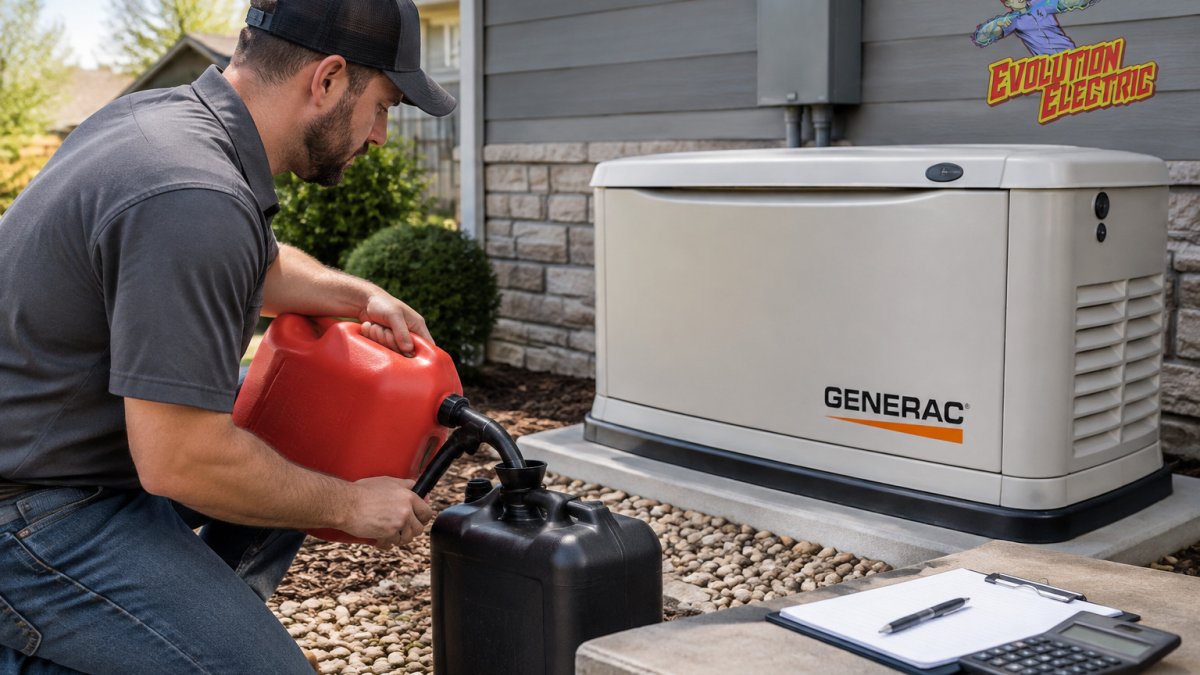
Many people ask whether it is safe to leave gas in the generator tank between uses. The answer depends on how long it will sit. For short breaks, you can leave stabilized fuel in place. For long storage, drain the tank and carburetor, or run the engine dry as the manufacturer directs.
Leftover fuel in the carburetor often causes the hard starts that frustrate generator owners. Draining it before a long break saves trouble later. If you notice a strong gas odor around the unit, check for leaks and have the generator inspected before running it again. Our article on signs your generator needs service lists the warning signs to watch for.
Scheduling Your Next Storage Check and Generator Service
Set a reminder to check stored fuel and containers at least twice a year. Look for cracks, leaks, rust, or swollen cans. Check the purchase date on each container and use the oldest fuel first, replacing it with fresh gasoline.
Plan a generator service visit on the same schedule so the engine and fuel system are checked together. Our residential generator maintenance tips cover the steps to include in that checklist.
Need help setting up a reliable backup power system for your home? Take our 60-second quiz at Generators of Nashville by Evolution Electric to receive a free, personalized quote for your whole-home backup system.
Frequently Asked Questions
How long will gasoline stay good in a generator or jerry can?
Untreated gasoline does not stay usable indefinitely in a sealed container, and ethanol-blended fuel can degrade faster because it absorbs moisture. Adding a fuel stabilizer designed for gasoline can extend its usable life, depending on the product and storage conditions. Store gasoline in an approved container, keep it cool and dry, and label each can with its purchase date. Check manufacturer guidance for your specific generator, since some engines are more sensitive to old fuel than others.
Is it safe to store gasoline in a 5-gallon bucket?
No. A bucket is not an approved fuel container, and it may not seal properly, crack, or allow vapors to escape. Use a container that is labeled for gasoline and meets recognized safety standards, such as a UL-listed or FM-approved metal or plastic gas can. Keep it tightly capped, leave some headspace for expansion, and store it outdoors or in a detached structure away from living spaces. Never store gasoline inside the home or attached garage.
Does fuel stabilizer extend gasoline's storage life?
Yes. Fuel stabilizer can slow oxidation and gum formation in gasoline. Add it at the correct ratio listed on the product label, mix it into the fuel, and run the generator briefly so treated fuel reaches the carburetor. Stabilizer works best on fresh fuel. It cannot restore gasoline that has already degraded or become contaminated with water, so stale fuel should be disposed of through a household hazardous waste program.
Should you leave gasoline in a generator when it is not in use?
Leaving untreated gasoline in a generator for several months often leads to varnish and gum deposits in the carburetor or fuel system, which can cause hard starts. If you plan to store the unit, either add a stabilizer and run the engine for a few minutes, or drain the fuel tank and carburetor completely before storage. Follow the manufacturer's instructions for your model, and consider scheduling a professional tune-up before the next outage season.