 How-to
How to Reduce Generator Noise for Residential Areas
Last Updated: November 16, 2026
Quick Summary
Generator noise in residential areas is measured in decibels, and local ordinances usually set the enforceable limit by zoning district and time of day. Inverter generators run quieter than conventional fixed-speed units because their engine speed adjusts to the load. Placing the unit away from property lines and bedroom windows reduces how much neighbors hear.
- Each 10 dB increase sounds roughly twice as loud to the human ear.
- Inverter generators slow their engine at light loads and run noticeably quieter.
- Nighttime noise limits are often stricter than daytime limits in local ordinances.
- Emergency exemptions usually cover outages, not routine weekly test runs.
- Schedule test runs during allowed daytime hours and confirm local limits with code enforcement.
Table of Contents
- Typical Generator Noise Levels in Decibels
- How Generator Noise Is Measured and What Ratings Mean
- Generator Noise Level Regulations in Residential Areas
- Comparing Generator Sound to Everyday Household Noise
- Choosing the Quietest Generator for Home Backup
- Sound-Attenuated Generator Enclosures and Placement
- How to Reduce Whole-Home Generator Noise
- Scheduling Your Installation and Next Step With Generators of Nashville
- Frequently Asked Questions
Typical Generator Noise Levels in Decibels
If you live close to your neighbors, generator noise is often the first thing that comes up after the lights come back on. Generator noise levels for residential areas matter because a generator that runs quietly in a rural field can be a real problem in a subdivision.
Generator noise is measured in decibels, or dB. Each 10 dB increase sounds roughly twice as loud to the human ear.
Conventional Versus Inverter Generator Sound Ratings
Conventional generators use a fixed-speed engine that runs at full speed whether you need the power or not. That constant engine speed is the main reason they tend to be louder.
Inverter generators adjust engine speed to match the electrical load. When the load is light, the engine slows down, and the unit gets noticeably quieter.
- Conventional units: steady, full-speed engine noise
- Inverter units: quieter at light loads, louder as demand rises
- Standby units: installed permanently and usually enclosed
How Generator Noise Is Measured and What Ratings Mean
Manufacturers usually publish a sound rating in dB(A), which applies an A-weighting filter that roughly matches human hearing. A rating like this is typically measured at a set distance.
Two ratings deserve separate attention. A standby generator is often rated at a "normal" load rather than at full load, and the engine is louder under heavier demand. A portable generator may be rated at a lower load than the one you will actually run.
Sound measured at the property line matters more for neighbors than a rating on the box. A reading taken at your own back door tells you little about what the house next door hears, because the property line is usually closer to the neighbor and farther from your door.
A Step-by-Step Noise Measurement Procedure
If you want to know whether your generator complies, or you want to establish a baseline before a complaint, measure it the same way twice. A sound level meter or a calibrated phone app is enough for a homeowner's check, though a dedicated meter is more consistent.
- Set the meter to A-weighting and slow response. A-weighting matches how people perceive the sound, and slow response smooths out brief spikes so you read a steady level rather than a flicker.
- Measure background noise first, with the generator off. Note the level and the time. A generator reading only a few dB above a noisy background is hard to interpret, and many codes account for background level.
- Run the generator under a realistic load. Turn on the appliances or the transfer switch load it will actually carry during an outage, not just the idle condition.
- Take the reading at the location your code specifies, usually the property line nearest the neighbor or the neighbor's dwelling. Hold the meter at roughly ear height and point it at the generator.
- Take several readings over a few minutes and record the highest and the average. Generator sound fluctuates as the load changes, so a single number can mislead.
- Repeat at the same locations at a different time of day if you plan to run the unit at night, since background noise and the applicable limit both change.
- Write down the meter model, the weighting and response settings, the distance, the load, and the time. That record is what makes the measurement useful later.
Watch out: a phone app is convenient but uncalibrated, so treat its absolute numbers as approximate and use it mainly to compare before-and-after conditions rather than to prove compliance.
Once you have a baseline, you can test changes one at a time: move the unit a few feet farther from the property line, add a barrier, or add vibration isolation, then re-measure at the same spot. That is how you find out which fix actually helps instead of guessing.
Generator Noise Level Regulations in Residential Areas
Noise rules for generators come from local ordinances, not from a single national standard. That is the most important thing to understand before you shop: a manufacturer's dB(A) rating is a product specification, while the number your code enforcement officer can act on is a locally adopted limit measured in a locally defined way.
Most ordinances share a common structure even when the numbers differ. Because routine exercise runs may still be subject to nighttime limits, Moser Electric can help clarify how noise reduction fits alongside local compliance.
Daytime Versus Nighttime Noise Thresholds
Many local ordinances set a lower allowed noise level at night than during the day. Nighttime limits are often stricter than daytime limits, and the exact hours differ by jurisdiction. The practical consequence is that a weekly exercise run scheduled for a weekday afternoon is usually the safest choice, while the same run at 9 p.m. can violate a nighttime limit even though daytime use of the same generator is permitted.
Watch out: an emergency exemption usually covers the outage itself, not the test run you schedule to confirm the unit will start. Confirm separately whether exercise cycles are exempt before you set a recurring test time.
How to Verify Local Ordinances and Zoning Rules
Rather than assume a threshold you read online applies to your address, work through a short lookup sequence. The goal is to find the limit that is actually enforceable where the generator will sit.
- Identify every layer of authority that applies. That usually means the city or county, plus any homeowners association or deed restriction, plus any state-level noise statute that sets a floor local codes cannot go below.
- Open the municipal code and search for the noise chapter. Useful search terms include "noise," "sound level," "decibel," "unreasonable noise," and "nuisance." Many codes are published on a searchable online platform through the city or county website.
- Find the zoning district for your parcel. The decibel table is almost always keyed to zoning, so the same generator can be compliant in one district and noncompliant in the next.
- Note the measurement method the code specifies: the weighting (dB(A) is common), the distance and location of the reading, and whether the limit applies at the property line or at the neighbor's dwelling.
- Read the exemptions section for emergency equipment, standby power, and construction or maintenance activity.
- Check the HOA covenants and architectural review rules, which can restrict placement, screening, or operating hours beyond what the city requires.
- Call the code enforcement or building department and ask them to confirm the applicable limit and measurement location for your address. Ask for the citation so you can read it yourself.
municipal code and ordinance library
A common pattern is that the person answering the phone can tell you the limit but not always the measurement method, so ask for both. If the code language is ambiguous, request the interpretation in writing, because that is what an enforcement officer will rely on if a neighbor files a complaint.
Keep a short record of what you found: the code section, the limit, the hours, the measurement location, and the date you confirmed it. If a complaint ever arises, that record shows you made a good-faith effort to comply, and it gives your installer the constraints to design around.
Comparing Generator Sound to Everyday Household Noise
Numbers mean more when you can compare them to sounds you already know. The table below gives approximate levels for common household sounds and generators. Values vary by source, so treat them as rough guides.
| Sound source | Approximate level (dB) |
|---|---|
| Quiet bedroom at night | 30 |
| Refrigerator hum | 40 |
| Normal conversation | 60 |
| Vacuum cleaner | 70 |
| Portable generator at 23 feet | 70 to 80 |
| Lawn mower | 85 to 90 |
Approximate level (dB)
A generator in the 70 to 80 dB range is about as loud as a vacuum cleaner running in the next room. That comparison helps you decide whether a unit will bother neighbors.
Choosing the Quietest Generator for Home Backup
For a whole house, a standby unit is usually quieter and more practical than a portable one. A standby generator is installed permanently, runs automatically during an outage, and can be placed and enclosed for noise control. For a closer look at standby and portable models, see Standby vs Portable Generator for Home: 2026 Guide.
Sizing matters as much as sound. An oversized unit may run lighter but still cost more and take up more space. An undersized unit will run at high load, which makes it louder. To see how much capacity air conditioning needs, read Can I Power AC With a Generator? Sizing Guide. If noise is your top priority, also compare 7 Quiet Standby Generators for Residential Neighborhoods.
Sound-Attenuated Generator Enclosures and Placement
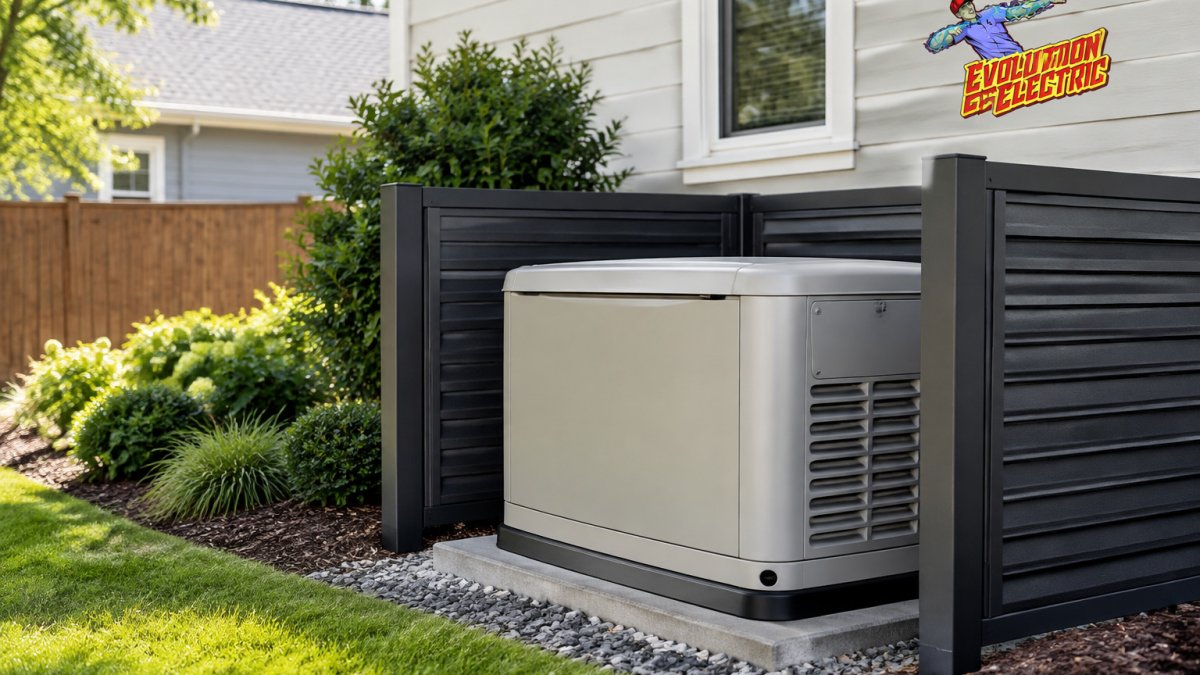
A sound-attenuated enclosure is a housing around the generator lined with insulating material. It lowers noise without stopping airflow the engine needs. Good enclosures are designed for ventilation, so the unit does not overheat.
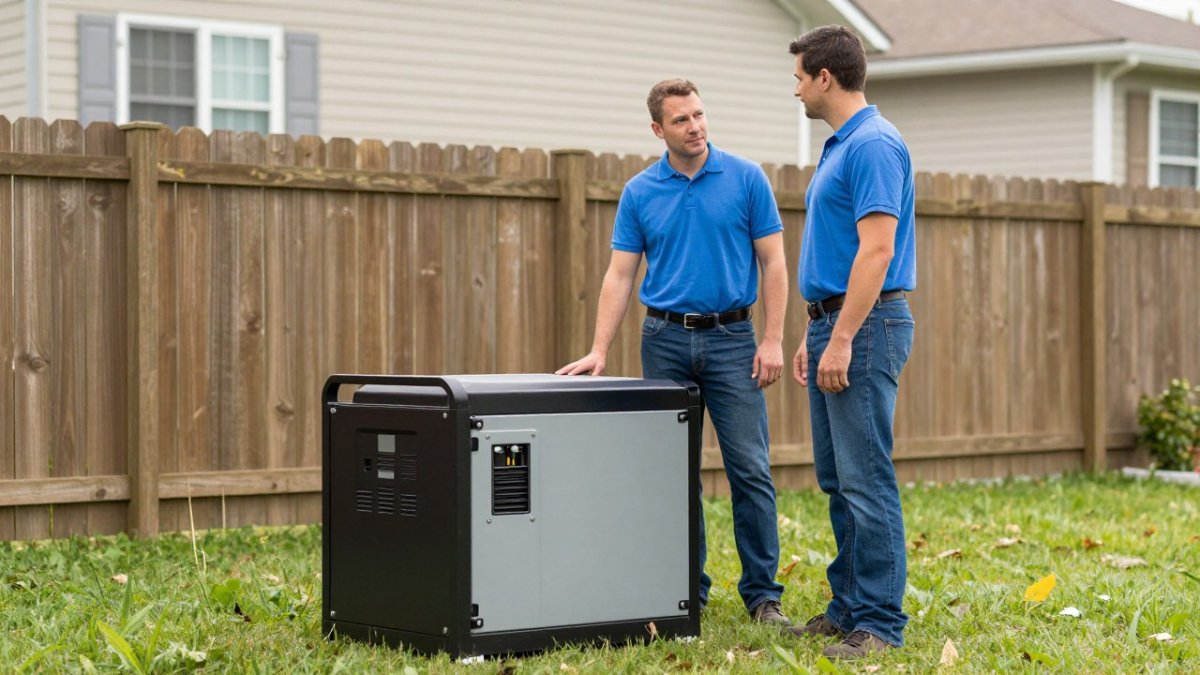
Placement also changes how loud a generator sounds. Keep the unit as far from bedroom windows and property lines as your setup allows. Avoid placing it against a solid wall that reflects sound back toward the house. Never run any generator inside a garage, basement or enclosed space, because it can produce deadly carbon monoxide.
- Place the unit away from bedroom windows and neighbors' homes
- Keep clearances the manufacturer specifies for airflow
- Use a sound-attenuated enclosure rated for your model
- Never run a portable generator indoors or in a garage
How to Reduce Whole-Home Generator Noise
Several steps can lower the noise of a whole-home unit. Start with the simplest changes before spending on upgrades.
- Position the unit on the side of the house farthest from neighbors.
- Add a sound-attenuated enclosure matched to your model.
- Install vibration pads or isolators under the base.
- Schedule weekly test runs during allowed daytime hours only.
- Ask your installer to review exhaust routing, since exhaust noise can carry.
Each step has trade-offs. Enclosures can restrict airflow and add cost, and extra distance may require longer gas or wiring runs. Ask for a clear explanation of these trade-offs before you buy.
Scheduling Your Installation and Next Step With Generators of Nashville
Once you know your noise limits and sizing needs, the next step is a site review. Generators of Nashville by Evolution Electric installs Generac generators and offers E4G whole-home backup power systems for homeowners in Middle Tennessee. Contact Generators of Nashville to discuss placement, sound options and a plan that fits your neighborhood.
Frequently Asked Questions
What is an acceptable noise level for a generator?
No single federal number applies to home generators. Most residential noise rules are set by local ordinances and are usually written as a decibel limit measured at the property line, often with lower limits at night. Check your city or county code before you buy, because the enforceable limit is the one that matters if a neighbor complains.
What is the quietest generator for home backup?
Quiet operation depends on the design, load, and enclosure rather than on one brand. Compare the manufacturer's dBA rating at a stated distance and load, and ask your installer how the unit will perform at the load your home actually needs.
Does a sound-attenuated enclosure make a generator quieter?
Yes. A sound-attenuated enclosure must maintain adequate airflow and clearance so the engine does not overheat. Placement away from bedroom windows and property lines adds further reduction, and the manufacturer's clearance requirements must always be followed.
How can I reduce noise from a home generator?
Start with the rating and placement: choose a quieter model, install it as far from neighboring properties and bedroom windows as the code and manufacturer allow, and set it on a stable, level pad. Add an enclosure or sound barrier where clearances permit, keep exhaust routed away from openings, and maintain the engine so it runs smoothly.