 how-to
Can I Power AC With a Generator? Sizing Guide
Table of Contents
- Sizing a Generator for Your AC: Watts, Surge, and Load Management
- How to Calculate the Starting Watts for Your Air Conditioner
- Why a Soft Start Kit for AC Is Often the Best Upgrade
- Portable vs. Standby Generator: Which One Can Power AC With Generator Setup?
- Safety, Transfer Switches, and Interlock Kits for AC Backup Power
- Generator Maintenance During Extended Outages
- Frequently Asked Questions
Last Updated: September 16, 2026
Sizing a Generator for Your AC: Watts, Surge, and Load Management
The short answer is yes, you can power AC with generator equipment, but only if the generator's surge capacity covers the compressor's startup demand, not just its running load. Most failed attempts come down to one mistake: sizing to the running watts printed on the unit's data plate and ignoring the momentary spike that happens every time the compressor kicks on.
Air conditioning is almost always the deciding factor in a backup power plan. A fridge, a few lights, and a router draw very little. A central AC compressor is the load that separates a generator that works from one that trips its breaker on the first hot afternoon.
Generator sizing for central air comes down to three numbers: running watts, starting watts, and the surge capacity your generator can deliver for a few seconds. Get those three right and the rest of the calculation falls into place.
Starting Watts vs Running Watts: What Your AC Actually Draws
Running wattage is the power your air conditioner draws once the compressor is up to speed and operating steadily. Starting wattage is the brief, much higher draw required to get the compressor motor spinning from a dead stop.
That startup spike lasts only a second or two, but it can run several times higher than the steady load. A generator must supply the surge without stalling, then settle back to continuous power. If it can't, the compressor never starts, and you're left with a humming unit and a tripped breaker.
Calculating Surge Amperage and Locked Rotor Amps
Locked rotor amps (LRA) is the current a compressor motor pulls at the instant it starts, before it begins turning. Rated load amps (RLA) is the current it draws while running normally. You'll find both on the unit's data plate, along with the minimum circuit ampacity.
To estimate surge amperage, multiply the LRA by the system voltage. A 240-volt unit with a listed LRA of 80 amps needs roughly 19,200 watts of surge capacity for that instant. That's the number that decides whether a given generator can start your AC, and it's the number most sizing shortcuts skip entirely.
How to Calculate the Starting Watts for Your Air Conditioner
Start with the data plate on the outdoor condenser, not the thermostat or the manual. Here's the sequence a licensed electrician runs through:
- Record the RLA and LRA for the compressor from the outdoor unit's rating plate.
- Note the system voltage (typically 240-volt for central AC condensing units).
- Multiply LRA by voltage to estimate surge watts at startup.
- Multiply RLA by voltage to estimate running watts during normal operation.
- Add the indoor air handler and any electric heat strips to the running total.
- Add other essential loads (refrigerator, sump pump, well pump, networking gear).
- Compare the total to your generator's continuous and peak ratings, keeping continuous load under roughly 80% of the generator's continuous rating so it isn't running flat out.
The result tells you whether a portable generator can start the AC at all, or whether you need a larger standby unit, a soft start kit, or load management that sheds the AC while other high-draw appliances run.
Why a Soft Start Kit for AC Is Often the Best Upgrade
A soft start kit reduces the inrush current your compressor draws at startup, which lowers the surge the generator has to absorb. Instead of the motor slamming on at full locked rotor amps, the kit ramps it up over a second or two. That smaller spike means a smaller generator can start the same air conditioner, and the lights in the house stop flickering every time the compressor cycles.
For homeowners who already own a portable generator and want it to handle central air, a soft start kit is often the difference between "it trips the breaker" and "it just works." It's also easier on the compressor itself, since the motor isn't fighting a full-current jolt on every startup.
Soft Start Kit Installation: What a Licensed Electrician Does
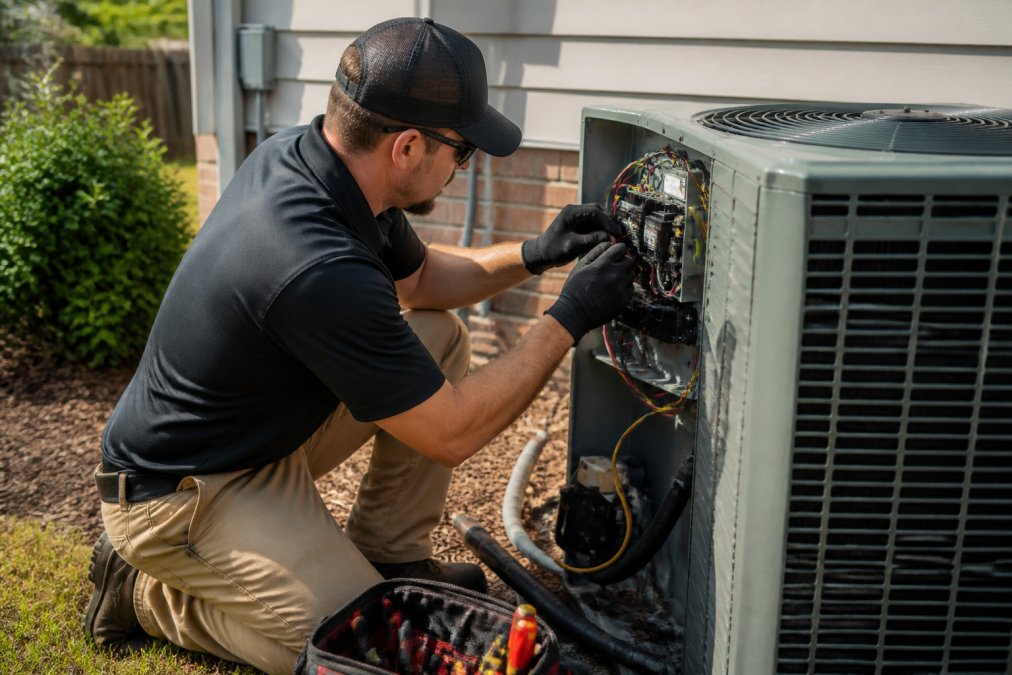
Soft start kit installation is not a plug-in accessory job. The kit wires into the compressor's start circuit inside the condenser's electrical compartment, which means working inside a live 240-volt enclosure. A licensed electrician will: Proper installation ensures the unit operates safely, though reducing the overall electrical load through energy efficient cooling solutions remains the most effective way to minimize strain on your generator.
Take our 60-second quiz for a free quote today! →
- Shut off and lock out power at the disconnect and the panel
- Verify the capacitor and contactor are in good condition before adding the kit
- Mount the soft start module inside the condenser cabinet
- Wire the module into the compressor start winding per the manufacturer's diagram
- Test startup amperage with a clamp meter to confirm the surge dropped
- Re-check running amps and confirm the unit cycles normally
The payoff is measurable: a lower startup surge means more generator options, less strain on the compressor, and fewer nuisance trips during an outage. If you're not comfortable working inside a 240-volt cabinet, this is a job for a licensed electrician, not a weekend project.
Portable vs. Standby Generator: Which One Can Power AC With Generator Setup?
A portable generator can power AC with generator support if its surge rating covers the compressor's startup demand and you manage the rest of the load carefully. A standby generator is permanently wired to your home's electrical system and sized to carry the whole house, including central air, without manual load juggling.
| Factor | Portable Generator | Standby Generator |
|---|---|---|
| Startup surge for AC | Limited; often needs a soft start kit | Sized to cover LRA directly |
| Continuous power | Usually 3,000-12,000 watts | Sized to whole-home load |
| Fuel | Gasoline or dual-fuel, refueled manually | Natural gas or propane, continuous supply |
| Connection | Extension cords or inlet box | Automatic transfer switch |
| Best for | One or two critical circuits | Whole-home backup during extended outages |
Portables work well for a window unit or a single small central system with a soft start kit. A standby unit is the better answer when you want the AC, well pump, refrigerator, and home office all running at once without thinking about it.
Inverter vs. Conventional Generator Performance
Inverter generators produce cleaner power with lower total harmonic distortion than conventional models. That matters for AC systems with sensitive control boards and for the electronics in a home office.
Conventional generators are typically cheaper per watt and simpler to service, but their power quality varies with load. For a modern variable-speed AC or a home full of electronics, an inverter or a standby unit with clean output is the safer choice.
Safety, Transfer Switches, and Interlock Kits for AC Backup Power
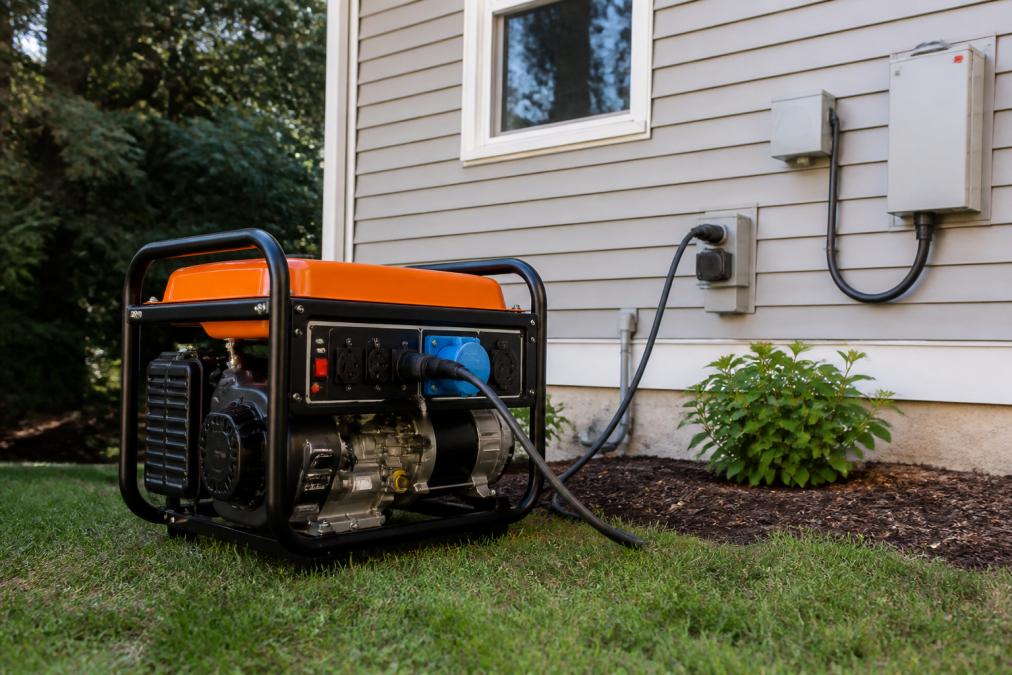
Backfeeding a generator through a dryer outlet or an unmodified panel is dangerous and illegal in most jurisdictions. The safe path is a transfer switch or an interlock kit that mechanically prevents the generator and utility from being connected at the same time.
Other safety essentials:
- Never run a portable generator indoors, in a garage, or near a window or vent; carbon monoxide kills silently (the CDC)
- Use the correct gauge extension cord for the run length to limit voltage drop
- Let a hot generator cool before refueling
- Keep the generator dry and on a level surface
- Have a licensed electrician verify grounding and bonding
Generator Maintenance During Extended Outages
Extended outages are where generator maintenance separates a system that lasts from one that quits on day three. During a multi-day event, check the oil level every 8 to 12 hours of run time and top off fuel before the tank runs low, not after. Let the unit cool before refueling to avoid a fire risk.
Frequently Asked Questions
How big of a generator do I need to run AC?
Start with the running watts on your AC's data plate, then add for startup surge. Add other household loads like a refrigerator or well pump, and size the generator so its continuous rating covers all running watts plus the largest single surge. A licensed electrician can perform a load calculation for your specific home.
Will a 7,500-watt generator run central air?
It can, but only if the AC is the primary load and you manage everything else. A portable generator may handle a smaller central air unit with a soft start kit installed. Without a soft start, the locked rotor amps on a larger compressor will trip the generator's breaker. You will likely need to turn off other large appliances while the AC cycles on.
What is a soft start kit and do I need one for my AC?
A soft start kit is a device wired into your AC's compressor circuit that reduces the initial inrush current by 60-70%. It lets a smaller generator start the same air conditioner without tripping. If your generator's surge capacity is close to your AC's starting watts, a soft start kit for AC is the most cost-effective upgrade. It also reduces voltage drop and mechanical stress on the compressor.
Is it safe to run central air on a standby generator?
Yes, when the generator is sized correctly and connected through a transfer switch or interlock kit installed by a licensed electrician. Standby generators with 240-volt output and total harmonic distortion under 5% are safe for HVAC equipment. Portable generators connected with suicide cords or backfeeding are dangerous and illegal. Always use a proper transfer switch, and never run a generator indoors or in a garage.