 listicle
Which Backup Power Handles Tennessee Heat Waves Best?
Last Updated: November 1, 2026
Quick Summary
For Tennessee heat waves, a standby generator sized for central air conditioning is the most reliable option for multi-day outages, while home batteries and portable power stations suit smaller loads. Central AC needs extra capacity to cover its compressor's startup surge. Size the system to your air conditioner's starting load, not only to the nameplate ratings of your appliances.
- Central air is often the largest load in a summer outage, and it is the appliance most needed.
- Size a generator using starting watts, since the compressor's startup surge can be several times its running draw.
- Standby generators can run indefinitely on natural gas, but propane runtime depends on tank size.
- Home batteries and power stations are quiet and safe indoors, but suit smaller loads or short runtimes.
- Carbon monoxide from portable generators is lethal, so run them outdoors at least 20 feet from the house.
Table of Contents
- Why Tennessee Heat Waves Make Backup Power Harder to Get Right
- Quick Comparison: Backup Power Options for Tennessee Homes
- Standby Generator Sizing for Central Air Conditioning
- Home Battery Backup for Air Conditioning: What It Can and Cannot Run
- How Long a Standby Generator Can Run and What It Costs to Operate
- Portable Generator Safety During a Power Outage
- Keeping Vulnerable People and Pets Cool Without Full Power
- Scheduling Your Heat Wave Backup Installation With Generators of Nashville
- Frequently Asked Questions
Why Tennessee Heat Waves Make Backup Power Harder to Get Right
Backup power for Tennessee heat waves is not the same problem as backup power for a winter storm. In a summer outage, your central air conditioner is often the single largest load in the house, and it is the appliance you most need. In a summer outage, the lights may stay on while the house becomes hard to live in by mid-afternoon.
Heat changes the math in three ways. Air conditioners draw heavily when they start, and that startup surge can exceed the running load several times over. Humidity pushes systems to run longer cycles. And the outages that come with summer thunderstorms often last longer than people plan for, because crews are working through fallen trees across wide areas.
Generators and batteries handle heat differently, and the right choice depends on what you need to keep running and for how long.
Quick Comparison: Backup Power Options for Tennessee Homes
A useful comparison for a heat wave goes beyond a feature list. You need to know which option will actually keep a room cool, for how long, and at what operating cost. The comparison below is built around the loads that matter in a summer outage: a central air conditioner, a window unit, a refrigerator, a dehumidifier, and fans.
| Option | Can Run Central AC | Realistic Runtime Under Cooling Load | Fuel or Charging | Typical Installed Cost | Noise and Emissions | Best For |
|---|---|---|---|---|---|---|
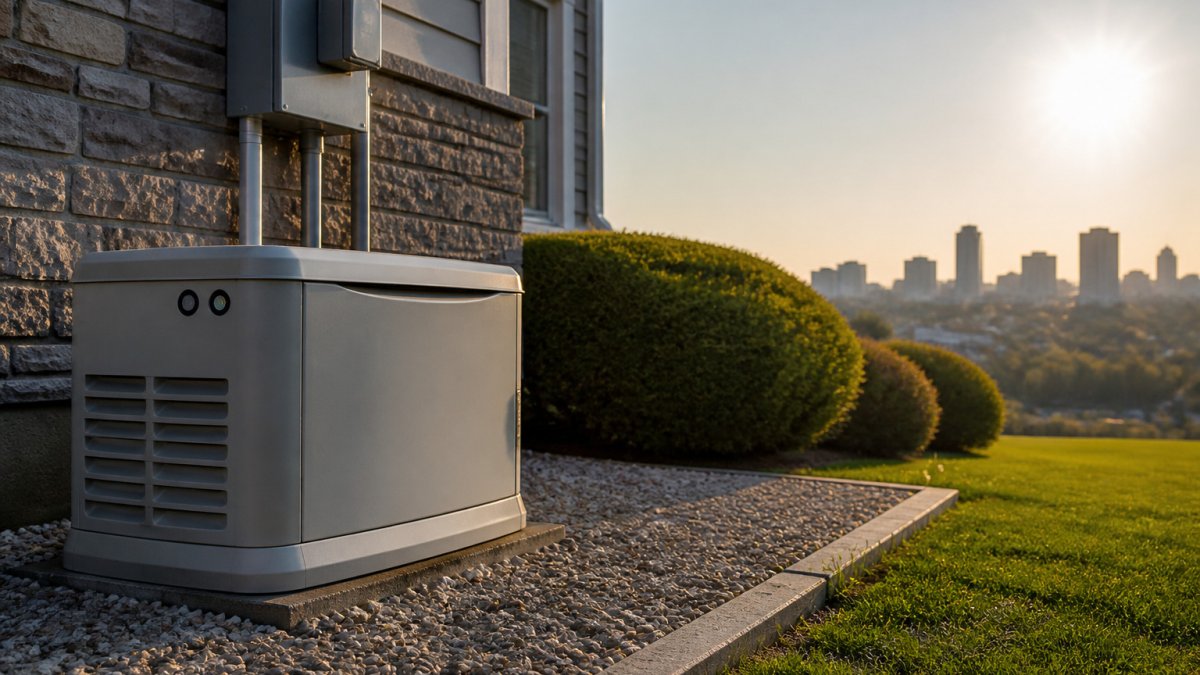
| Standby generator | Yes, when sized for startup surge | Indefinite on natural gas; limited by propane tank size | Natural gas or propane | Varies by size and site; get a written quote | Moderate noise outdoors; carbon monoxide outdoors only | Whole-home or essential-circuit backup, multi-day outages |
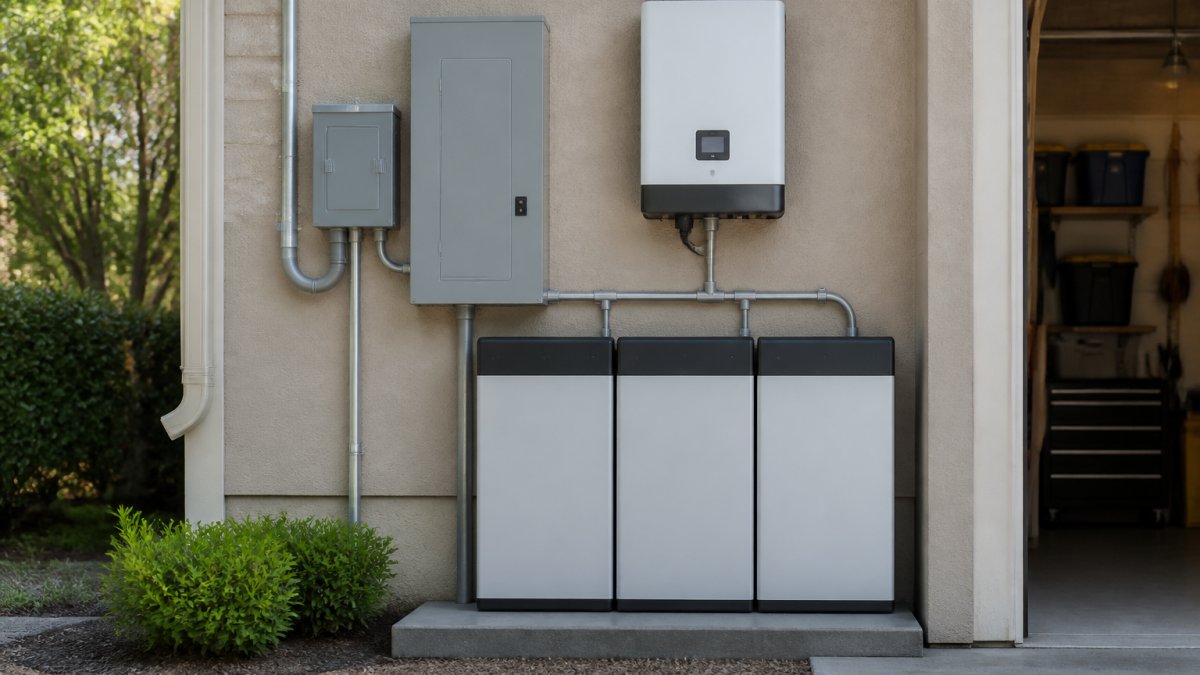
| Home battery system | Partial; depends on capacity and inverter | Hours, based on usable kWh and load | Solar or grid recharge | Significant; listed starting prices around $5,000 and up | Quiet; no combustion emissions | Quiet, indoor-safe backup, solar pairing |
| --- | --- | --- | --- | --- | --- | --- |
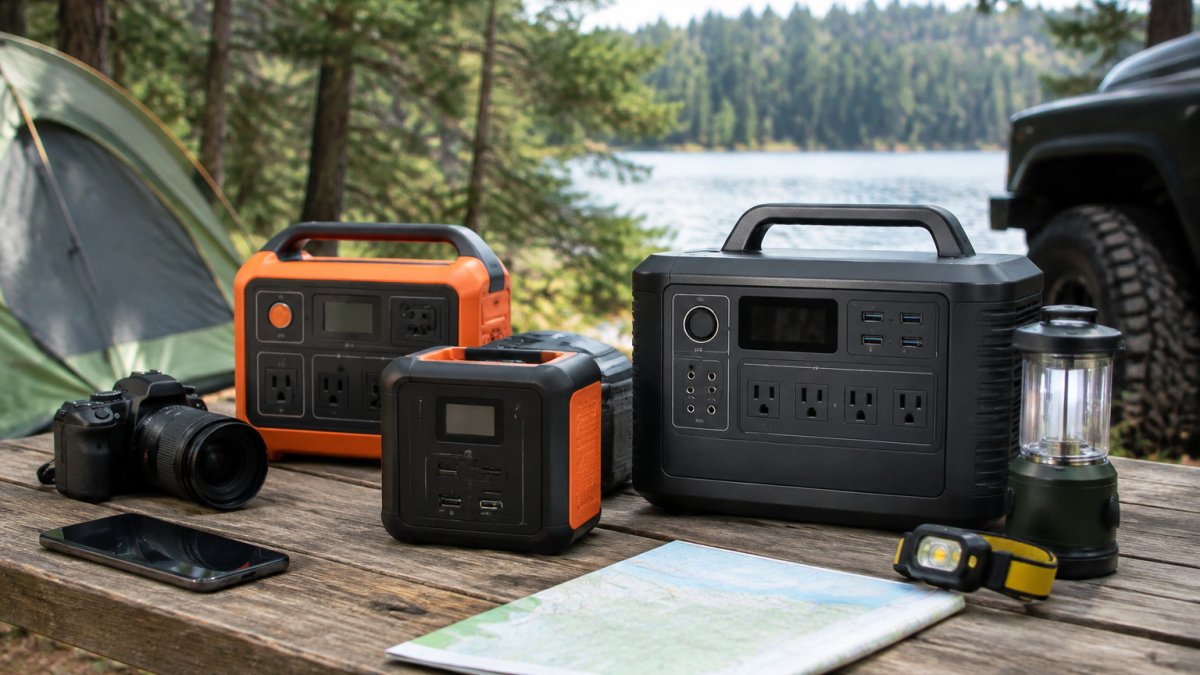
| Portable power station | Fans and small units only | Short; scales with battery size | Grid, solar, or car | $300-$5,000 depending on capacity | Quiet; no combustion emissions | Fans, phones, medical devices, small window units |
How to read the runtime column. Runtime is not a single number. Treat any runtime figure as an estimate that depends on outdoor temperature, thermostat setpoint, insulation, and how many other loads you leave on.
Operating cost, not just purchase price. Operating cost depends on the fuel source and the electricity used to recharge it. Ask your installer for a fuel-use estimate at your expected load, and compare that to your utility rate.
Noise and emissions. Battery systems and power stations are quiet and produce no combustion emissions, which makes them safe indoors and in shared spaces. Generators are louder and must run outdoors, away from doors, windows, and garages. In a heat wave, when windows may be open or people are moving between indoors and outdoors, placement matters more than in mild weather.
Installation and electrical compatibility. Standby generators and whole-home batteries require a transfer switch and a licensed electrician. Portable generators need a transfer switch or properly rated extension cords, and should never be backfed into a wall outlet.
Standby Generator Sizing for Central Air Conditioning
A standby generator is the most reliable way to run central air through a long outage. Sizing is the part most people get wrong. Many homeowners add up the nameplate ratings of their appliances and stop there. That approach misses the startup surge a compressor draws when it kicks on, which can be several times its running draw.
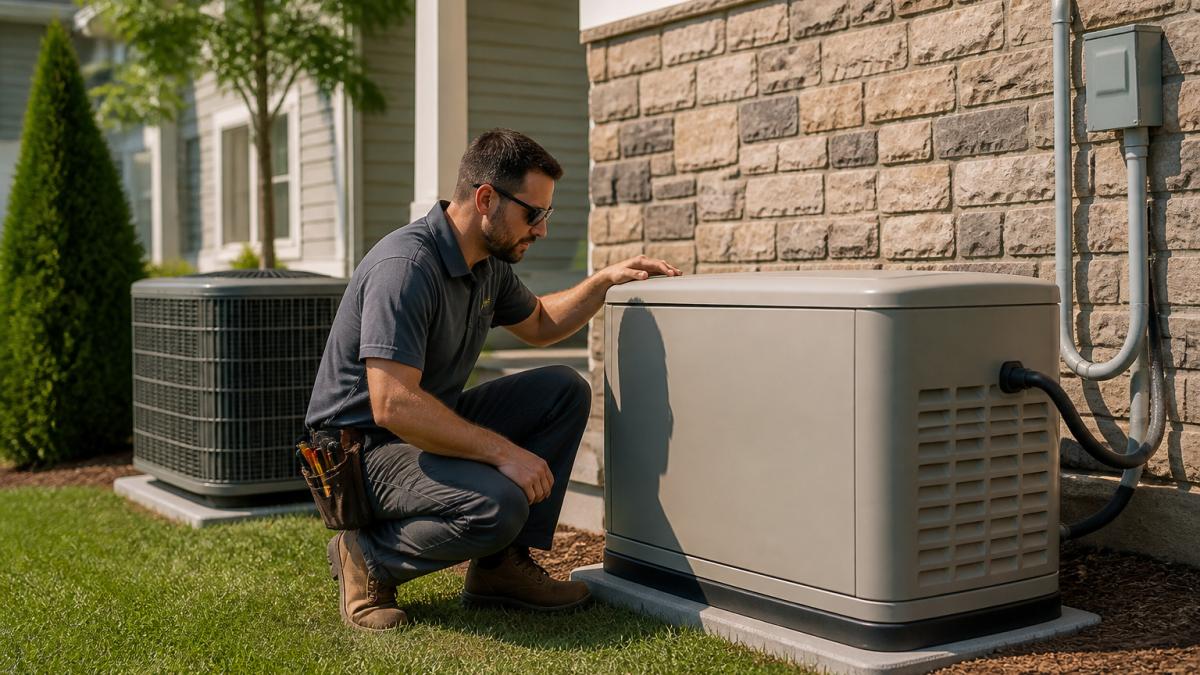
Having an electrician calculate the air conditioner's starting load, the running load of everything else you want powered, and a margin on top is a sound approach. Ask for the generator's starting watts, not just its running watts, and confirm the transfer switch can handle the circuits you plan to include.
An undersized generator can trip or stall when the compressor starts.
Home Battery Backup for Air Conditioning: What It Can and Cannot Run
A home battery can keep an air conditioner running, but usually only for part of a day and only with the right capacity. The battery's usable energy, measured in watt-hours, has to cover the compressor's startup surge plus its running load over the hours you need. To see how long a battery keeps your system running, read how long a home battery lasts during an outage.
Smaller portable batteries are generally better suited to fans, phones, a small window unit, and medical devices. A whole-home battery system with a proper inverter and transfer switch can handle more, but the capacity needed for central AC during a multi-day heat wave is substantial. Battery systems also recharge from solar or the grid, so a long outage without sun can limit how long they last.
Batteries are quiet and safe to run indoors, which matters in a heat wave when people are tempted to run gas equipment in closed spaces. Our installation requirements for whole-home battery backup explain what a system needs to support your equipment. That is a real advantage over fuel-burning options.
How Long a Standby Generator Can Run and What It Costs to Operate
A standby generator runs as long as its fuel supply holds. The practical answer depends on three things: the fuel source, the load you are asking the generator to carry, and how often the air conditioner's compressor cycles on.
Natural gas versus propane. A unit connected to a natural gas line can run continuously without refueling, which is the main reason many homeowners choose natural gas for heat-wave backup. The tradeoff is that natural gas delivers less energy per unit volume than propane, so a natural gas generator typically burns more fuel per hour to produce the same output.
Take our 60-second quiz for a free quote today! →
Realistic runtime estimates. Runtime is load-dependent. At that load, a propane tank of a given size will last proportionally longer than at full load. Ask your installer for a fuel-consumption curve at your expected load rather than a single "hours per tank" number.
What it costs to operate. Operating cost is fuel price multiplied by fuel use, plus maintenance. Because fuel prices and utility rates change, the honest approach is to get a written estimate from your installer for fuel use at your specific load, then multiply by the current local fuel price. Maintenance adds a smaller but real cost: oil changes, filter changes, and annual service.
Load management cuts cost. You do not have to run everything at once. Setting the air conditioner to a higher setpoint during the outage, running the refrigerator and freezer in cycles, and turning off non-essential circuits reduces fuel use and extends runtime. A transfer switch that lets you choose which circuits are powered makes this practical.
Before storm season, ask your installer to write down the generator's fuel use at 50% and 75% load, and the size of your propane tank in gallons. Multiply to get a realistic hours-per-tank estimate for your home, not a generic one.
When to expect longer outages. Summer thunderstorms can cause outages that last longer than expected, so planning for several days of runtime is a reasonable assumption for a heat wave.
Portable Generator Safety During a Power Outage
Portable generators are useful and dangerous in equal measure. They produce carbon monoxide, which can build up to lethal levels in minutes when a unit runs in a garage, a basement, or near an open window.
Follow these basic rules:
- Run the generator outdoors, at least 20 feet from the house, with the exhaust pointed away from doors and windows.
- Install battery-powered or battery-backup carbon monoxide alarms on every level of the home.
- Never plug a portable generator into a wall outlet. Use a transfer switch or heavy-duty extension cords rated for the load.
- Let the unit cool and refuel only when it is off.
These steps matter most during a heat wave, when the temptation to run equipment near shelter is strongest.
Keeping Vulnerable People and Pets Cool Without Full Power
Not every household can run whole-home cooling during an outage. For those cases, focus on protecting people first. Older adults, infants, and people with chronic health conditions are at the highest risk during extreme heat.
Practical steps include choosing a single cool room and keeping it shaded and closed during the hottest hours, using a battery-powered fan or a small power station for that room, and checking on vulnerable neighbors. Keep water available and watch for signs of heat illness. Pets need shade, water, and limited exertion, and should never be left in a parked car or a hot enclosed space.
If someone in the home is medically dependent on powered equipment, plan for that need separately and contact your utility or local emergency management office before an outage occurs.
Scheduling Your Heat Wave Backup Installation With Generators of Nashville
Installing backup power before a heat wave is far easier than during one.
Generators of Nashville by Evolution Electric has served Middle Tennessee since 2014 with licensed electricians. We are an authorized installer of Generac, EcoFlow, Anker SOLIX, and Jackery systems, and we can size a system to your air conditioner and the circuits you choose to protect. To start, take our 60-second quiz for a free, personalized quote for your whole-home backup system.
Frequently Asked Questions
What is the best backup power for a home during a heat wave?
For most homes, a standby generator sized to the central air conditioner gives the most reliable cooling during a long outage, because it starts automatically and runs on natural gas or propane. Portable power stations work well for fans, electronics and a few essential circuits, but they usually cannot carry a central AC compressor for long. Pricing varies with the equipment, electrical work and permits, so request a quote for an accurate figure.
Can a home battery run an air conditioner during a power outage?
Some can, but only with enough capacity and inverter output. Central AC compressors draw high starting surges, so a battery system must be rated to handle that load, and a smaller battery may only run a window unit or a few fans. Runtime depends on the AC's running wattage and how many hours it cycles. A licensed installer can compare your AC's nameplate data with a battery's capacity before you buy.
How big of a generator do I need to run central air conditioning?
Sizing starts with the AC's rated amperage and starting (inrush) watts, plus the refrigerator, lighting and any critical circuits you want running at the same time. A whole-house standby generator is usually the right tool for central air, while a portable unit may handle a single-zone system but often needs a load-management plan. An installer can perform a load calculation from your electrical panel to confirm the correct size.
What should I keep running during a heat-wave power outage?
Prioritize a refrigerator and freezer, one or two fans or a window AC for a bedroom, a phone and communication devices, and any medical equipment. Keep the refrigerator and freezer doors closed to hold cold for several hours. Limit cooking appliances and electric water heaters, which draw large loads. Plan cooling for vulnerable people and pets before the outage starts, not during it.