 listicle
5 Portable Power Stations for Emergency Use
Quick Summary
The best portable power stations for emergency use are the Bluetti Elite 200 V2, Goal Zero Yeti 1500, EcoFlow DELTA 3 Ultra, Jackery Explorer 2000 Plus, and Anker C300X. The Bluetti is the safest overall starting point because its efficiency is independently tested at 81.08%. Match the unit's surge rating to your refrigerator, not just its capacity.
- The Bluetti Elite 200 V2 is the only model with independently tested efficiency, at 81.08% RTE.
- Confirm surge output against your refrigerator's startup draw, since capacity alone can miss it.
- Refrigerators cycle, so plan on roughly one-third of the day running rather than 24 hours.
- Plan on using about 80 to 85 percent of rated capacity as usable energy.
- The Anker C300X suits phones, lights, and laptops, not a full kitchen.
Table of Contents
- How We Selected These Five Portable Power Stations
- Quick Comparison of the Top 5 Portable Power Stations
- 1. Bluetti Elite 200 V2: Best Overall for Emergency Preparedness
- 2. Goal Zero Yeti 1500: Built for Rugged Conditions
- 3. EcoFlow DELTA 3 Ultra: High-Capacity Option for Whole-Home Backup
- 4. Jackery Explorer 2000 Plus: Large Capacity for Extended Outages
- 5. Anker C300X: Compact Option for Essential Devices
- Matching Battery Capacity to Your Refrigerator and Essentials
- Frequently Asked Questions
How We Selected These Five Portable Power Stations
Last Updated: November 5, 2026
Choosing a portable power station for emergencies is harder than it looks. Capacity numbers on a spec sheet do not tell you whether a unit will keep a refrigerator running overnight.
We focused on five models that the research we reviewed names as strong candidates for emergency use. Our criteria were straightforward: enough stored energy for essentials, output strong enough for common appliances, and charging options that work when the grid is down.
Capacity is the first filter. Watt-hours (Wh) measure how much energy a unit stores, and that number determines how long it can run a load.
Recharge options were the second filter. A battery that cannot be recharged after two days is only useful for a short outage.
Portability and build quality mattered too, especially for households that might move a unit between rooms or outdoors.
Your home's load profile should drive the final choice.
Quick Comparison of the Top 5 Portable Power Stations
Here is how the five models compare at a glance. Where the research we reviewed did not verify a figure, the cell says so rather than guessing. Treat this table as a shortlist for your own load math, not as a spec-sheet ranking.
| Model | Best For | Key Strength | Main Limitation | What to Verify Before Buying |
|---|---|---|---|---|
| Bluetti Elite 200 V2 | Overall emergency preparedness | Strong tested efficiency (81.08% RTE) and a 2026 Lab Award for efficiency among large-sized units | Price and full specs not verified in our research | Usable capacity, continuous and surge output, and current price |
| Goal Zero Yeti 1500 | Rugged, off-grid conditions | Described as well designed for dusty or wet conditions | Specs and pricing not verified in our research | Ingress protection rating, capacity, and output |
| EcoFlow DELTA 3 Ultra | High-capacity whole-home backup | Positioned as a large-capacity option in a 2026 roundup | Capacity, output, and price not verified in our research | Whether its capacity and surge output can start your refrigerator compressor |
| Jackery Explorer 2000 Plus | Extended outages | Large-capacity design suited to longer runtime | Exact capacity, output, and price not in our research | Usable watt-hours after depth-of-discharge limits |
| Anker C300X | Essential devices | Compact and easy to store | Smaller capacity will not run most refrigerators for long | Whether its output can handle a fridge surge at all |
Two columns deserve your attention before you read further. First, "What to Verify" is not filler. Second, the efficiency figure for the Bluetti unit is the only independently tested number in this table, which is why it earns the overall slot despite the missing price.
A common pattern in emergency-focused roundups is to rank by watt-hours alone. That misleads households whose critical load is a refrigerator, because compressor startup can draw several times the running wattage for a few seconds.
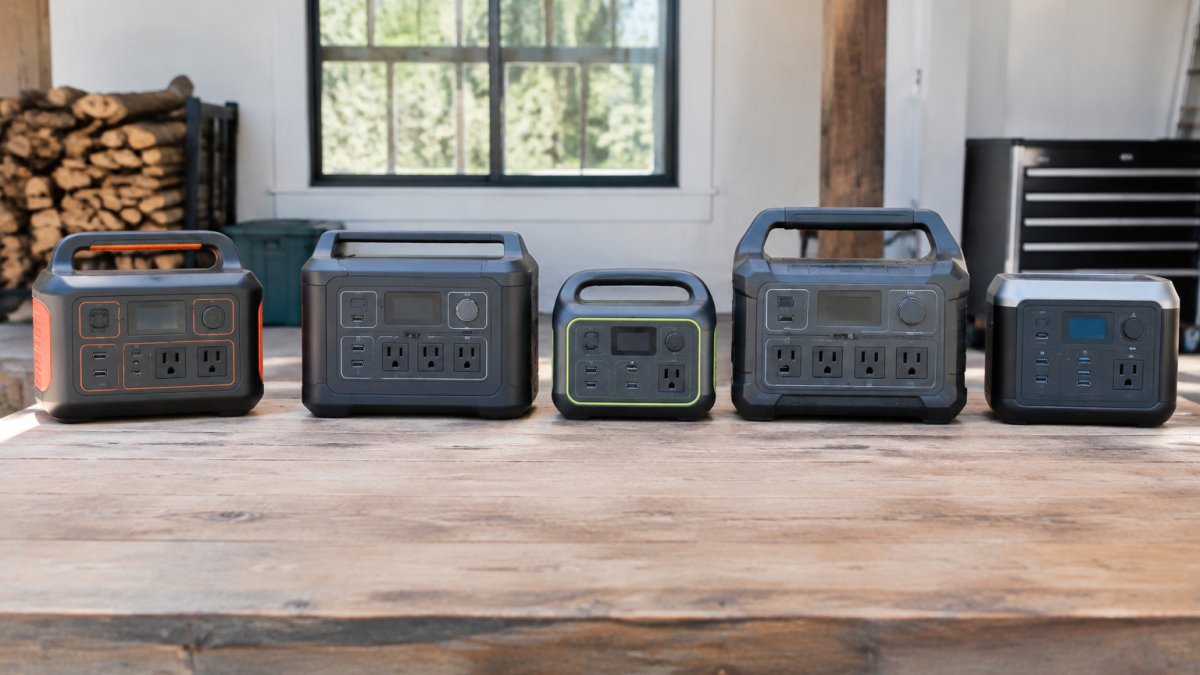
1. Bluetti Elite 200 V2: Best Overall for Emergency Preparedness
RTE tells you how much of the energy you put in comes back out, so a higher number means less energy lost during charging and discharging.
Pros:
- Named best overall by CNET
- Tested 81.08% RTE and a 2026 Lab Award for efficiency
Cons:
- Price and full specifications were not available in our research
The efficiency figure matters for emergency use because every watt lost in conversion shortens runtime. We would verify the usable capacity and continuous output against your refrigerator's running wattage before buying.
2. Goal Zero Yeti 1500: Built for Rugged Conditions
If your emergency plan involves a garage, a shed, or a trip where the unit may be exposed to weather, that durability can matter more than a few extra watt-hours.
Pros:
- Described as well designed for off-grid use
- Suited to dusty or wet conditions
Cons:
- Specifications and pricing were not in our research
Rugged design is a real advantage, but confirm the capacity and output ratings directly with the manufacturer. Durability does not replace enough energy for a refrigerator.
3. EcoFlow DELTA 3 Ultra: High-Capacity Option for Whole-Home Backup
A high-capacity unit can carry essentials through a multi-day outage, but it also weighs more and costs more. Compare it against a backup power buying guide for remote workers before deciding.
Pros:
- Positioned as a high-capacity option in current roundups
Cons:
- Capacity, output, and price were not verified in our research
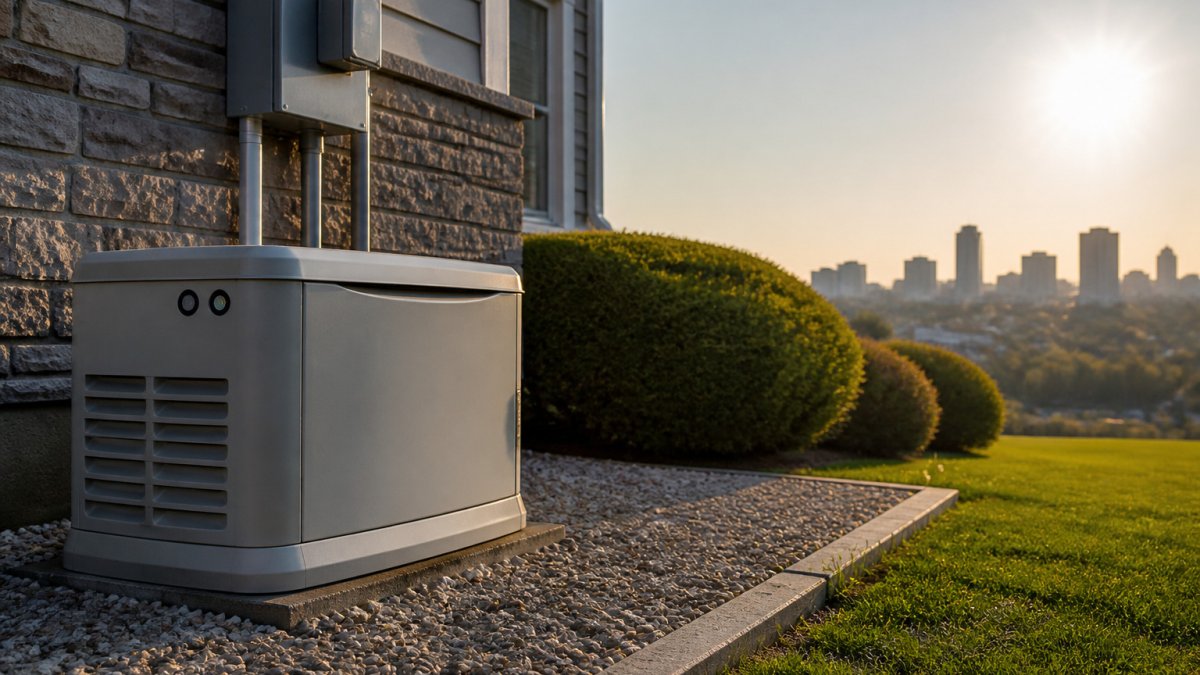
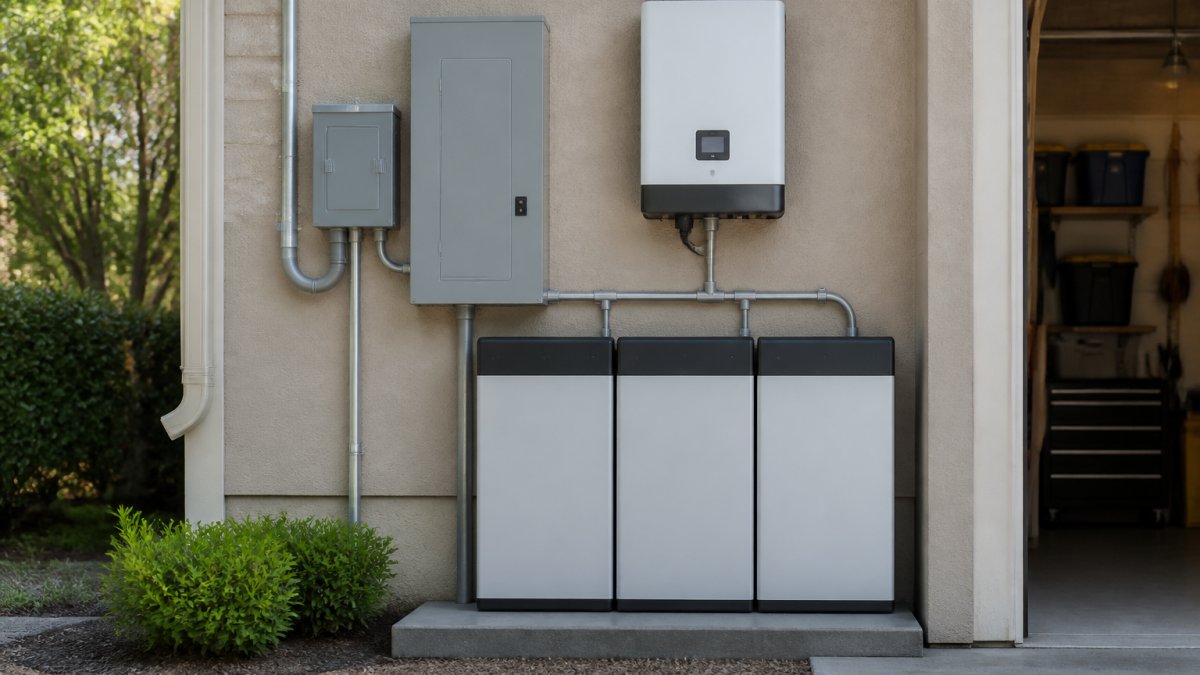
For a whole-home setup, a portable unit has limits. A fixed installation, such as a standby generator or home battery system, may be the better fit.
4. Jackery Explorer 2000 Plus: Large Capacity for Extended Outages
For households expecting longer outages, capacity is the main reason to consider it.
Take our 60-second quiz for a free quote today! →
Pros:
- Large-capacity design suited to longer outages
Cons:
- Exact capacity, output, and price were not in our research
Before you commit, calculate your daily energy use. Multiply each device's watts by its hours of use, then add the totals. That figure tells you whether a 2,000-class unit gives you the runtime you need.
5. Anker C300X: Compact Option for Essential Devices
It suits phones, lights, a laptop, and small devices rather than a full kitchen.
Pros:
- Compact and easy to store
Cons:
- Smaller capacity will not run most refrigerators for long
If your outage plan centers on communication and lighting, a compact unit can be enough. For refrigerators and medical equipment, choose a larger model.
Matching Battery Capacity to Your Refrigerator and Essentials
Most roundups stop at the spec sheet. The step that actually decides whether a power station carries your household through an outage is load planning: estimating how much energy each critical device draws, how long it runs, and how much of the battery's rated capacity you can realistically use. This section walks through that math with realistic examples so you can size a unit before you buy. Once you have accounted for each device’s draw and runtime, the same load-planning approach can help determine how much power for van life your daily essentials require.
Step 1: Build your critical load list
List only the devices you need to keep running, not everything you own. A typical emergency list looks like this:
- Refrigerator (the largest load for most households)
- Modem and router (so you keep internet and phone service over Wi-Fi)
- A few LED lights
- Phone and laptop chargers
- Any medical device, such as a CPAP machine or a home oxygen concentrator
For each device, find the wattage on its label, manual, or an energy monitor. If the label lists amps and volts, multiply them to get watts.
Step 2: Separate running watts from surge watts
A refrigerator is the clearest example of why this matters. A typical full-size refrigerator draws roughly 100 to 200 watts while running, but its compressor can pull several hundred watts for a few seconds at startup. A power station must supply that surge or the compressor will not start.
Watch out: a unit rated for 1,500 continuous watts may still fail to start a refrigerator if its surge rating is too close to the compressor's startup draw, so confirm both numbers before relying on it.
Step 3: Convert watts to watt-hours per day
Multiply each device's running watts by the hours per day it actually runs, then add the totals. A refrigerator compressor cycles on and off, so it does not run 24 hours straight; a common planning assumption is that it runs roughly one-third of the day. Here is a realistic example for a small household:
| Device | Running Watts | Hours per Day | Daily Watt-Hours |
|---|---|---|---|
| Refrigerator | 150 | 8 (cycling) | 1,200 |
| Modem and router | 15 | 24 | 360 |
| LED lights (4 bulbs) | 40 | 5 | 200 |
| Phone and laptop charging | 60 | 3 | 180 |
| CPAP machine | 60 | 8 | 480 |
| Total | 2,420 |
That total is the energy your station must deliver per day. For a two-day outage, double it to about 4,840 watt-hours.
Step 4: Adjust for usable capacity, not rated capacity
Battery capacity is not the same as usable capacity. Manufacturers rate stations in watt-hours, but depth-of-discharge limits and inverter losses mean you cannot extract every rated watt-hour. A reasonable planning assumption is that you can use roughly 80 to 85 percent of rated capacity, and round-trip efficiency losses shave a bit more.
That changes the sizing math. For the 2,420 watt-hour daily load above, a 2,000-class unit gives you well under a full day, while a 3,000-class unit covers a full day with margin.
Step 5: Match the unit to your outage duration and household
Use these rough tiers to narrow the field:
- Short outages (a few hours): a compact unit for phones, router, and lights is enough; the refrigerator stays closed.
- One-day outages: a 1,500 to 2,000 watt-hour class unit can cover a refrigerator plus electronics if you manage usage carefully.
- Multi-day outages: plan on 3,000 watt-hours or more, or budget for an expansion battery, and confirm the unit accepts one.
- Medical equipment households: size for the device's continuous draw first, then add the refrigerator; do not assume a camping-focused unit will run a medical device overnight without checking its continuous output and runtime.
Step 6: Plan recharge before the outage, not during it
A station that cannot be recharged is a one-shot resource. Confirm the unit accepts AC wall charging, and check whether it supports solar input and how many watts of panel it can accept.
If the math feels like more than you want to take on, take our 60-second quiz to receive a free, personalized quote for your whole-home backup system. For households that want a permanent solution rather than a portable one, a fixed standby generator or home battery system may be the better fit,
Frequently Asked Questions
Can a portable power station power a refrigerator during an outage?
Yes, many portable power stations can run a refrigerator, but the runtime depends on the fridge's energy use and the station's watt-hour capacity. Refrigerators cycle on and off, so their average draw is lower than their startup surge. Check the appliance's label for its running watts and daily energy use in kilowatt-hours, then compare that to the station's rated capacity. Keep the door closed as much as possible to extend how long food stays cold, and plan around the fact that a station will not run a fridge indefinitely without recharging.
How long can a portable power station run essential appliances?
Runtime is roughly the station's usable watt-hours divided by the average watts your devices draw. A 2,000 watt-hour unit running a 50-watt device load could last around 30 to 40 hours after accounting for inverter losses. Higher-draw appliances such as space heaters or window air conditioners will shorten that time considerably. List the devices you need, add up their wattage, and estimate how many hours each runs per day before choosing a capacity.
What is the difference between a portable power station and a home battery?
A portable power station is a self-contained battery with outlets that you can move and use anywhere, typically charged from a wall outlet, solar panels or a vehicle. A home battery is a permanently installed system, often wired into your electrical panel, that can back up selected circuits or the whole house. Portable stations suit lighter, flexible backup needs, while home batteries suit longer outages and larger loads. A licensed electrician can help you determine which fits your home.
How do I choose a portable power station for emergency use?
Start with the devices you must keep running, then calculate their total daily watt-hours. Confirm that the station's continuous output exceeds the combined wattage of the devices you plan to run at once, and that its surge rating covers motor-driven appliances at startup. Look for multiple recharge options, including wall, solar and vehicle charging, so you are not dependent on the grid. Factor in weight and portability if you may need to move it, and budget for a second charging method in case the primary one fails during a storm.