 how-to
Troubleshooting Common Standby Generator Issues in Nashville
Last Updated: November 13, 2026
Quick Summary
Most standby generator issues in Nashville start at the controller, so read the fault code before touching anything else. Green means ready, yellow is a warning, and red is a lockout that will not restart until the fault clears and you reset it. No-start problems are usually battery or fuel, while a running generator with no house power points to the transfer switch.
- Write down the exact fault code and date before resetting, since the controller may store only the most recent fault.
- If the same code returns after one reset, stop and book service rather than resetting again.
- Check oil with the dipstick, engine off and cool, because low-oil shutdown explains a start-then-stop pattern.
- Never open the transfer switch enclosure, which carries live utility voltage even during an outage.
- Run the weekly exercise cycle and check oil monthly to catch weak batteries and fuel issues early.
Table of Contents
- Start With the Controller: Reading Warning Lights and Error Codes
- Generac Troubleshooting Codes and What They Usually Point To
- A Generator Troubleshooting Chart: Match the Symptom to the First Check
- Fuel, Battery, and Oil Checks Homeowners Can Do Safely
- When a Generac Generator Is Not Producing Power but Runs
- Transfer Switch and Wiring Problems That Stop Power From Reaching the House
- Home Standby Generator Maintenance That Prevents Most Outage Failures
- Book a Licensed Generator Inspection Before the Next Storm
- Frequently Asked Questions
Start With the Controller: Reading Warning Lights and Error Codes
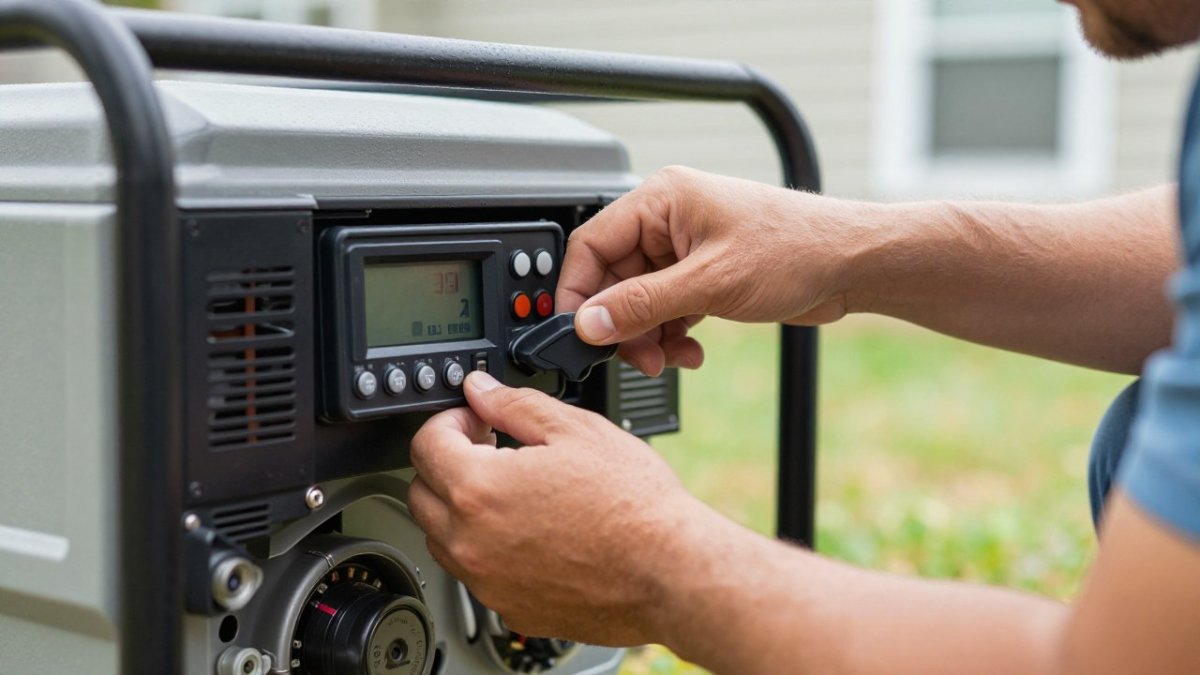
Most standby generator problems announce themselves before the engine ever turns over. The controller is the small display panel inside the unit, and it logs every fault the system detects. Learning to read it is the fastest way to narrow down troubleshooting common standby generator issues in Nashville, where storm-season outages put these machines to work hard. At Generators of Nashville by Evolution Electric, we tell every homeowner the same thing: check the panel before you touch anything else.
What Red, Yellow, and Green Indicators Tell You
A green light means the system is ready and in auto mode. Yellow usually signals a warning: low battery, a service reminder, or a minor fault that has not shut the unit down yet.
The man is American.
If you are mid-outage and want to know what to expect from the grid, our breakdown of how long Nashville power outages usually last gives useful context while you work.
Generac Troubleshooting Codes and What They Usually Point To
Generac controllers use a set of common fault codes, and each one narrows the search. The exact meaning varies by model and controller generation, so confirm against the owner's manual before acting. What most homeowners need is not a full code database but a way to sort a code into one of three buckets: a warning you can watch, a lockout you can safely reset once, or a fault that requires a licensed technician.
Warning Codes Versus Lockout Codes
A warning code lets the unit keep running or stay in auto mode while it logs the condition. A lockout code shuts the unit down and prevents restart until the fault clears and the controller is reset. The practical difference matters: a warning can wait for a scheduled service call, while a lockout during an outage means you are already on utility power and need a plan.
Common Codes and the First Safe Check
- Low battery or charger fault: the unit cannot crank or is losing charge between exercise cycles. Check the battery terminals for corrosion and confirm the charger breaker is on. A battery that reads low at rest is suspect and should be checked.
- Low oil pressure: the engine has shut down to protect itself. Check the oil level with the dipstick, engine off and cool, and top off to the full mark with the viscosity the manual specifies. If the level is correct and the code returns, stop, the pressure sensor or oil pump needs a technician.
- Overcrank: the engine tried to start and failed within the controller's crank cycle limit. Fuel supply or battery strength is the usual cause. Confirm the fuel shutoff valve is fully open and the tank has fuel before resetting.
A common mistake is resetting a red fault without reading it. The code clears, the unit fails again during the next storm, and now you have no record of what went wrong.
Watch out: resetting a lockout code more than once without finding the cause can mask a fuel or oil problem that damages the engine. If the same code returns after one reset, stop and book service.
A Generator Troubleshooting Chart: Match the Symptom to the First Check
A generator troubleshooting chart saves time because it turns a vague "it's broken" into a specific first step. Use this one as your starting point, then follow the matching section below.
| Symptom | First Check | Likely Area |
|---|---|---|
| Will not crank at all | Battery voltage and connections | Battery or charging system |
| Cranks but will not start | Fuel shutoff valve and fuel level | Fuel supply |
| Starts, then shuts down | Oil level and controller code | Low-oil shutdown |
| Runs but no power to house | Breaker and transfer switch | Transfer switch or wiring |
| Yellow warning light | Controller code and service log | Maintenance item |
No-Start, No-Power, and Shutdown Symptoms Compared
Three symptom families cover most calls we get. A no-start issue is almost always battery or fuel. A shutdown after start is usually oil or temperature. A no-power issue with a running engine points at the transfer switch, not the generator itself. Sorting your problem into one of these three buckets tells you which tools to grab.
Fuel, Battery, and Oil Checks Homeowners Can Do Safely
These three checks are safe for most homeowners and solve a large share of standby generator issues before a technician is needed. Stay within these boundaries: no opening the electrical enclosure, no working on gas lines, and no adjusting the engine while it runs.
Fuel Supply, Shutoff Valves, and Stale Fuel
Confirm the fuel shutoff valve is fully open. A valve left partly closed after service is a frequent cause of no-starts. On propane units, check the tank level; on natural gas, confirm the supply is on. If you ever smell gas near the unit, stop and treat it as a safety issue. Our article on why your standby generator smells like gas explains when to call for help.
Battery Condition, Connections, and Low-Oil Shutdowns
Look for corrosion on the battery terminals and tighten any loose connections. A weak battery cranks slowly or not at all, especially in cold snaps. Then check the oil with the dipstick, engine off and cool. Most units protect themselves with a low-oil shutdown, so a low reading explains a start-then-stop pattern instantly.
When a Generac Generator Is Not Producing Power but Runs
A Generac generator not producing power but runs usually has a transfer problem, not an engine problem. The engine is doing its job; the power just is not reaching the house. Check the main breaker on the generator itself first.
Homeowners sometimes hear the engine running and assume everything is fine, then lose power to the house anyway. The generator is fine. The handoff is not.
Transfer Switch and Wiring Problems That Stop Power From Reaching the House
The automatic transfer switch is the component that disconnects your home from the utility and connects it to the generator. If it fails to switch, the generator runs but your home stays dark. Because the engine can sound healthy in this situation, the transfer switch is a place where homeowner troubleshooting should stop early. The switch carries live utility voltage even when the generator is off.
How the Switch Is Supposed to Work
When utility power drops, the controller senses the loss, starts the engine, waits for voltage and frequency to stabilize, then signals the switch to move from utility to generator. When utility returns, the sequence reverses after a cool-down delay. A failure anywhere in that chain, sensing, start signal, switch motor, or the switch contacts themselves, leaves you with a running generator and a dark house.
Symptom-to-Action Checks You Can Do Safely
- Generator runs, house stays dark, switch is silent: confirm the main breaker on the generator itself is on. If it is tripped, reset it once. If it trips again, stop and call a licensed electrician, the fault is downstream and repeated resets can damage equipment.
- Switch hums or buzzes: this often indicates the switch coil is trying to move but the mechanism is stuck or the control circuit is faulty. Do not open the enclosure. Note the sound and call for service.
- Switch stays in one position: the actuator or control wiring has failed. This is not a homeowner repair.
Service-Rated Versus Non-Service-Rated Switches
Most whole-home standby systems use a service-rated transfer switch that also serves as the main disconnect, while some older or partial-backup installations use a non-service-rated switch paired with a separate main panel. The distinction matters for diagnosis because the location of the main breaker and the neutral bonding differ. If you are unsure which type you have, check the label inside the switch cover, reading the label is safe; probing the terminals is not.
When to Stop and Call a Licensed Electrician
Never open the transfer switch enclosure yourself. If your system needs a switch installed or serviced, our team handles backup generator installation in Nashville with licensed electricians on every job.
Watch out: a transfer switch that fails to transfer can also fail to transfer back, leaving your home on generator power after the grid returns. If you notice the generator still running hours after utility power is restored, call for service rather than switching breakers yourself.
Home Standby Generator Maintenance That Prevents Most Outage Failures
Home standby generator maintenance is the cheapest troubleshooting you will ever do, because it stops failures before they happen. A unit that sits idle for months can fail on the first cold night simply because nobody checked it. We recommend this routine:
- Run the exercise cycle weekly and confirm it completes
- Check oil level monthly
- Inspect the battery and terminals every quarter
The exercise cycle is the one item most homeowners skip. It is also the one that catches a weak battery or fuel issue while the weather is calm.
Book a Licensed Generator Inspection Before the Next Storm
Some faults are beyond safe homeowner troubleshooting. Our guide on how to hire a professional generator installer walks through the questions to ask before you book. If you are weighing repair against replacement, our roundup of the best standby generators for Tennessee homes covers what suits this climate.
Storm season does not wait for a convenient week. If your generator has thrown a fault code, stalled during an outage, or simply sat unchecked for a year, get it looked at now.
Frequently Asked Questions
What is the most common reason a standby generator will not start?
Battery problems top the list, followed by fuel delivery and low oil. A battery that has lost charge or has corroded terminals cannot crank the engine, and the controller often shows a low-battery or no-crank warning. Check that the fuel shutoff valve is open and the fuel supply is reaching the unit, then look at the oil level, since many units shut down to protect the engine. If those three check out and it still will not start, the cause is usually ignition or controller related and needs a licensed technician.
Why does my Generac generator run but not produce power?
When a Generac generator is not producing power but runs, the fault usually sits between the generator and the house rather than in the engine. Common causes include a transfer switch that has not switched to generator position, a tripped breaker on the generator or in the transfer switch, loose wiring connections, or a failed alternator. Start by confirming the main breaker and the generator breaker are on, then check whether the transfer switch moved. Anything past that point involves live voltage and should go to a licensed electrician.
How do I read Generac troubleshooting codes?
Generac controllers display a short code or a flashing light pattern, and each one maps to a specific fault such as low oil pressure, high temperature, over crank, or low battery. Write down the exact code and the light color before you reset anything, because a reset clears the history. Your owner's manual lists the meaning for your model, and a generator troubleshooting chart is a fast reference for the most common ones. If the same code returns after a reset, stop resetting and call a technician.
When should I call a generator technician instead of troubleshooting myself?
Draw the line at fuel lines, the transfer switch, and anything behind a panel with live voltage. Homeowners can safely check the oil, inspect the battery and its connections, confirm the fuel shutoff valve is open, clear debris from the air intake, and read controller codes. Fuel pressure testing, transfer switch diagnosis, alternator testing, and wiring repairs belong to a licensed electrician. If the unit has thrown the same code twice, smells of gas, or shows scorched wiring, stop and call for service.