 how-to
Nashville Power Outages: How Long They Usually Last
Quick Summary
How long power outages last in Nashville depends on the cause and scale. Most are short, often a single fault cleared within hours, while widespread storm damage can stretch restoration into days. Check the NES outage map for your area's current status and estimated restoration time.
- Routine single-home outages depend on how many other service calls are ahead of yours.
- Neighborhood outages are frequently caused by a fallen branch, blown fuse, or equipment fault.
- Widespread storm outages can stretch into days because crews must find and repair each break.
- Estimated restoration times are forecasts, not guarantees, and can change in either direction.
- Check the NES outage map by address or ZIP code and report your outage so it is counted.
Table of Contents
- How Long Power Outages Typically Last in Nashville
- Why Most Outages End Within Hours
- Why Major Storms Stretch Restoration Into Days
- Checking the NES Power Outage Map Today
- Finding Outage Information by ZIP Code
- Nashville Power Outage Today: Reading the Latest Update
- Preparing a Backup Power Plan for Longer Outages
- Frequently Asked Questions
How Long Power Outages Typically Last in Nashville
A power outage is a loss of electric service to a home or area, and the length of most power outages depends on what caused them. The honest answer to how long outages last is that it depends on scope: a problem on your own service line behaves very differently from a storm that damages major circuits across a service area. Most outages are short, but the cause and scale decide whether you are looking at hours or days.
Here is a practical baseline, framed by the type of event rather than a single number:
- Routine, single-home outages: Often caused by a damaged service line, a failed transformer serving one or two homes, or a tripped main breaker. The wait depends on how many other calls are ahead of yours.
- Neighborhood outages: Frequently caused by a fallen branch on a local line, a blown fuse on a tap, or an equipment fault.
- Widespread storm outages: Caused by severe thunderstorms, ice, straight-line winds, or tornado damage to major lines and substations. These are the events that stretch into days, and the duration scales with how many separate breaks crews must find and repair.
Exact times vary with weather, crew availability, and how much equipment is damaged. No single number fits every outage, and any specific figure you see for a given event is an estimate that can move in either direction.
Watch out: treating a routine outage and a storm outage as the same problem leads people to under-prepare for the events that actually last. If a storm has caused widespread damage in your area, plan for days even if the first estimate says hours.
The table below summarises how outage duration depends on the type of event, as described above.
| Outage type | Typical cause | Typical duration |
|---|---|---|
| Routine, single-home | Damaged service line or failed transformer | Depends on calls ahead |
| Neighborhood | Fallen branch, blown fuse, equipment fault | Frequently short |
| Widespread storm | Severe storms, ice, winds, tornado damage | Can stretch into days |
Why Most Outages End Within Hours
A common mistake is assuming your outage is the biggest one on the map. Often a single fault on a shared line is the cause, and a crew can clear it quickly once it is found.
Why Major Storms Stretch Restoration Into Days
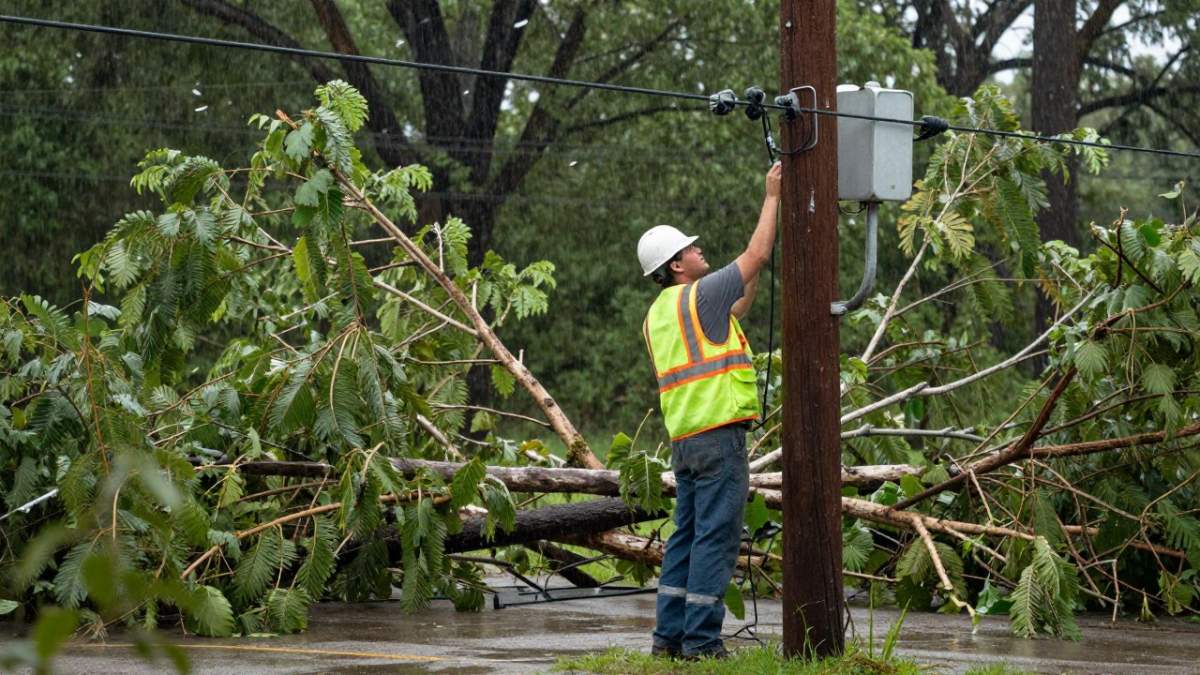
Storms change everything. High winds, falling trees, and ice can knock down many lines at once, which is why power outages from storms take longer to clear. Crews must first make roads safe, then find each break, then repair it. When fallen trees are part of the damage, clearing them safely can help crews reach broken lines, while Red Woodpecker Tree Service offers another point of reference for urgent tree hazards.
Checking the NES Power Outage Map Today
To use it:
- Open the outage map on the NES website or app.
- Find your address or the area on the map.
- Check the status message and estimated restoration time for your area.
Finding Outage Information by ZIP Code
- Enter your ZIP code on the NES outage page.
- Review the list or map of affected areas.
- Note the number of customers affected and the status of each area.
Using a ZIP code search is often faster than scrolling a full map on a small screen.
Nashville Power Outage Today: Reading the Latest Update
-
Affected customers: The number of homes or businesses without power in an area. This is a count, not a severity rating; a large count can reflect a single feeder lockout, while a small count can reflect a long, difficult repair.
-
Estimated time of restoration (ETR): A forecast, not a guarantee. It is the utility's best current estimate of when service will be back for that area, based on the damage known at the time it was posted.
-
Crews assigned: Shows that repair work is underway or queued. It does not mean a crew is on your street; it means the job has been routed.
-
Patrol or assessing: Crews are still inspecting damage and have not yet committed to a repair plan. Estimates in this stage are the most likely to change.
-
Restored: Service has been returned to the area. If your power is still out after a status shows restored, your address may be on a separate fault or a service-line problem that needs its own report.
-
Check the status label, not just the color. A colored area with an 'assessing' label is earlier in the process than one with 'crew assigned.'
-
Compare the affected-customer count to the size of the area. A small count over a large shaded area usually means scattered, individual faults.
-
Expect reporting delays. Outage maps are updated on a cycle, so a status can lag the actual field work by a period of time.
-
Re-check rather than anchoring on the first ETR. The number you saw an hour ago may already be superseded.
Plan as if the outage could last longer than the first estimate, and confirm your own outage is reported so your address is counted.
Preparing a Backup Power Plan for Longer Outages
Most power outages will not require a plan beyond flashlights and charged phones. Longer outages are different. If a storm could leave you without power for several days, a backup plan keeps your home safe and comfortable.
Start with the basics:
- Keep flashlights, batteries, and a battery-powered radio ready.
- Store enough water and non-perishable food for several days.
- Charge phones and portable power banks before storms arrive.
For a more lasting solution, a home backup power plan from Generators of Nashville can be a practical next step. A reader weighing a permanent system may also want to review generator installation permits in Middle Tennessee before buying. To understand how far a battery system will carry you, read how long a home battery lasts during an outage. If you are comparing standby options, see the best standby generator for Tennessee homes. Owners who already have a generator can keep it ready with residential generator maintenance tips.
Whatever you choose, the goal is the same: know how long your power might be out and be ready before the lights go dark.
Frequently Asked Questions
How long do power outages typically last?
Many power outages are caused by localized problems such as a tree branch touching a line or an equipment fault on a single transformer. Widespread outages from severe thunderstorms, ice storms or high winds can last much longer, because crews must clear roads, inspect damage and rebuild lines before power can be restored. Estimated restoration times are updated as crews assess conditions, so the first estimate is often the least reliable.
How many customers are still without power in Nashville?
The number of customers without power changes constantly during an outage, so the most reliable source is the outage information published by your utility provider. Check it directly rather than relying on a figure from a news article, which may be hours old by the time you read it.
How can I check the NES outage estimate for my address?
Start with your utility provider's outage information. If your power has been out well beyond the posted estimate, contact your utility to report it so the outage is logged against your address.
What should I do if my power is out for an extended time?
Keep refrigerator and freezer doors closed to preserve food, and unplug sensitive electronics to protect them from a surge when power returns. Never run a generator, grill or camp stove indoors or in an attached garage, because carbon monoxide can build up quickly. Stay away from any downed power line and report it to NES. If an extended outage threatens health, for example if someone relies on powered medical equipment, arrange alternative power or shelter early rather than waiting.