 how-to
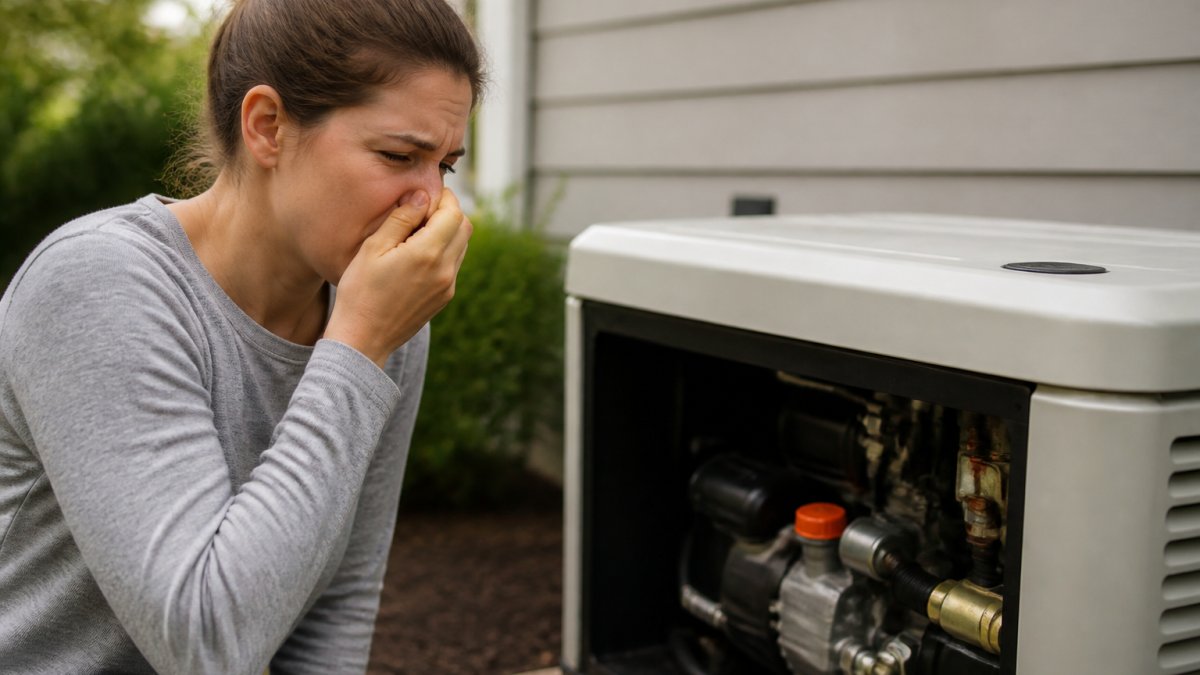
Why Your Standby Generator Smells Like Gas
Table of Contents
- Safety First: What to Do the Moment You Smell Gas
- Common Reasons a Standby Generator Smells Like Gas
- Is It Exhaust Fumes or Raw Fuel? How to Tell the Difference
- Signs of a Natural Gas Leak in Generator Systems
- Evaporative Emissions, Venting, and Environmental Factors
- Your Standby Generator Maintenance Checklist to Prevent Gas Smells
- Dual-Fuel and Propane Generators: What's Different
- When to Call a Licensed Technician
- Frequently Asked Questions
Last Updated: October 1, 2026
Safety First: What to Do the Moment You Smell Gas
If your standby generator smells like gas, treat it as a real leak until proven otherwise. Shut it down, avoid sparks and flames, and move people away before looking for the source.
Here is the sequence that keeps you safe:
- Shut the generator off at the controller and at the fuel shutoff valve.
- Put out cigarettes, and do not start vehicles or lawn equipment nearby.
- Keep everyone back at least 25 feet.
- Call your fuel provider or 911 if the smell is strong or you hear hissing.
- Do not restart the unit until a qualified technician clears it.
Common Reasons a Standby Generator Smells Like Gas
Most generator gas smell complaints trace back to a short list of causes: fuel leaks, worn lines, a flooded carburetor, an overfilled tank, and venting problems. Knowing which one you have saves time and money.
Fuel Leaks and Degraded Fuel Lines
Fuel leaks are the most serious cause and the easiest to miss. Rubber lines crack with age, heat, and vibration, and fittings loosen over time.
Look for these signs:
- Wet spots or stains under the unit
- A shiny film on fuel lines
- A gas smell that lingers after shutdown
- Loose hose clamps at the fittings
Carburetor Flooding and Overfilled Tanks
A flooded carburetor pushes too much fuel into the engine, and the excess has to go somewhere, you often smell it before you see it. Overfilling the tank causes the same problem: fuel expands as it warms, and a brim-full tank sends overflow out the vent. Check the level when the unit is cool, leave room for expansion, and never top off right before a long run.
Is It Exhaust Fumes or Raw Fuel? How to Tell the Difference
Most people who search this question are not smelling a leak at all, they are smelling exhaust and assuming the worst. Getting this distinction right tells you whether you have a nuisance odor or an active fuel release.
Use Timing as Your First Test
The clock is your best diagnostic tool. Run this sequence:
- Shut the unit down at the controller.
- Step at least 25 feet away and wait five minutes.
- Return and smell near the enclosure, the tank, and the regulator.
Why Exhaust Odor Still Matters
Do not dismiss an exhaust smell as harmless. Carbon monoxide is colorless and odorless on its own, and the burnt smell that accompanies it is not a reliable warning. A standby generator that runs close to a window, soffit vent, or fresh-air intake can push CO into the home even when the unit itself is running correctly. The [U.S.
- Headaches, dizziness, or nausea that improve when you go outside
- A generator positioned within 20 feet of any opening into the house
- Exhaust that drifts toward the home on still air
- A CO alarm sounding anywhere in the building
Side-by-Side Comparison
| What You Notice | Likely Cause | Timing | What To Do |
|---|---|---|---|
| Sharp, acrid smell that fades after shutdown | Normal exhaust | Gone in 5-10 minutes | Verify 20-foot clearance and CO alarm function |
| Sweet, sulfurous smell that lingers | Raw fuel release | Still present after 5 minutes | Shut down, ventilate, call a technician |
| Smell only near the tank | Vent, overfill, or evaporative issue | Worse on warm days | Check fuel level when cool |
| Smell only near the engine | Carburetor, line, or fitting leak | Constant while fuel is on | Shut off fuel at the source, call a technician |
| Smell inside the home | CO intrusion or interior gas line | Any time | Evacuate and call 911 |
A Note on "Normal" Generator Smell
A brand-new standby generator often gives off a light burnt smell during its first few hours of break-in, residual oil and paint curing on hot metal, not fuel, and it fades with runtime. If it persists past the first oil change or has any sweet or sulfurous character, treat it as fuel until proven otherwise.
Signs of a Natural Gas Leak in Generator Systems
Natural gas and propane carry an added odorant called mercaptan so you can smell a leak. That rotten-egg smell is your warning, not a nuisance.
Watch for these signs of a natural gas leak in generator systems:
- A sulfur or rotten-egg smell near the unit
- Hissing at the regulator or fittings
- Dead grass or damp soil above the gas line
- A higher gas bill with no change in use
Evaporative Emissions, Venting, and Environmental Factors
Sometimes the smell is not a leak at all. Evaporative emissions systems capture fuel vapor and route it back to the engine; when a vent clogs or a line kinks, that vapor escapes. Environmental factors matter too: a hot, still day traps vapor near the unit, and a closed enclosure with poor airflow holds the smell longer. Persistent odors that linger despite clear ventilation often indicate a mechanical failure requiring professional gas leak repair services to ensure the integrity of your fuel system.
Take our 60-second quiz for a free quote today! →
Check these items:
- Clogged or blocked vent lines
- A kinked evaporative hose
- Debris or nests in the enclosure
- Poor airflow around the unit
Your Standby Generator Maintenance Checklist to Prevent Gas Smells
A steady maintenance routine prevents most gas smells before they start. Run this checklist every few months and after any long outage.
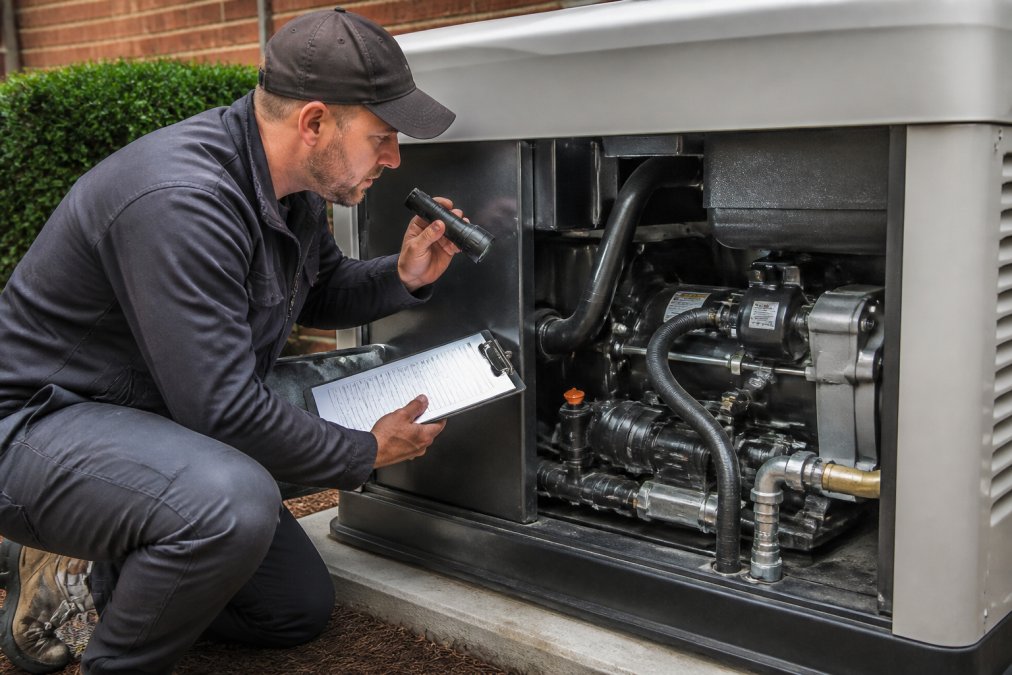
- Inspect fuel lines for cracks or stiffness
- Tighten fittings and replace worn clamps
- Check the fuel level and leave room for expansion
- Clear vents and the enclosure of debris
- Replace the air filter on schedule
- Test the regulator for hissing or corrosion
- Look for wet spots under the unit
- Run the unit under load and check for smells
Dual-Fuel and Propane Generators: What's Different
Dual-fuel and propane standby generators behave differently from gasoline and natural gas units in ways that change both how a leak smells and where to look for it, and this is where the most confusing calls come from.
Propane Settles, Natural Gas Rises
The key physical difference is vapor density. Propane is roughly 1.5 times heavier than air, so a propane leak sinks and pools in low spots: the enclosure base, a concrete pad depression, against a foundation wall, or in a nearby window well. Natural gas is lighter than air and dissipates upward, so you usually smell it near the regulator or at the roofline of a gas appliance.
Mercaptan Is the Same, the Concentration Is Not
Both propane and natural gas are odorized with mercaptan, the sulfur compound behind the rotten-egg smell. But propane is often odorized at a different concentration than pipeline natural gas, and some homeowners describe propane leaks as sweeter or more chemical. Do not rely on smell intensity to judge leak size, a small leak in a still, enclosed space can smell stronger than a larger leak outdoors.
Switching Fuels Introduces Its Own Risks
A dual-fuel generator running on either LP or natural gas has two fuel paths, two regulators, and a selector or orifice change determining which fuel the engine receives. Common failure points after a fuel switch:
- Wrong orifice or regulator setting. Running a unit set up for natural gas on propane (or vice versa) delivers the wrong air-fuel ratio and can produce a rich, fuel-heavy exhaust smell that mimics a leak.
- Residual fuel in the unused line. After switching from propane to natural gas, the LP line can hold vapor for some time. A faint smell at the LP regulator for a short period after a switch is not unusual; a smell that persists is.
- Cross-contamination at the selector. If the changeover valve does not seat fully, both fuel paths can see pressure. This is a technician-level diagnosis, not a homeowner fix.
- Sediment and oil in the LP line. Propane carries trace oils that can accumulate in the line and regulator over years. When they break loose, they can foul the regulator and produce both a smell and a performance problem.
What to Check on a Propane or Dual-Fuel Unit
- The tank itself: valves, the tank gauge, and the fill connection
- The first-stage regulator at the tank and the second-stage regulator at the unit
- The flexible connector between the regulator and the generator
- The selector valve or changeover assembly on dual-fuel models
- Low points in the fuel line run where propane vapor can collect
- The enclosure base and pad for pooling vapor
Why This Matters for Sizing and Runtime
Propane and natural gas carry different energy content per unit, which is why a dual-fuel generator is rated at two output figures, one on LP, one on NG. A unit correctly sized on natural gas may be slightly under-rated on propane, and running it at or above its LP rating for extended periods can stress the fuel system and increase the chance of a rich-running condition that smells like a leak.
When to Call a Licensed Technician
Call a licensed technician for any smell you cannot trace in a few minutes. Fuel pressure problems, regulator faults, and hidden line leaks need the right tools to find and fix.
Reach out right away if you notice:
- A smell that returns after you fix a fitting
- Hissing at the regulator or meter
- A leak near the fuel tank or gas line
- Any smell after a flood or storm damage
Frequently Asked Questions
Is it normal for a generator to smell like gas?
A faint gas odor right after startup or shutdown can be normal, especially with propane or natural gas units where a small amount of unburned fuel escapes. But a strong, persistent generator gas smell is not normal. It usually points to a fuel leak, a flooded carburetor, or a venting problem. If the odor lingers or you also see wet spots near fittings, shut the unit down and have it inspected.
How do I tell the difference between exhaust fumes and a raw fuel smell?
Exhaust fumes smell sharp, acrid, and slightly burnt, and they usually fade within a minute or two after the generator shuts off. Raw fuel smells like gasoline or the sulfur-like odorant added to natural gas and propane, and it tends to hang around or get stronger near the fuel tank, lines, or regulator. If the smell is strongest at a fitting or hose, treat it as a fuel leak until a technician proves otherwise.
What are the signs of a natural gas leak in a generator?
Watch for a rotten-egg or sulfur smell near the unit, hissing at the gas line or regulator, dead grass or discolored soil around buried lines, and unexplained headaches or nausea when you are nearby. On the gas meter, look for the dial moving when no appliances are running. If you notice any of these signs of a natural gas leak in generator equipment, leave the area, avoid flipping switches, and call your gas utility from a safe location.
How often should a standby generator be serviced to prevent fuel leaks?
Most manufacturers recommend a professional service visit once a year, plus oil and filter changes every 100 to 200 hours of run time or per the owner's manual. Use a standby generator maintenance checklist between visits: inspect fuel lines and fittings for cracks, check the air filter, look for corrosion on the regulator, and confirm the unit exercises weekly without a fuel odor. Annual service catches cracked lines and loose fittings before they turn into a leak.