 how-to
Signs Your Generator Needs Service
Table of Contents
- 8 Warning Signs Your Generator Needs Service
- Generator Maintenance Checklist for Preventative Care
- How Often Should a Home Generator Be Serviced
- DIY vs. Professional Repair: When to Call a Technician
- Best Home Energy Storage Systems as an Alternative
- Cost-Benefit Analysis: Repair Versus Replacement
- Frequently Asked Questions
Last Updated: September 20, 2026
8 Warning Signs Your Generator Needs Service
Your standby generator needs regular attention to perform when it matters most. At Generators of Nashville by Evolution Electric, we help homeowners in Middle Tennessee recognize when their backup power systems need professional care before a crisis hits.
Catching warning signs early prevents complete failure during an outage. Below are the eight most common indicators that your generator needs service.
Unusual Noises or Vibrations
Grinding, knocking, or squealing noises signal internal wear, loose components, bearing degradation, damaged fan blades, or misaligned parts. Vibrations that shake the unit can damage housing and loosen electrical connections. If your generator sounds different than before, contact a professional technician for a diagnostic inspection.
Difficulty Starting or Delayed Startup
If your generator hesitates, cranks slowly, or fails to start, the startup cycle is breaking down. Common causes include weak battery terminals, stale fuel, worn spark plugs, or corroded electrical connections. Delayed startup during an outage can leave your home without power for critical minutes. A professional service will test your battery, inspect fuel quality, and verify electrical connections.
Fluctuating or Inconsistent Power Output
If lights flicker or appliances cycle on and off, your generator's voltage regulation is failing. Causes include alternator degradation, improper transfer switch engagement, insufficient power capacity, or corroded wiring. Inconsistent power damages electronics and shortens appliance lifespans. If you notice these issues, your system needs immediate service.
Excessive Fuel Consumption
Excessive fuel consumption signals mechanical problems: engine degradation, misfiring spark plugs, clogged air filters, fuel leaks, or low oil levels. Track fuel usage over time. If consumption increases noticeably for the same runtime, schedule a professional inspection.
Visible Leaks and Corrosion
Look for fluid pooling, oil leaks, coolant leaks, fuel leaks, and rust or corrosion on battery terminals and connections. Corrosion reduces electrical conductivity and weakens startup. Fuel or oil leaks create fire hazards and environmental risks. Visible leaks require immediate professional attention.
Smoke, Exhaust Fumes, or Carbon Monoxide Concerns
Smoke or unusual fumes indicate serious problems: oil burning from worn piston rings, fuel system issues, overheating, or electrical short circuits. Carbon monoxide is invisible and deadly, never run a generator indoors (the CDC). If exhaust smells different or the unit runs hot, stop using it immediately and call a professional.
Frequent Error Codes or Alerts
Error codes signal low oil pressure, high temperature, electrical faults, battery voltage issues, or fuel system problems. Never ignore them, they alert you before complete failure. Write down the code and contact a professional to interpret and repair it.
Corroded or Frayed Wiring and Battery Terminals
Inspect wiring and battery connections for corrosion, fraying, loose cables, burn marks, and rust. Corroded wiring weakens electrical current and reduces startup reliability. Battery terminals with heavy corrosion should be cleaned or replaced immediately.
Generator Maintenance Checklist for Preventative Care
Follow a preventative maintenance schedule to catch small problems before they become expensive failures.
Monthly: Check oil level, inspect battery terminals, look for leaks, listen for unusual noises, verify clean fuel, check housing for debris, test transfer switch operation.
Quarterly: Replace or clean air filter, run under load for 20-30 minutes, inspect wiring, check coolant levels, verify battery voltage.
Annual professional service: Fluid analysis and replacement, spark plug inspection, load bank testing, electrical system inspection, battery health testing, fuel system cleaning.
How Often Should a Home Generator Be Serviced
A standby generator should receive professional service at least once per year, depending on climate, usage patterns, and seasonal stress.
Standard Service Intervals by Usage Pattern:
Heavy-use environments (frequent outages, weekly or monthly testing) need service every 6 months. After 200-300 hours of runtime, internal components degrade noticeably.
Moderate-use situations (occasional outages, monthly testing) typically need annual service, the standard recommendation for most homeowners.
Light-use scenarios (rare outages, minimal testing) can extend to 18-month intervals, but annual service is safer due to fuel degradation, battery self-discharge, and oil oxidation.
Seasonal Service Timing and Warning Signs:
Fall (September-November), Winterization Preparation:
Winter (December-February), High-Demand Monitoring:
Spring (March-May), Post-Winter Assessment:
Take our 60-second quiz for a free quote today! →
Summer (June-August), Heat Stress and Efficiency Monitoring:
DIY vs. Professional Repair: When to Call a Technician
Not every warning sign requires the same response. The key is distinguishing between symptoms you can safely investigate yourself and red flags that demand immediate professional intervention. Below is a diagnostic framework tied to the warning signs covered earlier.
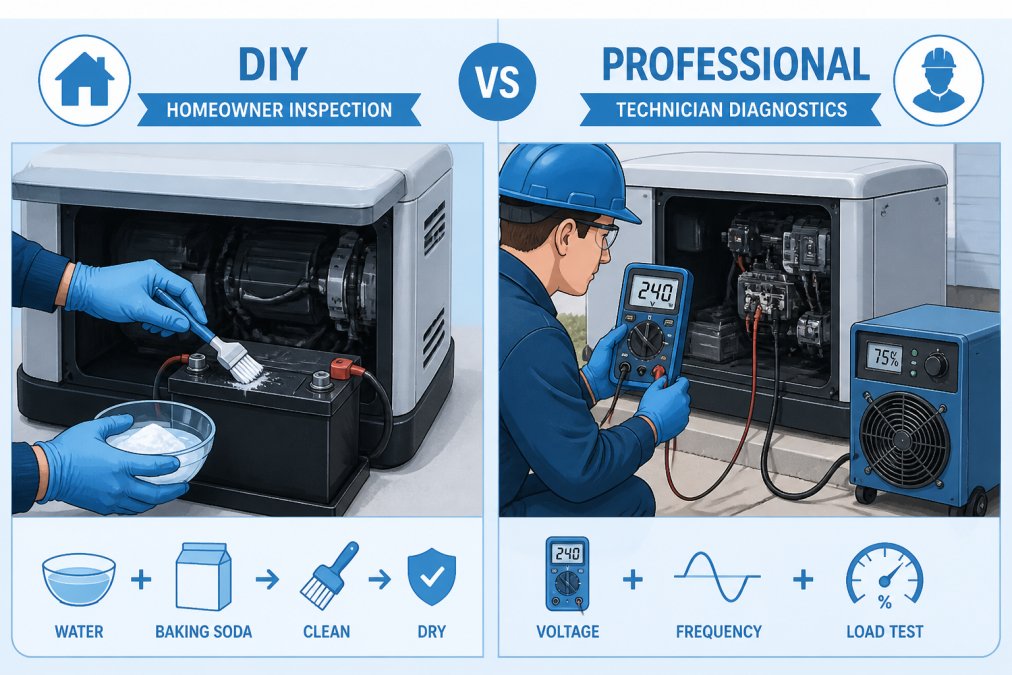
Symptoms Safe for Homeowner Inspection:
If you notice visible leaks or corrosion, you can perform an initial assessment:
- Check oil level with the dipstick (engine off and cool)
- Clean battery terminals with a wire brush and baking soda solution
- Inspect wiring for obvious fraying or burn marks
- Look for pooling fluids and note their color (oil is dark brown, coolant is bright green or orange, fuel is clear)
If you notice excessive fuel consumption, you can track usage:
- Record fuel level before and after a 30-minute test run at the same load
- Compare consumption against your generator's manual specifications
- Check that the air filter isn't visibly clogged (replace if dirt blocks light)
If you notice unusual noises, you can perform a listening test:
- Run the generator in daylight with no load
- Listen for the baseline hum (should be steady and consistent)
- Note whether grinding, squealing, or knocking occurs at startup, during load, or continuously
- Document when the noise started and whether it's getting worse
Symptoms Requiring Immediate Professional Service:
If you notice difficulty starting or delayed startup, do not attempt repairs:
- Weak battery connections can be cleaned, but internal starter motor failure requires specialized tools
- Stale fuel requires professional fuel system flushing (not a DIY task)
- Spark plug replacement involves engine disassembly and proper gap settings
- Call a technician immediately if the generator fails to start after three attempts Persistent ignition issues often indicate that the underlying power distribution system is failing, necessitating a professional assessment of whether your home requires electrical panel replacement.
If you notice fluctuating or inconsistent power output, stop using the generator:
- Voltage regulation failures can damage home electronics and appliances
- Transfer switch problems create electrocution hazards
- Load testing requires a load bank (specialized equipment costing $2,000-$5,000)
- Do not attempt to diagnose this yourself; call a professional for a multimeter test
If you notice smoke, exhaust fumes, or unusual odors, shut down immediately:
- Oil burning inside the engine (blue or white smoke) indicates piston ring failure
- Electrical burning smells signal short circuits or component failure
- Carbon monoxide is invisible and deadly, never run a generator indoors
- Do not restart the unit; call a technician before any further operation
If you notice frequent error codes or alerts, write down the code and contact a professional:
- Error codes are manufacturer-specific diagnostic messages
- Common codes include low oil pressure (requires oil analysis), high temperature (cooling system failure), and alternator faults (electrical diagnosis needed)
- Clearing codes without addressing the root cause will cause them to reappear
- A technician with the manufacturer's code manual can interpret and fix the underlying problem
If you notice corroded or frayed wiring, assess the severity:
- Light surface corrosion on battery terminals can be cleaned with baking soda and water
- Heavy corrosion (thick white or green crust) requires terminal replacement by a professional
- Frayed wire insulation anywhere on the unit is a fire and electrocution hazard, do not attempt repair
- Burn marks on connectors indicate previous arcing and require professional inspection
The Safety Rule:
Best Home Energy Storage Systems as an Alternative
If your generator is aging or requires frequent repairs, a battery-based backup system might be a better long-term solution. Modern energy storage systems like the EcoFlow Smart Home Panel, Anker SOLIX F2000, and Jackery Solar Generator 3000 Pro offer advantages over traditional fuel-based generators.
Battery systems eliminate many common service issues:
- No spark plugs or air filters to replace
- No fuel to degrade or contaminate
- No oil changes or coolant leaks
- No startup delays or engine wear
- Quiet operation with no exhaust fumes
- Built-in monitoring that alerts you to problems
Cost-Benefit Analysis: Repair Versus Replacement
Deciding whether to repair or replace an aging generator requires honest assessment of repair costs, remaining lifespan, and reliability needs.
Consider repair if:
- The generator is less than 10 years old
- Repair costs are under 50% of replacement cost
- The unit has been well-maintained
- You have no immediate plans to replace it
- The repair addresses a single, isolated problem
Consider replacement if:
- The generator is over 15 years old
- Repair costs exceed 50% of a new unit's price
- Multiple components are failing simultaneously
- You're experiencing frequent service needs
- The unit no longer meets your home's power demands
- You want to upgrade to a more efficient or quieter model
Frequently Asked Questions
How often should a home generator be serviced?
Most standby generators require professional service annually or every 100-200 operating hours, whichever comes first. If your generator runs frequently during outages, you may need service more often. Check your manufacturer's recommendations and service interval guidelines. Regular preventative maintenance prevents costly mechanical failures and ensures your backup power system operates reliably when you need it most.
Can I perform generator maintenance myself, or do I need a professional?
Basic checks like inspecting oil levels, air filters, and battery terminals can be done by homeowners. However, professional technicians should handle electrical diagnostics, load testing, and transfer switch inspections. If you notice error codes, unusual vibrations, or startup delays, contact a licensed professional immediately. Professional service ensures compliance with electrical codes and identifies issues DIY inspections might miss.
What is the most common problem with generators?
Fuel system degradation and startup failure are among the most common issues. Stale fuel, clogged fuel filters, and spark plug fouling prevent reliable engine performance. Regular preventative maintenance, including fuel stabilization and filter replacement, prevents these problems. Other frequent issues include battery terminal corrosion, voltage regulation problems, and worn alternator components that reduce power output stability.
What are the best home energy storage systems as an alternative to fuel-based generators?
Battery-based systems like EcoFlow, Anker SOLIX, and Jackery offer low-maintenance backup power without fuel concerns. These systems integrate with solar arrays for renewable charging and provide smart monitoring through mobile apps. They eliminate exhaust fumes and carbon monoxide risks, making them ideal for remote workers and families prioritizing clean energy. Choose based on capacity needs, runtime requirements, and whether you want portable or whole-home solutions.