 how-to
Residential Generator Permits in Tennessee: A Step-by-Step Guide
Table of Contents
- Do You Need a Permit for a Residential Generator Installation?
- Understanding Standby Generator Electrical Permit Requirements in Tennessee
- Generator Gas Line Permit Requirements in Tennessee
- How to Apply for Your Generator Installation Permit
- Generator Installation Inspection Requirements and Timeline
- Generator Permit Cost and Installation Fees in Tennessee
- Common Mistakes to Avoid During the Permit Process
- Frequently Asked Questions
Last Updated: October 20, 2026
Do You Need a Permit for a Residential Generator Installation?
Yes. Most residential generator permits in Tennessee are required for installations. The specific permits depend on the type of generator and the work involved.
Whole-home standby generators vs. portable generators
The permit requirement differs sharply based on generator type. Standby generators that connect permanently to your home's electrical system and fuel supply need permits. Portable generators that you move between locations typically do not.
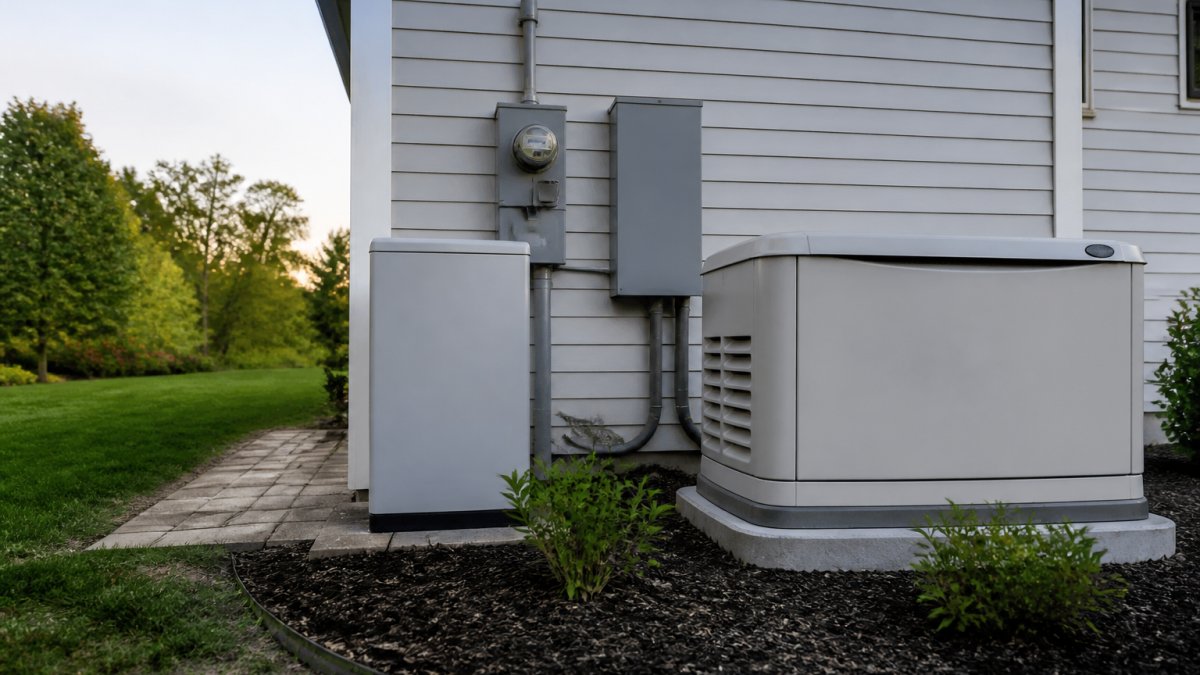
Standby generators are hardwired into your home, connecting to your electrical panel through a transfer switch and to a natural gas line or propane tank. This permanent installation triggers electrical, gas, and building permits in most jurisdictions.
Portable generators are temporary: you plug them in when needed and disconnect when the outage ends.
The key distinction: if the generator stays connected to your home's systems, you need permits. If it's truly portable and temporary, you likely don't, but check your local code first.
Understanding Standby Generator Electrical Permit Requirements in Tennessee
Your standby generator requires an electrical permit before installation. This permit covers the transfer switch, the new wiring, and any upgrades to your electrical panel.
The transfer switch is the critical component. It automatically disconnects your home from the utility grid when the generator kicks in, protecting utility workers from backfeed. Without one, your generator becomes a serious safety hazard.
New wiring runs from the generator to the transfer switch to your electrical panel. This wiring must meet code requirements for gauge, routing, and protection.
Many homes also need electrical panel upgrades. If your panel is full or outdated, the electrician adds a subpanel or replaces the main panel. This work also requires a permit and inspection.
At Generators of Nashville by Evolution Electric, we handle all electrical permitting as part of the installation process. Our licensed electricians know the specific requirements across Middle Tennessee jurisdictions and ensure every connection meets code.
Generator Gas Line Permit Requirements in Tennessee
Natural gas or propane connections require a separate gas permit. This covers the fuel line from the utility connection (or propane tank) to the generator.
The gas line must be properly sized for the generator's fuel consumption, too small starves the generator of fuel, too large wastes material and money. The permit application includes the line size, material, and routing.
Gas lines must also be protected from damage. Buried lines need marking and proper depth. Above-ground lines need protection from weather and mechanical damage. The permit inspector checks that the installation prevents leaks and accidental damage.
If you're connecting to the municipal gas line, the utility company coordinates with the permitting process. If you're using a propane tank, its placement and connection must also meet code, including specific setback requirements from buildings and property lines.
How to Apply for Your Generator Installation Permit
Tennessee does not issue a single statewide residential generator permits in Tennessee through one unified process.
Step 1: Identify your AHJ
Start with the city or county where the property sits; unincorporated areas fall to the county. Call the department and ask three questions:
- Does your office issue the electrical permit for a standby generator, or does a separate electrical inspection bureau (such as a municipal electrical inspection division) handle it?
- Is a separate gas or fuel-gas permit required for a natural-gas or propane connection, and who issues it?
- Do you require a building or zoning permit for the generator pad, setbacks, or noise?
If your area has no local building department, the Tennessee Fire Marshal's codes enforcement division may handle adopted statewide codes. Verify current contact information and jurisdiction on the state website before submitting.
Tennessee Department of Commerce & Insurance, Fire Marshal codes and permits
Step 2: Assemble the application package
Most Tennessee AHJs want the same core documents. Build this checklist before you call:
- Completed permit application (electrical and, if applicable, gas/building)
- Property owner authorization or contractor letter of authorization
- Generator cut sheet: model, kW rating, fuel type, and manufacturer installation instructions
- Electrical one-line or riser diagram showing the transfer switch, service panel, grounding electrode conductor, and any panel upgrade
- Load calculation (Article 220 of the National Electrical Code, as adopted locally) supporting the generator and transfer-switch sizing
- Fuel-gas piping diagram showing meter or tank location, line size, material, and routing
- Site plan with generator footprint, clearances to windows, doors, property lines, and the fuel source
- Contractor license and insurance information (see Step 3)
Your electrician or installer normally prepares the electrical and gas drawings. Ask for a copy of everything submitted so you can track revisions.
Step 3: Confirm contractor licensing and scope
Tennessee requires electrical contractors to be licensed by the Tennessee Board for Licensing Contractors; fuel-gas work is typically done by a licensed plumber or gas fitter under local rules. Confirm license numbers are active before work begins.
Tennessee Board for Licensing Contractors, verify a license
Step 4: Submit, pay, and track
Take our 60-second quiz for a free quote today! →
Submit the complete package in one pass, incomplete submittals are the most common cause of delay.
Step 5: Sequence the work to the inspection schedule
A typical sequence in Tennessee jurisdictions:
- Permit issued.
- Electrical rough-in: transfer switch mounted, wiring run, panel work complete but not energized.
- Gas rough-in: line installed and pressure-tested.
- Rough inspections (electrical and gas), often combined or scheduled back-to-back.
- Generator set and final connections.
- Final electrical and gas inspections.
- Utility approval to energize, if the service was altered.
Generator Installation Inspection Requirements and Timeline
Inspections are where most generator projects lose time. Knowing what the inspector looks for, and what commonly fails, keeps the schedule on track. Tennessee AHJs generally follow the locally adopted National Electrical Code (NFPA 70) and the International Fuel Gas Code or International Residential Code for fuel-gas work.
What the electrical rough inspection covers
- Transfer switch: correct type (service-rated or non-service-rated as designed), mounting height, working clearance, and labeling
- Wiring methods: conductor type, support intervals, protection from physical damage, and box fill
- Grounding and bonding: grounding electrode conductor sizing, bonding of the generator frame, and separation of grounded and grounding conductors where required
- Panel work: breaker sizing, busbar rating, and whether a panel upgrade or subpanel is properly permitted
What the gas rough inspection covers
- Line sizing against the generator's Btu input at the available pressure
- Pipe material and joining method approved for the application
- Support, protection, and burial depth for underground runs
- Pressure test: the inspector witnesses or reviews the test record; typical test pressure and duration are set by the adopted fuel-gas code
- Sediment trap, shutoff valve, and connector at the appliance
- Propane tank setbacks from the structure, property line, and ignition sources
What the final inspection covers
- Generator running under load and transferring automatically
- Transfer switch operation and neutral/ground configuration
- Clearances around the generator and exhaust termination
- Labeling of disconnects and the transfer switch
- Carbon monoxide alarm placement per the adopted code
- Removal of construction debris and confirmation that the pad and anchoring match the approved plan
Common failure points and how to avoid them
- Missing or undersized grounding electrode conductor at the generator
- Transfer switch not listed for the service configuration (service-entrance vs. standby)
- Gas line pressure test not documented or not witnessed
- Exhaust terminating under a window, deck, or air intake
- Generator pad too close to the property line or not anchored per manufacturer instructions
- Panel label not updated to show the generator and transfer switch
Timeline expectations
Scheduling varies by department; in many Tennessee jurisdictions inspectors are booked several business days to two weeks out, and urban departments run longer during peak season. Request rough inspections immediately after rough-in and the final as soon as the generator is set and tested. Do not energize the system or remove the lockout until the final passes and, where the service was altered, the utility approves reconnection.
Generator Permit Cost and Installation Fees in Tennessee
Permit fees and installation costs vary widely based on your home's electrical system, generator size, and local labor rates.
Electrical permits usually cost between $100 and $400, gas permits add $50 to $150, and building permits for site preparation or structural work add more. Contact your local building department for exact fees.
Installation labor depends on the work required: a home with an empty electrical panel and accessible gas line costs less than one needing panel upgrades or trenching.
The generator itself is a separate cost from installation and permits. Pricing depends on the brand, model, and fuel type. Discuss total project cost with your installer before starting work.
At Generators of Nashville by Evolution Electric, we provide a free quote that includes all costs, the generator, installation labor, permits, and inspections. Our 60-second quiz helps us understand your home and power needs, so the quote is accurate and personalized.
Common Mistakes to Avoid During the Permit Process
Skipping the permit process is the biggest mistake.
Underestimating generator size is another common mistake.
Hiring an unlicensed electrician to save money creates code violations. Unlicensed work fails inspection and must be redone by a licensed electrician, so you pay twice.
Delaying inspections causes problems. Wait weeks to schedule one and you can't use the generator legally; if something fails before inspection, you're liable for damage.
Not checking local code variations before starting is a trap. Permit requirements, gas line setbacks, electrical panel requirements, and noise limits differ between Nashville, suburban counties, and rural areas.
Residential generator installation in Tennessee requires planning, permits, and professional installation. The process protects your home, your family, and your investment, and licensed professionals ensure your system performs when you need it most.
At Generators of Nashville by Evolution Electric, we manage the entire permitting process for you. Take our 60-second quiz today to receive a free, personalized quote for your whole-home backup system.
Frequently Asked Questions
Do I need a permit to install a residential generator in Tennessee?
Yes. Whole-home standby generators require electrical permits, building permits, and often gas or fuel-line permits depending on your fuel source and local jurisdiction. The Tennessee Building Code and the National Electrical Code (NEC) mandate permits for permanent generator installations to ensure safety, code compliance, and proper utility connection. Portable generators for temporary use typically do not require permits, but permanent installations must go through the local building department approval process.
What is the difference between a standby generator electrical permit and a gas line permit in Tennessee?
An electrical permit covers the transfer switch, electrical panel upgrades, wiring, and connection to your home's electrical system. A gas line permit covers the natural gas or propane fuel line running from your utility connection or tank to the generator. If your generator runs on propane or natural gas, you need both permits. Diesel or liquid-propane-only generators may require different permitting. Your local building department determines which permits apply based on your specific installation and fuel type.
How much does a residential generator permit cost in Tennessee?
Permit costs vary by county and municipality. Total permit fees are separate from installation costs. Contact your local building department or county permit office for exact fees, as they differ across Middle Tennessee jurisdictions. A licensed contractor can provide an estimate that includes all applicable permit costs.
What happens during a generator installation inspection in Tennessee?
An inspector verifies that your transfer switch, electrical panel, wiring, and fuel connections meet code. They check that the generator is properly grounded, the automatic transfer switch is correctly installed, electrical work is performed by a licensed contractor, gas piping is secure and compliant, and the installation matches your approved permit drawings. Inspections typically occur after installation is complete. A passing inspection results in final approval and a certificate of compliance. Failed inspections require corrections before resubmission.