 comparison
GenFellas Alternative for Backup Power: 2026 Guide
Table of Contents
- Quick Comparison: Backup Power Options at a Glance
- Home Battery Backup vs Standby Generator: Which Fits Your Home?
- Who Installs Generac in Tennessee? What to Look For
- Portable Power Stations and Solar Generators for Essential Loads
- Installation and Electrical Requirements for Backup Power
- 10-Year TCO: What Backup Power Really Costs
- Zoning, HOA Rules, and Smart Home Integration
- Sizing Guide: Match Wattage to Your Appliance Loads
- Frequently Asked Questions
Last Updated: September 22, 2026
Quick Comparison: Backup Power Options at a Glance
If you're searching for a GenFellas alternative for backup power, the right system depends on your home's wattage needs, fuel situation, and expected outage length. This guide from Generators of Nashville by Evolution Electric breaks down the trade-offs between home battery backup, standby generators, and portable power stations. Backup power is any system that keeps your home's critical circuits running when the grid fails, a fuel-burning generator, a battery storage system, or a hybrid of both.
| Option | Fuel Source | Runtime | Noise | Maintenance |
|---|---|---|---|---|
| Standby generator | Natural gas or propane | Unlimited while fueled | Loud | Annual service |
| Home battery backup | Grid or solar charging | Hours to days | Near-silent | Maintenance-free |
| Portable power station | Battery | Hours | Silent | Minimal |
| Solar generator | Sun plus battery | Depends on sun | Silent | Minimal |
Home Battery Backup vs Standby Generator: Which Fits Your Home?
The choice between a home battery backup and a standby generator comes down to runtime versus convenience. A standby generator runs indefinitely while fuel flows; a battery system runs silently and needs no fuel. Middle Tennessee homeowners facing extended ice storm outages often lean toward fuel, while those wanting clean, quiet power for shorter events lean toward batteries.
Standby Generators: How They Work and What They Cost
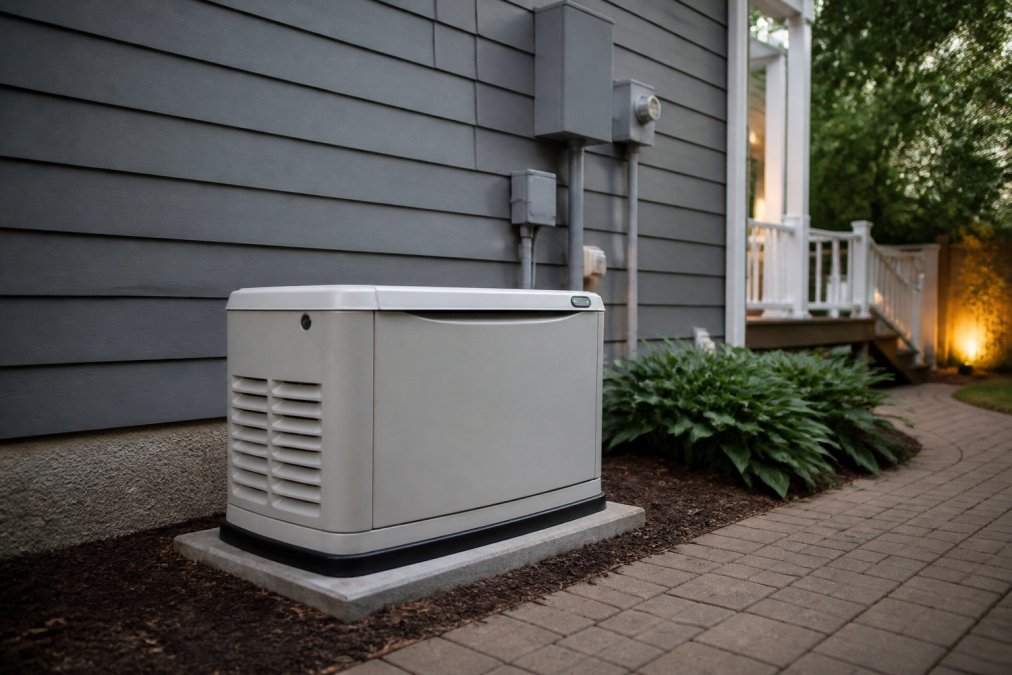
A standby generator is permanently installed, runs on natural gas or propane, and kicks on automatically through an automatic transfer switch. Trade-offs include annual engine maintenance, fuel logistics, and carbon monoxide risk if placed poorly.
Home Battery Systems: Silent, Clean, and Maintenance-Free
Battery storage systems store energy from the grid or solar and discharge it during an outage. EcoFlow's whole-home backup system uses modular capacity, with fast solar or AC charging. Anker SOLIX offers scalable capacity with app-based monitoring. Determining the long-term financial viability of solar battery storage requires a careful assessment of how these systems offset rising utility rates over time.
Who Installs Generac in Tennessee? What to Look For
Anyone asking who installs Generac in Tennessee should prioritize licensed electricians with a documented installation history, not just a low bid. Generators of Nashville by Evolution Electric has served Middle Tennessee since 2014 as an authorized installer of Generac, EcoFlow, Anker SOLIX, and Jackery systems, and offers E4G whole-home backup power systems.
Portable Power Stations and Solar Generators for Essential Loads
Portable power stations and solar generators cover essential loads without permanent installation, handling refrigerators, Wi-Fi routers, medical devices, and phone charging during short outages. A solar generator pairs a battery with panels for renewable backup that recharges without fuel.
Installation and Electrical Requirements for Backup Power
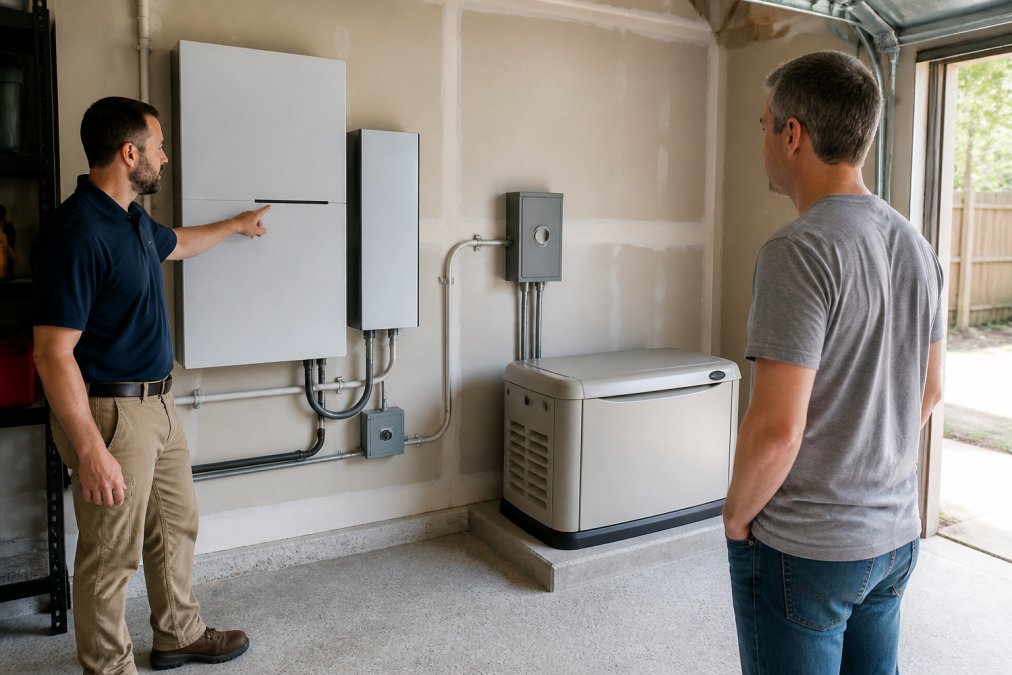
Permanent installation requires an automatic transfer switch, proper generator inlet wiring, and a permit in most jurisdictions. Wattage, amperage capacity, and voltage regulation all factor into whether a system safely carries your load. A qualified electrician sizes the transfer switch to your panel and confirms code compliance.
10-Year TCO: What Backup Power Really Costs
Sticker price is the least useful number in backup power. What matters is total cost of ownership (TCO) over the equipment's life, and almost no comparison guide does this math. Here's how to build it yourself so you can compare a standby generator, a home battery, and a portable power station on the same 10-year footing.
The five cost buckets
Every backup power option draws from the same five buckets; the difference is how much lands in each.
- Upfront equipment and installation, unit, transfer switch or inlet, permit, labor, and any concrete pad, gas line, or panel upgrade.
- Fuel or charging energy, natural gas, propane, gasoline, or grid/solar electricity consumed during outages and, for batteries, standby parasitic draw.
- Routine maintenance, oil, filters, spark plugs, load testing, and inspection visits.
- Replacement and degradation, battery capacity fade and eventual cell replacement; generator part wear (battery, belts, control board, alternator).
- Soft costs, HOA approvals, noise mitigation, insurance riders, and downtime during service.
How the buckets differ by system
Standby generator. Upfront cost is moderate; ongoing cost is dominated by fuel and annual service. A propane or natural-gas unit runs continuously while fueled, so a multi-day outage consumes meaningful fuel volume. Annual maintenance isn't optional, most manufacturers condition the warranty on it. Expect at least one significant repair in a 10-year window, and plan for the unit to be near or past its typical service life by year 10-15.
A simple TCO worksheet
You don't need a spreadsheet full of guesses. Use this structure and fill in your own quotes:
| Cost bucket | Standby generator | Home battery | Portable / solar generator |
|---|---|---|---|
| Equipment + install (one-time) | $ | $ | $ |
| Fuel or charging energy (10 yr) | $ | $ | $ |
| Maintenance (10 yr) | $ | $ | $ |
| Replacement / degradation (10 yr) | $ | $ | $ |
| Soft costs (permits, HOA, insurance) | $ | $ | $ |
| 10-year total | $ | $ | $ |
Two rules make the comparison honest:
- Count the outages you actually get, not the worst case. If your grid is reliable and you lose power a few hours a year, fuel and cycle costs are small and the battery's higher upfront cost is harder to justify. If you routinely lose power for days, the generator's unlimited runtime earns its keep.
- Discount nothing, but don't ignore residual value. A battery with remaining capacity at year 10 still has value; a generator at end of life does not.
The pattern most homeowners miss
The upfront gap between a battery and a generator narrows once you load fuel, annual service, and at least one major repair into the generator column, and narrows further if you charge the battery from solar you already own. Conversely, if you rarely lose power, the battery's zero-fuel, zero-maintenance profile is a convenience premium, not a savings play.
Zoning, HOA Rules, and Smart Home Integration
Zoning codes and HOA rules can block or delay installation, so check before you buy. Many HOAs restrict generator placement, setback distances, and noise levels, often favoring near-silent battery systems. Smart home integration matters too: app-monitored batteries let you track energy storage capacity and discharge rate in real time.
Sizing Guide: Match Wattage to Your Appliance Loads
The most common sizing mistake is buying for the biggest appliance in the house instead of the loads you actually need during an outage. Sizing is a three-step calculation: list your critical loads, separate running watts from surge watts, and match the total to your system's continuous and peak output.
Step 1: Running watts vs. surge watts
Every appliance has two numbers that matter:
- Running watts, what it draws steadily once it is on.
- Surge (starting) watts, the brief spike when a motor or compressor kicks on. Surge can be several times running watts for motor-driven loads like refrigerators, well pumps, furnace blowers, and air conditioners.
Your system must cover running watts continuously and surge watts momentarily. A generator or battery that meets your running total but not your surge total will trip every time the compressor starts.
Step 2: Typical running watts for common loads
Use these as planning estimates and confirm against your appliances' nameplates, the label is always the authority.
| Appliance | Typical running watts | Surge consideration |
|---|---|---|
| Refrigerator | 150-400 | High surge on compressor start |
| Freezer | 200-400 | High surge on compressor start |
| Furnace blower (gas furnace) | 300-800 | Moderate surge |
| Window AC unit | 500-1,500 | High surge |
| Central AC | 3,000-5,000+ | Very high surge; often needs whole-home sizing |
| Sump pump | 800-1,200 | High surge |
| Well pump | 1,000-2,000+ | Very high surge |
| Wi-Fi router / modem | 10-30 | Negligible |
| Laptop | 50-100 | Negligible |
| Phone charging | 5-20 | Negligible |
| LED lights (each) | 5-15 | Negligible |
| TV | 100-200 | Negligible |
| Medical device (CPAP, etc.) | 30-200 | Varies by device |
| Microwave | 1,000-1,500 | Moderate surge |
| Space heater | 1,000-1,500 | Moderate surge |
Step 3: Build your load list and total it
- List every appliance you must keep running. Be ruthless, this is the critical-load list, not the whole-house list.
- Write down running and surge watts for each. Nameplate first, table above as fallback.
- Add all running watts for your continuous load.
- Find your peak surge by taking the highest single surge wattage and adding it to the running total of everything else on at the same time.
- Add a safety margin, most practitioners size to about 20% above the calculated peak.
- Match that number to your system's continuous and peak output, and confirm the transfer switch or inlet is rated for the amperage.
Worked example: a modest critical-load panel
A homeowner wants to keep the essentials running during a multi-day outage:
- Refrigerator: 300 running / 1,200 surge
- Furnace blower: 600 running / 1,200 surge
- Sump pump: 1,000 running / 2,500 surge
- Wi-Fi router: 20 running
- Six LED lights: 60 running
- Phone and laptop charging: 100 running
What this means for system choice
- Portable power station / solar generator, fits the modest critical-load example above, and the right entry point for renters or anyone not ready for a permanent install. Limitation: most portable units won't run central air conditioning.
- Home battery backup, handles critical loads silently and scales toward whole-home with additional capacity modules.
- Standby generator, the choice when your load list includes central AC, a well pump, or anything you need to run indefinitely.
For a precise whole-home sizing, the National Fire Protection Association and local code officials set the standards your installer must follow. If you want a system sized to your actual loads rather than a guess, Generators of Nashville by Evolution Electric offers a free quote through a 60-second quiz.
Frequently Asked Questions
What are some alternatives to using a generator for backup power?
Home battery systems from EcoFlow and Anker SOLIX store energy and release it during outages without fuel or engine noise. Solar generators pair panels with battery storage for renewable backup. Portable power stations handle essentials like Wi-Fi and refrigerators. For whole-home coverage, a professionally installed battery system with an automatic transfer switch is the closest alternative to a standby generator.
How do home battery systems compare to traditional standby generators?
Battery systems run near-silent, need no fuel, and have no carbon monoxide risk. Standby generators like Generac units run on natural gas or propane and can power heavy loads such as HVAC for days, but require maintenance and produce emissions. The home battery backup vs standby generator decision often comes down to outage length, budget, and whether you want clean energy or unlimited runtime.
Who installs Generac in Tennessee, and what should I look for?
Licensed electricians with generator experience handle Generac installation, including the automatic transfer switch and generator inlet. Look for a company with a local service history, proper permits, and clear warranty terms. Generators of Nashville by Evolution Electric has installed Generac systems across Middle Tennessee since 2014 and offers a free quote to confirm sizing and code compliance.
Are portable power stations sufficient for whole-home backup?
Portable power stations cover essentials: refrigerator, internet router, phone charging, and a few lights. They rarely run central AC, electric water heaters, or well pumps. For whole-home backup, pair a portable unit with a transfer switch or step up to a permanent battery or standby generator sized to your wattage requirements.
Backup power decisions get complicated fast once fuel logistics, permits, and long-term costs enter the picture. Generators of Nashville by Evolution Electric takes the guesswork out with licensed electricians, authorized installation of Generac, EcoFlow, Anker SOLIX, and Jackery systems, and E4G whole-home backup options. Get started with Generators of Nashville by Evolution Electric and take the 60-second quiz for a free, personalized quote.