 how-to
GenerLink Installers Near Me: What to Know Before You Hire
Table of Contents
- How to Find GenerLink Installers Near You
- GenerLink Utility Approval: What Your Power Company Requires
- GenerLink Installation Cost: What Drives the Price
- Portable Generator Transfer Switch Installation Basics
- GenerLink vs Transfer Switch: Which Fits Your Home?
- Choosing and Vetting Qualified GenerLink Installers
- Frequently Asked Questions
Last Updated: October 17, 2026
How to Find GenerLink Installers Near You
The fastest way to find GenerLink installers near you is to start with GenerLink's dealer locator, then confirm each candidate's license and utility experience before you call.
A GenerLink installer is a licensed electrician authorized to mount a GenerLink meter-mounted transfer switch between your utility meter and your electrical panel.
At Generators of Nashville by Evolution Electric, we've handled backup power installations across Middle Tennessee since 2014.
Most guides treat "find an installer" as a search problem.
Below, we walk through exactly what to check, what drives the price, and how to compare GenerLink against a conventional transfer switch.
What to Verify Before You Call
Run every candidate through this checklist before you book anything:
- Active state electrical license number you can look up yourself
- Confirmation they have installed GenerLink units before, not just generators
- Knowledge of your specific utility's interconnection requirements
- Written scope of work covering permit, meter pull, and inspection
- Proof of liability insurance and workers' compensation
- Local permit history in your county or city
- Written quote with labor, materials, and permit fees itemized
- Clear answer on who handles the utility application
That last item matters most. If the installer says "you handle the utility paperwork," ask how many times they've walked a homeowner through it.
GenerLink Utility Approval: What Your Power Company Requires
GenerLink approval is not automatic or uniform. Your utility must confirm the device fits its metering setup and meets its interconnection rules before power flows. Skipping this step stalls installations for weeks.
The requirements vary by utility, but the categories are predictable:
- Approved device listing. The utility checks that the GenerLink model matches your meter type and service configuration. Your installer should point to the exact model that matches your socket.
- Licensed installer. Most utilities require a licensed electrical contractor to perform and sign off on the work. Some also require the contractor to be on the utility's approved-contractor list before they will accept an application.
- Permit and inspection. Local building departments typically require an electrical permit, and the utility wants proof of inspection before reconnecting. The inspection is usually a third-party electrical inspection, not a utility inspection.
- Interconnection application. Some utilities want a formal application and review before the meter is pulled. Others handle it as a service-order work request. The difference matters because an application can add review time that a work order does not.
How to Verify Compatibility Before You Book
Before you sign anything, confirm four things in writing:
- Meter form and service type. GenerLink units are built for specific meter forms (for example, a 200-amp overhead service with a particular socket configuration). Ask the installer to confirm your meter form matches the unit they plan to install. If they cannot tell you the form number, they have not looked.
- Panel and service capacity. The device sits between the meter and the panel, so the service entrance must be in condition to accept it. A panel with known bus damage, a double-tapped main, or an undersized service may need correction first.
- Utility approved-device list. Ask your utility whether GenerLink is on its approved list for your service type. If the utility has no list, ask what review process it uses for meter-mounted transfer equipment.
- Local amendment or ordinance. Some jurisdictions adopt local amendments to the electrical code that affect meter-side equipment. Your building department can confirm whether any apply.
What the Interconnection Application Usually Contains
When a utility requires a formal application, the packet typically includes the property address and account number, the GenerLink model and serial number, the contractor's name and license number, the permit number, the generator type and running wattage, and a one-line diagram or cut sheet. Your installer should assemble this, not you.
When Your Utility Has No GenerLink Precedent
In smaller municipal utilities and rural electric cooperatives, no one on staff may have reviewed a GenerLink application before. That doesn't mean rejection, but the review takes longer and may generate questions.
GenerLink's manufacturer publishes compatibility information and a network of authorized dealers, and your utility's interconnection page is the authoritative source for local rules.
Get the utility's requirement in writing before anyone touches the meter. It takes one phone call and prevents the most common scheduling disaster.
GenerLink Installation Cost: What Drives the Price
GenerLink installation cost depends on your service panel, meter configuration, permit fees, and whether the utility requires added work. Any contractor who quotes before seeing your setup is guessing.
Here's what actually moves the price:
| Cost Driver | What It Means | Effect on Price |
|---|---|---|
| Service panel condition | Age, capacity, and code compliance of your existing panel | Older panels often need upgrades first |
| Meter location | Distance and access between meter, panel, and generator hookup | Difficult access adds labor |
| Permit and inspection fees | Set by your local building department | Fixed, varies by jurisdiction |
| Utility coordination | Application review, meter pull, reconnect scheduling | Adds administrative time |
| Generator sizing | Matching your portable generator to household load | May require a larger unit |
| Site work | Conduit, mounting, weatherproofing | Depends on exterior layout |
Ask for a written quote after an on-site assessment. A quote built without seeing your panel isn't worth the paper it's printed on.
Portable Generator Transfer Switch Installation Basics
Portable generator transfer switch installation is what makes your generator safe to connect. Without a transfer switch, backfeeding your panel can energize utility lines and put line workers at risk.
Take our 60-second quiz for a free quote today! →
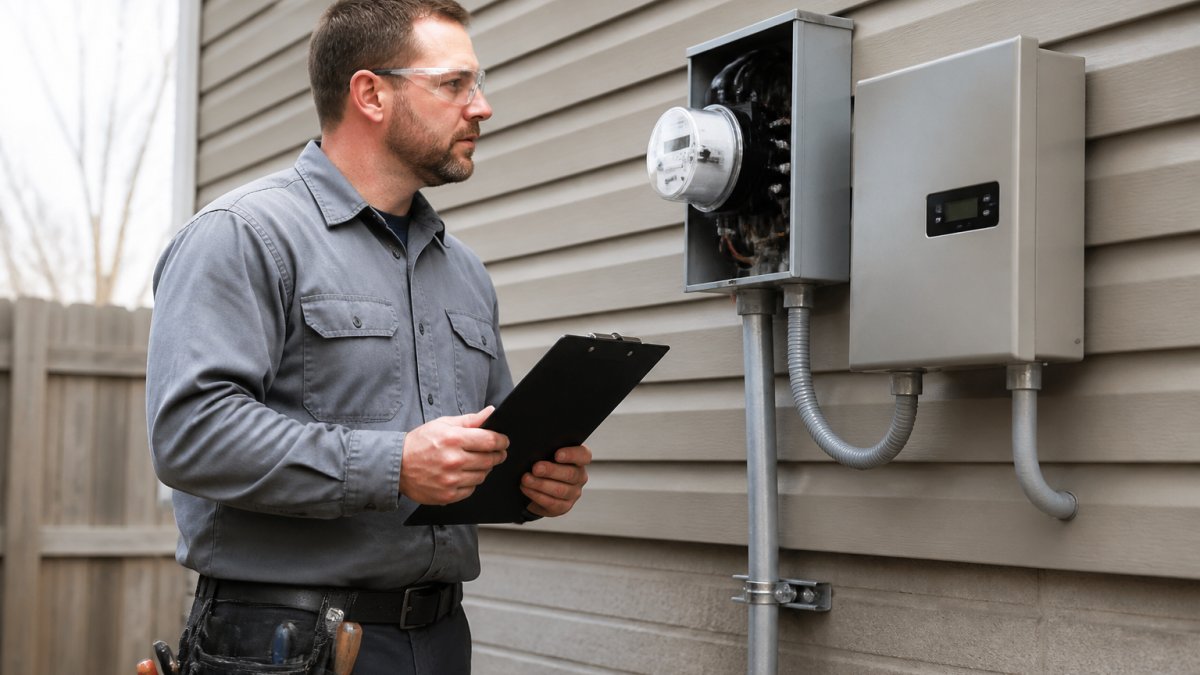
GenerLink works differently from a conventional transfer switch. Instead of a wall-mounted panel wired into your service, GenerLink sits between the meter and the meter socket: the meter plugs into the GenerLink, and the GenerLink plugs into the socket.
The Installation Sequence
The installation sequence generally looks like this:
- Utility approves the device and the installer.
- Electrician pulls the permit.
- Utility disconnects and removes the meter.
- Installer mounts the GenerLink unit and makes the connections.
- Electrical inspection is completed.
- Utility reinstalls the meter and restores service.
- Installer tests the connection with your generator under load.
Steps three through six decide the schedule. The electrical work is often a few hours; coordination can stretch across days or weeks depending on your utility's backlog and inspection scheduling.
Generator Compatibility and Load Limits
GenerLink does not supply backup power, it's a connection device. The power comes from your portable generator, limited by what it can produce. A common residential GenerLink unit is rated for a maximum generator input, often 30 to 50 amps depending on model and service configuration.
Load management is the part homeowners underestimate. A portable generator sized for a few circuits won't carry central air, an electric range, and a well pump at once, no matter how good the switch is.
Safe Operating Practices
- Never connect a generator to the GenerLink cord while the generator is running. Connect the cord first, then start the generator.
- Keep the generator outdoors and away from windows and doors. Carbon monoxide is the leading cause of generator-related deaths during outages.
- Use the cord length and gauge specified for the unit. Undersized cords overheat.
- Do not exceed the unit's rated generator input. The interlock protects against backfeed, not against overloading the device.
- Test under load after installation. The installer should run the generator with a representative load before signing off.
GenerLink vs Transfer Switch: Which Fits Your Home?
GenerLink vs transfer switch isn't a question of which is better; it's a question of which fits your setup and habits.
| Factor | GenerLink | Conventional Transfer Switch |
|---|---|---|
| Installation footprint | Mounts at the meter, no interior panel | Requires wall space near the panel |
| Utility approval | Required, varies by utility | Required, generally more standardized |
| Best for | Portable generator users wanting simple hookup | Whole-home or large-load backup |
| Load management | Limited to what the generator can carry | Can be sized for specific circuits |
| Portability | Generator stays portable | Generator can be portable or standby |
| Typical use case | Occasional outages, quick setup | Frequent outages, fixed installation |
GenerLink shines for homeowners who already own a portable generator and want a clean, code-compliant connection without a permanent interior installation. A conventional transfer switch makes more sense when backing up specific circuits or moving toward a standby generator.
Choosing and Vetting Qualified GenerLink Installers
Qualified GenerLink installers combine three things: a current electrical license, direct experience with meter-mounted equipment, and a working relationship with your utility.
When you talk to candidates, ask these questions directly:
- How many GenerLink units have you installed in the last year?
- Which utilities in this area have you worked with, and how did the approval go?
- Who pulls the permit, and who schedules the inspection?
- What happens if the utility rejects the installation?
- What's your warranty on the labor, and how long does it last?
- Can you provide references from customers with similar panels?
The answers separate specialists from generalists fast.
Our licensed electricians have specialized in backup power since 2014, navigating utility approvals, permit offices, and inspection schedules across the region.
One more thing worth saying plainly: get everything in writing, scope, timeline, who owns each step, and what happens if the utility requires changes. A written agreement is your only real protection.
Finding the right installer comes down to verification, not luck.
Take our 60-second quiz for a free, personalized quote and find out what your home actually needs.
Frequently Asked Questions
Who is qualified to install a GenerLink?
A licensed electrician who is familiar with GenerLink devices and your utility's requirements should do the work. GenerLink installs between the meter and the meter socket, so it involves pulling the meter, which usually requires utility coordination. Before hiring, confirm the electrician holds a current state license, has installed GenerLink units before, and can walk you through the utility approval process. Ask for job photos or references from similar installations, and get the scope of work in writing.
Does a GenerLink need to be approved by my utility?
Yes, in most cases. Because the GenerLink connects at the meter, your power company typically has to approve the device and may need to send a crew to pull and reseat the meter during installation. Requirements vary by utility, so call yours before you buy. Ask whether the specific GenerLink model is approved for your meter type, what paperwork they need, and how long approval usually takes. A qualified generlink installer can usually handle this coordination for you.
How much does GenerLink installation cost?
Pricing depends on your home's electrical setup, meter type, local labor rates, and whether utility coordination or panel upgrades are needed. The device itself is one part of the bill; electrician labor, permits, and any utility fees are separate. Because costs vary so much by situation, ask for an itemized quote that separates equipment, labor, permits, and utility charges. Get at least two written quotes so you can compare what each one actually includes.
Is a GenerLink better than a standby generator?
They solve different problems. A GenerLink lets you connect a portable generator to your home's wiring through the meter, which costs less upfront and works well for shorter outages. A standby generator runs automatically, can carry larger loads like central AC, and doesn't require you to wheel out and fuel a portable unit. If outages are frequent or long, a standby system is usually the sturdier choice. If you already own a portable generator and want a safe connection, GenerLink is a practical option.