 how-to
Can Home Battery Storage Reduce Electricity Bills?
Table of Contents
- How Home Battery Storage Works to Lower Your Bill
- Home Battery Time-of-Use Savings: Arbitrage and Peak Avoidance
- Home Battery Storage Without Solar: Is It Worth It?
- Home Battery Storage Cost and Payback Period: What to Expect
- Battery Efficiency, Degradation, and Usable Capacity in Savings Estimates
- Battery-Only vs. Solar-Plus-Battery: A Decision Framework
- Frequently Asked Questions
Last Updated: October 5, 2026
How Home Battery Storage Works to Lower Your Bill
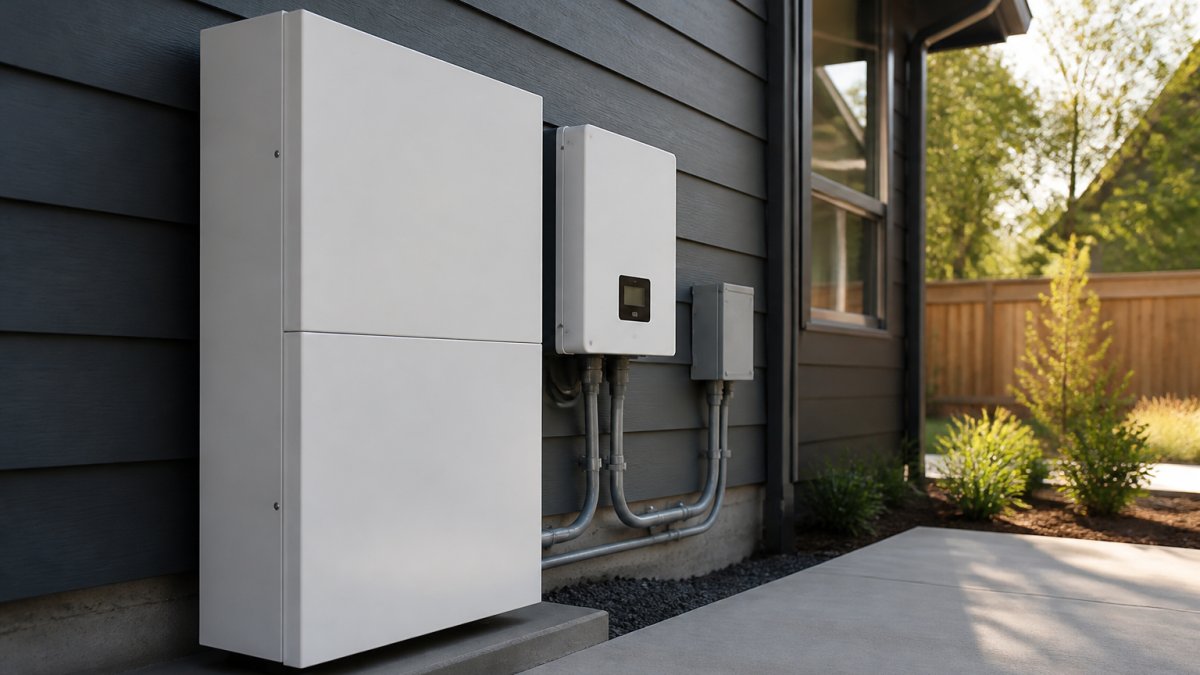
Home battery storage is a system that stores electricity in your home so you can use it later instead of buying power from the grid at full price.
The key measure here is usable capacity, not the number on the box. A battery advertised at 13.5 kWh might only give you around 13 kWh of real use.
Charging and Discharging: The Basics of Bill Reduction
Your battery charges when electricity is cheap or when your solar panels are producing more than your home needs. It discharges during the hours when grid power costs the most.
- Charge window: overnight or midday, depending on your rate plan
- Discharge window: late afternoon and evening, when rates peak
- Round-trip efficiency: the share of stored energy you actually get back, usually 85% to 90%
That efficiency loss is the first thing most savings estimates ignore. Every kWh you store and pull back out shrinks a little along the way.
Home Battery Time-of-Use Savings: Arbitrage and Peak Avoidance
Time-of-use savings work by shifting when you buy power, not by using less of it. If your utility charges more during peak hours, a battery lets you avoid those rates by running your home on stored energy instead.
Two savings paths exist:
- Peak avoidance: you stop buying grid power during the most expensive hours
- Rate arbitrage: you charge at off-peak rates and discharge at peak rates, pocketing the difference
The second one only pays if your utility's peak and off-peak rates are far enough apart. A wide gap means real savings. A narrow one means the battery mostly just sits there.
How to Calculate Your Potential Time-of-Use Savings
Use this formula with your own numbers:
Monthly savings = (peak rate − off-peak rate) × kWh shifted per month × round-trip efficiency
Here's a worked example with placeholder rates:
- Peak rate: $0.20 per kWh
- Off-peak rate: $0.08 per kWh
- Spread: $0.12 per kWh
That gives you 0.12 × 300 × 0.90 = $32.40 per month, or roughly $389 a year. Plug in your own rates from your utility bill and rerun it. The result changes a lot by household.
Home Battery Storage Without Solar: Is It Worth It?
Home battery storage without solar can still cut your bill, but only if your utility's rate structure rewards load shifting. Without panels, every kWh you store comes from the grid, so your savings depend entirely on the rate spread.
Compare the two setups:
| Setup | Where power comes from | Main savings driver | Best for |
|---|---|---|---|
| Battery only | Grid, charged off-peak | Rate arbitrage | Homes with steep peak rates |
| Battery plus solar | Panels plus grid | Self-consumption and backup | Homes wanting lower bills and resilience |
A battery-only system makes the most sense when your utility has a big gap between peak and off-peak rates. If your rates are flat, the payback gets long and the case weakens.
Home Battery Storage Cost and Payback Period: What to Expect
Payback period is the time it takes for your bill savings to cover what you paid for the system. It's the number that decides whether a battery is a smart buy or an expensive hobby, and it's the number most quotes get wrong because they leave out half the cost stack.
The Full Cost Stack, Not Just the Sticker
Installed cost for a residential battery system commonly lands in a wide range, with a typical single-battery install running somewhere in the low-to-mid five figures. That range is wide because four things move it:
- Equipment: chemistry, usable capacity, and whether the inverter is included or separate
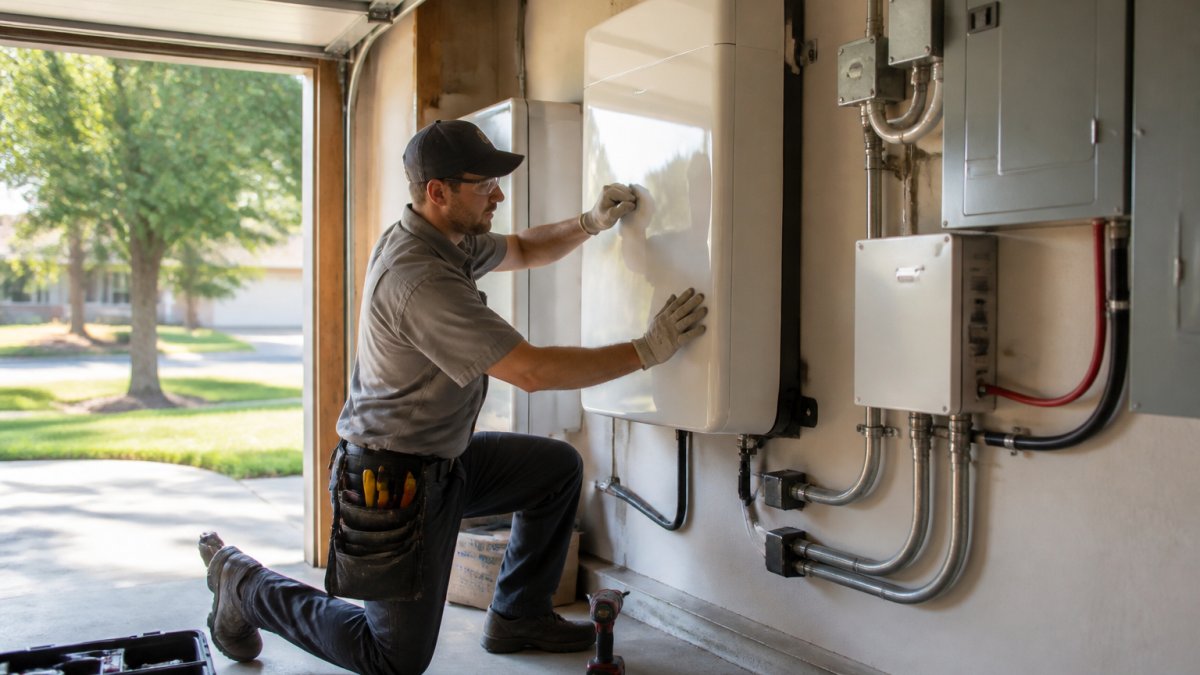
- Installation: panel capacity, wiring runs, permitting, and whether you need a main-panel upgrade
- Add-ons: critical-load subpanel, transfer switch, monitoring, or a second battery
A battery-only install is usually cheaper than solar-plus-battery because you skip the array, racking, and solar-side labor. But battery-only also has no production to offset, so every kWh it stores is one you bought from the grid.
A Realistic Payback Formula
Don't accept a payback number without seeing the inputs. Ask for this math in writing:
Take our 60-second quiz for a free quote today! →
Simple payback (years) = Net installed cost ÷ Annual bill savings
Where:
- Net installed cost = gross cost − federal credit − state/utility rebates
- Annual bill savings = (peak rate − off-peak rate) × kWh shifted per year × round-trip efficiency, plus any demand-charge reduction, minus any standby or connection fees
Run it with your own numbers. The rate spread, not the battery brand, decides whether payback works.
What Payback Estimates Usually Leave Out
- Degradation: capacity fades over the system's life, so year-10 savings are lower than year-1 savings
- Round-trip losses: 85-90% efficiency means you never bank the full spread
- Standby draw: some systems pull a small continuous load that shows up on the bill
When Payback Actually Works
A battery tends to pencil out on bill savings alone when three things line up: a wide peak-to-off-peak spread, high peak-hour consumption you can actually shift, and meaningful incentives. It rarely pencils out on arbitrage alone when rates are flat or the spread is under about $0.10/kWh.
Because pricing depends on your home's wiring, your utility, and the equipment you choose, we don't quote generic numbers. For current pricing, the U.S. Department of Energy's home energy rebate programs outlines what incentives may apply in your area, and your utility's own tariff sheet tells you the rates you're actually working with.
Battery Efficiency, Degradation, and Usable Capacity in Savings Estimates
Battery degradation and efficiency losses shrink your savings over time, and most estimates skip them. A battery holds less energy as it ages, and every charge-discharge cycle loses a bit to heat.
What to account for:
- Usable capacity: the energy you can actually draw, which is less than the rated figure
- Round-trip efficiency: typically 85% to 90%, so you never get back everything you put in
- Degradation: capacity fades gradually over the battery's lifespan
A realistic savings estimate uses all three. If a quote assumes 100% efficiency and no degradation, the payback will look better than it turns out to be. Ask for the assumptions in writing. the National Renewable Energy Laboratory's storage research documents how these losses play out in real systems.
Battery-Only vs. Solar-Plus-Battery: A Decision Framework
Most articles tell you solar-plus-battery is better. That's not a framework, it's a default. The right choice depends on what you're optimizing for, what your utility pays for exports, and how long you plan to stay in the home. Here's a side-by-side that actually decides it.
The Two Setups, Side by Side
| Factor | Battery only | Solar plus battery |
|---|---|---|
| Where stored power comes from | Grid, charged off-peak | Your panels first, grid as backup |
| Primary savings driver | Rate arbitrage (peak vs. off-peak spread) | Self-consumption of solar + arbitrage |
| Secondary value | Backup power | Backup power, longer runtime |
| Upfront cost | Lower (no array) | Higher (array + battery + more labor) |
| Federal credit | 30% if the battery is 3 kWh or larger and installed in a home | 30% on the battery and the solar |
| Exposure to rate changes | High, savings live or die on the spread | Lower, you own the production |
| Best fit | Steep peak rates, no roof or shading issues, short horizon | Good solar resource, long horizon, want independence |
The Decision Tree
Work down this list and stop at the first line that matches your situation:
- Do you have a usable roof and at least a few hours of good sun? If no, battery-only is your realistic path. If yes, keep going.
- Is your peak-to-off-peak spread at least about $0.15/kWh? If no, battery-only arbitrage is weak, solar-plus-battery's self-consumption value carries the case instead.
- Do you plan to stay in the home more than 7-10 years? If no, battery-only sized to peak hours usually recovers more of its cost before you sell. If yes, solar-plus-battery's longer savings runway wins.
- Is backup power a must-have? If yes, solar-plus-battery keeps you running through multi-day outages; battery-only drains and stops until the grid returns.
- Does your utility pay retail for exports (full net metering)? If yes, solar-only may beat solar-plus-battery on pure bill savings, the battery adds resilience, not always dollars.
Total Cost of Ownership Over the System's Life
This is the comparison most articles skip. Over a 10-year horizon, count:
- Installed cost (net of the 30% federal credit and any state or utility rebates)
- Financing cost if you use a loan or lease, a 7% loan over 10 years adds real dollars to the total
- Degradation: assume the battery delivers less each year, not the same amount
A battery-only system's TCO is lower but its savings ceiling is capped by the rate spread. A solar-plus-battery system's TCO is higher but its savings scale with production and are less exposed to future rate changes.
When Neither Pays on Bill Savings Alone
If your utility has flat rates, low export credits, and no meaningful peak window, neither setup will pay back on bill savings in a reasonable timeframe. In that case, buy for resilience and size the battery to your critical loads, fridge, internet, a few circuits, rather than trying to justify it on arbitrage.
We size systems around your actual usage, not a sales target. If a battery won't pay off for your rate plan, we'll tell you.
Frequently Asked Questions
Can a home battery reduce your electricity bill without solar panels?
Yes, a home battery can reduce your electricity bill without solar panels by charging during off-peak hours when electricity rates are low and discharging during peak hours when rates are high. This strategy, called time-of-use arbitrage, works best if your utility offers significant rate differences between peak and off-peak periods. However, savings depend on your battery's usable capacity, round-trip efficiency, and how much energy you can shift. Without solar, you're still buying all your electricity from the grid, so the savings come purely from price differences rather than generating your own power.
How much can a home battery save on an electric bill?
Savings vary widely based on your utility's rate structure, household energy consumption, and battery size. Homes with higher peak-rate differentials and larger batteries may save more, while those with flat rates or low peak charges may see minimal savings. To estimate your potential, review your utility bill for peak and off-peak rates, then calculate how many kilowatt-hours you could shift daily.
Does a home battery save money with time-of-use rates?
A home battery can save money with time-of-use rates if the price difference between peak and off-peak periods is large enough to offset the battery's cost and efficiency losses. To estimate annual savings, multiply the price difference by your daily shifted energy and 365 days. However, if your utility's rate differential is small or you don't use much energy during peak hours, the savings may not justify the upfront cost.
How long does a home battery last during a power outage?
A home battery's duration during a power outage depends on its usable capacity and your household's energy consumption. A home battery can power essential loads like a refrigerator, lights, internet router, and phone chargers for a certain duration. If you include heating or cooling systems, that duration drops significantly. Many homeowners pair batteries with solar panels to recharge during daylight, extending backup indefinitely. For extended outages, a generator or additional battery capacity may be needed. Always consult an installer to size your system based on your critical loads.
The real challenge isn't picking a battery. It's knowing whether your rates, usage, and goals make one worth it. Generators of Nashville by Evolution Electric helps Middle Tennessee homeowners answer that question with a free, personalized quote, backed by licensed electricians, authorized installation of Generac, EcoFlow, Anker SOLIX, and Jackery systems, and whole-home backup options like our E4G systems. Take our 60-second quiz and get a quote built around your home.